How Often Should You Wash Your Tea Towels?
Transparency Note: We independently select these products based on research and user reviews. If you buy something through our links, we may earn a commission.
In a house with four daughters and a constant cycle of meal prep, the humble tea towel is the hardest-working "Soft Infrastructure" in the building. As a father, I look at these towels as filters: they catch moisture, food particles, and aerosolized grease.
Most people wait until a tea towel looks dirty or develops that tell-tale "sour" smell before throwing it in the wash. But as a builder who understands how mold and bacteria thrive in damp environments, I can tell you: If you can smell it, the infrastructure has already failed. In the "Beautiful Chaos" of our kitchen, tea towels are the primary source of cross-contamination. Here is the professional schedule to keep your linens, and your family, safe.
1. The Daily Swap: The "Biological" Rule
In a high-traffic kitchen, the professional frequency is simple: One New Towel Every 24 Hours.
The Science: Studies have shown that E. coli and other pathogens can survive on a damp towel for over 48 hours. When you dry your "clean" hands on a day-old towel, you are often re-contaminating them before you touch food.
The "Compromised" Exception: If you have used a towel to wipe up spills from raw meat, unwashed produce, or cracked eggs, that towel is "compromised" immediately. It goes straight to the laundry bin, do not pass go.
2. Separate the "Functions"
One of the biggest mistakes I see in home maintenance is using the same towel for multiple "trades." You wouldn't use a framing hammer to hang a delicate mirror; don't use a hand-drying towel to dry your dishes.
The Three-Towel System:
Towel A (Hand Drying): These catch the most "bio-load" from skin contact. Swap: Daily.
Towel B (Dish Drying): These stay cleaner longer, but because they hold moisture in the fibers, they should be changed every 2 days to prevent "sour" odors.
Towel C (The "Spill" Rag): These are for the "chaos." Use them once and put them in the wash. Never hang a "spill rag" back up to dry.
Kitchen Linen Maintenance Matrix
| Towel Type | Wash Frequency | Material Choice | Builder's Note |
|---|---|---|---|
| Hand Towel | Every 24 Hours | Heavy Cotton Terry | High bio-load; requires daily rotation. |
| Dish Towel | Every 48 Hours | Linen / Flour Sack | Low lint; dries faster to prevent bacteria bloom. |
| Spill Rag | Single Use | Recycled Cotton | Do not cross-contaminate with food surfaces. |
3. The "Pure" Laundry Protocol
Washing your towels is a "Material Restoration" process. We want to strip away the oils without using toxic residues.
Avoid Fabric Softeners: Softeners are made of synthetic waxes that coat the fibers. This makes the towel feel soft but destroys its absorbency. A towel coated in wax can't "pull" moisture off your Stone Dish Drying Mat.
The Vinegar Strip: Every few washes, add a half-cup of white vinegar to the rinse cycle. This breaks down mineral buildup and keeps the "bones" of the fabric thirsty and fresh.
BUILDER TIP: THE MOISTURE TRAP
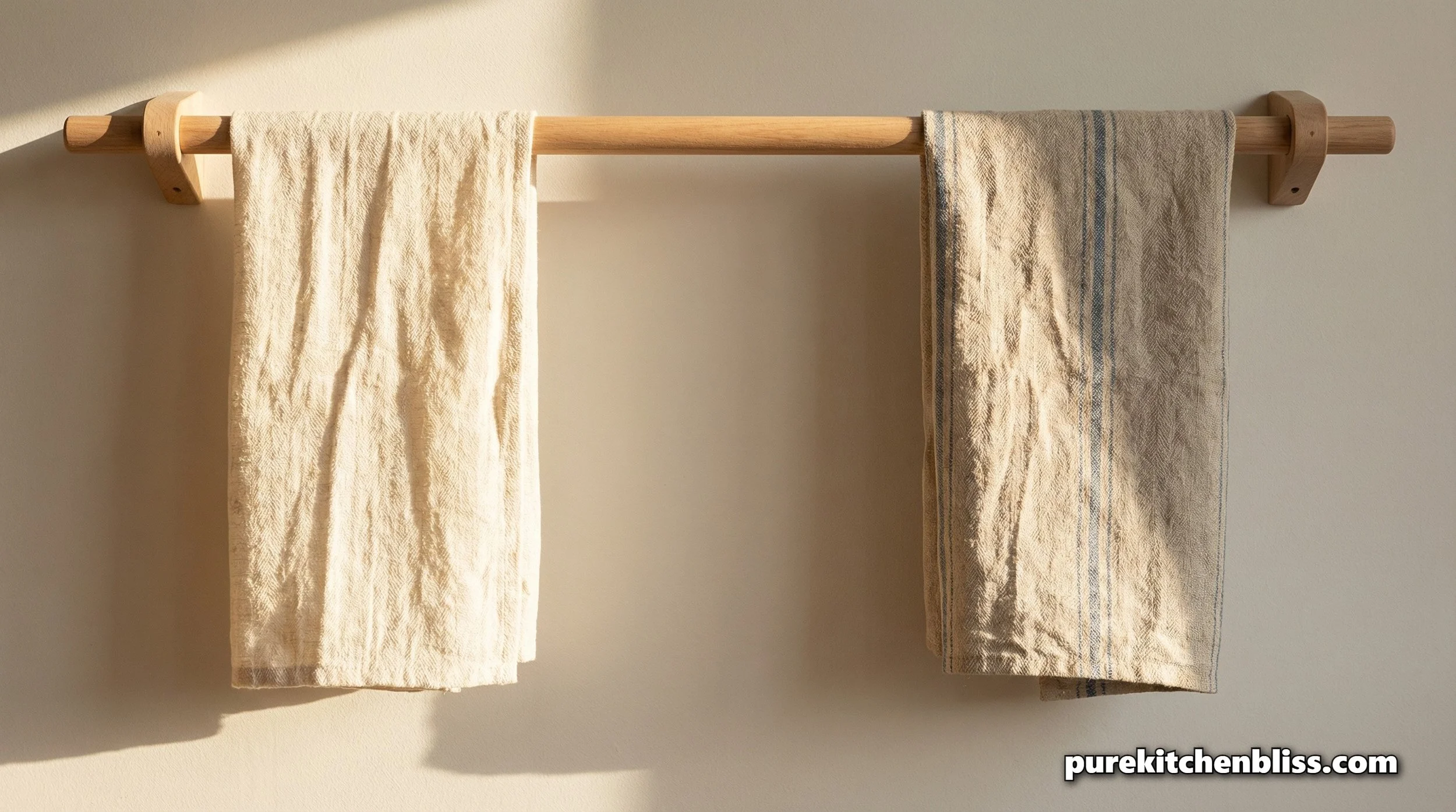
Never hang your damp towels over the oven handle if the oven is on. The heat combined with the moisture in the fabric creates a "steam-tent" effect that accelerates bacterial growth inside the fibers. Use a dedicated wall-mounted rail for better airflow.
4. Maintenance: The "Scent-Check" Infrastructure
If your towels come out of the dryer still smelling slightly "musty," you have a Bio-Film problem.
The "Hot" Reset: Once a month, wash all your kitchen linens on the highest temperature setting (140°F or 60°C) with a cup of baking soda. This "shocks" the bacteria and restores the purity of the material.
Inter-Wash Refresh: Between washes, if your kitchen linens have absorbed a heavy cooking odor (like fish or grease), give them a quick spray of your DIY neutralizer.
Read More: The DIY Vodka Fabric Spray: How to Remove Kitchen Odors
The Pure Linen Toolkit
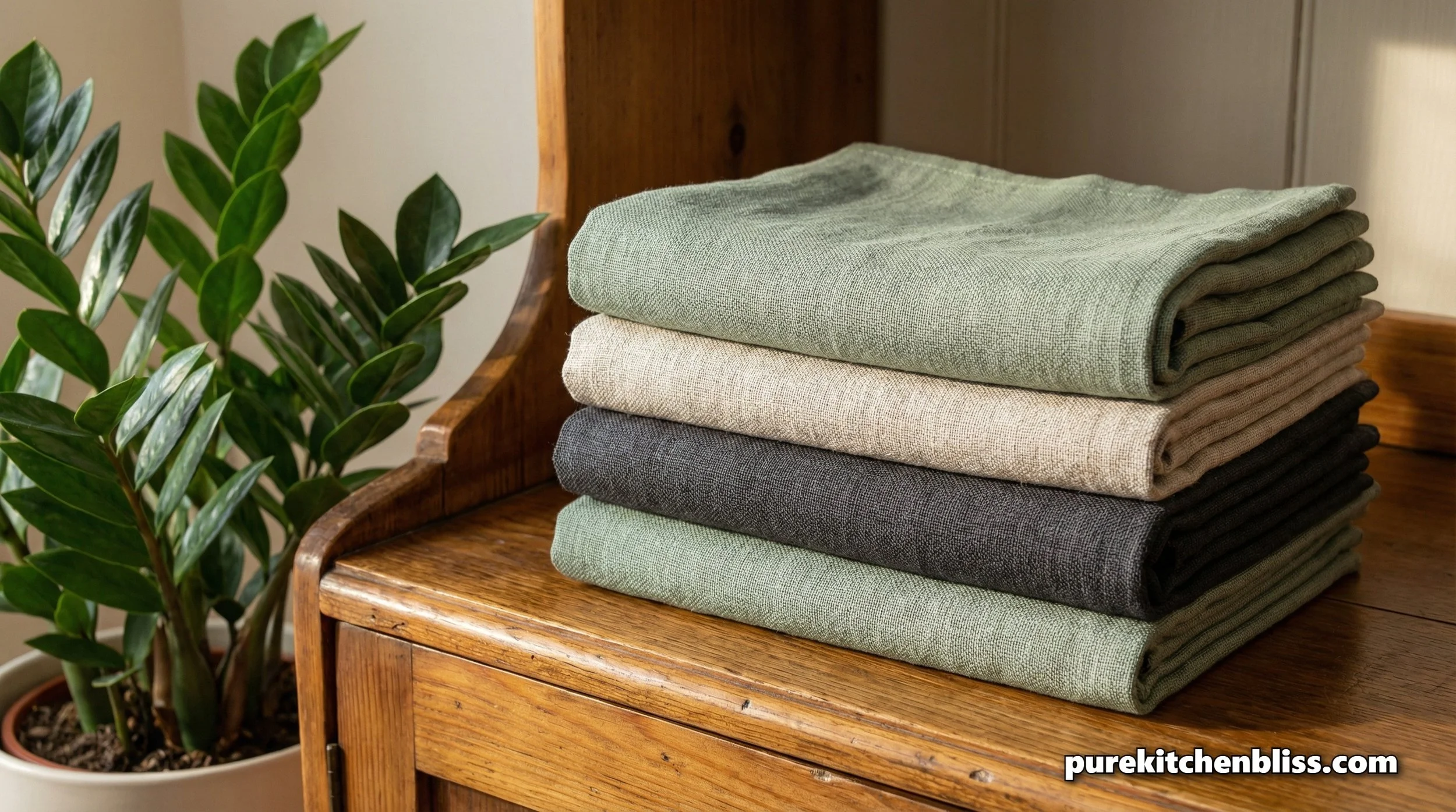
To maintain a daily swap, you need a deep inventory of high-quality towels. We recommend 100% organic cotton or linen—synthetic blends simply don't have the "infrastructure" to absorb moisture properly.
The Workhorse: 12-Pack Organic Cotton Flour Sack Towels
The Rail: inimalist Stainless Steel Towel Rail (For Airflow)
The Restoration: Pure Baking Soda (Bulk for Laundry Resets)
Conclusion: Purity in the Details
In a Sustainable Sanctuary, we don't just clean for the eyes; we clean for the "bones." By implementing a daily tea towel swap, you are cutting off the primary highway for bacteria in your kitchen. It’s a small, $0 habit that protects the health of your family and the purity of your home.