Spider Plant Care: The High-Performance Filter for Your Kitchen
Transparency Note: We independently select these products based on research and user reviews. If you buy something through our links, we may earn a commission.
In a house with four daughters and a constant flow of activity, the kitchen is more than just a place to cook, it is a high-output environment. As a Builder-Curator, I look at every element of the room as infrastructure. While we’ve covered the "Steel Beam" resilience of the Snake Plant, the Spider Plant (Chlorophytum comosum) brings a different kind of mechanical advantage to your sanctuary.
The Spider Plant is the kitchen’s "Carbon Monoxide Scrubber." It is one of the few plants scientifically proven to target the specific byproducts of gas cooking and wood-burning. More importantly, in a home where safety is paramount, it is 100% non-toxic to your pets.
1. The Biological Spec: Why Every Kitchen Needs One
Every time you engage your stovetop, you are introducing trace amounts of combustion byproducts into your air. The Spider Plant is your biological defense system.
The Air Quality Spec: NASA studies highlight the Spider Plant for its ability to remove up to 90% of Formaldehyde, Xylene, and Carbon Monoxide from the air.
The Pet-Safe Pillar: Unlike the Peace Lily or certain Ivy varieties, the Spider Plant is officially non-toxic to cats and dogs. It is the only "Zero-Risk" choice for a family with curious pets who might nibble on the greenery.
2. The Installation: Light and Placement Logic
To get the most "Extraction Power" out of your Spider Plant, you have to place it where it can breathe.
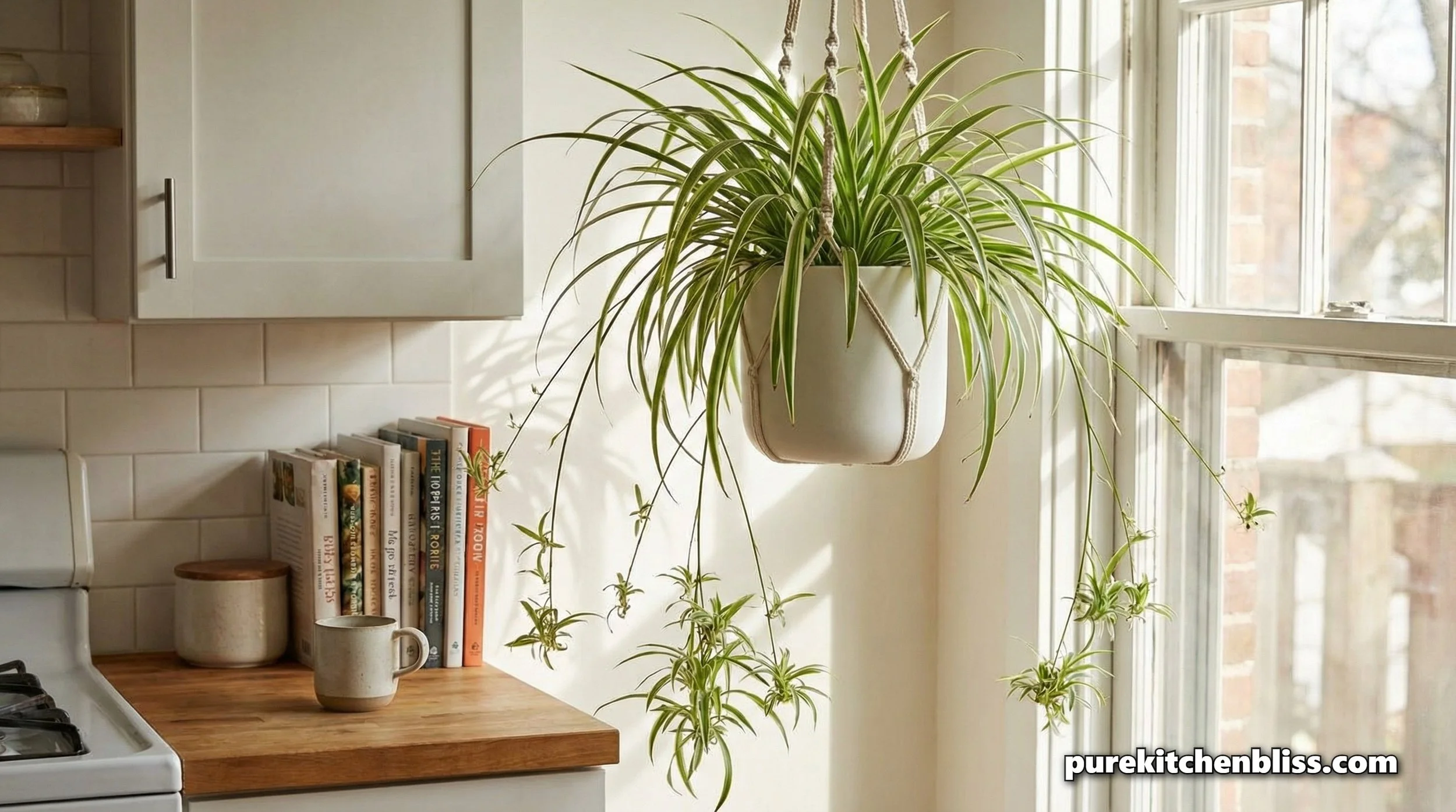
Light Requirements: These plants thrive in Bright, Indirect Light. Direct afternoon sun will scorch the variegated white stripes, while too little light will cause the plant to lose its "Stripe" and turn a dull green.
The Vertical Advantage: Because Spider Plants love to "trail," they are the perfect candidates for hanging baskets or high Open Shelves. This keeps them out of the "Beautiful Chaos" of your countertop workspace while allowing them to catch rising air currents.
3. The Maintenance Protocol: Water and Humidity
Spider plants are incredibly forgiving, but they do have a "tell" when the infrastructure is failing.
The Watering Ritual: Water your spider plant when the top 50% of the soil is dry. They prefer to stay slightly moist but never "soggy."
The Fluoride Factor: If you notice brown tips on the leaves, it’s usually not a watering issue, it’s a chemical one. Spider plants are sensitive to the fluoride and chlorine in city tap water.
The Builder’s Fix: Use filtered water or let your tap water sit out for 24 hours before watering. This allows the chemicals to dissipate, preserving the "Sanctuary Purity" of the foliage.
BUILDER TIP: THE LEAF WIPE
Just like your Toaster Placement needs to account for grease buildup, your plants do too. Aerosolized grease from cooking creates a film on the leaves that blocks the plant's pores. Once a month, give your Spider Plant a "Reset" by wiping the leaves with a damp cloth or giving it a gentle "shower" in the sink.
4. Propagation: Scaling Your Air Infrastructure
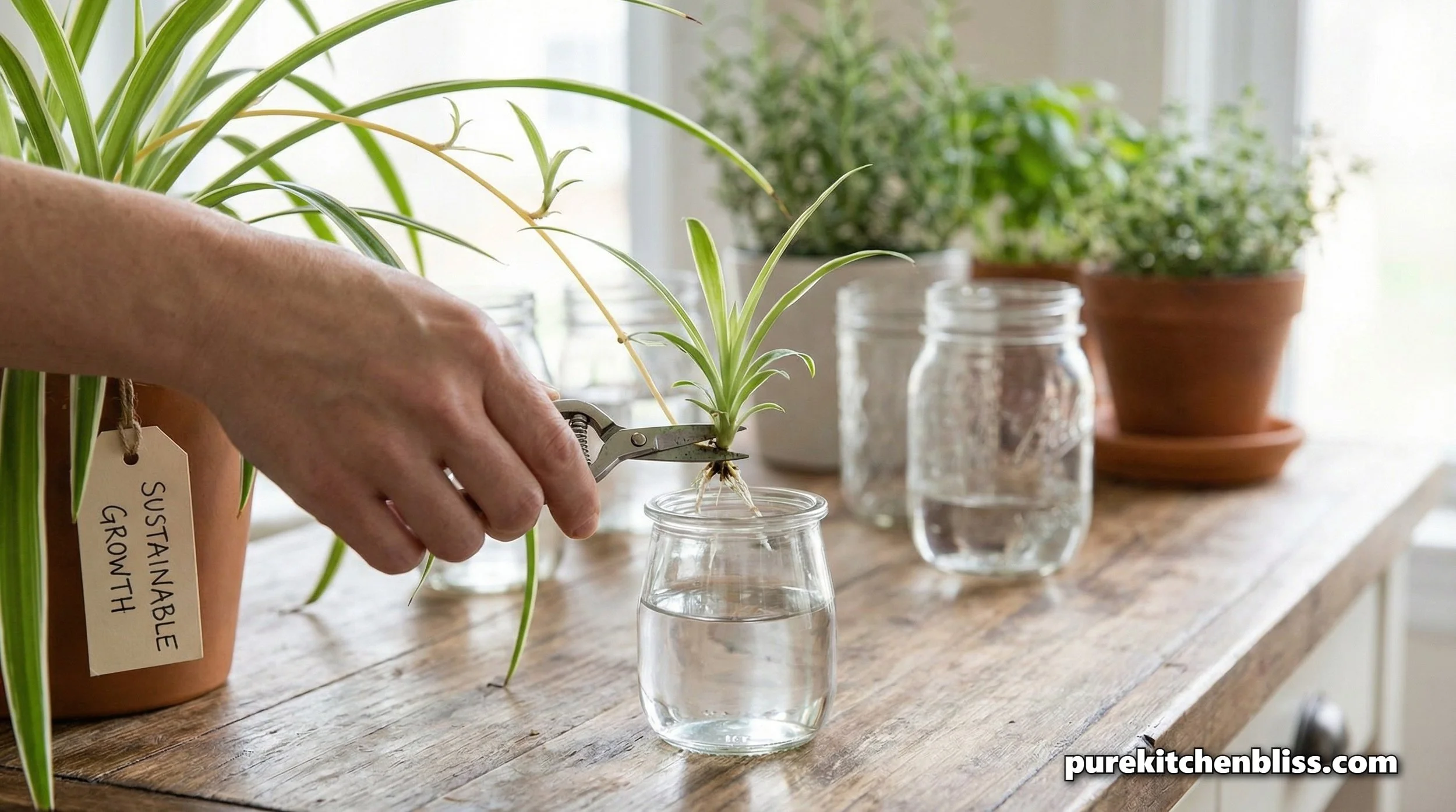
The Spider Plant is the only plant that actively wants to help you grow your collection. The long runners produce "Spiderettes" (pups) that can be easily turned into new plants.
The Snip: Wait until the baby plant has small, visible brown "nubs" (aerial roots) at the base.
The Rooting: Place the pup in a jar of water or directly into moist, well-draining soil.
The Result: Within weeks, you have a brand-new air filter ready for the laundry room or the girls' bedrooms.
5. The "Cat-Nip" Effect
A quick note for pet owners: While the spider plant is non-toxic, it contains mild compounds that can have a "catnip-like" hallucinogenic effect on felines. If your cat is obsessed with the plant, it’s not because they’re hungry, it’s because they’re looking for a "Sanctuary High." Hanging the plant is the best way to protect both the cat and the infrastructure.
Conclusion: A Living Safety System
The Spider Plant is more than decor, it is a functional tool that scrubs your air, protects your pets, and thrives on minimal intervention. It is a foundational element of any Sustainable Sanctuary.
Complete Your Kitchen Air Infrastructure:
Shop the Collection: Order Your Professional-Grade Spider Plant & Hanging Planter
Read the Pillar Guide: 7 Unkillable Plants That Purify Your Kitchen Air
Clean the space around your plants: 5 Brilliant Uses for Castile Soap