The Sanctuary Philosophy: Health as an Infrastructure
The modern kitchen is often described as the "heart of the home," but in the pursuit of convenience, we have allowed it to become a source of biological stress. From the off-gassing of composite cabinetry to the microplastics shedding from "non-stick" coatings, the room where we nourish our bodies is frequently the most chemically burdened space in the house.
At PureKitchenBliss, we view the kitchen through the lens of the Sustainable Sanctuary. It is not merely a workspace for meal preparation; it is a high-performance ecosystem. When you align the infrastructure of your kitchen with the principles of organic living, you create a ripple effect that touches your health, your home’s longevity, and the planet.
The Sanctuary Philosophy: Health as an Infrastructure
Most "green" kitchen advice stops at buying organic produce. We believe that is the final step, not the first. A true sanctuary begins with biological and emotional wellness baked into the physical environment.
An organic kitchen is designed to reduce the "cognitive load" of the home. When every material is chosen for its non-toxicity and every system is designed for zero-waste flow, the kitchen stops being a place of chores and begins to feel like a place of restoration. We move away from the "disposable" culture and toward a builder-curator mindset, where we invest in materials that age gracefully and systems that protect the home’s integrity.
The Golden Triangle of Sustainability
In traditional kitchen design, the "Golden Triangle" refers to the distance between the stove, the sink, and the refrigerator. In a Bliss-inspired kitchen, we redefine this triangle to represent the three pillars of a healthy home ecosystem.
1. Material Integrity: Real Wood vs. The Hidden Toxins of MDF
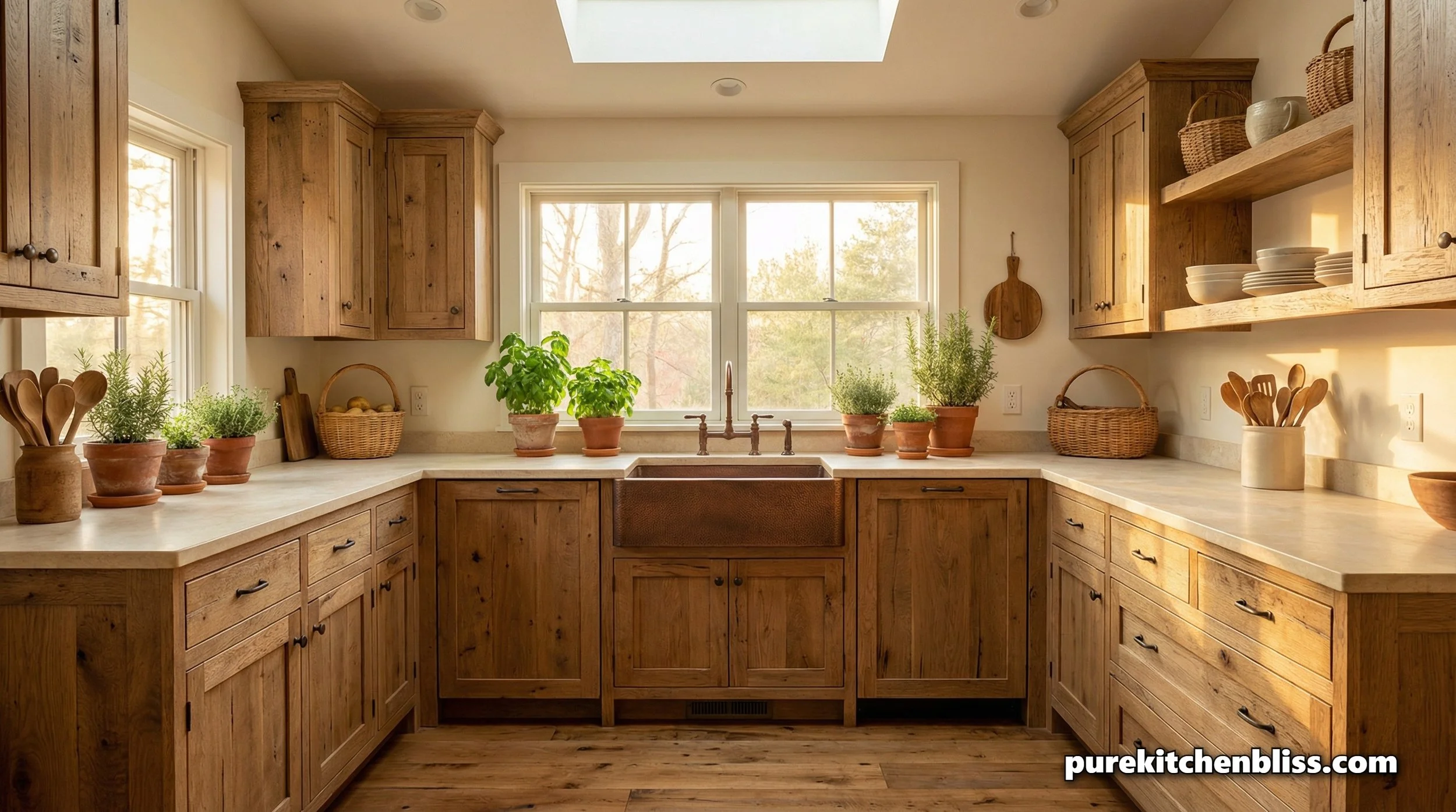
The most significant "hidden" health hazard in the kitchen is often the cabinetry itself. Most standard kitchen cabinets are constructed from medium-density fiberboard (MDF) or particleboard. These materials are held together by urea-formaldehyde resins.
Formaldehyde is a known carcinogen that off-gasses into your indoor air for years, a process accelerated by the heat and humidity of a working kitchen.
The Bliss Standard: We prioritize solid wood construction or formaldehyde-free plywood. If you are retrofitting an existing kitchen, we recommend sealing exposed particleboard with a non-toxic, zero-VOC vapor barrier.
The Countertop Connection: We move away from synthetic "quartz" (which can contain high levels of resin and crystalline silica) toward living stones like soapstone, marble, or butcher block finished with food-grade linseed oil.
2. Resource Efficiency: Beyond the Tap
A sustainable sanctuary respects the flow of $H_{2}O$. Water efficiency in the kitchen isn't just about a low-flow faucet; it’s about the purity of the intake and the safety of the output.
Filtration as Infrastructure: We advocate for multi-stage, under-sink filtration systems that target heavy metals, PFAS (forever chemicals), and chlorine.
Thermal Regulation: An overlooked part of efficiency is how we manage heat. Induction cooking, for example, is not only more energy-efficient than gas, but it also eliminates the combustion byproducts (nitrogen dioxide) that degrade indoor air quality.
3. Biological Flow: The Zero-Waste Pulse
The kitchen should be a closed-loop system. This means designing the "Biological Flow"—how food scraps become compost and how air is purified naturally.
Integrated Composting: A sanctuary kitchen hides the "mess" of sustainability. We recommend built-in, filtered compost bins integrated directly into the countertop or cabinetry to make zero-waste living frictionless.
Air Purity: The "Bliss Kitchen" utilizes high-CFM (cubic feet per minute) ventilation that vents outside, combined with the air-purifying plants we’ve curated for high-humidity environments.
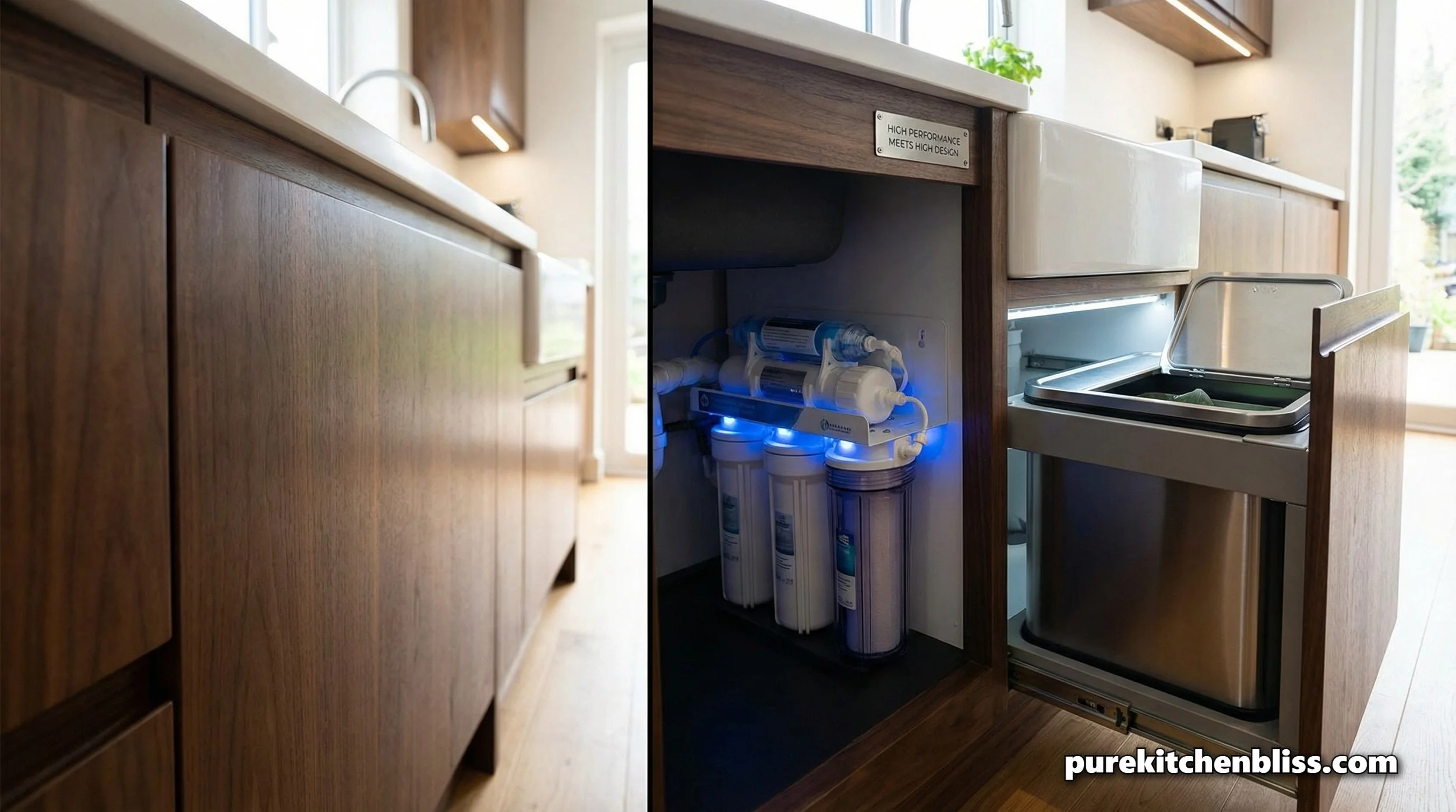
Kitchen Infrastructure: Protecting the Skeleton of Your Home
As "Builder-Curators," we understand that a kitchen is only as healthy as the plumbing and cabinetry supporting it. You cannot have "bliss" in a kitchen plagued by mold or structural decay.
Moisture: The Silent Sanctuary Killer
The kitchen is a high-moisture zone. Between the steam from boiling water and the hidden leaks under the dishwasher, moisture is the primary enemy of cabinetry integrity.
Cabinet Liners: We don't use plastic adhesive liners. Instead, we use recycled cork or heavy-duty silicone mats in the "wet zones" (under the sink and dishwasher). These protect the wood from slow drips that lead to black mold.
Ventilation Rituals: True maintenance involves using your range hood every single time the stove is on—not just when you burn something. This prevents aerosolized grease from settling on your wood surfaces, where it becomes a magnet for dust and bacteria.
The War on "Fatbergs": Protecting Your Pipes
A non-toxic kitchen also means a non-toxic drainage system. FOG (Fats, Oils, and Grease) are the primary cause of kitchen plumbing failures. When grease is poured down the drain, it cools and solidifies, creating "fatbergs" that trap other debris.
The Bliss Protocol: Never use chemical "drain cleaners." These caustic bases can damage your pipes and kill the beneficial bacteria in septic systems.
The Reset Ritual: Keep a wide-mouth glass jar for grease collection. For a natural monthly "pipe refresh," use a combination of boiling water and a concentrated citrus enzyme cleaner to break down organic buildup without eroding your plumbing.
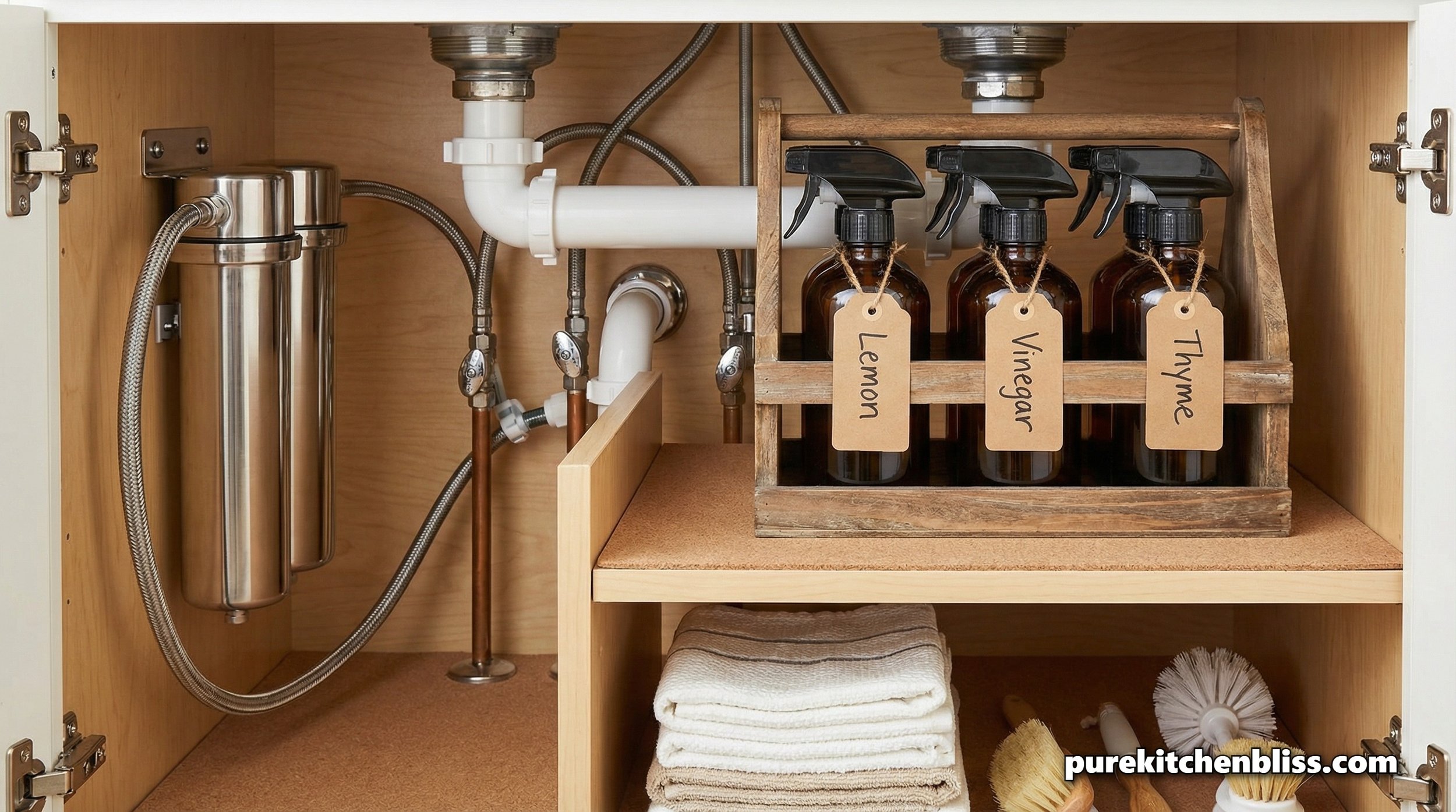
Biological Purity: Air and Light
Before we even reach the cookware, we must address the "envelope" of the kitchen.
The Air Quality Paradox
It is a profound irony of modern home maintenance that we obsess over the sterility of our floors while remaining indifferent to the toxicity of our air. When we cook on gas ranges without high-CFM external ventilation, we are often subjecting ourselves to concentrations of nitrogen dioxide (NO₂) that would violate federal outdoor air quality standards. A truly blissful kitchen does not just look clean; it breathes clean.
The Solution: If you cannot switch to induction, you must prioritize air-purifying "unkillable" plants and high-efficiency particulate air (HEPA) filtration. Plants like the Snake Plant and Golden Pothos are excellent at absorbing the VOCs emitted by traditional cleaning products.
Lighting and Wellness
We utilize a layered lighting approach to support the circadian rhythm of the home.
Task Lighting: Bright, high-CRI (Color Rendering Index) LEDs over prep areas to ensure safety.
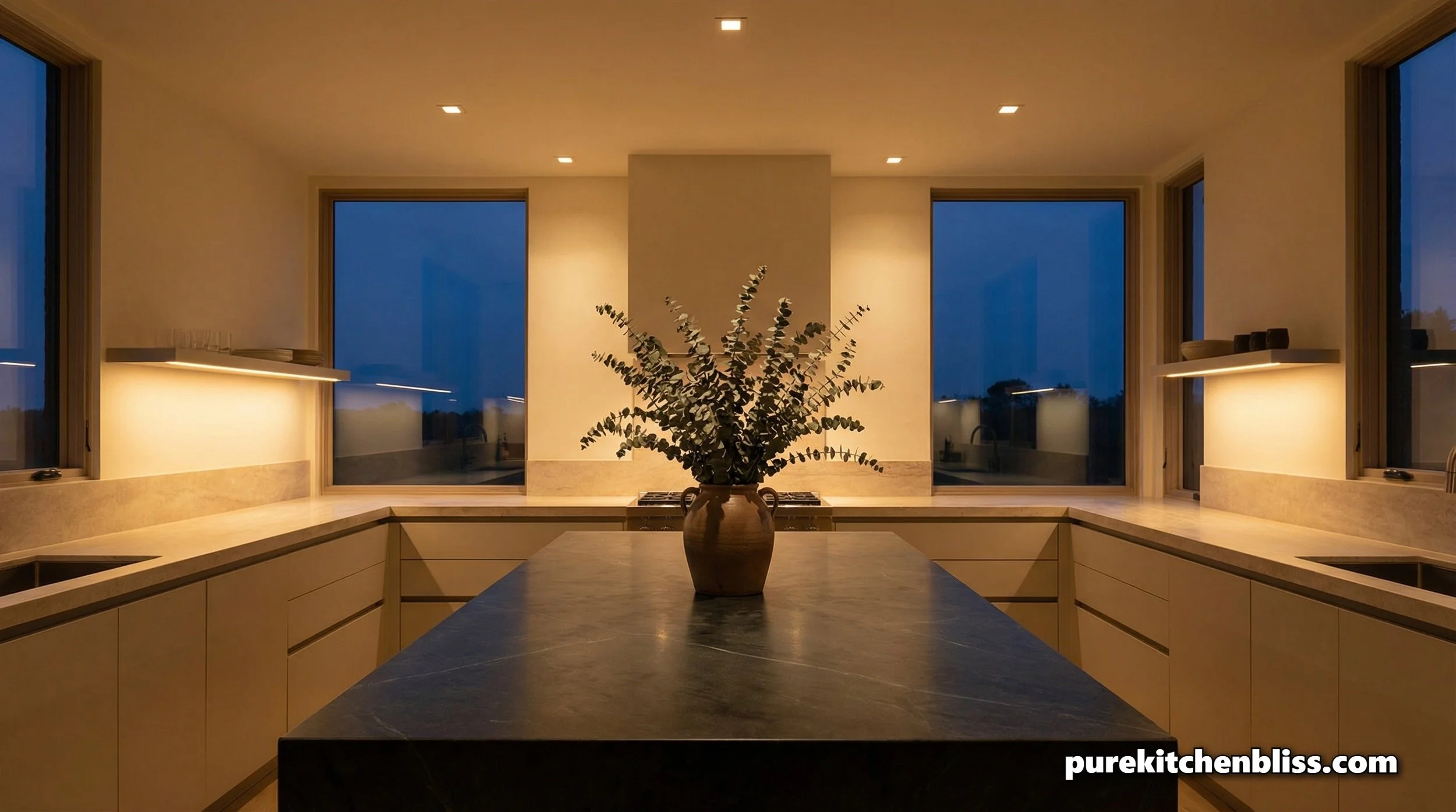
Ambient Lighting: Warm, dimmable "sunset" tones for evening wind-downs, signaling to the body that the day’s labor is done.
Material Health: The Alchemy of Non-Toxic Cookware
In our "Sustainable Sanctuary," the tools we use to heat our food are just as important as the ingredients themselves. Many modern kitchens are filled with "convenience" items that leach endocrine disruptors and heavy metals when heated.
The Problem with "Non-Stick" (PTFE and PFOA)
Traditional non-stick coatings are a chemical shortcut. When these pans reach high temperatures (typically above 500°F), they can release toxic fumes known to cause polymer fume fever. Furthermore, as the coating inevitably scratches, microplastics and chemical flakes migrate directly into your meals.
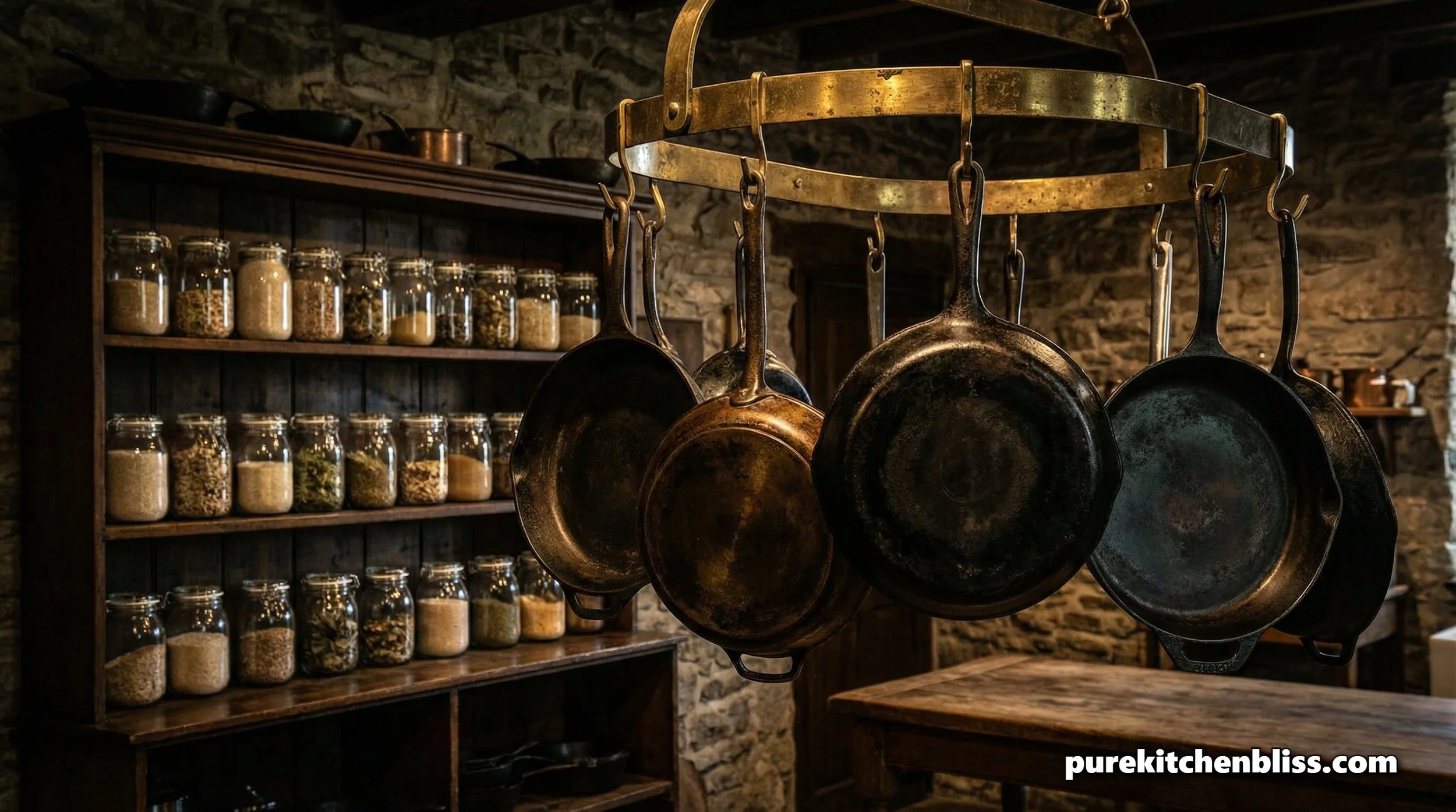
The Bliss Alternative: We advocate for Heirloom Materials. These are surfaces that improve with age rather than degrading, embodying the "Builder-Curator" philosophy of longevity.
Cast Iron & Carbon Steel: These are the ultimate "zero-waste" pans. They require no synthetic coatings, provide natural iron fortification, and can last for multiple generations.
Thermal Shock Protection: To maintain material integrity, never plunge a hot cast iron skillet into cold $H_{2}O$. This prevents warping and ensures the structural quality of your cookware remains intact for decades.
Surfaces and Storage: The End of the Plastic Era
The "Curator" mindset extends to how we store our leftovers. Plastic containers, even those labeled "BPA-Free," frequently contain replacement chemicals like BPS or BPF that are equally reactive when exposed to heat or acidic foods.
The Transition: Replace plastic with high-borosilicate glass or food-grade stainless steel. These materials are non-porous and do not absorb odors or leach chemicals.
The Seal: Instead of single-use plastic wrap, we utilize Beeswax Wraps or platinum-grade silicone stretch lids. This reduces the biological load on the environment while keeping food fresher through superior breathability.
The "Pure" Cleaning Protocol: Chemistry of the Sanctuary
Most commercial kitchen cleaners are designed for "nuclear" disinfection, utilizing harsh surfactants and synthetic fragrances that strip the finish off real wood and etch natural stone. Our protocol uses bio-available chemistry to clean without destruction.
The Foundation: Lemon, Thyme, and Vinegar
Nature has provided the perfect degreasers and antimicrobials. However, as a "Builder-Curator," you must understand the interaction between your cleaning agents and your kitchen's infrastructure.
For Wood and Steel: A solution of distilled water, a drop of liquid Castile soap, and Thyme essential oil (a powerful thymol-based disinfectant) provides a safe, pH-neutral clean.
The Stone Warning: Never use vinegar or lemon on marble, limestone, or soapstone. The acid will "etch" the calcium carbonate in the stone, leaving permanent dull spots. For stone, we stick to a dedicated pH-neutral stone wash or simple steam cleaning.
The "Bliss" All-Purpose Recipe (Non-Stone Surfaces)
2 Cups Distilled H₂O
1/2 Cup Organic White Vinegar (Keep away from stone!)
10 Drops Lemon Peel Oil (Natural degreaser)
5 Drops Eucalyptus Oil (Antibacterial properties)
Maintenance Rituals: The Sunday Night Countertop Reset
A sanctuary is not a static state; it is a practiced rhythm. Physical clutter in the kitchen leads to "mental clutter" and decision fatigue. To maintain the energy of the space, we implement the Sunday Night Countertop Reset.
1. The Visual Declutter
Clear everything that isn't used daily. In a "Bliss" kitchen, the goal is uninterrupted horizontal lines. When the countertops are clear, the mind feels a sense of spatial peace. Only the "curated" items—a high-end espresso machine or a bowl of organic fruit—should remain.
2. The Wood Feed
Once a month, during your reset, "feed" your wooden cutting boards and butcher blocks with a mixture of beeswax and food-grade mineral oil. This prevents drying and cracking, ensuring that bacteria cannot hide in microscopic fissures in the grain.
3. The Sink Sanctification
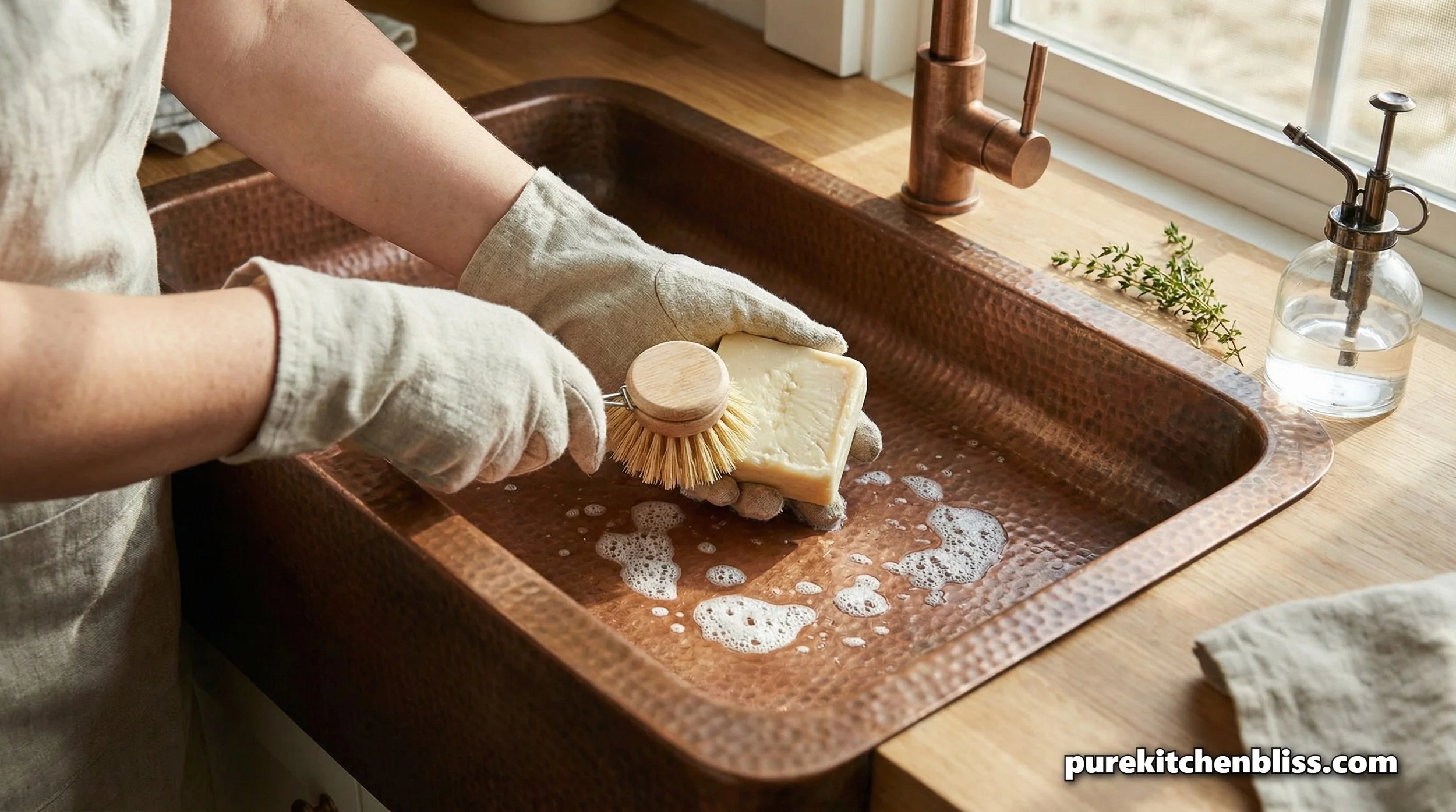
The sink is the "altar" of the kitchen. A deep scrub with baking soda and a lemon-half polish doesn't just clean the surface; it resets the scent-profile of the entire room, removing the lingering odors of the week’s meals and signaling a fresh start.
Conclusion: The Living Kitchen
Building a PureKitchenBliss environment is an act of resistance against the "disposable" age. By choosing solid wood over MDF, cast iron over Teflon, and biological cleaners over synthetic fragrances, you are doing more than just "decorating." You are curating a high-performance, low-toxin habitat that protects your family’s health and preserves the home’s infrastructure.
This is the Heart of the Sanctuary. It is where we nourish, where we gather, and where we practice the art of sustainable living.