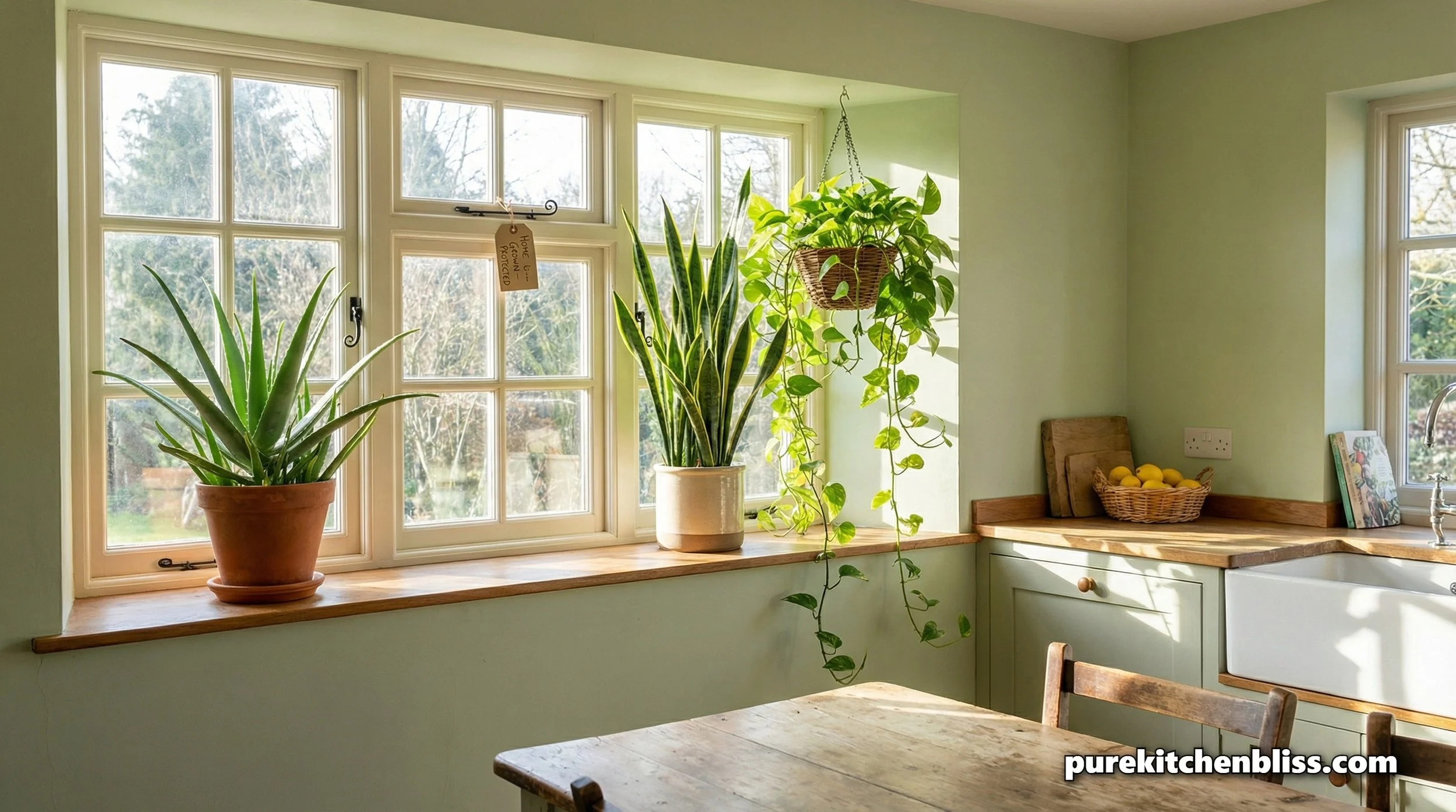
Aloe Vera Mastery: Your Kitchen’s Living First-Aid Station
Transparency Note: We independently select these products based on research and user reviews. If you buy something through our links, we may earn a commission.
In a kitchen defined by the "beautiful chaos" of family life, every item should serve more than one purpose. As a father of four, I’ve learned that the most valuable tools are the ones that are both beautiful and functional. The Aloe Vera plant is exactly that: a sleek, architectural succulent that doubles as your kitchen’s primary first-aid station.
Known for centuries as the "Burn Plant," Aloe Vera is a biological powerhouse. Having one on your windowsill isn't just a design choice, it's an infrastructure upgrade. When a minor burn happens during a busy dinner prep, you aren't reaching for a tube of synthetic gel filled with preservatives; you’re reaching for a raw, organic cooling agent grown right in your sanctuary.
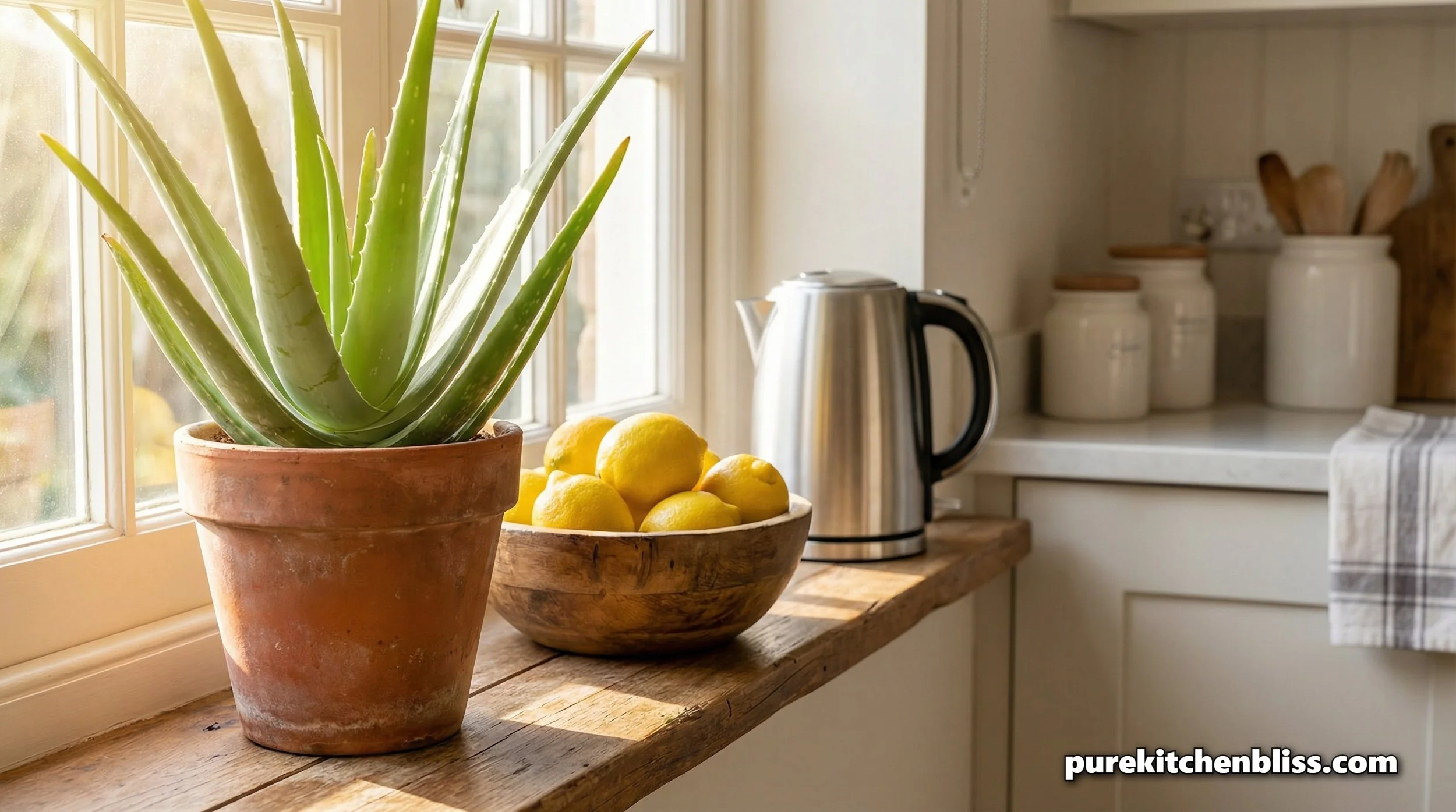
The Infrastructure of a "Burn Plant"
Aloe Vera is a succulent, which means its leaves are essentially storage tanks for H₂O. To get that thick, medicinal gel, the plant needs the right foundation.
Step 1: Secure the Right Specimen
Most grocery store plants are root-bound and stressed. To ensure your "first-aid station" is ready for use, you need a healthy, mature specimen with thick outer leaves.
GET THE SANCTUARY STARTER
Don't wait for a kitchen mishap to realize you need one. We’ve curated the best source for high-gel-yield, organic Aloe Vera plants delivered safely to your door.
Lighting: The Energy Source
Aloe Vera is a sun-worshiper. In the kitchen layout, placement is everything.
The South Window: This is the "Prime Real Estate." If your Aloe gets 6+ hours of bright, indirect sunlight, it will produce "pups" (baby plants) at an incredible rate.
The "Leggy" Look: If your Aloe leaves are thin and drooping, it’s starving for light. Move it to the brightest spot in the room to restore its structural integrity.
Hydration: The "Soak and Dry" Protocol
The quickest way to kill an Aloe is through "kindness" (overwatering).
The Builder’s Rule: Only water when the soil is 100% dry. I check the soil depth with a wooden skewer; if it comes out clean, it’s time to soak.
The Vessel: You must use a pot that breathes. Plastic traps moisture against the roots, leading to rot. I always recommend Terra Cotta for succulents.
THE DRAINAGE ESSENTIALS
A proper vessel is the "insurance policy" for your plant's life. We recommend this breathable stone-ware kit that includes the exact drainage infrastructure a succulent needs.
Curator’s Choice: Terra Cotta Planter with Drainage Tray & Organic Succulent Soil Bundle
Maintenance: Harvesting the Healing
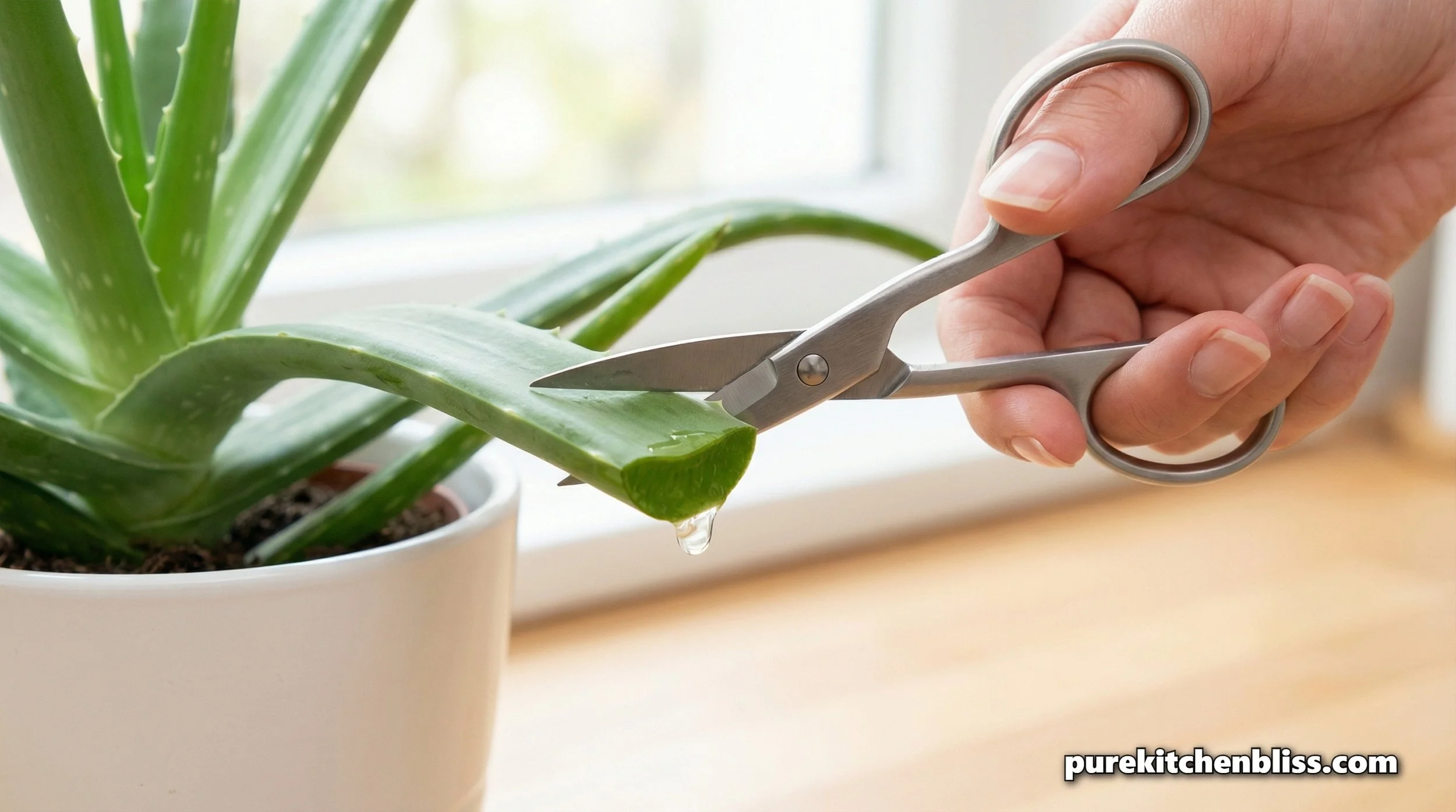
To use your Aloe as a first-aid tool, you must harvest correctly to protect the plant’s "bones."
Select the Oldest Leaf: Always cut from the very bottom of the plant.
The Clean Cut: Use a sharp, sterilized knife or shears.
The Application: Slice the leaf open and apply the gel directly to a minor burn or skin irritation. It provides an immediate cooling sensation and a protective biological barrier.
MAINTENANCE RITUAL: THE SUNDAY RESET
During your weekly reset, check your Aloe for "pups." Removing these baby plants keeps the mother plant strong and provides you with free gifts for friends.
Read More: The Sunday Night Countertop Reset: A Ritual for Kitchen Bliss
The Aloe Mastery Toolkit (Must-Haves)
To transform your windowsill into a high-performing first-aid station, equip yourself with these curator-approved essentials:
The Plant:[Extra-Large Organic Aloe Vera (High-Gel Yield)
The Tools: Precision Titanium Pruning Shears (For Clean Harvesting)
The Finishing Touch: Sustainable Bamboo Plant Stand (Elevate your greenery)
Conclusion: Beauty That Heals
The Aloe Vera is the ultimate "Builder-Curator" plant. It is resilient, structurally beautiful, and serves a vital function in the safety of your home. By adding one to your kitchen today, you are one step closer to a truly self-sustaining sanctuary.