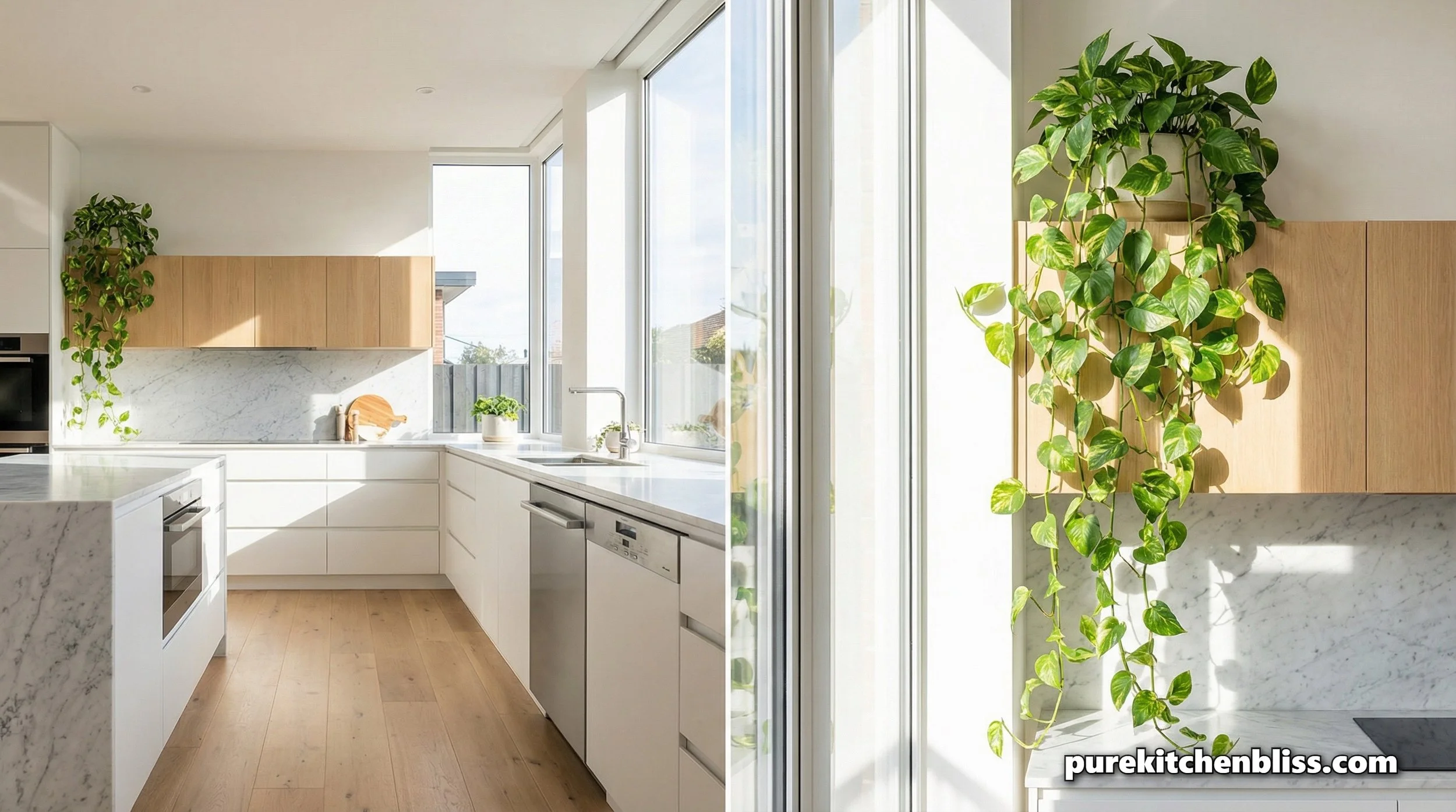
Golden Pothos Mastery: The Essential Kitchen Vine for Air Purity
If the Snake Plant is the "steel beam" of the kitchen sanctuary, the Golden Pothos (Epipremnum aureum) is the "living crown molding." As a Red Seal Carpenter, I’ve spent years finishing the tops of cabinets and installing high shelving. I’ve learned that the vertical space in a kitchen is often underutilized and prone to collecting stagnant heat and aerosolized grease.
The Golden Pothos is the perfect solution for these high-altitude zones. It is a resilient, fast-growing vine that softens the hard architectural lines of cabinetry while acting as a biological sponge for indoor pollutants. In a house with four kids, the Pothos is a favorite because it’s nearly impossible to kill, even when tucked away on a high shelf.
However, to get that lush, cascading "jungle" look without the vines becoming "leggy" or thin, you need a professional maintenance protocol. Here is how to master the Golden Pothos in the heart of your home.

Should You Eat Off the Kitchen Counter? The Professional Verdict
In the "Beautiful Chaos" of a busy home, the kitchen island is the ultimate multi-tool. It’s a homework station, a prep zone, and a buffet line. However, just because a surface is clean to the eye doesn't mean it’s safe for your food.
In my years of residential construction and home maintenance, I’ve seen what goes into (and onto) kitchen counters. Before you place that slice of pizza directly on the stone, we need to talk about Material Porosity, Chemical Residuals, and the "Bio-Load" of a family home.
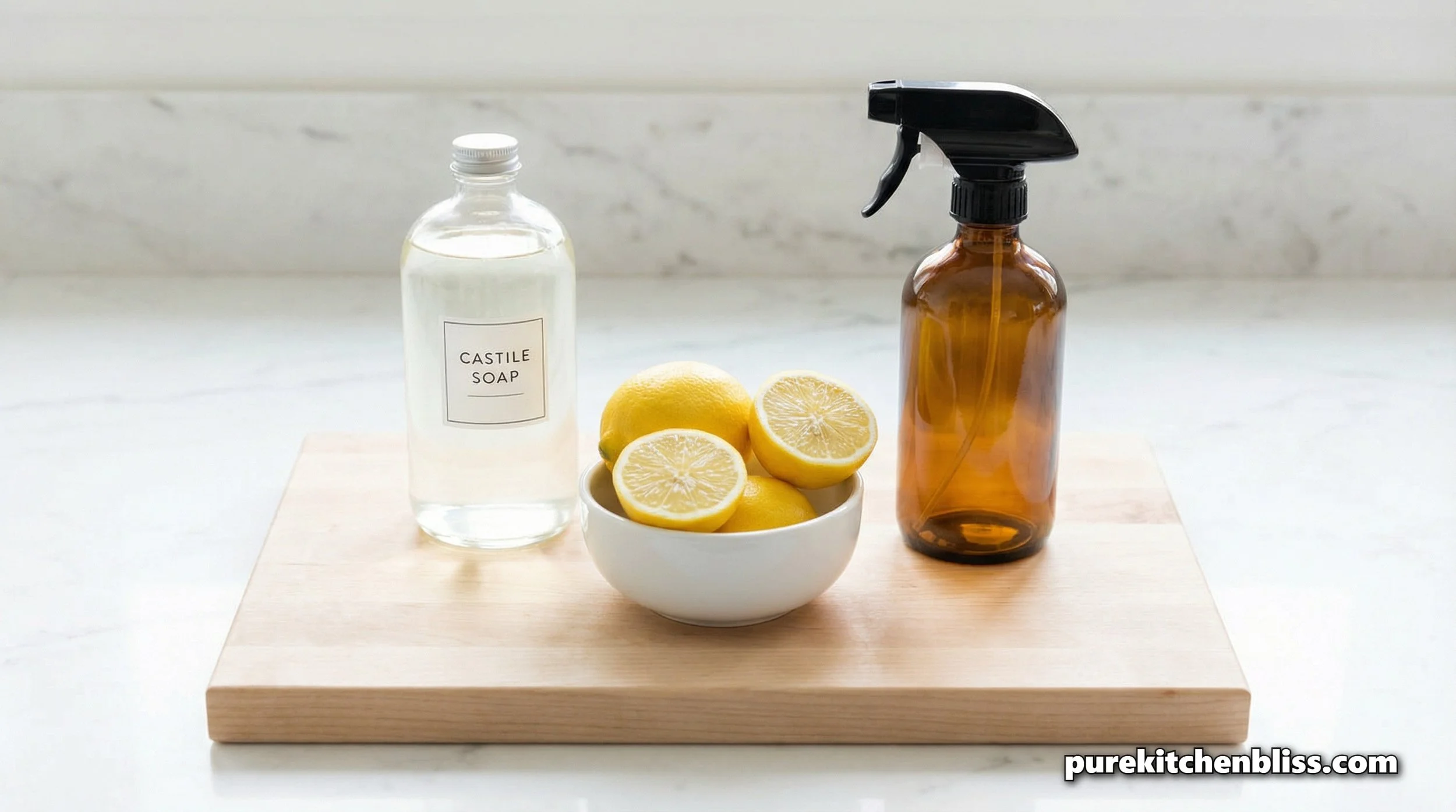
The Non-Toxic Kitchen Degreaser: How to Cut Through Grease Without Chemicals
If you’ve ever run your hand along the top of your kitchen cabinets or the back of your range hood and felt that sticky, "tacky" film, you’ve encountered aerosolized grease. In a busy kitchen, cooking oils become airborne, mix with household dust, and settle on every horizontal and vertical surface.
Most people reach for heavy-duty, "nuclear" degreasers to solve this. However, as a professional who understands the chemistry of home finishes, I avoid these. Harsh solvents can strip the topcoats off your cabinetry, etch your stone, and leave behind toxic residues that off-gas into your sanctuary.
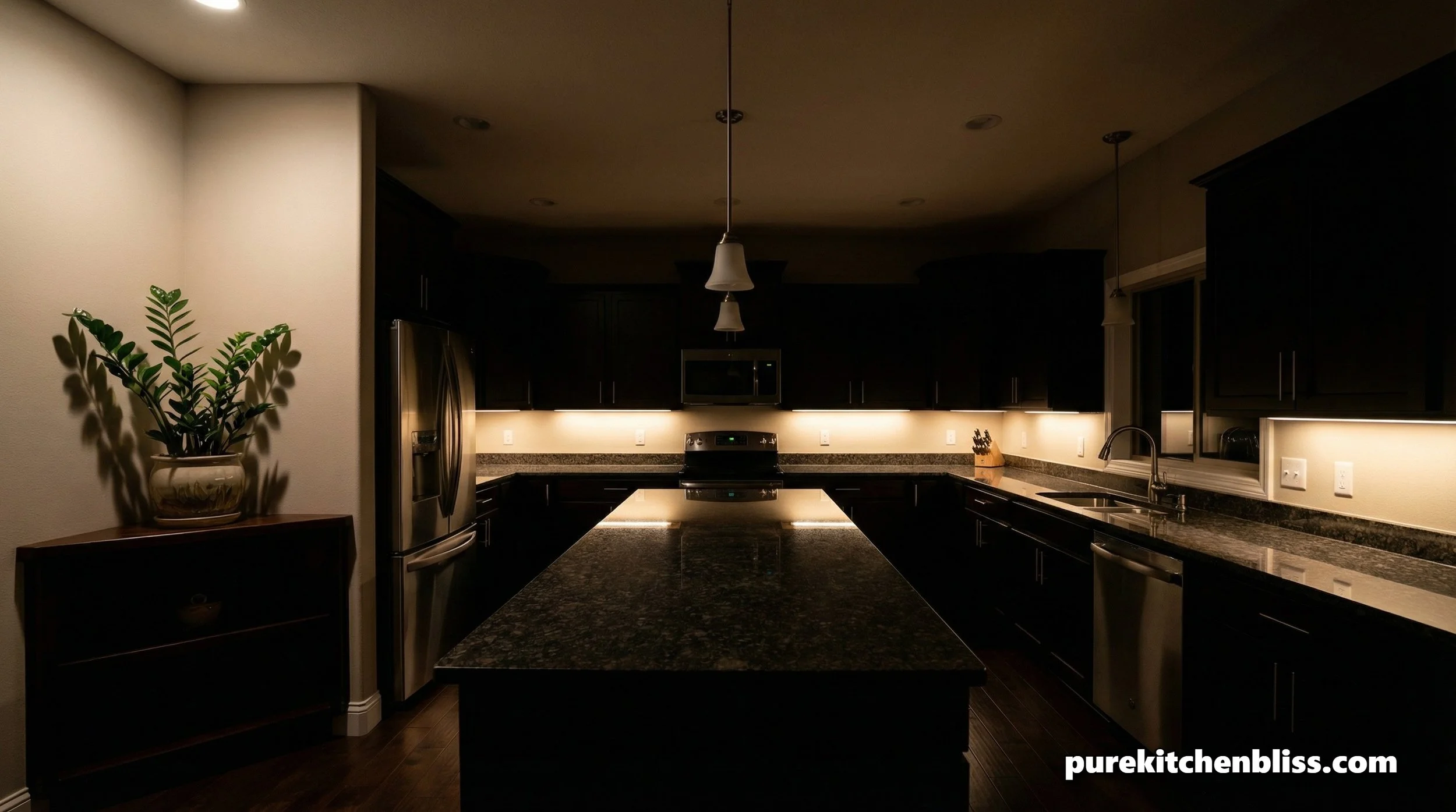
How Often Should You Clean Your Countertops? The Professional Maintenance Schedule
In my 20 years in the trades and as a father of four, I’ve realized that people generally fall into two camps when it comes to countertops: the "Compulsive Wipers" and the "Weekend Warriors." But to truly maintain a Sustainable Sanctuary, your cleaning frequency shouldn't be based on a whim, it should be based on material science and biological load.
If you clean too often with the wrong chemicals, you can etch your stone and strip your sealants. If you clean too rarely, you’re allowing your family’s meal-prep surfaces to become a breeding ground for bacteria and "Fatbergs" of aerosolized grease.
To maintain a "Pure Kitchen," you need a tiered maintenance schedule that addresses Biological Safety, Material Protection, and Visual Peace. Here is the professional breakdown of how often, and how, to treat your kitchen’s most important horizontal surfaces.
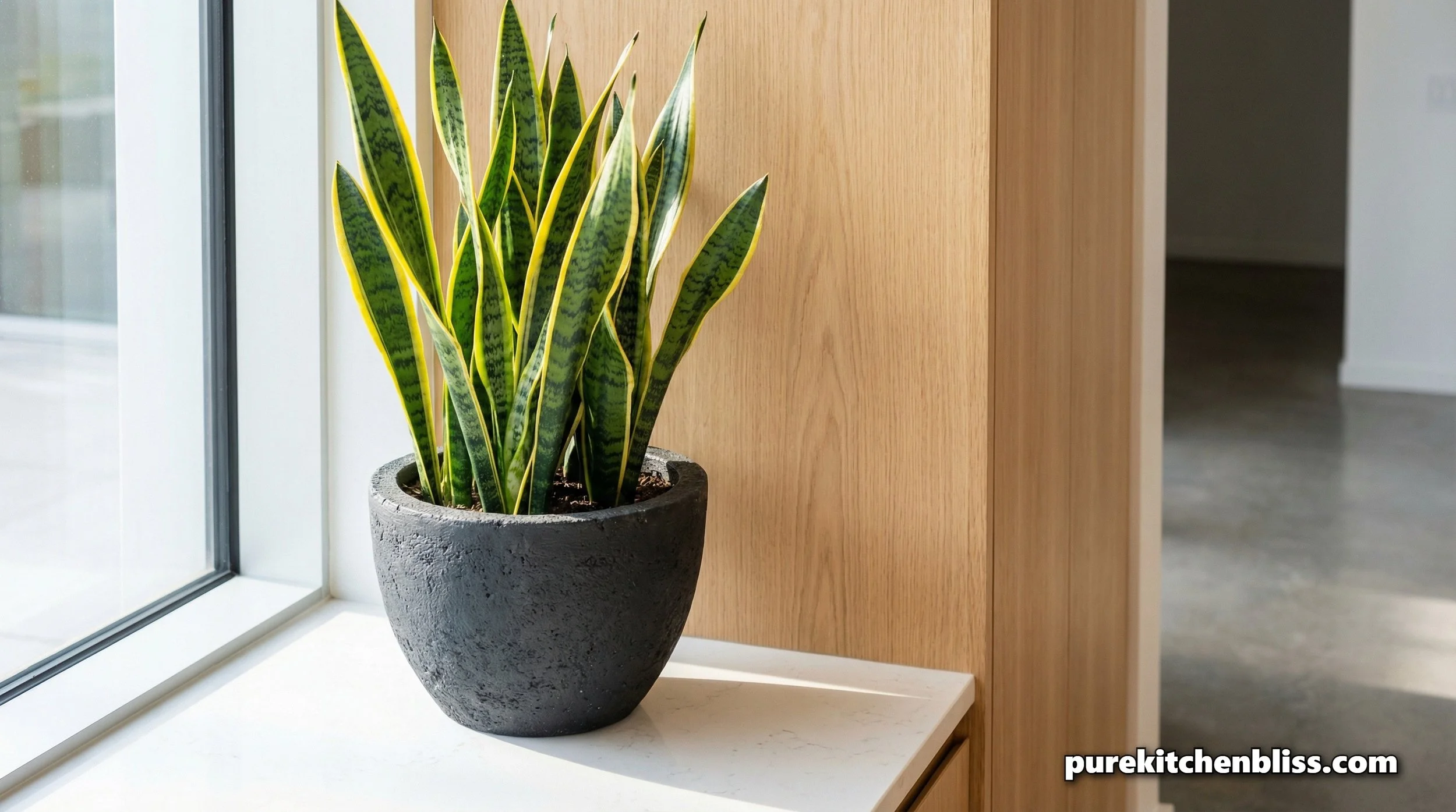
Snake Plant Mastery: The Best Unkillable Plant for the Busy Kitchen
In the world of residential construction, we look for materials that are "bulletproof", components that handle heat, neglect, and the test of time. In the botanical world, that role is filled by the Snake Plant (Dracaena trifasciata).1
As a professional who has spent decades in the trades and as a father of four, I’ve learned that a kitchen is the most demanding room in the house. It requires tools and lifeforms that can survive the "beautiful chaos." The Snake Plant is my top choice for a kitchen sanctuary; it is structurally sound, grows vertically to save valuable countertop real estate, and acts as a biological air-scrubber while the family sleeps.
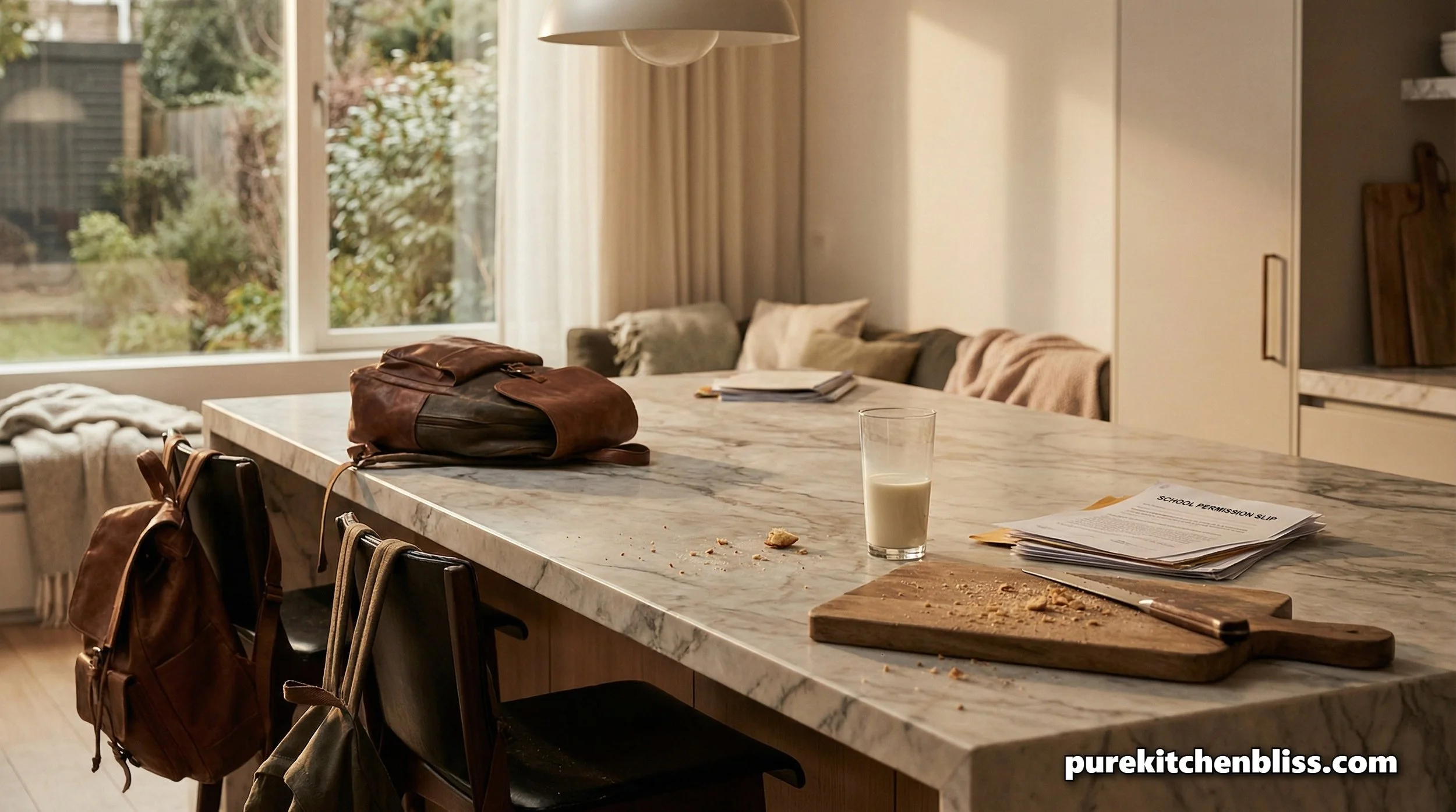
The Sunday Night Countertop Reset: A Ritual for Kitchen Bliss
In my 20 years as a Red Seal Carpenter, I’ve noticed a universal truth on every job site: the quality of the work is directly proportional to the cleanliness of the workspace. When a site is cluttered with offcuts, sawdust, and stray tools, mistakes happen. Measurements get missed, and safety is compromised.
Your kitchen is the high-performance job site of your home. It is the command center where we manage the "beautiful chaos" of a family with four daughters. Between school lunches, evening meal prep, and the inevitable mountain of mail, the week has a way of colonizing every horizontal surface you own.
The Sunday Night Countertop Reset isn't just a cleaning task; it’s a structural and psychological ritual. It is the act of reclaiming your sanctuary so that Monday morning begins with a sense of peace rather than a continuation of last week’s stress. Here is how we perform the reset to protect both our sanity and our home’s "bones."
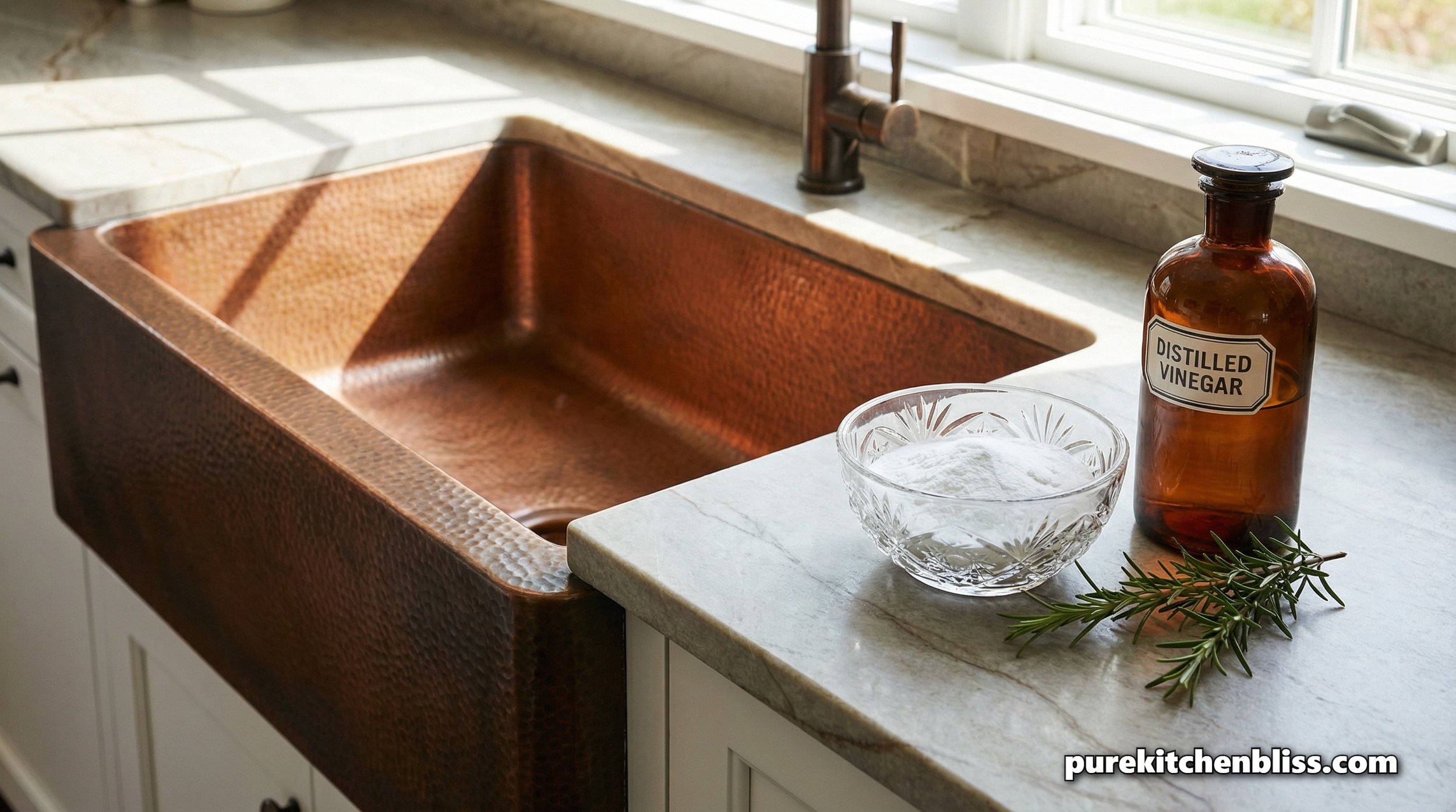
How to Unclog a Drain With Baking Soda and Vinegar: A Comprehensive Guide to Natural Drain Restoration
In the world of home maintenance, few things disrupt the "Bliss" of a kitchen faster than a standing pool of greywater in the sink. The instinct for most is to reach for a plastic bottle of caustic drain cleaner—a cocktail of sodium hydroxide and bleach.
But as a Carpenter, I have seen the "hidden" cost of those chemicals. They don't just eat through the clog; over time, they can corrode older pipes, damage the seals in your garbage disposal, and decimate the beneficial bacteria in your septic system.
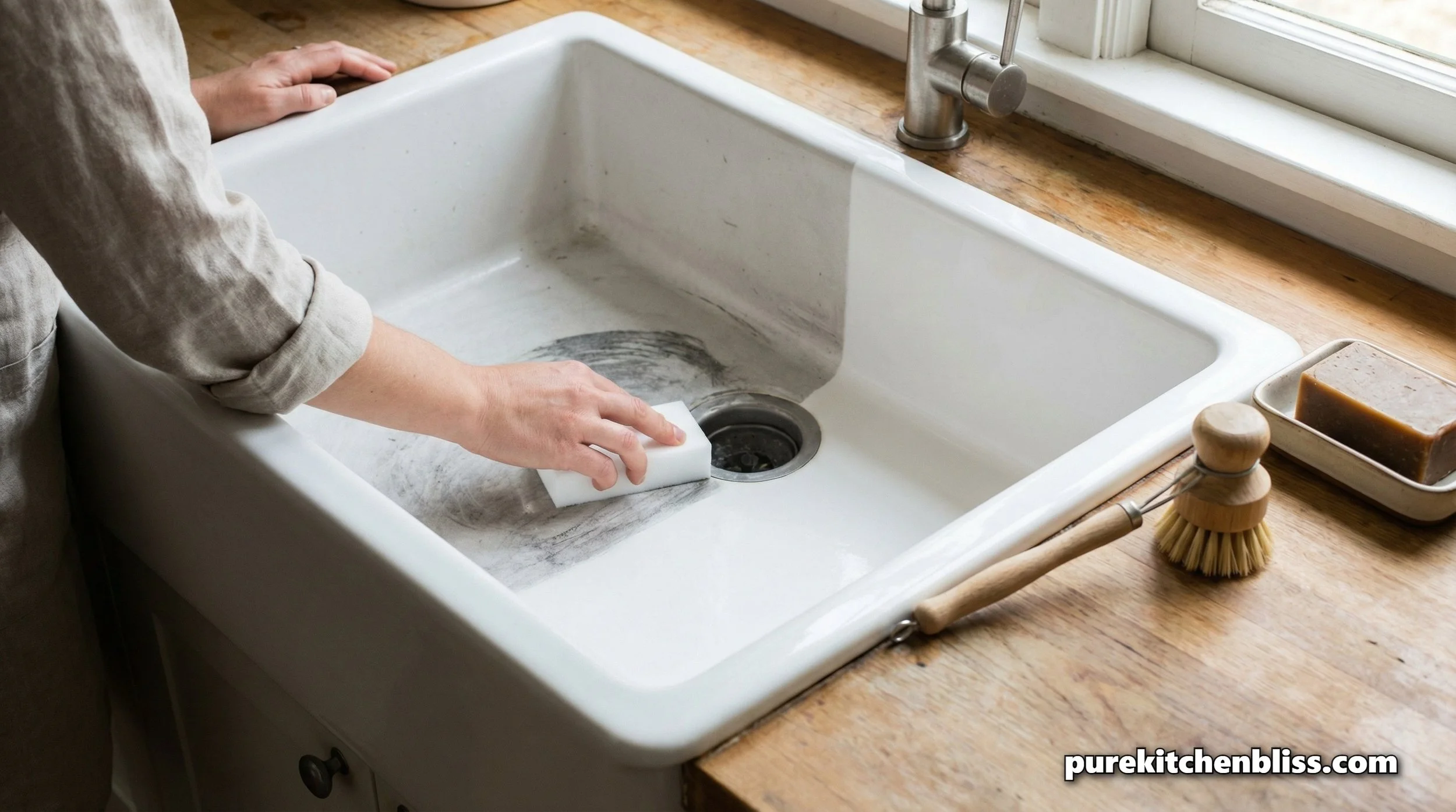
The Hidden Science of Magic Erasers: A Builder’s Guide to Kitchen Safety
In the world of "quick-fix" cleaning, the Magic Eraser is often hailed as a miracle. It’s a white foam block that, with just a little H₂O, seems to vanish stubborn grease, scuff marks on baseboards, and the mysterious stains on the bottom of a porcelain sink.
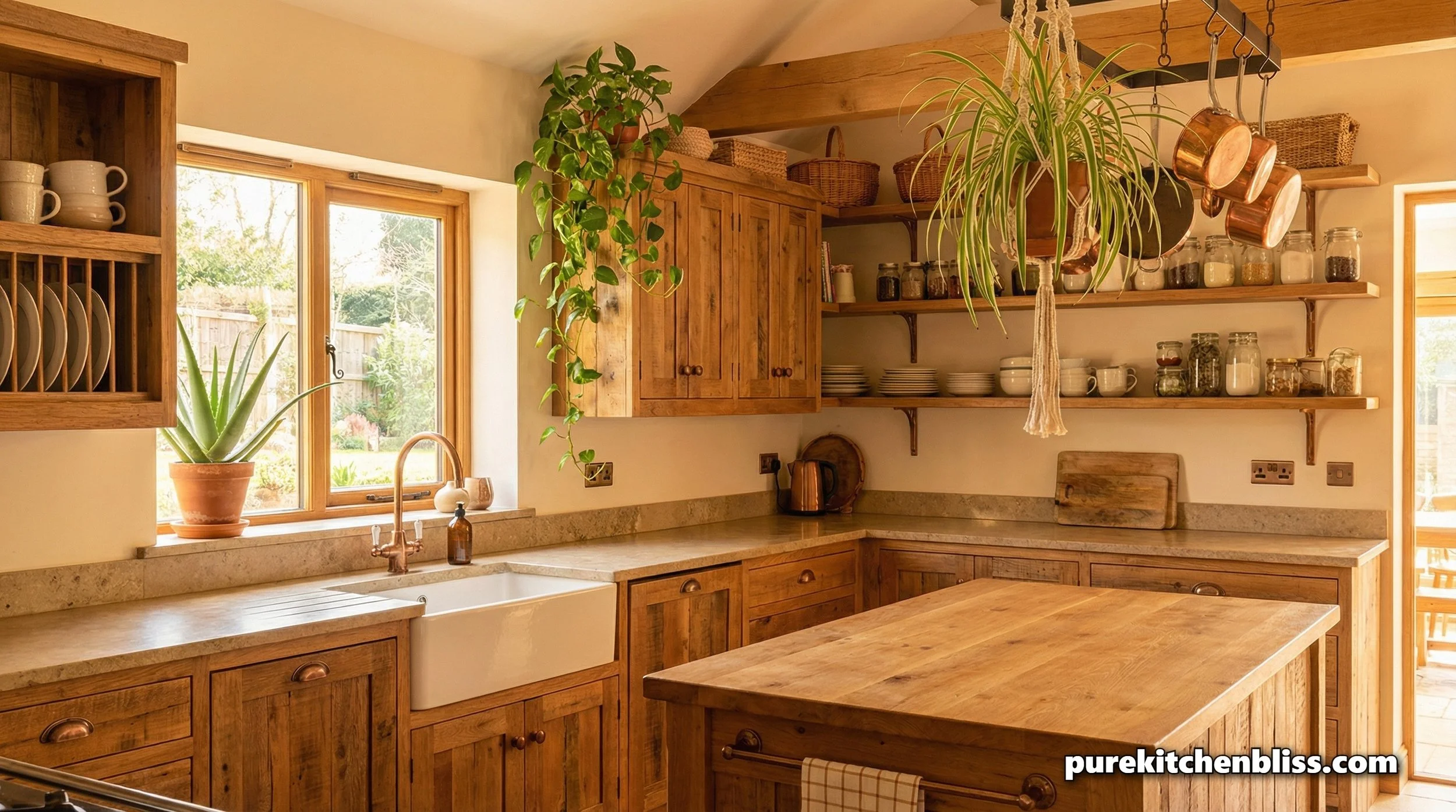
7 "Unkillable" Plants That Thrive in Your Busy Kitchen (And Purify the Air)
In the architecture of a home, the kitchen is the most demanding environment. It is a place of extreme temperature fluctuations, aerosolized grease, and varying humidity levels. Most interior design blogs suggest "decorating" with plants as if they were inanimate objects. But as a Carpenter and a father of four, I view plants as vital components of the home’s infrastructure.
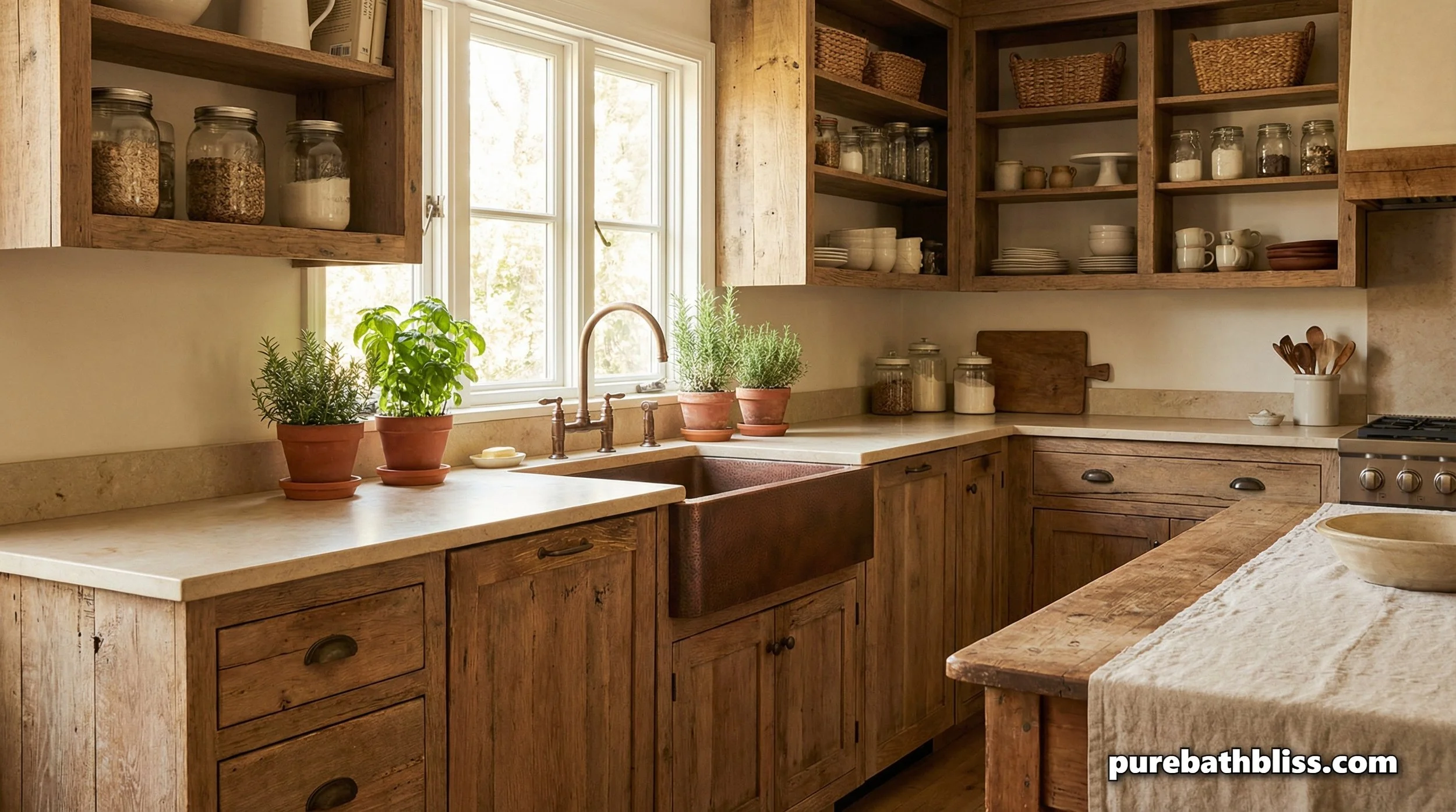
The Sanctuary Philosophy: Health as an Infrastructure
The modern kitchen is often described as the "heart of the home," but in the pursuit of convenience, we have allowed it to become a source of biological stress. From the off-gassing of composite cabinetry to the microplastics shedding from "non-stick" coatings, the room where we nourish our bodies is frequently the most chemically burdened space in the house.
At PureKitchenBliss, we view the kitchen through the lens of the Sustainable Sanctuary. It is not merely a workspace for meal preparation; it is a high-performance ecosystem. When you align the infrastructure of your kitchen with the principles of organic living, you create a ripple effect that touches your health, your home’s longevity, and the planet.