Is Your Kid’s Cookware Safe? A Parent’s Guide to Non-Toxic Plates & Pans
Just as parents have begun to question the synthetic dyes and fragrances in bath bombs, the modern kitchen is under a new level of scrutiny. In our pursuit of a high-performance sanctuary, we often prioritize the "shatterproof" and "non-stick" conveniences that make feeding children easier.
However, many of these "kid-friendly" materials rely on chemical coatings and composite resins that can leach into food when heated. To build a truly safe kitchen environment, you must understand the difference between a "convenient" material and a "biologically inert" one. When you are preparing a meal for a developing body, the material of the pan is just as critical as the quality of the ingredients.

1. The Non-Stick Debate: PFAS and "Forever Chemicals"
Traditional non-stick cookware is the primary concern for most parents. While the industry has largely phased out PFOA, many pans still utilize PTFE (the chemical base for Teflon), which belongs to the PFAS family, often called "forever chemicals."
The Risk: If a traditional non-stick pan is overheated (above 260°C), the coating can begin to break down, releasing microscopic particles and fumes. This is a significant concern in active cooking zones where high-heat searing is common.
The Safe Choice:100% Ceramic or Ceramic-Coated. Ceramic is derived from sand (silica) and is naturally PTFE-free. It does not off-gas at high temperatures, making it the "Builder" choice for family-safe pancakes and eggs.
2. The Melamine & Bamboo-Plastic Conflict
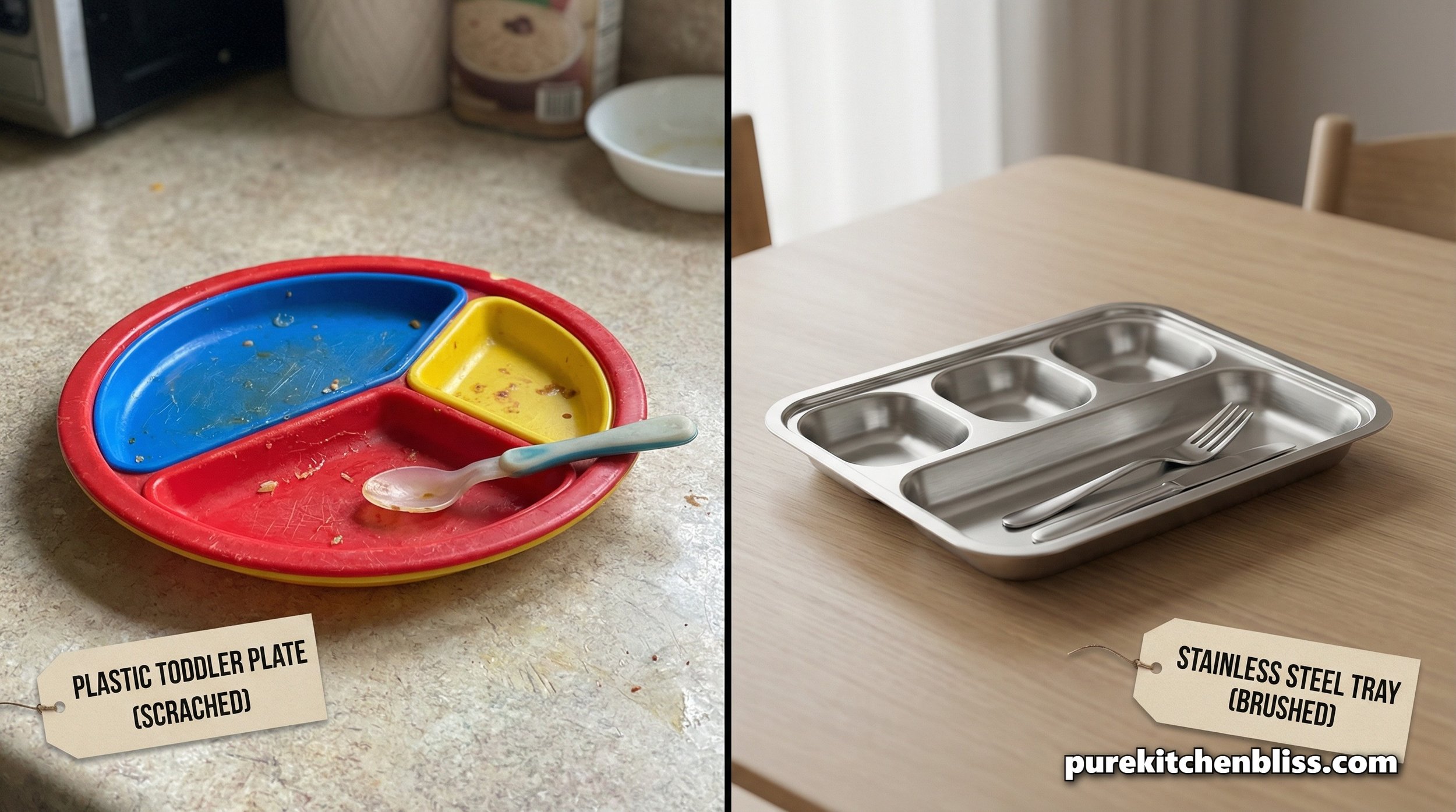
We often reach for melamine or "Bamboo-Fiber" plates for children because they don't break. However, these are often composite materials held together by urea-formaldehyde resins.
The Heat Trigger: Melamine is generally stable for cold snacks. However, when exposed to high-heat acidic foods (like hot tomato sauce) or the microwave, the formaldehyde can migrate into the food.
The High-Performance Alternative: 18/8 Stainless Steel or Food-Grade Silicone. These materials are inert, meaning they don't react with food or release chemicals when heated. Plus, they handle the high-heat sanitization of a deep-cleaned dishwasher without degrading.
3. Silicone: The "New" Infrastructure
Silicone is the "bath bomb" of the kitchen, it’s trendy, colorful, and everywhere. But not all silicone is created equal.
The "Filler" Test: High-quality "Platinum" silicone is chemically inert. However, cheaper brands often use plastic fillers to save on costs.
The Audit: Pinch and twist your silicone mats or plates. If "white" shows through the color, it contains plastic fillers and should not be used for high-heat baking in your clean oven. If the color remains solid, it is pure silicone and safe for your family.
4. Comparison: Child-Safe Material Matrix
| Material | Safety Status | Best Use Case |
|---|---|---|
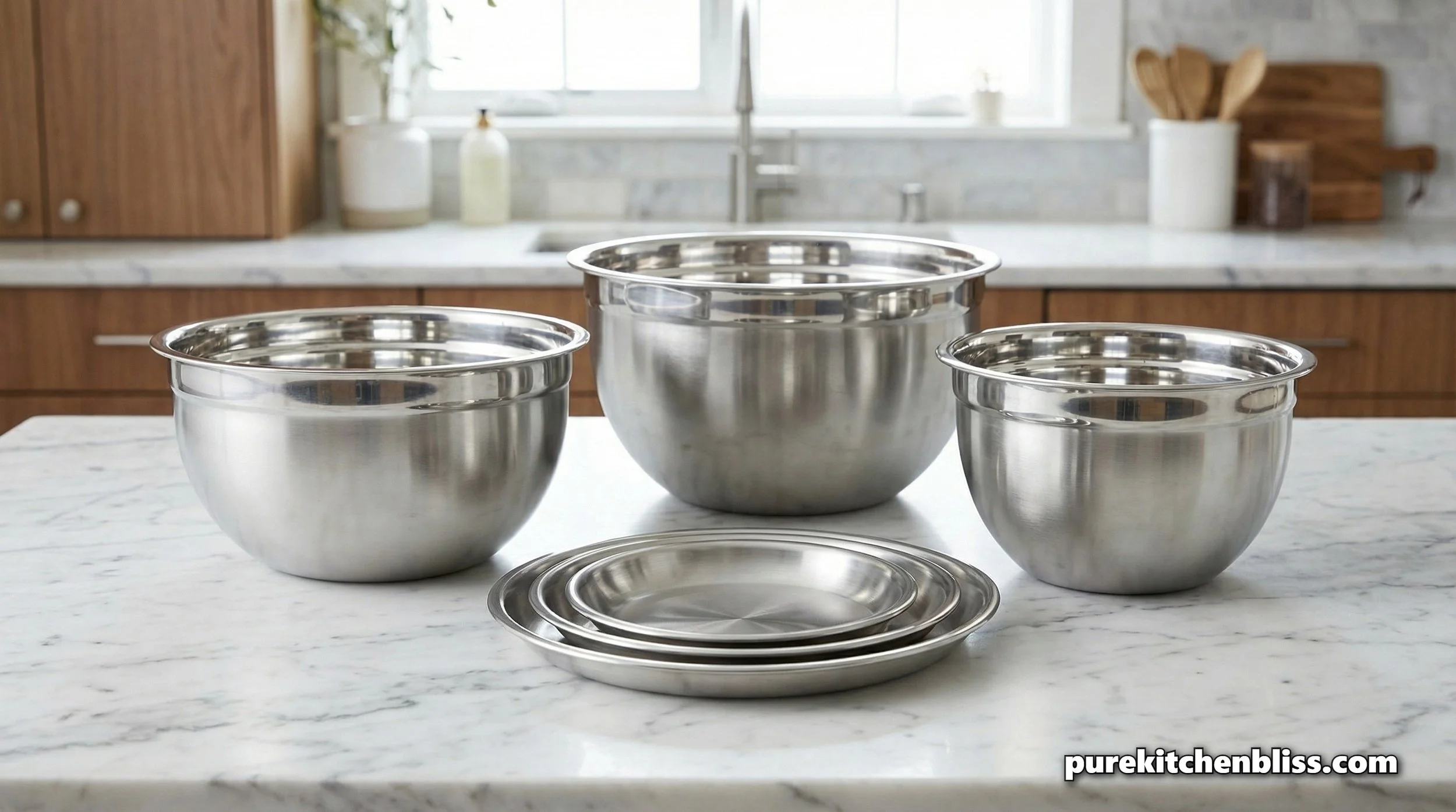
| Cast Iron / Stainless Steel | Gold Standard (Inert) | Daily stovetop cooking and serving. |
| Platinum Silicone | High (Safe) | Baking, suction plates, and spatulas. |
| Ceramic-Coated Non-Stick | High (PFAS-Free) | Low-to-medium heat frying (eggs/pancakes). |
| Melamine / Plastic | Low (Leaching Risk) | Cold snacks ONLY. Never microwave. |
5. Managing the "Scratched Pan" Protocol
If any of your non-stick pans, ceramic or traditional, show visible scratches, they should be retired immediately. Scratches aren't just an aesthetic issue; they represent a failure of the material's structural integrity, potentially allowing the underlying aluminum or chemicals to interact with your food. This is a key part of maintaining your culinary infrastructure.
6. Cleaning for Toxicity Prevention
How you clean these materials matters just as much as the materials themselves.
The Gentle Method: Use Castile soap for hand-washing wood and silicone. It is free of synthetic fragrances and sulfates that can leave a residue on porous surfaces.
Removing Mineral Buildup: If your child’s stainless steel water bottles develop white spots, don't use harsh abrasives. Use the citric acid trick to strip away the minerals and restore the protective chromium oxide layer of the steel.
Conclusion: Building a Safe Foundation A high-performance kitchen must be a safe one. By auditing your cookware and plates for chemical stability and heat resistance, you ensure your kitchen supports your family’s long-term wellness. Focus on inert materials like stainless steel, cast iron, and high-quality silicone to create a kitchen that is truly a sanctuary.
Next Up: Protect your kitchen from microscopic threats with our guide on Protecting Your Kitchen from Listeria.