What is Listeria and How to Protect Your Kitchen
Building on our discussion of food safety dates , it is time to address the most resilient "Invisible Infrastructure" threat in your home: Listeria monocytogenes. Unlike most foodborne pathogens, Listeria is a survivor. It doesn't just endure the cold; it thrives in it.
In 2026, we often assume our high-end appliances are a fortress against bacteria. However, Listeria is uniquely adapted to exploit the very environments we use to keep food fresh. Understanding its biology is the first step in building a truly defensive kitchen. If your goal is a high-performance sanctuary, you must manage the microscopic environment just as carefully as you manage the aesthetics.
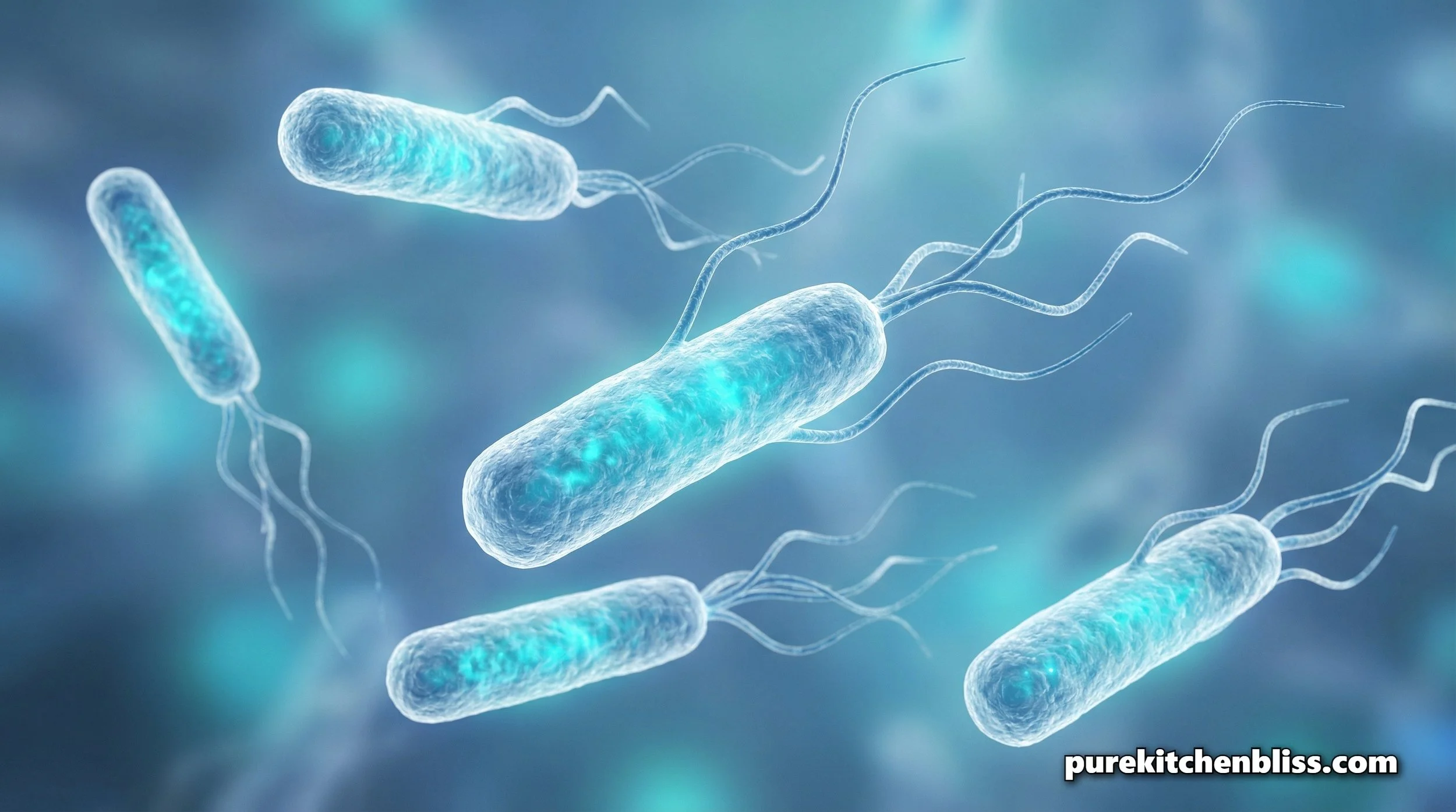
1. The Biology of a Survivor
Most bacteria, like Salmonella or E. coli, slow down or stop growing when they hit refrigerator temperatures (40°F or 4°C). Listeria is different. It is a "Psychrotroph," meaning it can grow and multiply at temperatures as low as 31°F.
Biofilm Production:Listeria creates a "biofilm,” a microscopic, sticky shield that allows it to cling to stainless steel, plastic, and rubber. Once this shield is formed, standard wiping isn't enough to dislodge it.
The "Invisible" Threat: It has no smell, no taste, and doesn't change the appearance of food. You can have a thriving colony in your high-functioning pantry or fridge without ever knowing it.
2. The High-Risk Zones: Where it Hides
To protect your kitchen, you must identify the "Gateways" where Listeria enters and the "Harborages" where it lives.
The Refrigerator Gasket: As we noted in our mold hot spots guide, the rubber seal of your fridge is a moisture trap. Listeria can live in the folds of these gaskets for months, cross-contaminating every item that passes through the door.
The Deli Drawer: Cold cuts, deli meats, and soft cheeses (like Brie or Feta) are the primary vehicles for Listeria. If a package leaks, the liquid can carry the bacteria into the crevices of the drawer.
The Sink and Drain: Because Listeria loves damp, cool environments, it often colonizes the anatomy of your kitchen sink. From there, it can be splashed back onto "ready-to-eat" foods during prep.
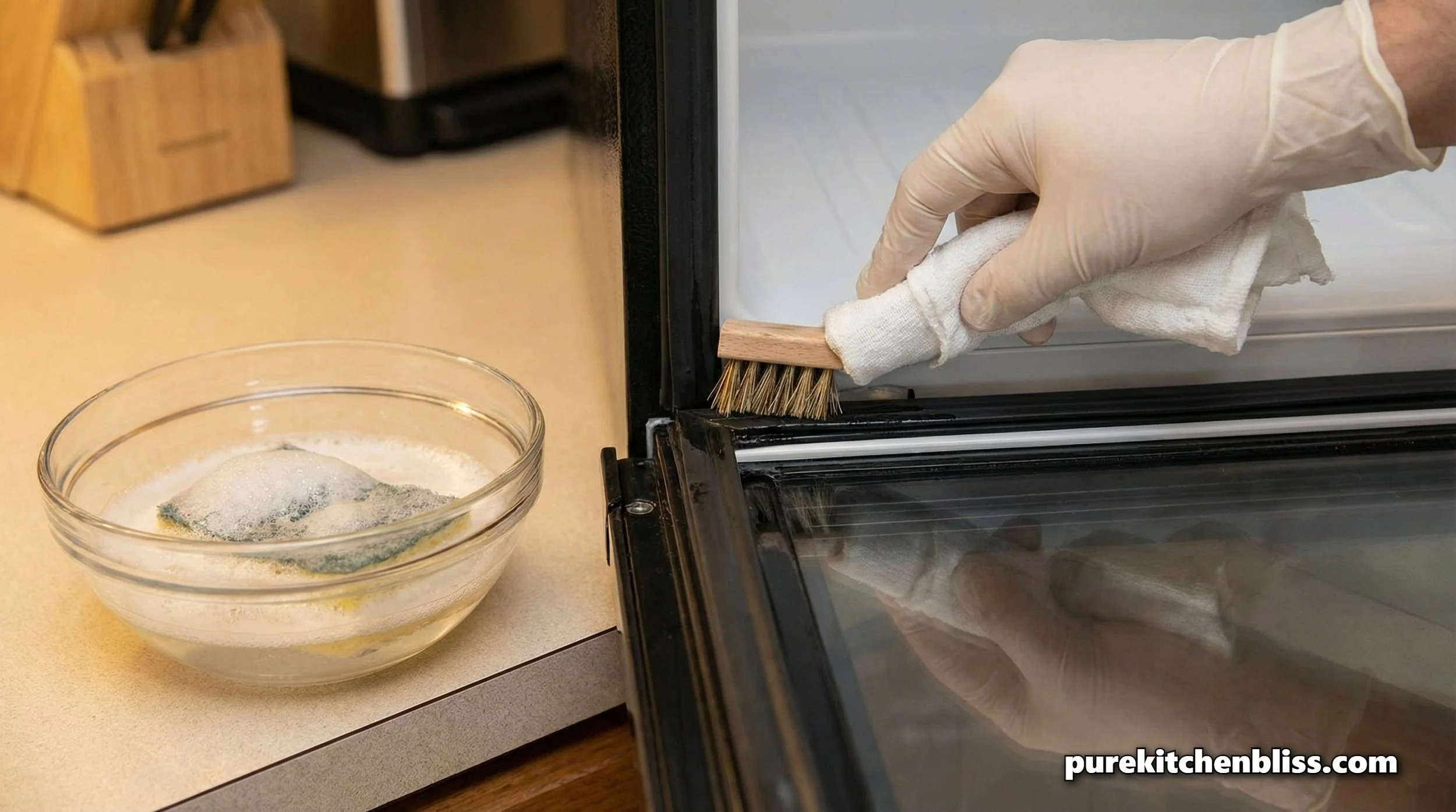
3. The 4-Step Protection Protocol
Protecting your kitchen requires a shift from "Cleaning for Appearance" to "Cleaning for Infrastructure Safety."
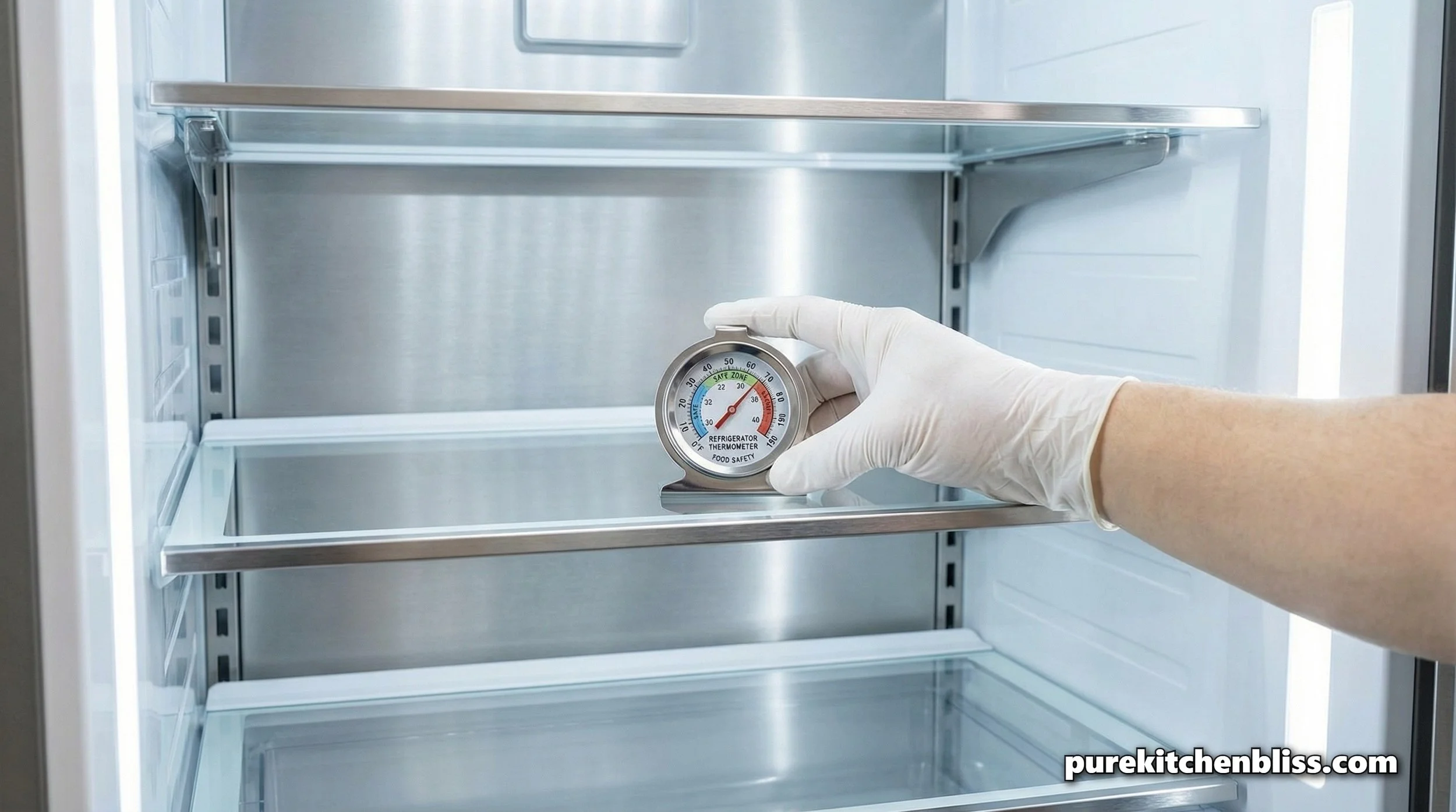
Step 1: Temperature Audit
Your refrigerator must be kept at 40°F (4°C) or below, and your freezer at 0°F (-18°C). Use an independent appliance thermometer to verify this; built-in digital displays can sometimes be inaccurate by a few degrees, a gap Listeria will gladly exploit.
Step 2: The "Weekly Wipe"
Avoid cross-contamination by cleaning your fridge shelves weekly. Use the versatile uses for Castile soap mixed with hot water. For deep disinfection, follow up with a diluted bleach solution (1 teaspoon per gallon of water) on non-porous surfaces.
Step 3: Moisture Management
Listeria cannot thrive without moisture.
Dry Your Produce: Never put wet leafy greens or berries directly into the crisper drawer.
The Range Hood Rule: Use your range hood every time you cook, even if just boiling water, to keep ambient humidity levels low.
4. Comparison: Listeria vs. Common Kitchen Pathogens
| Pathogen | Growth in Fridge? | Common Food Source | Best Defense |
|---|---|---|---|
| Listeria | Yes (Thrives) | Deli meats, soft cheese | Cold temps & sanitizing |
| Salmonella | No (Slows/Stops) | Poultry, eggs, sprouts | Cooking to 165°F |
| E. coli | No (Slows/Stops) | Beef, raw flour, leafy greens | Washing & thorough cooking |
Conclusion: Vigilance is Infrastructure Listeria is a biological challenge that requires a technical solution. By managing your refrigerator’s temperature, controlling moisture, and maintaining a strict "7-day" open-package rule, you create an environment where this resilient pathogen cannot take hold. A healthy kitchen is a managed kitchen.
Next Up: Learn the chemistry of home sanitation with our guide on 5 Versatile Uses for Castile Soap in the Kitchen.