The 3-Zone Spice Strategy: Protecting Your Volatile Infrastructure
In the pursuit of a high-performance sanctuary, we often spend thousands on professional appliances but neglect the very ingredients that provide flavor. Spices are essentially dried plant matter containing volatile oils. When those oils evaporate or oxidize, your $50 steak tastes like cardboard.
The traditional "Spice Rack" over the range is a functional nightmare. The heat from your induction cooktop and the steam that escapes your range hoodact as catalysts for degradation. To preserve your culinary investment, you must implement the 3-Zone Spice Strategy. This system separates your inventory based on frequency of use and environmental sensitivity.
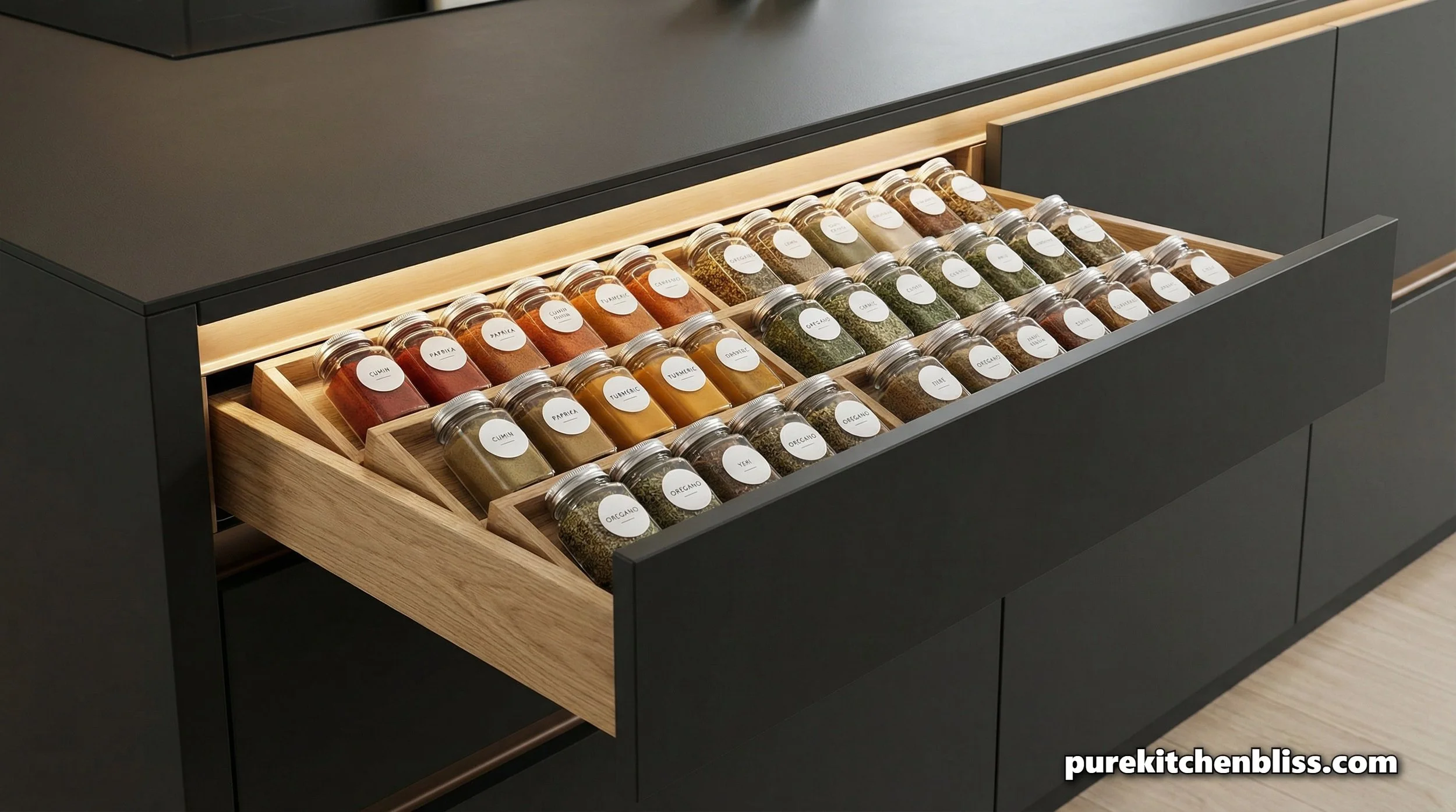
Zone 1: The "Active" Tier (Within Reach)
Zone 1 is for the 5–10 spices you use in almost every meal (e.g., Kosher salt, black peppercorns, garlic powder, red pepper flakes).
The Location: A dedicated drawer immediately to the left or right of your primary preparation zone.
The Infrastructure: Use a tiered drawer insert. This allows you to see the labels at a glance without digging. By keeping these in a drawer rather than on the counter, you protect them from the UV light that bleaches out flavor.
Pro Tip: If you use a salt cellar, ensure it has a lid. Open salt "pigs" are a magnet for the kitchen moisture and oils that circulate in the air.
Zone 2: The "Culinary" Tier (The Pantry Hub)
Zone 2 contains your specialty spices—those used 1–2 times a week (e.g., cumin, smoked paprika, dried oregano, cinnamon).
The Location: This belongs in your high-functioning pantry at eye level.
The Environment: This area should be the coolest and darkest part of your kitchen. If your pantry shares a wall with an oven or a refrigerator compressor, move your spices to the opposite wall.
Decanting: For Zone 2, decanting into airtight glass jars is mandatory. Original plastic spice shakers are rarely airtight, leading to the "clumping" caused by humidity.
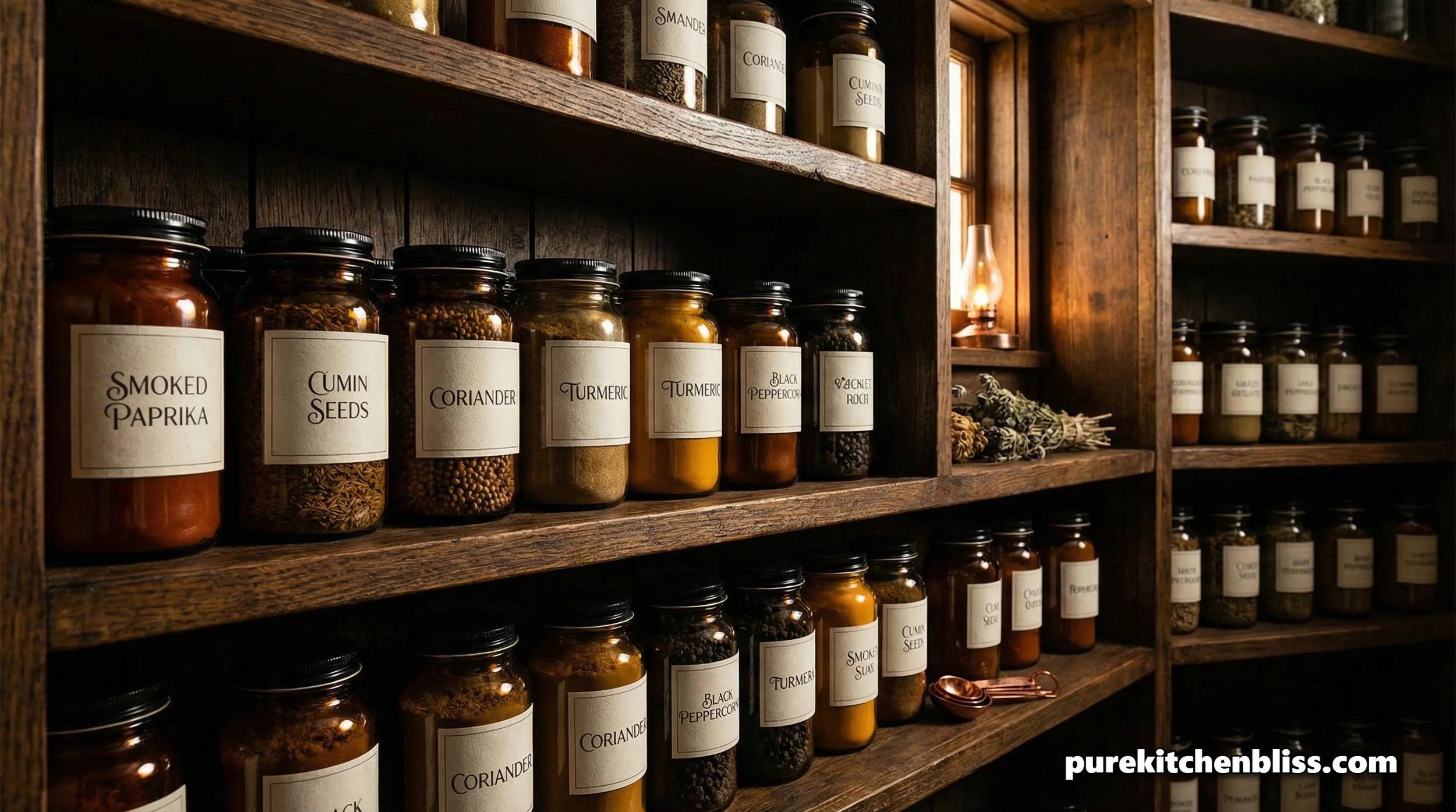
Zone 3: The "Back-Stock" Tier (Cold Storage)
Zone 3 is for bulk refills and "sensitive" spices like whole nutmeg, saffron, or high-oil seeds (poppy, sesame).
The Location: The refrigerator or the deep back of a cool lower cabinet.
The Science: High-oil spices can go rancid, similar to how whole-grain flours degrade past their best-before dates. Keeping them in a cold, dark environment slows the oxidation of these fats significantly.
4. Comparison: Spice Storage Environments
| Storage Location | Flavor Longevity | Primary Risk |
|---|---|---|
| Above the Range | 3-6 Months | Extreme Heat & Steam |
| Open Countertop Rack | 6-9 Months | UV Light Exposure |
| Dark Drawer/Pantry | 1-2 Years | Minimal (Optimal) |
| Refrigerator (Bulk) | 2+ Years | Moisture (if not sealed) |
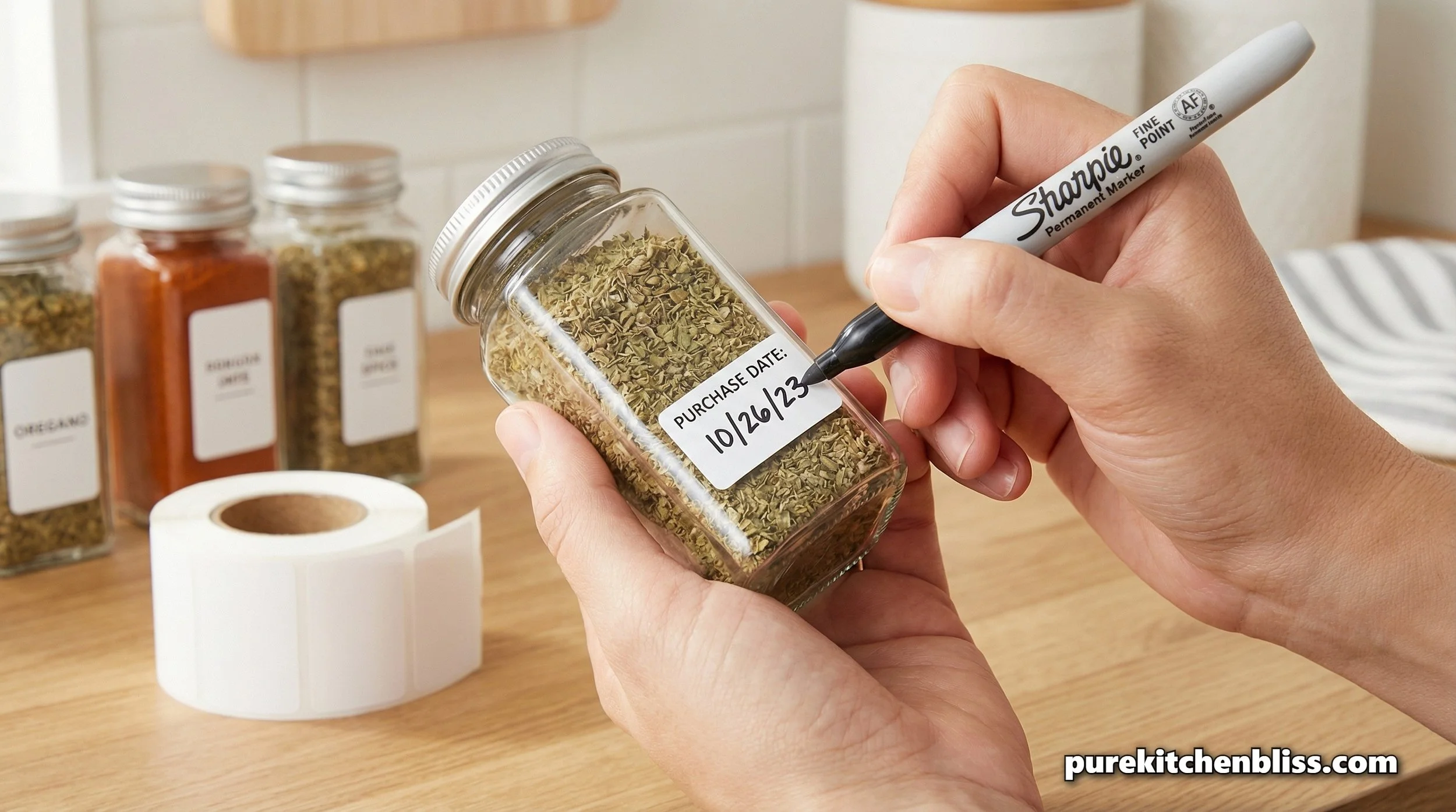
5. Maintenance: The "Sniff and Bloom" Audit
Because spices don't "expire" in a way that causes illness, they are often kept for years past their prime. To maintain your culinary infrastructure, perform a bi-annual audit:
The Sniff Test: If you open the jar and have to put your nose inside to smell anything, the volatile oils are gone. Discard it.
The "Bloom" Test: If a spice is borderline, try "blooming" it in a warm pan with a little oil. If the aroma doesn't fill the room within 30 seconds, the spice is "dead."
The Date Stamp: Always use the best-before dates logic. Write the "Opened On" date on the bottom of the jar. Most ground spices are at their peak for only 6 to 12 months.
6. Cleaning the Infrastructure
Spice drawers and cabinets are prone to "Dust-Grease" buildup. When you do your quarterly audit, wipe down the tiered inserts and the outside of the jars with a solution of warm water and Castile soap. This prevents the jars from becoming "sticky," which can lead to cross-contamination during active cooking.
Conclusion: Respect the Flavor Your spices are the "Software" of your kitchen; don't let bad "Hardware" storage ruin them. By implementing the 3-Zone Strategy, you ensure that every pinch of salt and dash of paprika performs at its peak. It is a simple infrastructure shift that yields immediate results on the plate.
Next Up: Pair your organized spices with a professional-grade layout in our guide to Designing the 5 Culinary Zones.