In the pursuit of a high-performance sanctuary, we often focus on the visual, the stone, the wood, and the gold hardware. But the true foundation of a healthy kitchen is its "Invisible Infrastructure," specifically its ability to manage moisture. Mold is not just a sign of a "dirty" kitchen; it is a biological response to trapped humidity and stagnant air.
By 2026, kitchen design has pivoted toward better ventilation and non-porous materials, but even the most modern space has hidden vulnerabilities. If you can smell a faint, musty odor but can't see the source, you likely have a "Micro-Climate" issue. Here is where mold hides in your kitchen and exactly how to dismantle its habitat.
1. The Undersink "Micro-Climate"
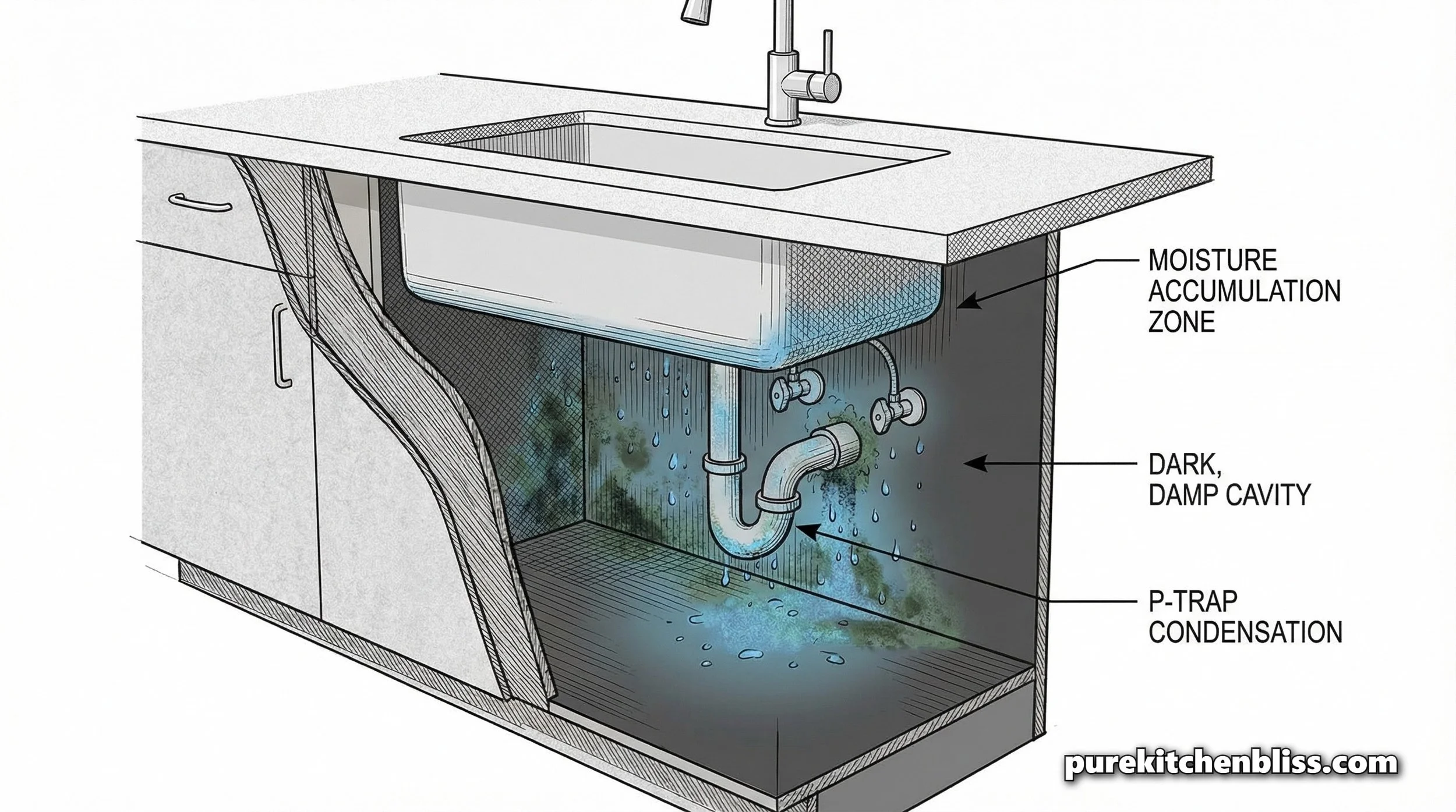
The cabinet beneath your sink is the #1 mold hot spot in the home. It is dark, unventilated, and subject to "Micro-Leaks", tiny drips from the faucet or the P-trap that don't flood the cabinet but keep the wood floor consistently damp.
The Fix: Empty the cabinet and inspect the back wall for "bubbling" paint or black speckles.
The Infrastructure Upgrade: Install a waterproof silicone undersink mat with a "lip." This ensures that any future drip is caught and evaporated rather than soaking into the cabinet’s particle board or plywood.
Cleaning: Use a high-concentration vinegar solution (80% vinegar, 20% water) to kill the spores at the root. Unlike bleach, which only whitens the surface, vinegar penetrates porous surfaces to kill the mold membrane.
2. The Refrigerator Drip Pan and Gaskets
We often focus on food storage rules we discussed, but the appliance itself can be the source of the spores.
The Gaskets: The rubber seal around your fridge door traps moisture and organic food particles every time you close the door. This creates a perfect "Petri dish." Wipe these weekly using the versatile uses for Castile soapto prevent the rubber from degrading and mold from taking hold.
The Drip Pan: Most modern refrigerators have a tray at the bottom (near the compressor) to catch condensation. If the dust levels are high, this water won't evaporate fast enough, leading to a stagnant pool of slime. Vacuum your fridge coils and check this pan every six months.
3. The Dishwasher Air Gap and Seal
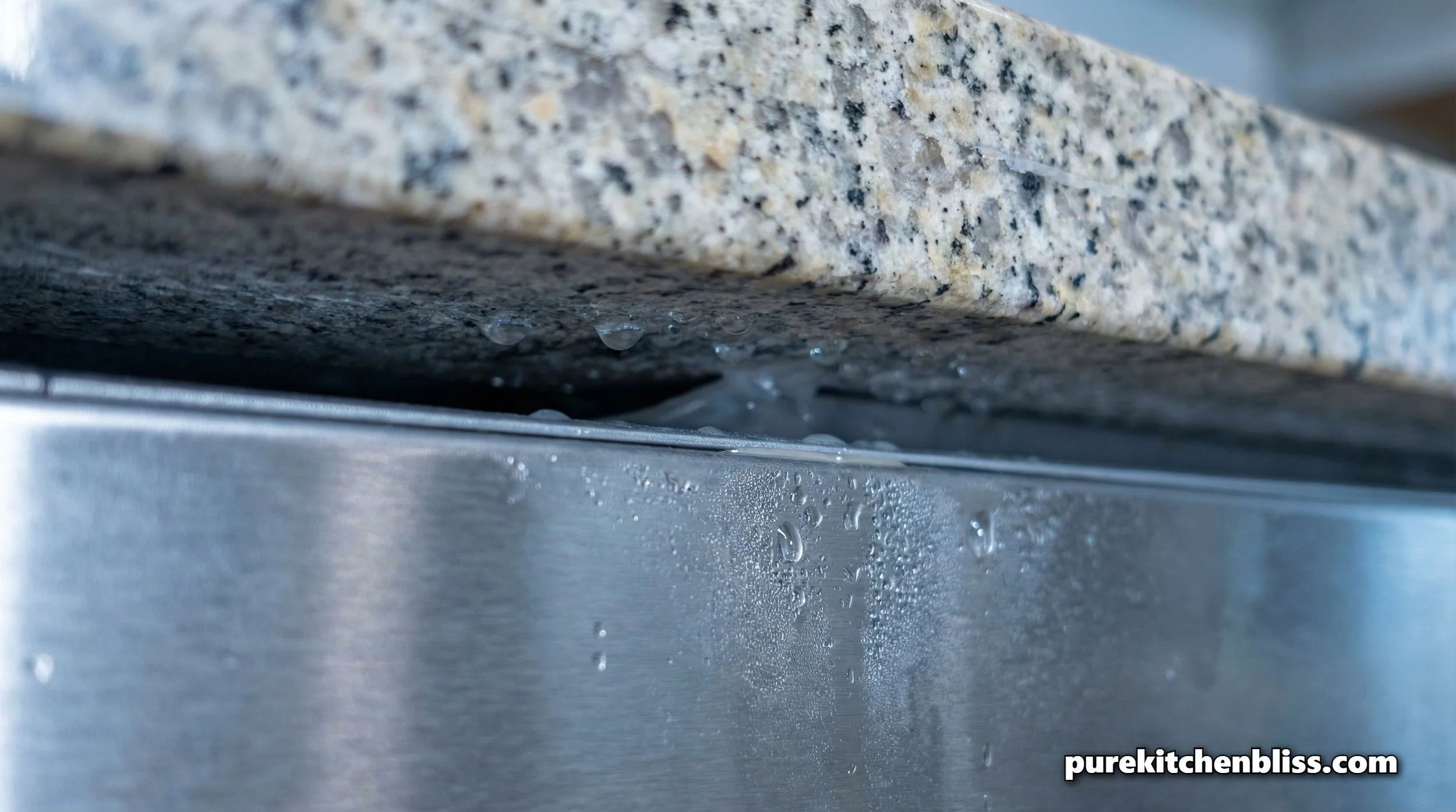
Your dishwasher is a steam machine. If the door seal is failing or if the "Air Gap" (that little silver cylinder on your sink) is clogged, moisture is being pushed into your cabinetry.
The "Invisible" Spot: Check the underside of the countertop directly above the dishwasher. In many kitchens, this area is unsealed wood or laminate. Constant steam will cause the underside to rot and mold long before you see it on the top.
The Fix: After a cycle, leave the dishwasher door cracked for 15 minutes to allow the steam to escape and dissipate, rather than letting it sit and condense on the machine's ceiling.
4. The "Secondary" Larder (Root Vegetable Storage)
If you are utilizing a working larder, you are likely storing onions, potatoes, and squash in drawers or baskets. These vegetables "breathe," releasing moisture and ethylene gas.
The Problem: If stored in a closed cabinet without airflow, the relative humidity inside that drawer can spike to over 70%, triggering a mold bloom that can jump from the vegetables to the cabinet itself.
The Fix: Ensure all root vegetable storage is ventilated. If your cabinets are solid wood, consider replacing the center panel of a drawer with a wire mesh or "reeded" insert to allow the "infrastructure" to breathe.
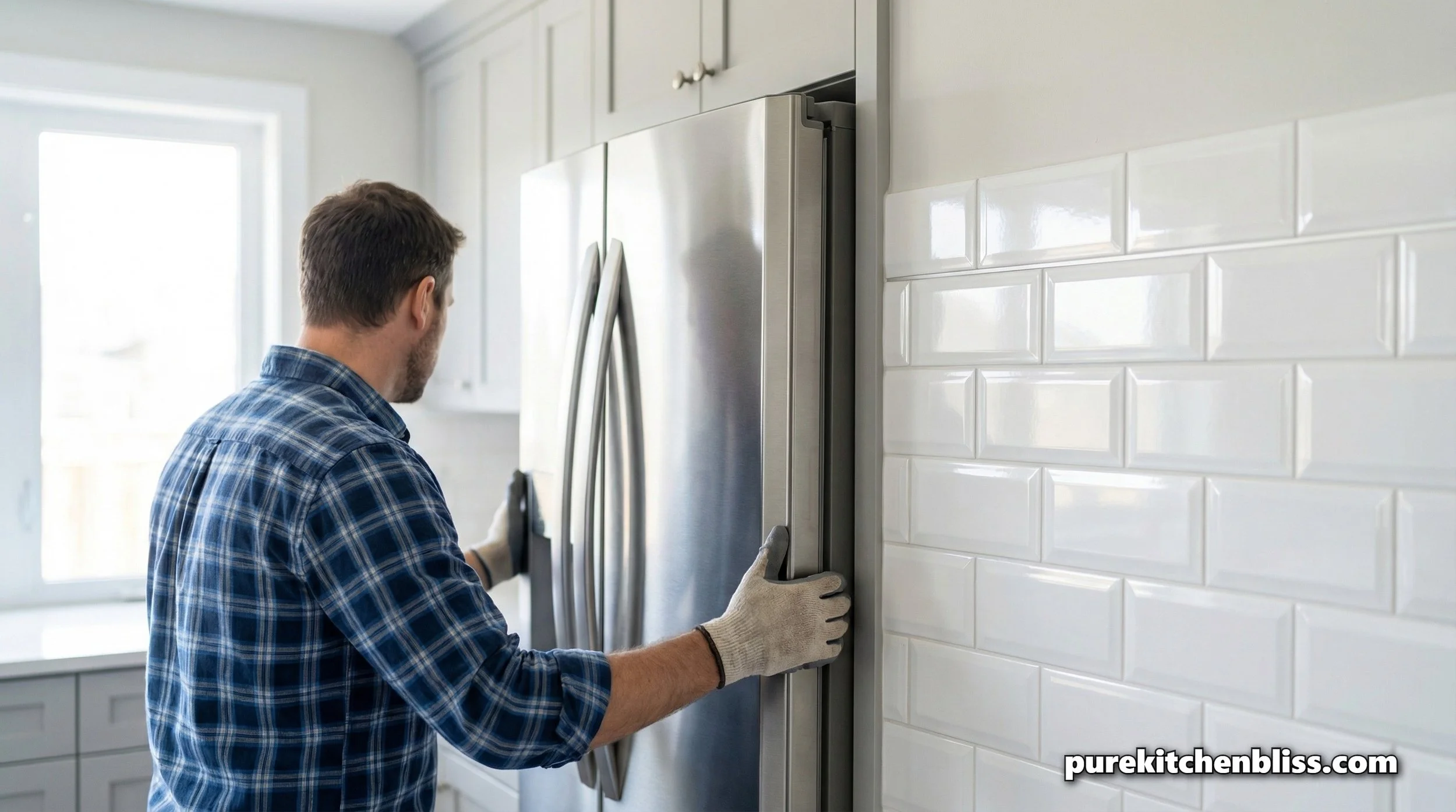
5. Behind the Refrigerator and Range
Dust is essentially organic "food" for mold. When dust combines with the grease-heavy steam that escapes even a high-functioning range hood, it creates a sticky film on the wall behind your appliances.
The Danger: Because these areas are warm (due to the appliance motors), mold can grow rapidly in the dark.
The Fix: Once a year, pull your heavy appliances out. Clean the walls with a degreaser and ensure that your baseboards aren't showing signs of water damage from a slow-leaking water line (for the fridge ice maker).
Summary: The Mold Prevention Protocol
| Hot Spot | The Cause | The Professional Fix |
|---|---|---|
| Undersink | P-trap leaks / lack of air | Silicone mat + Vinegar soak |
| Fridge Gaskets | Condensation + Food bits | Weekly Castile soap wipe |
| Dishwasher | Trapped steam | Crack door after cycle / Seal counter |
| Pantry Drawers | Vegetable "breathing" | Add mesh ventilation |
| Behind Appliances | Grease-dust + Motor heat | Annual "Pull and Clean" |
Conclusion: A Healthier Infrastructure
Mold prevention is about breaking the cycle of moisture and darkness. By treating your kitchen as a high-performance machine that requires airflow and regular "audits," you protect both your home’s value and your family’s health. Don't wait until you see the black spots, address the "Micro-Climates" today.
Want to refine your kitchen infrastructure?
Control the air: How to deep clean your range hood
Optimize your storage: food storage rules we discussed
Modernize your surfaces: Best flooring for modern kitchens