The Best Cutting Boards for Your Kitchen: Wood vs. Plastic
Whether you’re a weekend home cook or someone who spends every night experimenting with new recipes, your cutting board is the most used tool in your kitchen. It is the foundation for almost every meal, yet it is often the most overlooked. Most of us pick up whatever is cheap at the store or looks good on the counter, but the material of your board affects everything from how often you need to sharpen your knives to how safe your food is to eat.
For years, there has been a heated debate: is wood or plastic better for your kitchen? If you’ve been told that plastic is "cleaner" because you can throw it in the dishwasher, or that wood is a "bacteria trap," you might be surprised by what the actual research says.
1. The Science of Wood: Why It's Safer Than You Think
It seems counterintuitive to think that a porous material like wood could be more hygienic than non-porous plastic. However, studies (most notably from the University of California, Davis) have shown that wood has a remarkable ability to fight bacteria.
When bacteria like Salmonella or E. coli land on a wooden board, they are actually pulled down into the grain of the wood. Once inside the wood fibers, the bacteria are "trapped" and eventually die off because they lack the moisture and oxygen needed to survive. This natural antimicrobial property means that even if a wooden board has some light surface scratches, it is still doing the work to keep your food safe.
End-Grain vs. Edge-Grain
If you decide to go with wood, you’ll notice two main types:
Edge-Grain: These are made from long strips of wood glued together. They are more affordable and common, but your knife cuts across the wood fibers, which can show scars more easily.
End-Grain: Think of this like a checkerboard. The wood fibers stand vertically. When your knife hits an end-grain board, the fibers "spread" to let the blade in and then close back up when you pull the knife away. This "self-healing" property is why end-grain boards are the gold standard for keeping knives sharp.
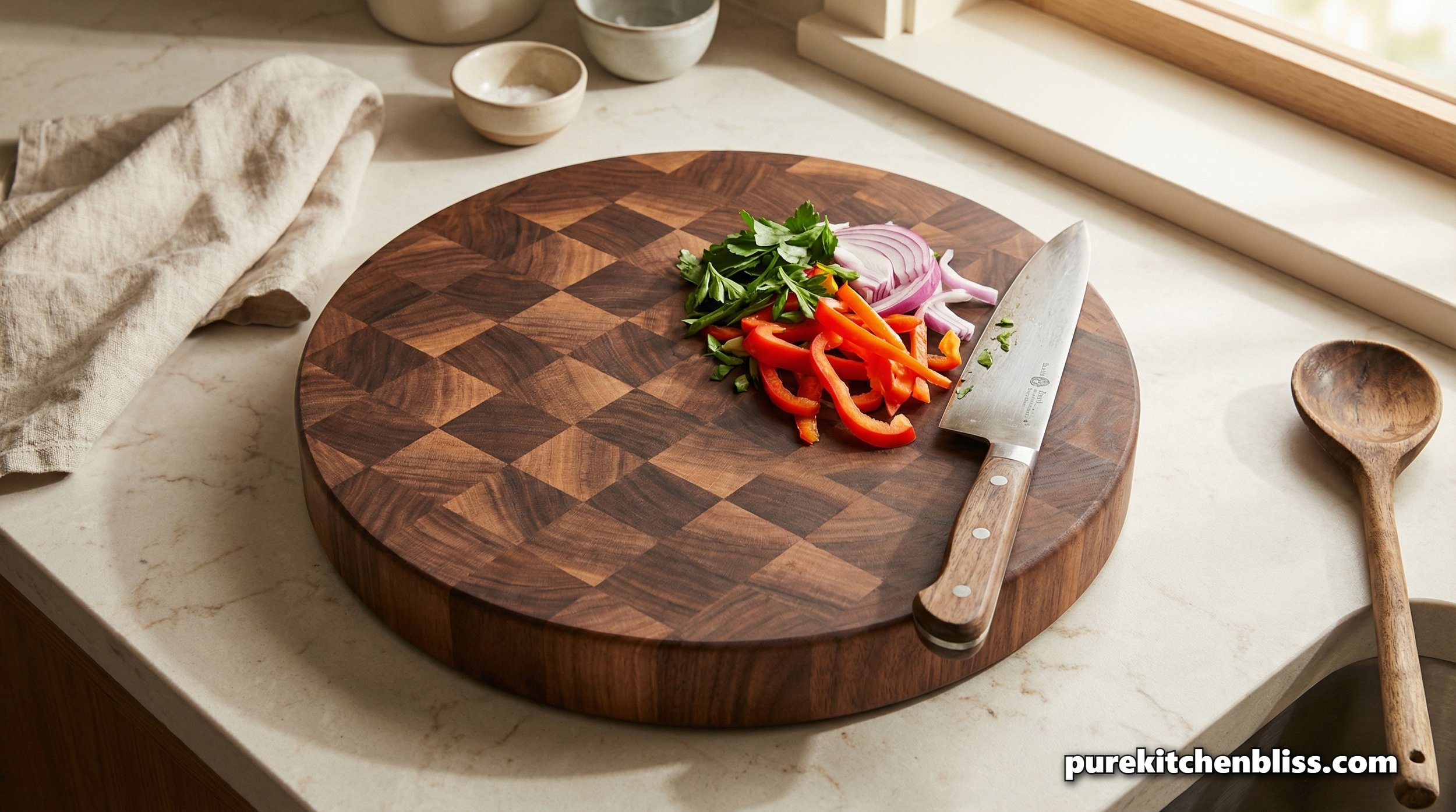
2. The Case for Plastic: Convenience and Raw Meat
Plastic boards definitely have their place in a modern kitchen. Their biggest advantage is maintenance. High-density polyethylene (HDPE) boards can be tossed into a high-heat dishwasher cycle, which is the most reliable way to kill bacteria.
Because of this, many experts recommend a "split system." Use your large, beautiful wooden board for vegetables, bread, and cooked meats, and keep a dedicated plastic board specifically for raw poultry and fish.
However, plastic has a major downside: once it gets deep "scars" from your knife, it becomes almost impossible to clean by hand. Bacteria can hide in those tiny grooves where a sponge can’t reach. If your plastic board looks like a roadmap of deep cuts, it’s time to recycle it and get a new one.
3. Materials to Avoid: Glass, Stone, and Bamboo
While glass and marble cutting boards look beautiful in photos, they are the worst possible choice for your kitchen. These materials are much harder than the steel in your knives. Every time you cut on glass, you are essentially "folding" the microscopic edge of your blade. A single prep session on a glass board can make a sharp knife completely dull.
Bamboo is a popular eco-friendly choice, but it's also very hard on knives. Bamboo contains a high amount of silica (essentially natural glass), which acts like sandpaper on your knife's edge. If you value your knives, stick to hardwood or high-quality plastic.
| Material | Durability | Knife Friendliness | Expert Verdict |
|---|---|---|---|
| Hardwood (Maple/Walnut) | Excellent; lasts for decades. | Best; "heals" itself. | The top choice for prep and safety. |
| High-Density Plastic | Moderate; scars easily. | Good, but dulls blades over time. | Good for raw meat; easy to sanitize in dishwasher. |
| Bamboo | High; very hard surface. | Poor; high silica content dulls knives. | Eco-friendly but tough on your expensive knives. |
| Glass or Stone | Brittle; can shatter. | Terrible; destroys knife edges instantly. | Avoid these entirely for cutting. |
4. How to Care for Your Wooden Board
A high-quality wooden cutting board isn't just a tool; it’s an investment that can last for 20 years if you take care of it. Here is how to keep it in peak condition without making it a chore:
Never Soak It
The quickest way to ruin wood is to leave it sitting in water. Wood is a natural fiber that expands when wet and shrinks when dry. Soaking a board causes it to warp, crack, or even split apart at the seams. Always hand-wash with warm soapy water and dry it upright immediately.
The Oiling Habit
Think of oiling your board like moisturizing your skin. Without oil, the wood becomes brittle and starts to absorb water and food juices. Once a month, rub your board down with food-grade mineral oil. You’ll know the board is "thirsty" if the oil disappears instantly. Let it sit overnight, wipe off the excess, and your board will be waterproofed and glowing.
Removing Stains and Odors
If your board starts to smell like onions or garlic, don't reach for bleach. Sprinkle the board with coarse salt and use half a lemon to "scrub" the surface. The salt acts as an abrasive to lift stains, while the lemon juice kills odors and brightens the wood.
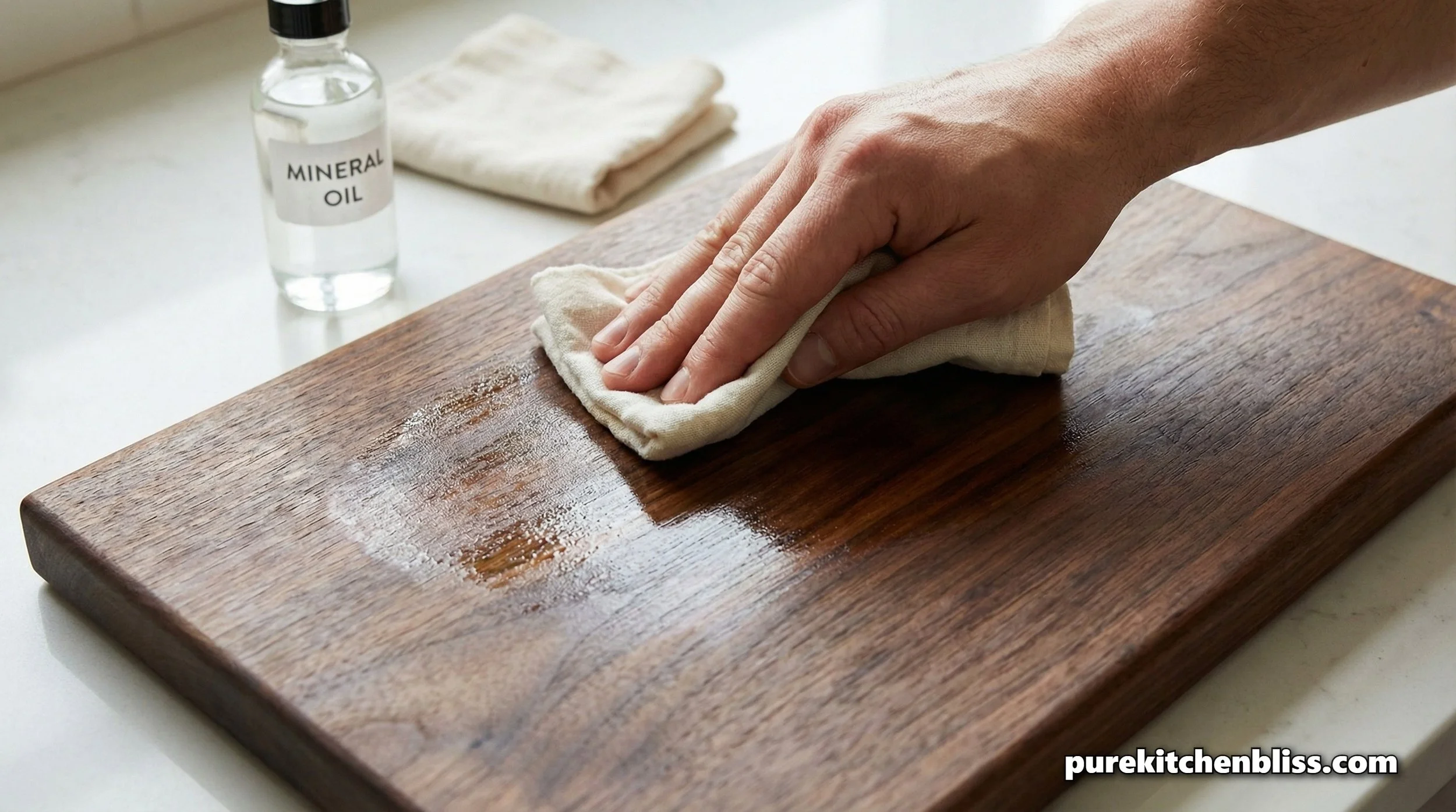
5. When to Replace Your Board
No matter the material, every cutting board has a lifespan. You should replace your board if:
It’s warped: If the board doesn’t sit flat on the counter, it’s a safety hazard and can slip while you’re cutting.
Deep cracks appear: Cracks in wood are deep enough to trap moisture and food, leading to rot.
Severe scarring: If your plastic board is "fuzzy" with knife marks, it can no longer be properly sanitized.
6. Expert Tips for Safer Food Prep
Color Coding: If you use plastic boards, buy a set of different colors. Use red for raw meat, green for veggies, and blue for seafood. This is the easiest way to prevent cross-contamination.
The "Wet Towel" Trick: If your board slides around on your counter, place a damp paper towel or a thin silicone mat underneath it. This creates a stable, non-slip surface that makes your chopping much safer.
Sanding Wood: One of the best things about wood is that it’s renewable. If your wooden board gets too many deep scratches, you can simply sand it down with some 120-grit sandpaper and re-oil it. It will look brand new.
Conclusion: Investing in the Foundation of Your Kitchen At the end of the day, your cutting board is the unsung hero of your kitchen. By choosing a high-quality hardwood board for your daily prep and a secondary plastic board for raw proteins, you’re creating a system that protects your health and your expensive knives. It’s a small detail that makes a massive difference in how your kitchen functions.
Want to keep your kitchen running at its best?
Feed your indoor garden safely: How to Use Coffee Grounds for Your Plants Without Killing Them
Stay on top of the latest styles: Kitchen Color Trends for 2026: What’s In and Why
Deep clean your other big tools: How to Deep Clean Your Dishwasher and Fix Common Issues