The High-Functioning Pantry: Building Your Inventory Infrastructure
The modern pantry has moved beyond being a simple closet for canned goods. In 2026, we view the pantry as a critical piece of "Active Infrastructure"—a localized warehouse that must be managed with the same precision as a professional kitchen. When a pantry is disorganized, it doesn't just look messy; it creates a "friction point" in your daily workflow, leading to food waste and "rebuying" items you already own.
Designing a high-functioning pantry is about more than just matching baskets. It requires a deep understanding of food storage rules and a commitment to "Zone-Based" organization. By treating your pantry as an inventory system rather than a storage locker, you can reduce meal-prep time by 20% and significantly lower your monthly grocery spend.

1. The "First-In, First-Out" (FIFO) Workflow
The biggest failure in most pantries is "Hidden Expiration." Items get pushed to the back of the shelf and forgotten until they are no longer safe to eat. To fix this, you need to implement a professional FIFO system.
Depth Management: Use tiered "staircase" shelving for canned goods and spices so you can see every label at a glance.
The Rotation Rule: When you come home from the store, pull the older items to the front and place the new items in the back. This simple habit is the backbone of any high-performance kitchen infrastructure.
2. Zoning by "Task" Rather than "Type"
Most people organize by category (e.g., all cans together, all boxes together). A more efficient way to organize is by Culinary Zones.
The Baking Zone: Group flour, sugar, baking powder, and extracts in one dedicated area.
The Quick-Prep Zone: Group pasta, sauces, and grains together for easy weeknight meals.
The "Sanctuary" Zone: A high-level shelf for "special occasion" ingredients or backup supplies that you don't need daily access to. This keeps your "active" shelves clear of clutter.
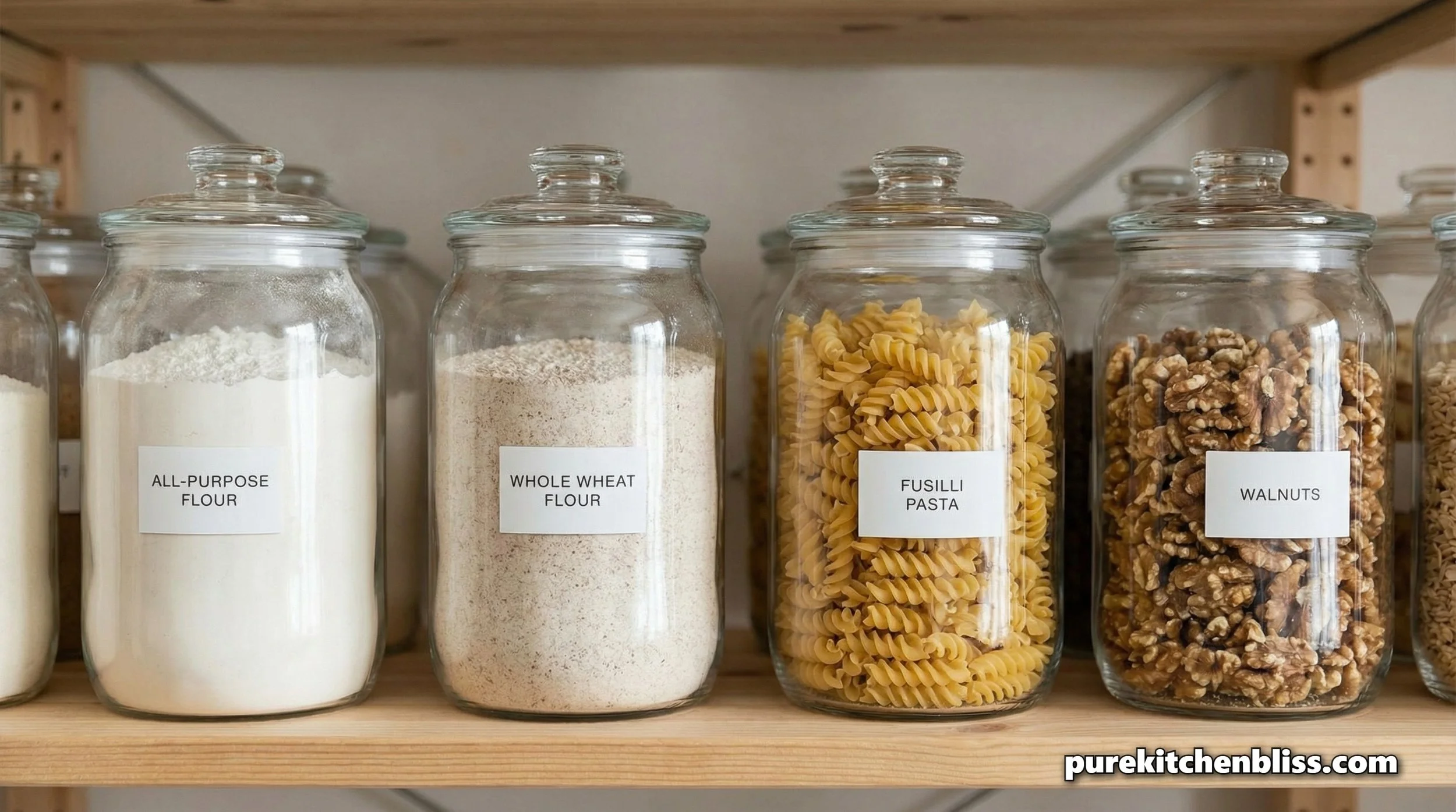
3. The Decanting Debate: Aesthetics vs. Infrastructure
Decanting (moving food from its original packaging into clear glass or plastic vessels) is a major trend in the Top 5 Kitchen Trends of 2026. But it’s not just for looks.
Airtight Integrity: Original cardboard boxes are porous and don't seal properly once opened. Transferring grains and cereals to airtight glass jars prevents the kitchen mold and moisture issues we’ve discussed.
Visual Inventory: You can instantly see when you are low on a staple. No more starting a recipe only to realize the "full" box of rice was actually empty.
4. Comparison: Pantry Storage Materials
| Vessel Material | Pros | Best For... |
|---|---|---|
| Borosilicate Glass | Non-reactive, dishwasher safe, ultra-clear. | Flour, Sugar, Grains |
| Woven Baskets | High airflow, masks visual clutter. | Potatoes, Onions, Snacks |
| BPA-Free Plastic | Lightweight, shatterproof, stackable. | Cereal, Children's Snacks |
| Wire Bins | Maximum visibility and air circulation. | Produce, Canned Goods |

5. Managing the "Living" Pantry (Produce)
Not everything in your pantry belongs in a glass jar. Root vegetables require "Breathing Infrastructure."
The Airflow Rule: Store potatoes and onions in open wire bins or woven baskets. As we learned from the citric acid cleaning protocol, managing moisture is key. If produce is trapped in a plastic bag or a solid bin, it will rot and release ethylene gas, which will spoil the rest of your inventory.
Separation: Never store onions and potatoes together. The gases from the onions will cause the potatoes to sprout prematurely.
6. Maintenance: The "Quarterly Audit"
Even the best pantry infrastructure needs a "reset." Every three months, pull everything off the shelves. Wipe the surfaces down with a mixture of water and Castile soap. This is the time to check for any signs of pests or leaks and to ensure your pantry lighting is functioning correctly.
Conclusion: Mastery of the Inventory A high-functioning pantry is the secret weapon of the organized home. By implementing a FIFO system, zoning by culinary task, and choosing the right storage vessels, you transform a cluttered closet into a professional-grade inventory system. It is the final piece of the puzzle in creating a kitchen that works for you, rather than against you.
Next Up: Complete your cleanup infrastructure by mastering the Anatomy of a High-Performance Kitchen Sink.