How to Clean Coffee Spills on Your Tiled Kitchen Floor
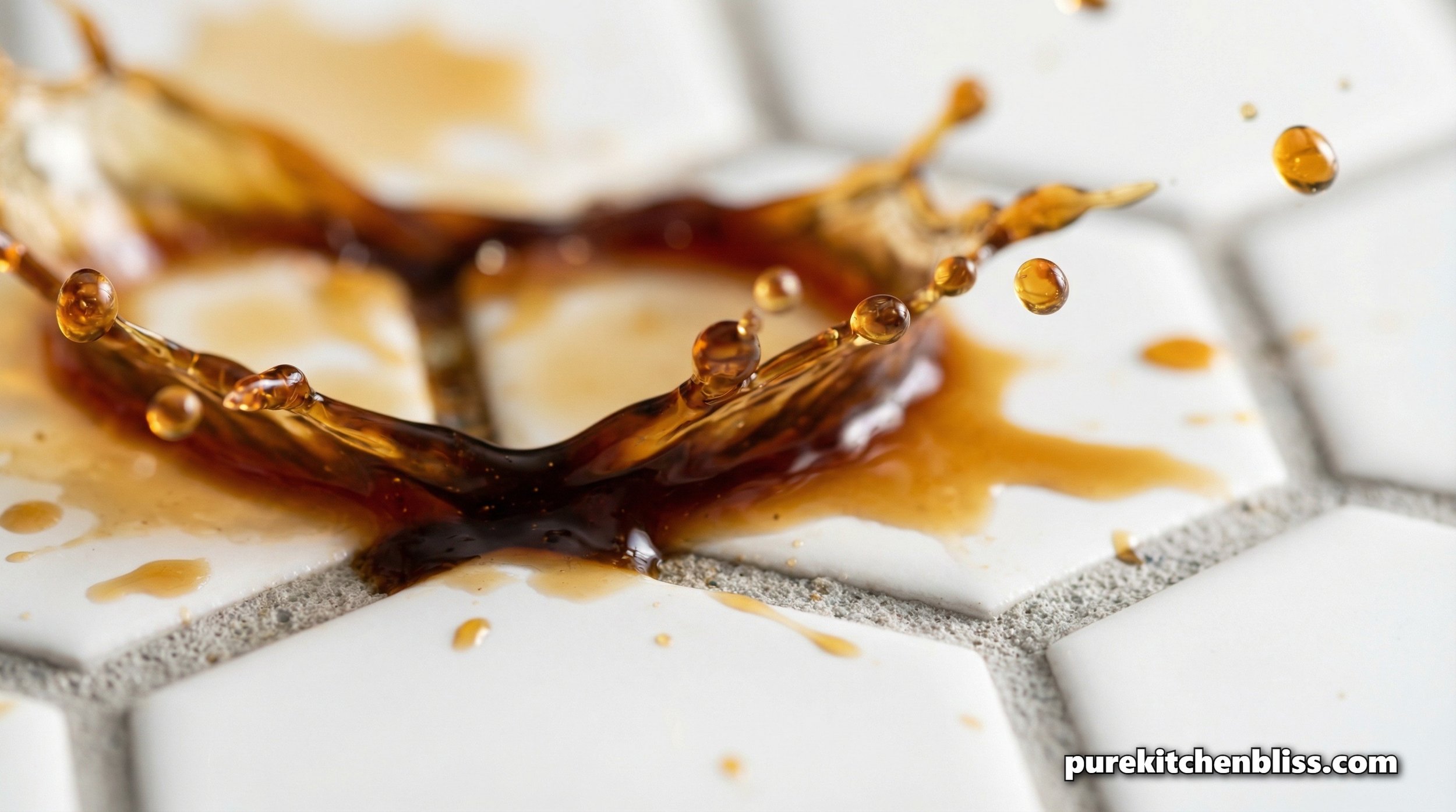
In the trades, I’ve seen beautiful (and expensive) tile floors ruined not by the tile failing, but by the grout failing. Grout is essentially a rigid, cementitious sponge. When you drop your morning brew, the coffee doesn't just sit on top; it begins a "capillary climb" into the microscopic pores of your floor’s infrastructure.
If you have kids or pets, your first instinct might be to grab a heavy chemical bleach. Stop. Harsh chemicals can break down the sealers on your tile and weaken the grout’s structural integrity over time. Instead, we use a "neutralization and extraction" method to restore the sanctuary.
1. The Physics of the Spill: Why Grout is Vulnerable
To understand how to clean a spill, you have to understand the "bones" of your floor. Most kitchen tiles are either Porcelain or Ceramic. While the tile face is usually glazed (making it waterproof), the grout lines are composed of a sand-and-cement mixture.
Capillary Action: Grout is porous. Liquid travels through it like water through a wick.
Tannin Bonding: Coffee contains tannins, the same organic compounds used to dye leather. If these tannins are allowed to dry inside the grout, they create a permanent "shadow."
The Glaze Factor: If you have Natural Stone tile (like Slate or Travertine), the tile itself is as porous as the grout. In these cases, a coffee spill is a structural threat to the material's purity.
2. The Immediate Extraction: "Blot, Don't Scrub"
The biggest mistake people make is grabbing a Tea Towel and scrubbing frantically.
The Physics of Scrubbing: When you scrub, you are using mechanical force to drive the coffee molecules deeper into the grout's pores. You are effectively "painting" the inside of your floor.
The Extraction Protocol: Use a highly absorbent material (like a paper towel or a dedicated "spill rag") and press down firmly. Let the material "wick" the liquid up vertically. You want to pull the coffee out of the infrastructure, not push it into the subfloor.
3. The Chemistry of Neutralization
Coffee is acidic, typically sitting at a pH of 5. To stop the staining process, we need to balance the chemistry without using "nuclear" cleaners that off-gas into your sanctuary.
The Solution: Mix 1 cup of warm $H_{2}O$ with 1 tablespoon of Non-Toxic Kitchen Degreaser (or eco-friendly dish soap) and a splash of distilled white vinegar.
Why Vinegar? While vinegar is an acid, it acts as a mild solvent for coffee oils. When diluted, it helps break the bond between the tannins and the cement without damaging the sealer.
BUILDER TIP: THE GROUT SEALER CHECK
If the coffee immediately soaks in and darkens the grout, your sealer has failed. In a Sustainable Sanctuary, your grout should be "hydrophobic", water should bead on top. If it doesn't, it’s time to re-seal your floor's infrastructure.
4. The "Biological Scrubber": Baking Soda & Oxygen
If the coffee has already started to "shadow" the grout—meaning you missed the 5-minute window—you need a mechanical lift combined with oxygenation.
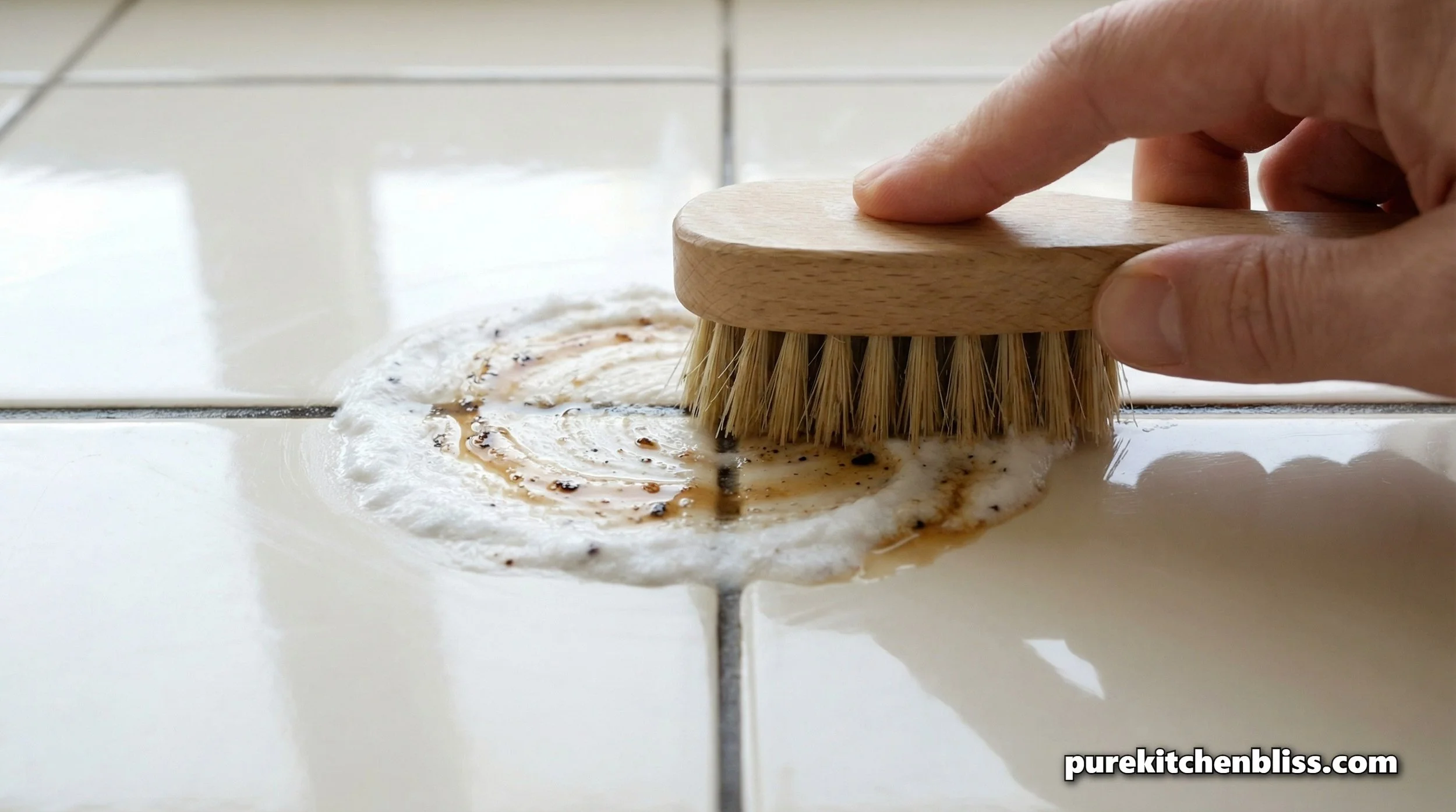
The Paste: Create a thick paste of baking soda and a tiny bit of H₂O (Hydrogen Peroxide).
The Dwell Time: Apply it to the grout line and let it "dwell" for 5 to 10 minutes. The peroxide will oxygenate the tannins, while the baking soda acts as a mild abrasive.
The Extraction: Use a soft-bristled brush to gently agitate the paste. Rinse with clear water and dry immediately.
5. Tile Type Identification Matrix
| Tile Material | Porosity | Cleaning Protocol | Builder's Risk |
|---|---|---|---|
| Glazed Porcelain | Low | 50/50 Vinegar/Water | Extremely resilient; hard to stain. |
| Natural Slate | High | pH-Neutral Soap Only | Acid (Vinegar) can etch the stone surface. |
| Terracotta | Very High | Blot Only + Re-seal | Absorbs liquid instantly; needs heavy sealing. |
| Polished Marble | Medium | Baking Soda Paste | Acid will eat the "shine" off the stone. |
6. The "Vapor-Phase" Finish: Odor Extraction
Once the spill is physically gone, you may still have a lingering "stale coffee" scent. This happens when the liquid seeps under the baseboards or into the expansion joints near your cabinetry.
The Bacteria Factor: Coffee contains sugars. If trapped in a dark, damp space, bacteria will begin to feed on it, creating an odor.
The Builder's Hack: Use your DIY Vodka Fabric Spray along the baseboards. The alcohol acts as a high-performance antimicrobial agent, killing the bacteria and evaporating the odor instantly.
7. Troubleshooting: "The Ancient Stain"
What if you moved into a home with coffee stains already "baked" into the grout?
The Steam Reset: High-heat steam can occasionally open the pores of the grout enough to release the pigment. Use a professional-grade steam cleaner followed immediately by a wet-vac extraction.
The Grout Pen Ritual: If the stain is truly permanent, do not use caustic acids. Instead, use a non-toxic grout paint or "pen" to re-pigment the line. This seals the stain in and restores the visual purity of the sanctuary.
Conclusion: Protecting the Foundation
A coffee spill is just a temporary glitch in the "Beautiful Chaos" of your kitchen. By acting fast and using the "Neutralize and Extract" method, you protect the structural integrity of your tile and grout. You’ve maintained the purity of your foundation, and your sanctuary is back to its blissful state.
Read More: