The DIY Vodka Fabric Spray: How to Remove Kitchen Odors Without Chemicals
Transparency Note: We independently select these products based on research and user reviews. If you buy something through our links, we may earn a commission.
As a Red Seal Carpenter, I spent years dealing with "site smells", sawdust, sweat, and heavy machinery. But nothing sticks quite like kitchen grease. If you’ve ever noticed that your kids' backpacks or your favorite winter coat smells like last night’s How to Get Rid of Fried Food Smell, you’ve experienced the "Sponge Effect."
Fabric is a porous material that captures aerosolized lipids and odors. While you can't throw your couch or the kids' school bags in the wash every day, you can reset their scent profile using a professional theater trick: The Vodka Spray.
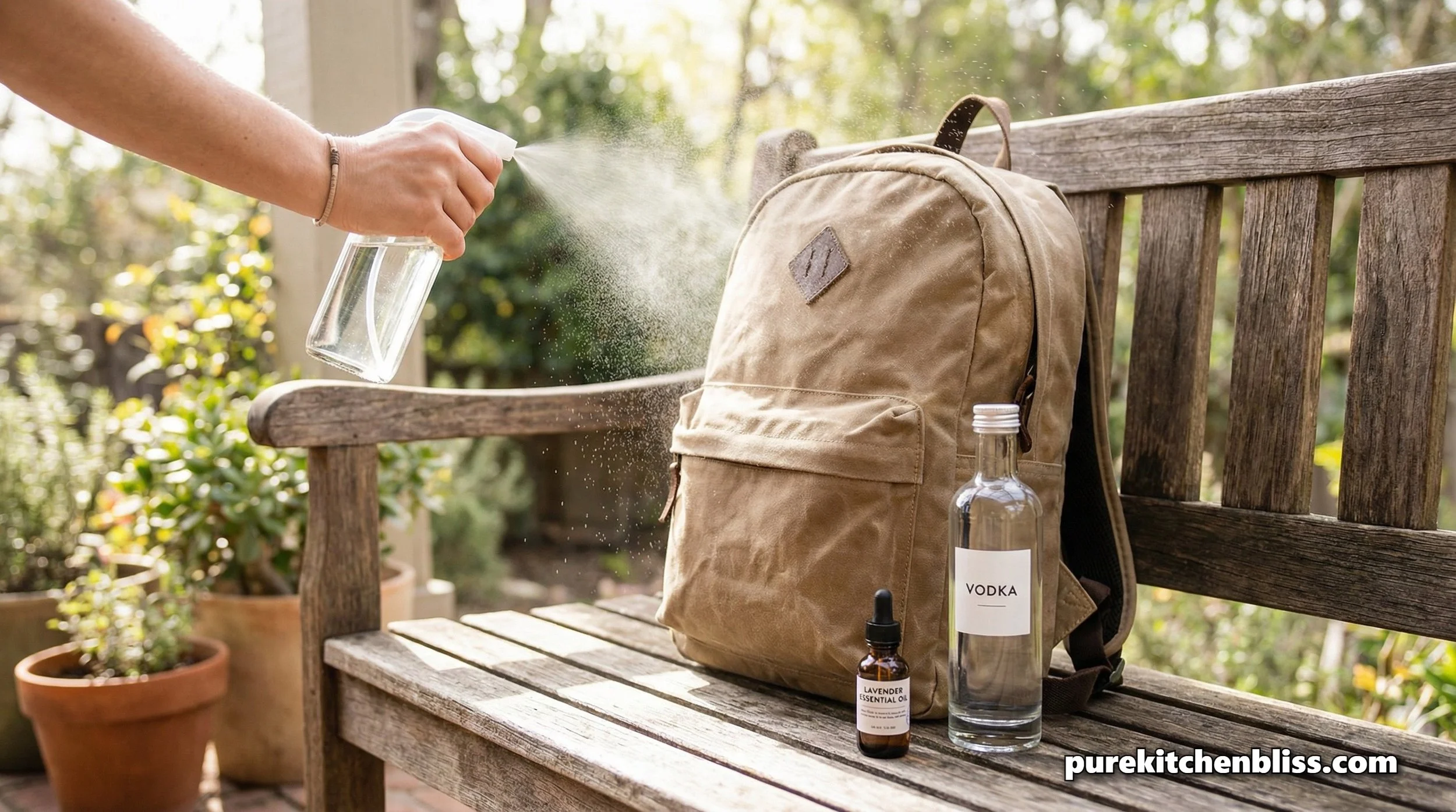
1. The Science of the "Alcohol Evaporation"
Why vodka? Unlike water, alcohol has a very low boiling point, meaning it evaporates almost instantly. As it turns from liquid to gas, it hitches onto odor-causing molecules and carries them away.
The Neutralizer: Alcohol is a natural disinfectant that kills the bacteria responsible for "stale" smells.
The Purity Spec: Because it’s high-proof and clear, it doesn't leave behind the sticky, synthetic residue found in store bought sprays (which often contain phthalates that trigger allergies).
2. The "Pure Sanctuary" Recipe
In our home, we keep a bottle of this in the mudroom and the kitchen pantry. It’s the "Active Recovery" tool for our soft infrastructure.
The Ingredients:
1 Cup Cheap Vodka: (High-proof, unflavored). No need for the top-shelf stuff; we just want the C₂H₅OH content.
1/2 Cup Distilled H₂O: Keeps the solution from being too harsh on delicate fibers.
15-20 Drops Organic Essential Oil: We recommend Eucalyptus, Lemon, or Tea Tree for their natural antiseptic properties.
BUILDER TIP: MATERIAL SAFETY DATA
Always do a "spot test" on the inside seam of any fabric before a full application. While alcohol is safe for most natural fibers (cotton, linen, wool), it can occasionally affect the dyes on certain synthetic "performance" fabrics or delicate silks.
3. The Protocol: Staging the Refresh
To maximize the "Momentum" of your clean, use this ritual as part of your Monday Morning Momentum or after a heavy cooking session.
Clear the Area: Hang the items (coats, bags, or kitchen curtains) in a well ventilated space.
The Mist: Hold the bottle 12 inches away and mist lightly. You want the fabric to feel slightly damp, not soaked.
The Air-Dry: As the alcohol evaporates, the smell disappears. Within 10 minutes, your "Soft Infrastructure" will be reset to a neutral state.
MAINTENANCE RITUAL: THE SUNDAY RESET
During your weekly reset, hit the "un-washables", the rug in front of the sink, the dining chair cushions, and the mudroom bench. It’s the final touch in creating a truly blissful environment.
Read More: The Sunday Night Countertop Reset: A Ritual for Kitchen Bliss

The Fabric Purity Toolkit
To build your own fabric-refresh system, these are the curator-approved components you’ll need:
The Vessel: 16oz Amber Glass Spray Bottle with Fine-Mist Trigger
The Essence: Organic Tea Tree & Lavender Essential Oil Set
The Hardware: Heavy-Duty Cast Iron Wall Hooks (For your "Soft Infrastructure")
The Living Filter: Snake Plant (To keep the mudroom air pure)
Conclusion: Purity in Every Layer
A Sustainable Sanctuary isn't just about the surfaces you can see; it’s about the air you breathe and the materials you touch. By using this DIY Vodka Spray, you are extending the life of your fabrics and protecting your family from the "hidden" odors of a busy kitchen.