The Ammonia Myth: Why This Old-School Cleaner Has No Place in a High-Performance Kitchen
For generations, ammonia was the "gold standard" for cutting through the heavy, polymerizing grease that accumulates in a working kitchen. It was cheap, powerful, and left a streak-free shine on windows. But just as the "Builder" community has moved away from toxic additives in bath products, the 2026 standard for the kitchen has shifted.
In a high-performance sanctuary, we no longer use "brute force" chemistry. We use targeted, pH-balanced solutions. Ammonia isn't just a respiratory irritant—it is a chemical mismatch for modern infrastructure. From the resins in your quartz countertops to the structural integrity of your high-performance sink, ammonia is a legacy cleaner that causes more harm than it solves.
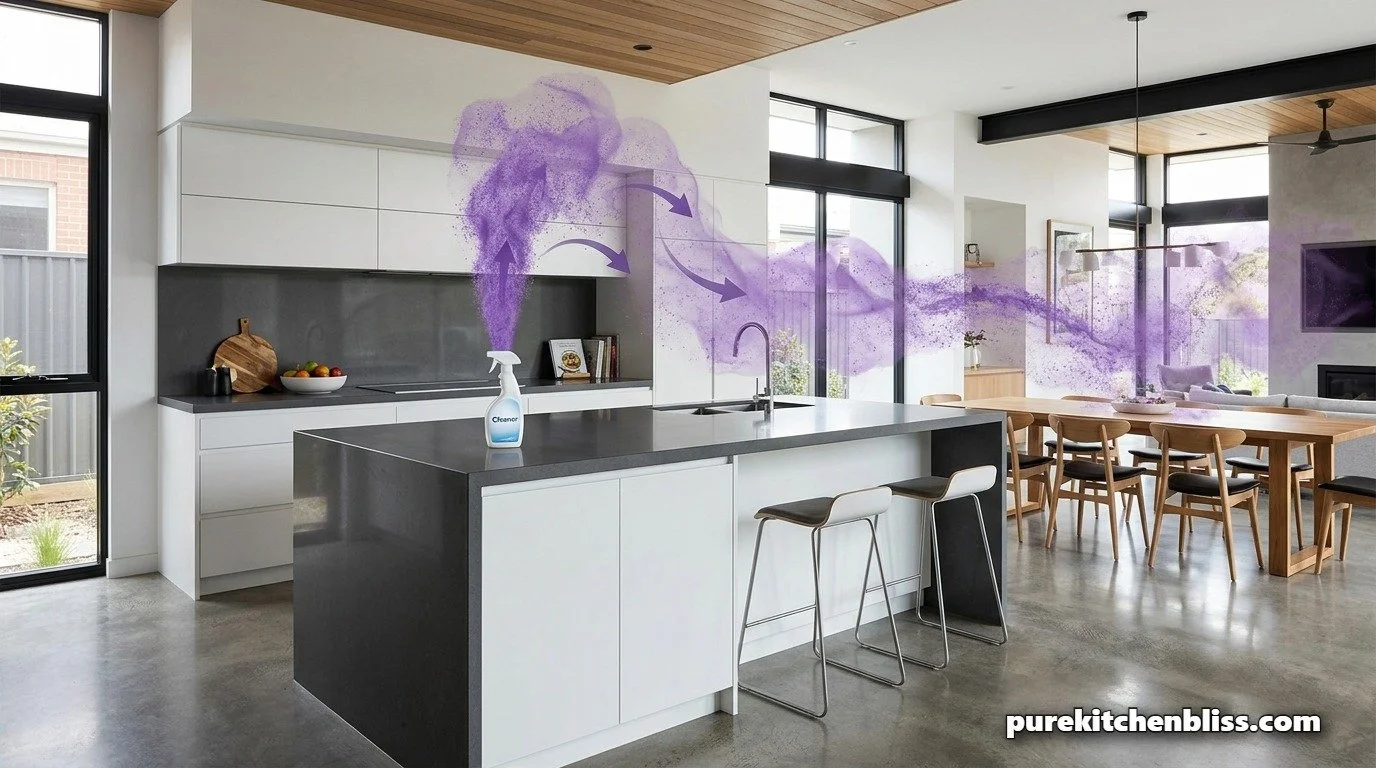
1. The Respiratory "Drift" in Open-Plan Infrastructure
In the bathroom, ammonia is a localized hazard. In the kitchen, it is an atmospheric one. Most modern homes feature open-plan layouts where the kitchen is the central hub. When you spray ammonia on a large surface like an island, the "volatile alkaline gas" doesn't stay on the counter.
The Vapor Pressure: Ammonia has a very high vapor pressure, meaning it turns from a liquid to a gas almost instantly at room temperature.
The HVAC Interaction: In a kitchen with an active range hood, the mechanical air movement can actually help circulate these fumes throughout the house before they can be exhausted. For children or pets near floor level, this "invisible drift" represents a major failure in your home's air-quality infrastructure.
2. The Quartz Crisis: Dissolving the Binder
Many homeowners assume quartz is indestructible because it is made of stone. However, quartz is a composite: 90% ground stone held together by 10% polyester resin.
Ammonia has a high pH (typically 11 or 12), making it extremely caustic. While it’s great at dissolving grease, it’s equally good at slowly eating away at those polyester resins. Over time, repeated ammonia use causes the surface of your quartz to become "pitted" or dull. Once that factory seal is compromised, the surface becomes porous, creating a perfect harborage for the Listeria pathogens we discussed.
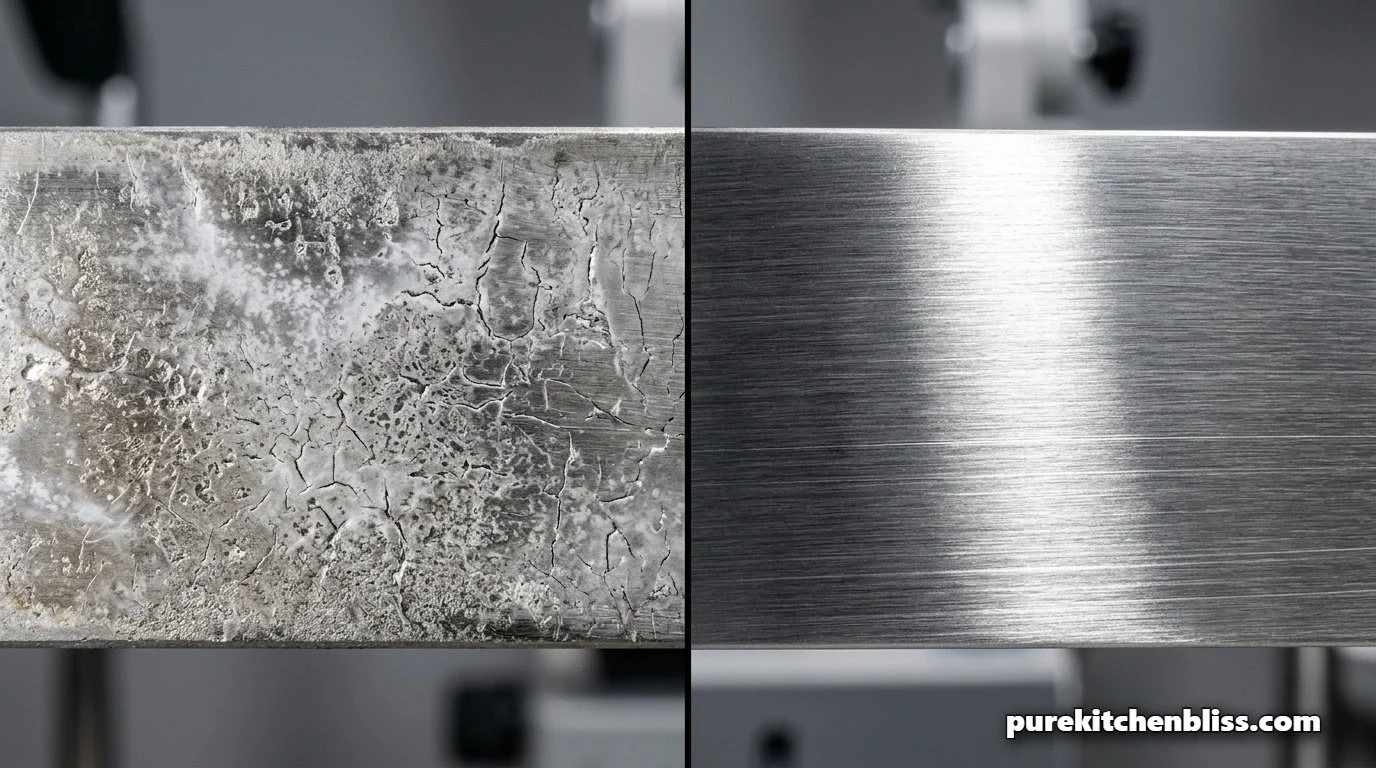
3. Stress Corrosion Cracking in Stainless Steel
This is the "Hidden Engineering" risk that sites like The Spruce rarely mention. While stainless steel is prized for its durability, it is susceptible to a phenomenon called Stress Corrosion Cracking (SCC) when exposed to high-alkaline environments.
Ammonia can cause microscopic "intergranular" corrosion. You won't see it immediately, but over 2–3 years of use on your high-performance faucet or sink, the metal can become brittle. This leads to pinhole leaks or "clouding" that no amount of polishing can fix.
4. The Deadly Sink "Intersection"
The most dangerous thing about ammonia in a kitchen is the proximity to other cleaners. This is a life-safety issue, not just a maintenance one.
The Chloramine Risk: If you use an ammonia-based glass cleaner on your windows and then use a bleach-based disinfectant in your dishwasher or sink, they will eventually meet in the drain.
The Chemistry: Mixing ammonia and bleach creates Chloramine gas. In an enclosed kitchen space, this gas can cause immediate respiratory distress, coughing, and chest pain. In a "High-Performance" kitchen, we eliminate the risk by removing the ammonia from the inventory entirely.
5. Professional Non-Toxic Comparisons
| Surface | The Ammonia Risk | The "Builder" Swap |
|---|---|---|
| Quartz / Granite | Dulls resin; pits the stone. | Castile Soap + Warm Water |
| Oven Glass / Windows | Lung-burning fumes; streaking. | Club Soda or Vinegar Solution |
| Wood Cabinets | Strips protective finish/stain. | Diluted Murphy's Oil or Castile |
| Stainless Appliances | Corrodes finish; leaves "cloud." | Microfiber + Grain-Rubbing |
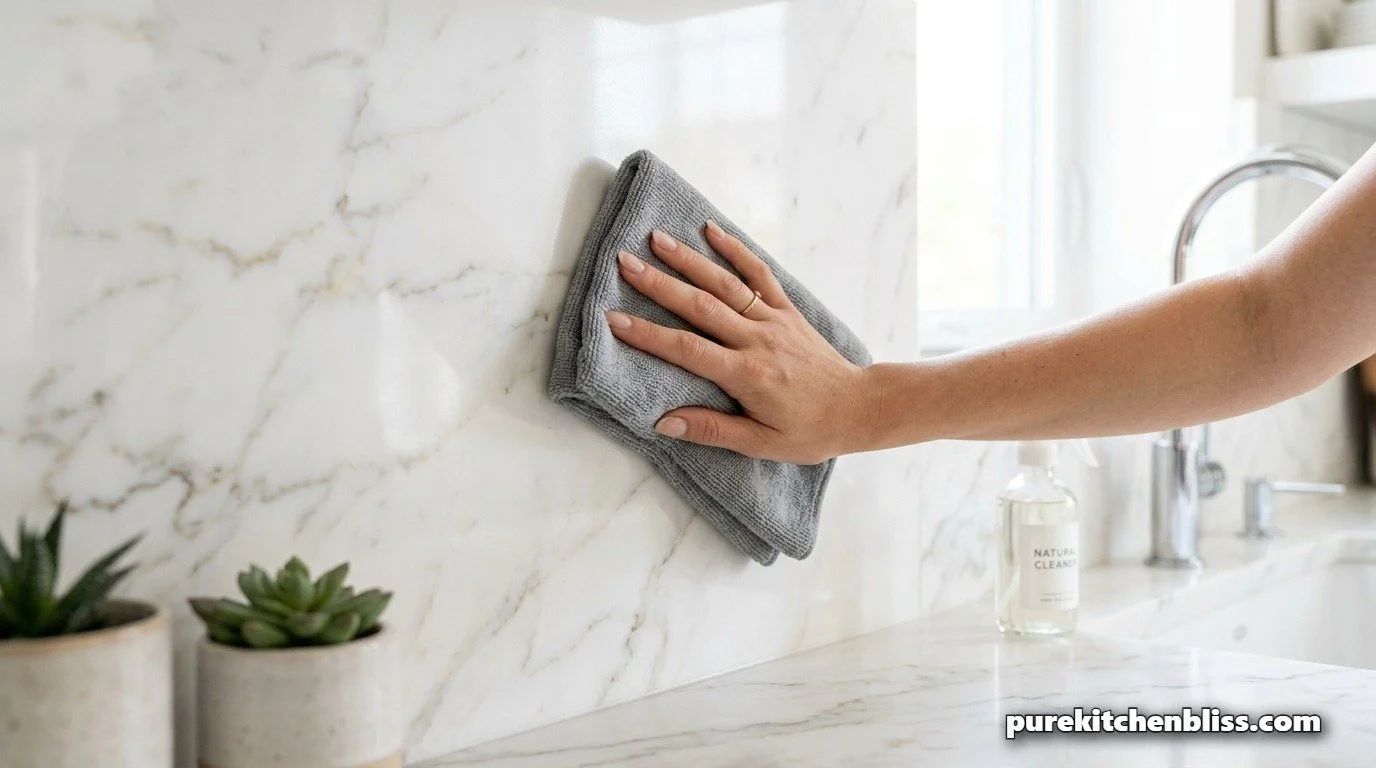
6. The "Builder" Recipes for a Grease-Free Kitchen
To out-clean ammonia, you need the right concentrations of versatile Castile soap and organic acids. These methods are biologically safe and infrastructure-friendly.
The Daily All-Purpose Spray: Mix 1 tbsp of Castile soap in 1 quart of warm water. The soap’s fatty acids encapsulate grease and oils, while the water carries them away. This is the only safe way to clean your non-toxic kids' dishesand prep surfaces.
The "Window Shine" Alternative: Skip the blue ammonia sprays. Use 1 part white vinegar to 4 parts water. Vinegar dissolves the mineral spots (calcium) that ammonia, being a base, cannot touch.
The Degreasing Paste: For heavy buildup on top of your fridge or range hood, use a paste of baking soda and a few drops of water. The mild abrasive action lifts the "grease-glue" without scratching the surface. Finish with the citric acid trick to neutralize any residue and leave a streak-free shine.
Conclusion: Professional Results, Zero Poison The "Ammonia Myth" persists because it is an effective, albeit violent, solvent. However, in 2026, we value the longevity of our materials and the quality of our air more than a 99-cent bottle of cleaner. By retiring ammonia and switching to pH-neutral soaps and mild organic acids, you preserve your expensive finishes and protect your family. A truly high-performance kitchen should smell like fresh ingredients, not the interior of a chemical plant.
Next Up: Learn how to manage the "Invisible Infrastructure" of your kitchen in our Guide to Kitchen Pathogens and Listeria.