The Triple-Fold Masterclass: How to Fold Towels Like a Professional
In a sustainable sanctuary, the visual state of your storage is just as important as the items inside. We’ve all experienced the frustration of a leaning tower of towels that eventually collapses into "Beautiful Chaos." This often happens because the "foundation" of the fold is unstable. Most home-folding methods rely on simple halves or quarters, which leave the towel's weight unevenly distributed and the "raw" edges exposed to the air.
The Hotel Triple-Fold is the gold standard for high-performance home organization. It is designed to create a self-supporting, uniform "brick" that hides raw edges and maximizes shelf space. By mastering this geometry, you move from merely "storing" your linens to "curating" your home’s infrastructure.
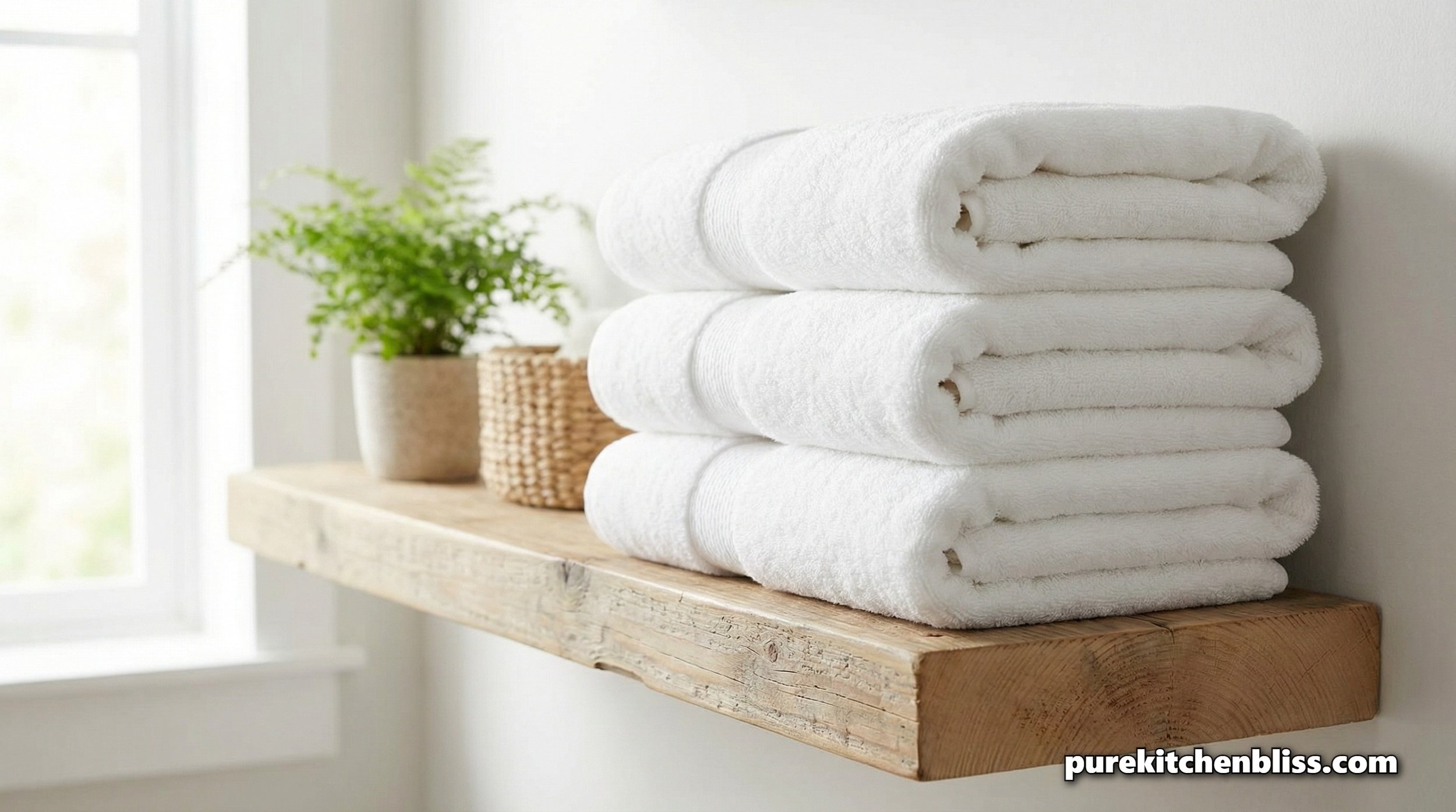
1. The Anatomy of a Perfect Fold: Structural Integrity
Before we begin the ritual, we must understand the physics of why the Triple-Fold works. Unlike a standard "half-and-half" fold, the triple fold creates three distinct layers of structural support. This thickness prevents the towels from sagging over time and allows you to stack them significantly higher without the risk of toppling.
When you fold a towel in thirds, you are creating a reinforced center. This center acts as a pillar. In a stack of six towels, the bottom towel must support the weight of the five above it. A standard fold will compress and tilt under this load, whereas the Triple-Fold "brick" distributes the pressure across the entire surface area of the shelf.
2. Step-by-Step: The Triple-Fold Ritual
For this masterclass, we will focus on the standard bath towel. Ensure you are working on a clean, flat surface like your kitchen island—using the same care you’d apply to your Countertop Stewardship.
Step 1: The Long Axis (The Thirds)
Lay the towel flat in front of you, oriented horizontally. Imagine the towel divided into three equal horizontal lanes. Fold the top third of the towel down toward the center, then fold the bottom third up over it.
Builder Tip: Run your hand firmly across the fabric to "de-air" it. This removes trapped oxygen that causes towels to feel "bouncy" and unstable in the closet.
Step 2: The Vertical Compression
You now have a long, narrow rectangle. Take the left side and fold it exactly to the center point. Repeat with the right side. You should now have two edges meeting in the middle.
Step 3: The Final "Spine" Fold
Fold the entire package in half one last time. This creates the "spine" of the towel, the smooth, rounded edge that will eventually face the room. You should be left with a compact, heavy rectangle that can almost stand on its own.
3. The "Spine-Forward" Strategy: Visual Silence
The secret to that boutique-hotel aesthetic is the orientation on the shelf. Always place your towels with the rounded, folded "spine" facing outward toward you.
Why It Matters for Your Sanctuary:
Visual Silence: By hiding the "raw" edges and the multiple layers of the fold at the back of the closet, you create a uniform wall of fabric. This reduces the visual noise that often contributes to "household stress."
Ergonomics: When the spine faces out, it acts as a handle. You can easily slide a single towel out from the middle of a stack without disturbing the "bones" of the towels above or below it.
4. To Fold or To Roll? The Storage Debate
A common question in home stewardship is whether towels should be folded or rolled. The answer depends on your Open Shelving vs. Upper Cabinets setup.
Rolling (The "Spa" Method): Rolling is excellent for deep baskets or narrow drawers. It is a "high density" storage method that prevents wrinkles. However, rolled towels can be difficult to stack on flat, open shelves, as they tend to migrate.
Folding (The "Linen Closet" Method): For standard 12 inch or 16 inch deep shelving, the triple-fold is superior. It utilizes the full depth of the shelf and provides the flat surface necessary for high stacks.
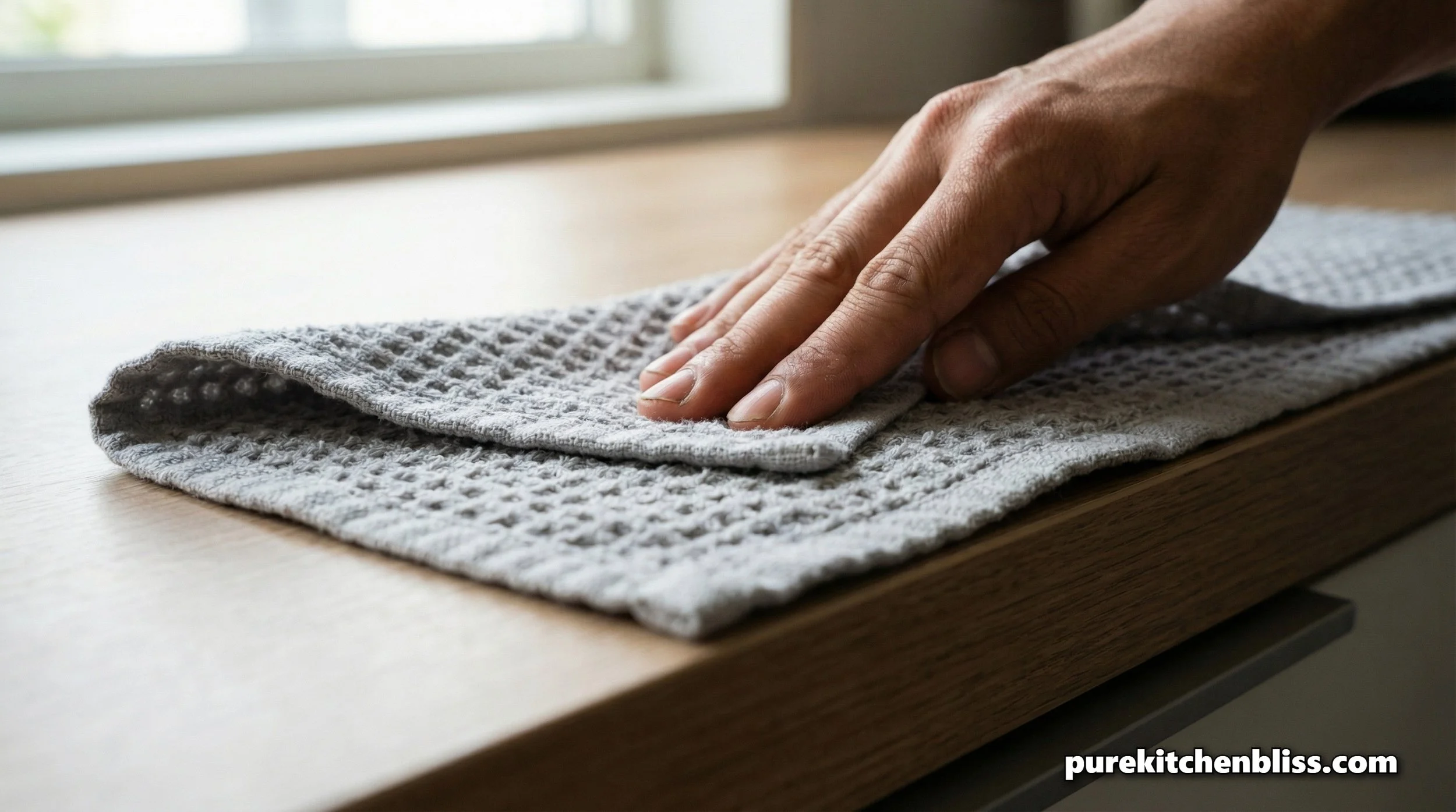
5. Folding for Different Weights: GSM and Waffle Weaves
As we discussed in our Linen vs. Cotton Sheets, the "Gram per Square Meter" (GSM) determines how a fabric behaves under pressure.
High-GSM Cotton ($800+): These are thick and heavy. The triple-fold is essential here to manage the bulk. Because these fibers are so dense, they hold "memory,” if you fold them poorly, they will stay misshapen.
Waffle Weaves: These are thinner and more "springy." For these, a tighter fold is required. I recommend an extra "tuck" at the end to ensure the honeycomb texture doesn't cause the stack to slide.
Kitchen Flour Sacks: For these lighter culinary textiles, we recommend the "File Fold" found in our The Ultimate Linen Closet Audit.
6. Maintenance: Rotating Your Inventory
A high-performance linen closet requires a "First-In, First-Out" (FIFO) rotation. When you bring fresh towels from the laundry, place them at the bottom of the stack. This ensures that every towel in your inventory is being used and "breathed" equally. This prevents the bottom towels from becoming compressed and stale, a key part of your 5 Natural Ways to Scent Your Linen Closet ritual.
7. Conclusion: The Peace of the Fold
Organization is not just about aesthetics; it is a form of self-care. When you open your closet and see a perfectly staged inventory, it reinforces the sense of order in your sanctuary. This folding ritual is a small but powerful part of your Monday Morning Momentum, setting the tone for a blissful, high performance week ahead.