The Ultimate Linen Closet Audit: Mastering Your Home’s Soft Infrastructure
In the curation of a sustainable sanctuary, we often focus on the hard surfaces, the stone counters, the wood cabinetry, and the architectural lines. But the "soft infrastructure" of the home, the linens that touch our skin and facilitate our rest, is equally vital to the feeling of bliss and order.
The linen closet is the hidden engine of household comfort. It is where we store the tools of our daily rituals: the towels that wrap us after a restorative bath, the sheets that invite deep sleep, and the textiles that maintain our kitchen’s purity. However, because this space is often tucked behind a closed door, it is prone to a specific type of "Beautiful Chaos", a slow accumulation of mismatched sets, frayed edges, and forgotten fabrics.
A true Linen Closet Audit is more than an afternoon of folding; it is a systematic reset of your home’s textile inventory. In this definitive guide, we will explore the material science of linens, the psychology of organization, and the professional methods for maintaining freshness from the fiber up.
1. The Audit Phase: The Blank Slate Method
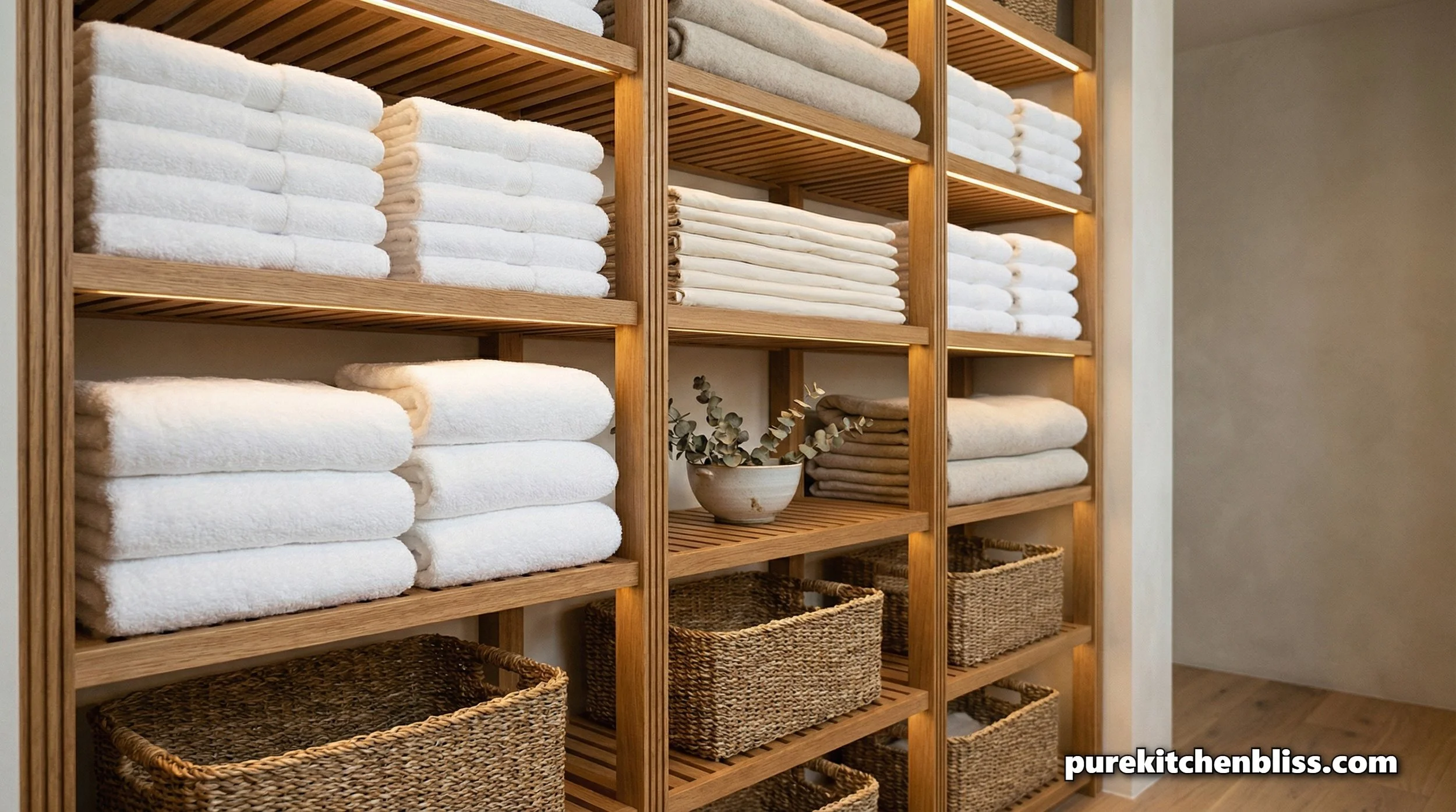
To achieve mastery over your linens, you must first confront the current state of the "Bio-load" and the inventory. We recommend the Blank Slate Method: removing every single item from the closet to an open staging area, such as a bed or a large table.
The Material Fatigue Assessment
As you remove items, you must perform a tactile assessment of every piece. In an intentional home, we do not keep items "just in case." Every textile should serve a specific purpose or be retired.
The Transparency Test: Hold your oldest towels up to a light source. If the "loops" of the terry cloth have worn down to the base weave, the towel has lost its absorbency and its ability to harbor heat. It is no longer a tool of comfort.
The Elastic Check: For fitted sheets, the elastic is the first point of mechanical failure. If the elastic is brittle or "crunchy," the sheet will no longer stay taut on the mattress, interfering with the ergonomics of your sleep.
The Scent Profile: If a clean item has a lingering "musty" smell even after washing, it likely has a buildup of body oils and detergent surfactants that have turned rancid within the fibers. These require a "Deep Strip" or retirement.
The "Rules of Two" for Inventory
How much is enough? For a high-performance home, we follow the Rule of Two (plus one):
Two sets per bed: One on the bed, one in the closet.
Two bath towels per person: One in use, one in the closet.
The "Plus One" (The Guest Reserve): A single, high-quality backup for each category to handle emergencies or visitors.
Anything beyond this is likely "inventory drag" that prevents air circulation in your closet.
2. Material Science: Understanding Your Fibers
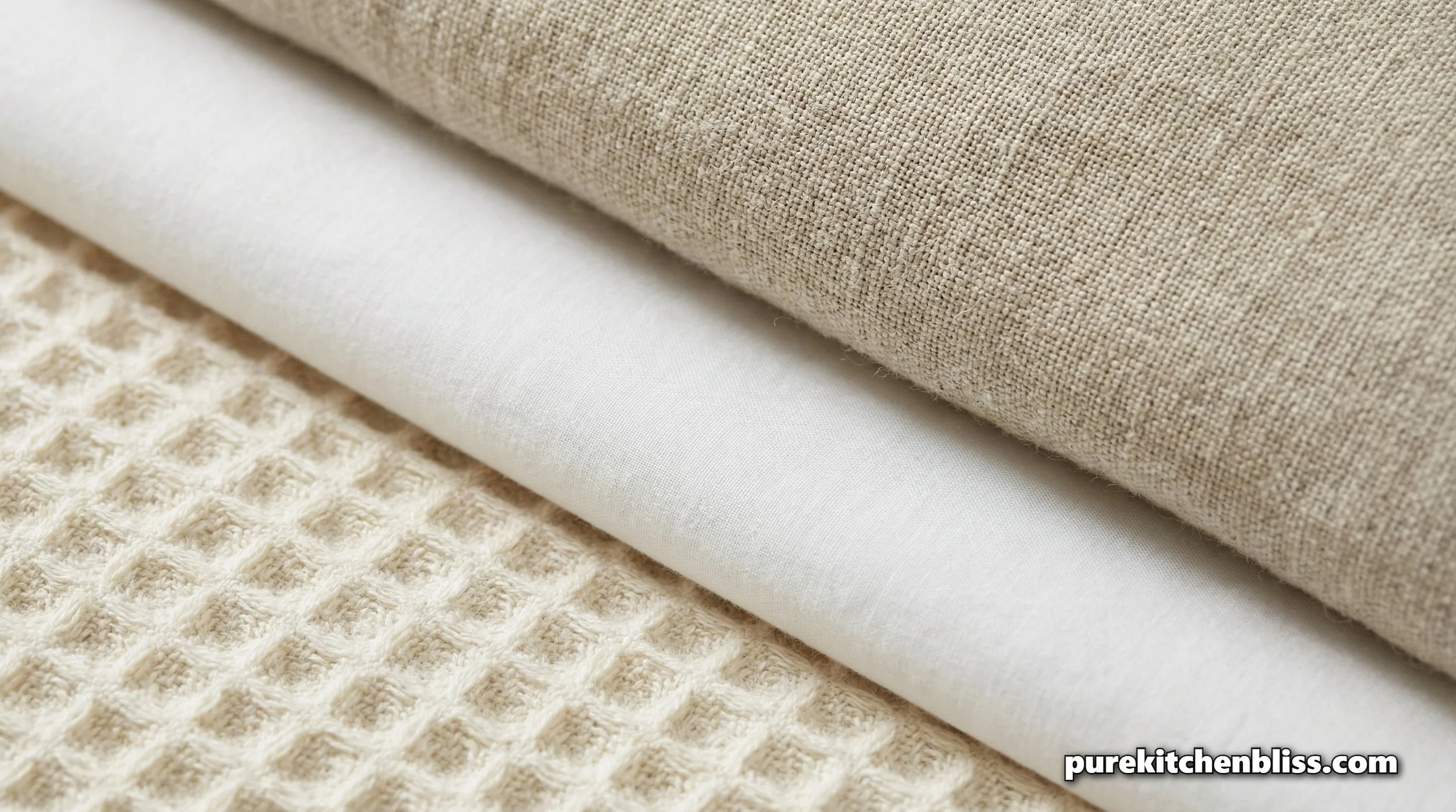
To organize linens correctly, you must understand what they are made of. Different fibers have different "storage personalities."
Long-Staple Cotton (Egyptian and Pima)
Cotton is the workhorse of the linen closet. It is prized for its absorbency and durability. However, cotton is also highly susceptible to mildew if stored in a humid environment. High-thread-count cotton (800+) is a tighter weave, meaning it breathes less than a 300 thread count percale. These "dense" linens should be stored on higher shelves where the air is warmer and drier.
European Flax Linen
Linen is a sustainable, luxury fiber that actually becomes stronger and softer with every wash. It is naturally antimicrobial and more breathable than cotton. Because linen fibers are more "brittle" than cotton, they should never be stored in tight, compressed stacks, which can cause permanent creasing and fiber breakage.
Bamboo and Eucalyptus (Lyocell)
These modern, eco-friendly fibers are exceptionally soft but hold onto moisture longer than cotton. If you use these in your sanctuary, they require the most "breathing room" in your closet organization to prevent the development of stale odors.
3. The Professional Folding Masterclass
The "look" of a professional linen closet is achieved through the geometry of the fold. Uniformity is not about vanity; it is about maximizing the "Spatial Infrastructure" of your shelving.
The "Hotel Triple-Fold" for Towels
This method hides the raw edges and creates a rounded, plush "spine" that faces outward.
Lay the towel flat and fold it in thirds lengthwise.
Fold the bottom half up to the middle.
Fold the top half over to create a clean, rectangular "brick."
The "Bundle Fold" for Sheet Sets
Never hunt for a matching pillowcase again. This is the ultimate ritual for sheet organization.
Fold your fitted and flat sheets into identical rectangles.
Stack them together.
Slide the entire stack inside one of the matching pillowcases.
Fold the excess pillowcase fabric under the bundle.
The "Filing" Method for Pillowcases
For extra pillowcases or tea towels, use the KonMari-style filing method. Instead of stacking them vertically (where the bottom one is forgotten), fold them into small squares and "file" them in a basket so you can see every option at a glance.
4. Organizational Psychology: The "Zone" System
A linen closet should be mapped out according to the frequency of use. This reduces the friction of daily chores.
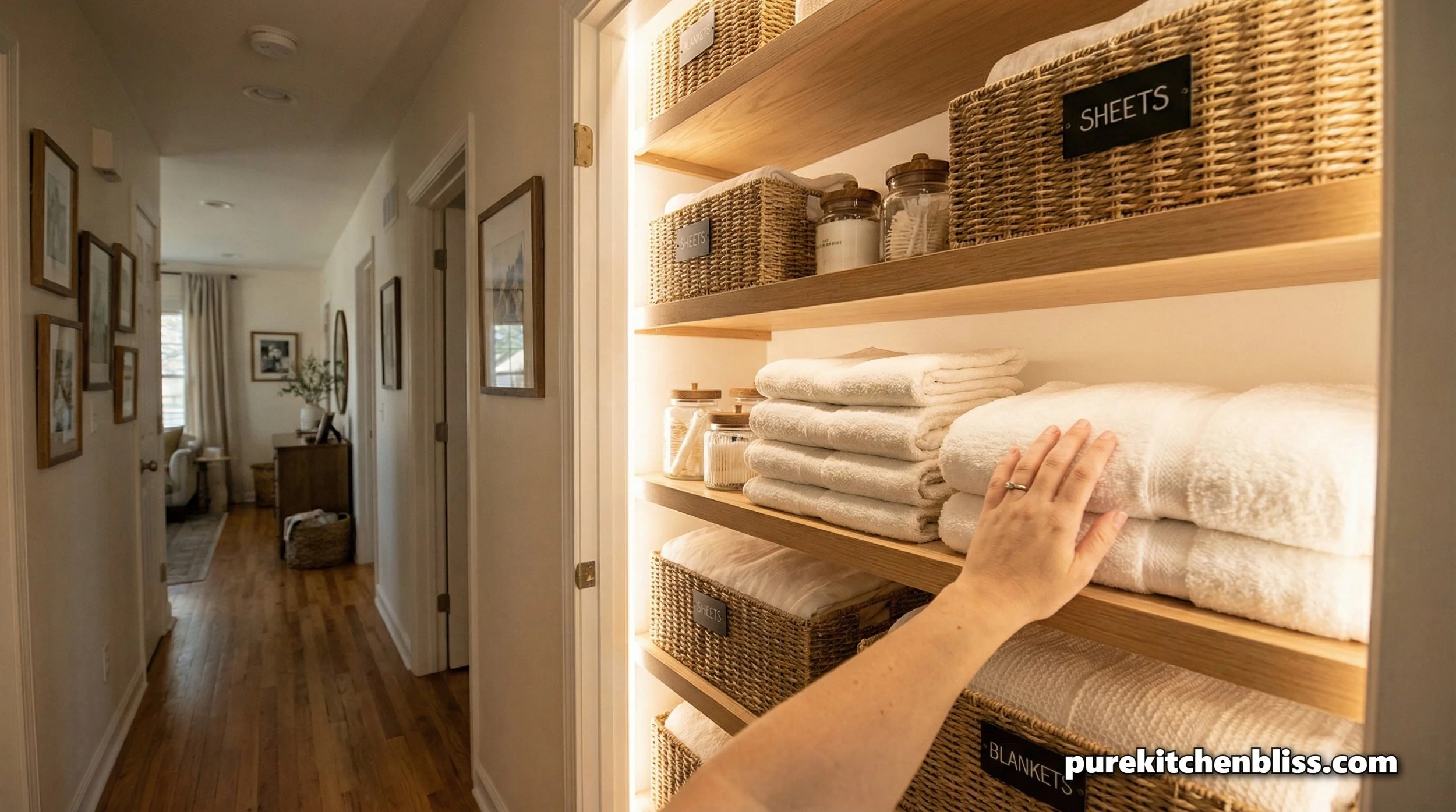
The Prime Zone (Eye Level): This is for your daily bath towels and the sheet sets you rotate most frequently.
The Upper Zone (High Reach): Reserved for "Seasonal Infrastructure"—heavy wool blankets, flannel sheets for winter, or extra duvets.
The Lower Zone (Floor Level): The ideal spot for heavy woven baskets containing beach towels, bath mats, or "retired" linens being used as cleaning rags for your [Internal Link: Range Hood Restoration].
5. The "Deep Strip" Ritual: Restoring Your Textiles
Every six months, your linens require more than a standard wash. They need a Fibre Reset to remove the "ghost" of minerals and oils.
The Non-Toxic Stripping Protocol
Fill your bathtub with hot water.
Add 1/2 cup Baking Soda, 1/4 cup Washing Soda, and a small amount of plant-based detergent.
Submerge your clean linens and let them soak for 4 hours.
You will be shocked to see the water turn grey, this is the hidden "bio-load" being extracted.
Wash as normal without detergent and dry thoroughly. This restores the "supple" feel to your towels and the "crisp" nature of your sheets.
6. Conclusion: The Sanctuary in the Details
The linen closet is a microcosm of the home. When it is in a state of order, the rest of the household rhythms follow suit. By auditing your inventory, respecting the material science of your fibers, and implementing a professional organizational system, you transform a simple storage space into a source of daily bliss.
Stewardship is about the long-term preservation of the things that care for us. When we care for our linens, we are ultimately caring for the comfort and health of our family.
7. The Culinary Textile Inventory: Beyond the Dish Cloth
In a high functioning kitchen sanctuary, the textiles we use are more than just rags; they are precision tools for moisture management and hygiene. A common mistake in home organization is treating kitchen linens as an afterthought, often stuffed into a crowded drawer. To achieve true stewardship, these must be audited and stored with the same intentionality as your finest bath linens.
The Anatomy of the Kitchen Linen
Not all kitchen fabrics are created equal. A professional-grade pantry should house a variety of weaves, each serving a specific "mechanical" purpose:
The Flour Sack Towel: These are thin, lint-free, and highly breathable. Because they don't leave fibers behind, they are the "infrastructure" for drying glassware and covering rising dough. In our Monday Morning Momentum rituals, these are essential for maintaining the clarity of your glass jars.
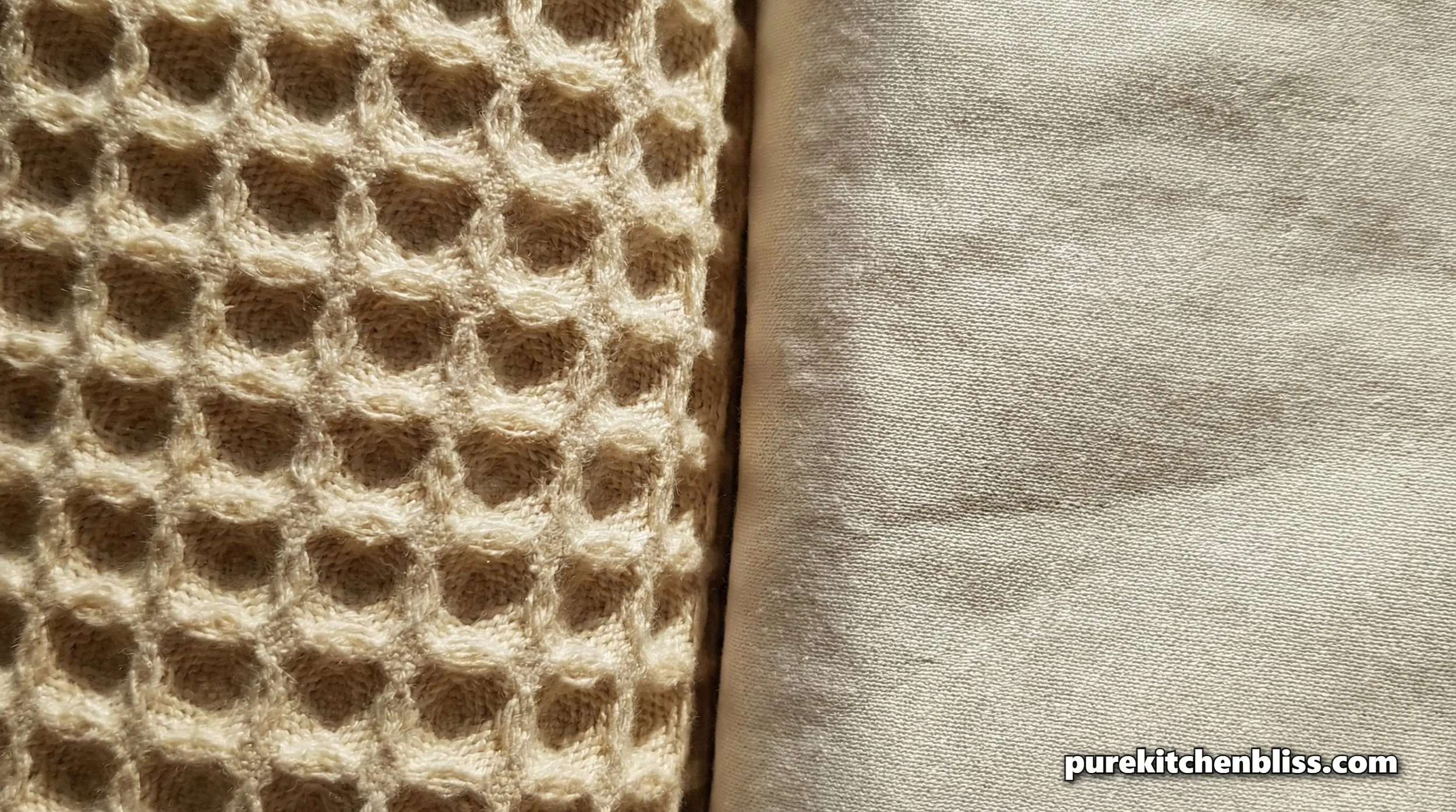
The Waffle Weave: These towels feature a recessed honeycomb pattern that increases the surface area for water absorption. These are your "extraction tools" for large spills or drying heavy pots.
The Huck Towel: Originally used in the medical field, these are made of a durable cotton-linen blend. They are nearly indestructible and perfect for the Range Hood Restoration or wiping down your Kitchen Countertop Stewardship without scratching the resin or stone.
Cross-Contamination & The Health Ecosystem
From a home health perspective, the linen closet must act as a barrier. We recommend the "Zoned Storage" method. Kitchen linens should occupy their own dedicated shelf or be housed in breathable seagrass baskets.
Storing your dish towels directly next to bath towels can lead to "aroma transfer." Kitchen linens often retain the microscopic "ghost" of cooking oils and spices even after washing. To maintain the purity of your bath sanctuary, keep the culinary textiles in their own "Pantry Zone."
The "Apron Infrastructure"
The apron is the protective layer of the home curator. It is the first line of defense against the "Beautiful Chaos" of oil splatters and flour dust.
The Storage Ritual: Do not fold your aprons; hang them. Folding causes "crease loading" where grease can settle into the folds. A row of brass hooks on the inside of the linen closet door keeps them accessible and allows the fabric to air out between uses.
[IMAGE PROMPT 4: The Culinary Textile Palette]
Prompt: An editorial flat-lay shot of various kitchen textiles: a crisp white flour sack towel, a charcoal grey waffle-weave cloth, and a heavy linen apron with brass hardware. A sprig of rosemary sits on top. The lighting is bright and clear, emphasizing the different fabric textures.
8. Maintenance Rituals: The "Kitchen Strip"
Because kitchen linens are exposed to organic fats and proteins daily, they require a specific cleaning frequency. We have discussed How Often Should You Wash Tea Towels?, we must address the "Kitchen Strip."
Removing the "Oil Varnish"
Over time, kitchen towels develop a "tacky" feel. This is polymerized grease—the same substance we tackle in our How to Degrease Kitchen Cabinets Naturally.
The Thermal Reset: Wash kitchen linens separately on the highest heat setting (140°F / $60°C).
The Acid Rinse: Use 1 cup of white vinegar in the fabric softener compartment. This breaks down the alkaline soap residue and the acidic cooking oils simultaneously.
The Sun Cure: Whenever possible, hang kitchen linens in direct sunlight. UV rays are the most sustainable "bleach" available, naturally sanitizing the fibers and removing stubborn pigment stains from berries or turmeric.
9. Material Science: The Physics of the Fiber
To curate a high-performance linen closet, you must understand the "structural integrity" of the materials you are storing. Every fiber has a specific reaction to the environment of your home. Choosing the right material for the right task is the hallmark of intentional stewardship.
Long-Staple Cotton: The Structural Standard
When we talk about "luxury" cotton, we are usually referring to the length of the individual fibers (the staples).
Egyptian and Pima Cotton: These feature extra long staples, which mean fewer "ends" in the yarn. This results in a fabric that is significantly stronger and less prone to pilling.
The Storage Requirement: Because these high end cottons are so dense, they hold onto moisture. If you live in a humid climate, these linens should never be stored in the "bottom zone" of a closet where air is coolest and most stagnant. Store them at eye level to ensure they stay crisp.
European Flax Linen: The Sustainable Powerhouse
Linen is a "hollow" fiber, which makes it a natural insulator. It stays cool in the summer and warm in the winter. From an organizational perspective, linen is unique because it is antimicrobial.
The Storage Requirement: Linen fibers contain pectin, which gives them their characteristic "stiffness." Over folding or compressing linen under heavy stacks can actually break these fibers over time. To preserve the "supple" nature of your flax linens, they should be stored at the top of a stack or "filed" vertically in baskets.
Technical Synthetics: Microfiber and Beyond
While we prioritize natural fibers in a sustainable sanctuary, technical microfibers have a place in the kitchen for their "mechanical" cleaning ability.
The Storage Requirement: Microfiber is made of polyester and nylon split to a microscopic level. It acts like a magnet for dust and oils. Crucially: Microfiber should never be stored touching natural cotton towels. The static charge of the microfiber will pull lint off the cotton, "clogging" the microfiber and making it less effective for your Kitchen Countertop Stewardship.
10. The Folding Masterclass: Geometry for the Home
The way you fold your linens determines the "Spatial Efficiency" of your closet. In a high traffic home, we use geometry to ensure that the "Beautiful Chaos" of a busy week doesn't collapse your organizational system.
The "Hotel Triple-Fold" (The Gold Standard)
This fold is used in world-class resorts because it creates a self-supporting "brick" that won't topple.
The Vertical Third: Lay the bath towel flat. Fold one third of the width into the center, then the other third over it. You now have a long, narrow strip.
The Horizontal Half: Fold the bottom edge up to meet the top.
The Final Third: Fold the resulting rectangle into thirds again.
The Result: When placed on the shelf with the "spine" (the rounded edge) facing out, it creates a clean, uniform wall of white that looks professionally curated.
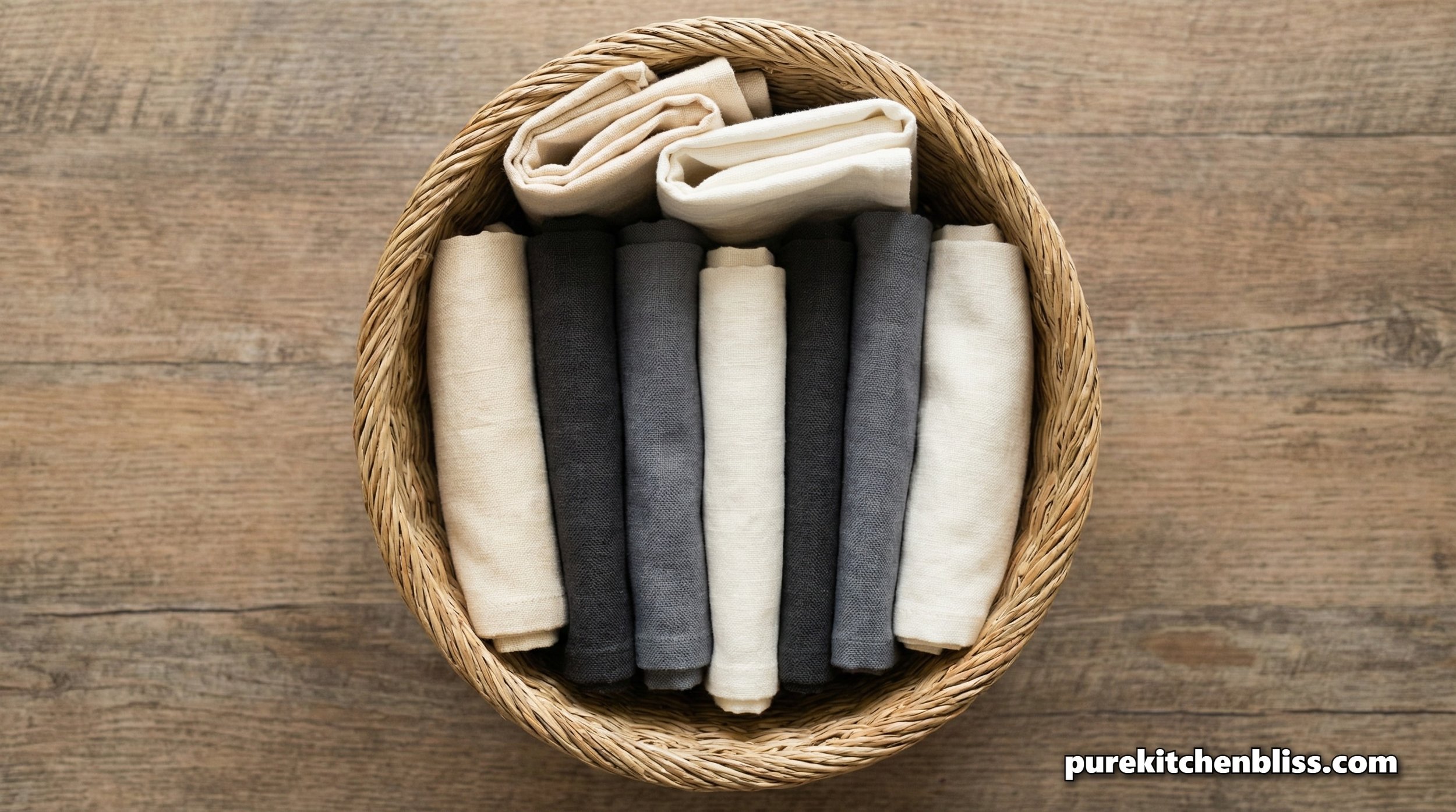
The "Kitchen Roll" (For High-Turnover Textiles)
For tea towels and cleaning cloths, the "Roll" is superior to the fold.
Fold the towel in half once.
Roll it tightly from the bottom up into a "log."
The Storage Ritual: Place these rolls "standing up" in a deep basket. This allows you to pull a fresh towel for your Sunday Night Countertop Reset without disturbing the rest of the inventory.
The "Envelope" Fold for Tablecloths
To prevent the deep, stubborn creases that ruin a dinner party's aesthetic, tablecloths require an "envelope" fold.
Fold the cloth into a large square.
Instead of a hard crease, lightly "roll" the final fold.
The Pro-Tip: Drape these over a padded hanger if space allows. If they must go on a shelf, place them on a dedicated "Tableware" shelf to avoid the weight of heavy bath towels compressing the fabric.
11. The Seasonal Reset: The "Textile Calendar"
A 3,000-word pillar guide is incomplete without a long-term maintenance plan. Stewardship is a year-round commitment.
Spring (The Audit): This is when we perform the "Blank Slate" audit described in Section 1. Remove winter flannels and check for any moisture damage from the damp winter months.
Summer (The Sun Cure): Take your white linens outside. The high UV index of summer is the perfect natural sanitizer for your kitchen "Flour Sacks."
Autumn (The Inventory Check): Before the "Beautiful Chaos" of the holiday season, ensure your "Guest Reserve" is washed and refreshed.
Winter (The Humidity Monitor): Use a small cedar block or a charcoal moisture absorber in the closet to prevent "winter staleness" while the heater is running.
12. The Sensory Infrastructure: Non-Toxic Scent Rituals
In a Sustainable Sanctuary, the "scent of clean" should not come from synthetic "linen spray" or petroleum-based dryer sheets. Those products coat the fibers in a waxy film that actually reduces the absorbency of your towels and introduces VOCs into your air. Instead, we use a sensory ritual that respects the air quality and the material's "bones."
The "Dryer Ball" Tech
Replace your dryer sheets with wool dryer balls. They create "mechanical agitation," separating the linens so hot air can flow more efficiently.
The Ritual: Add 3 drops of organic Lavender or Bergamot essential oil to each ball. The heat of the dryer infuses the scent deep into the fibers without the chemical residue.
The "Cabinet Sachet"
For long-term storage, especially for the "Guest Reserve," use natural desiccants.
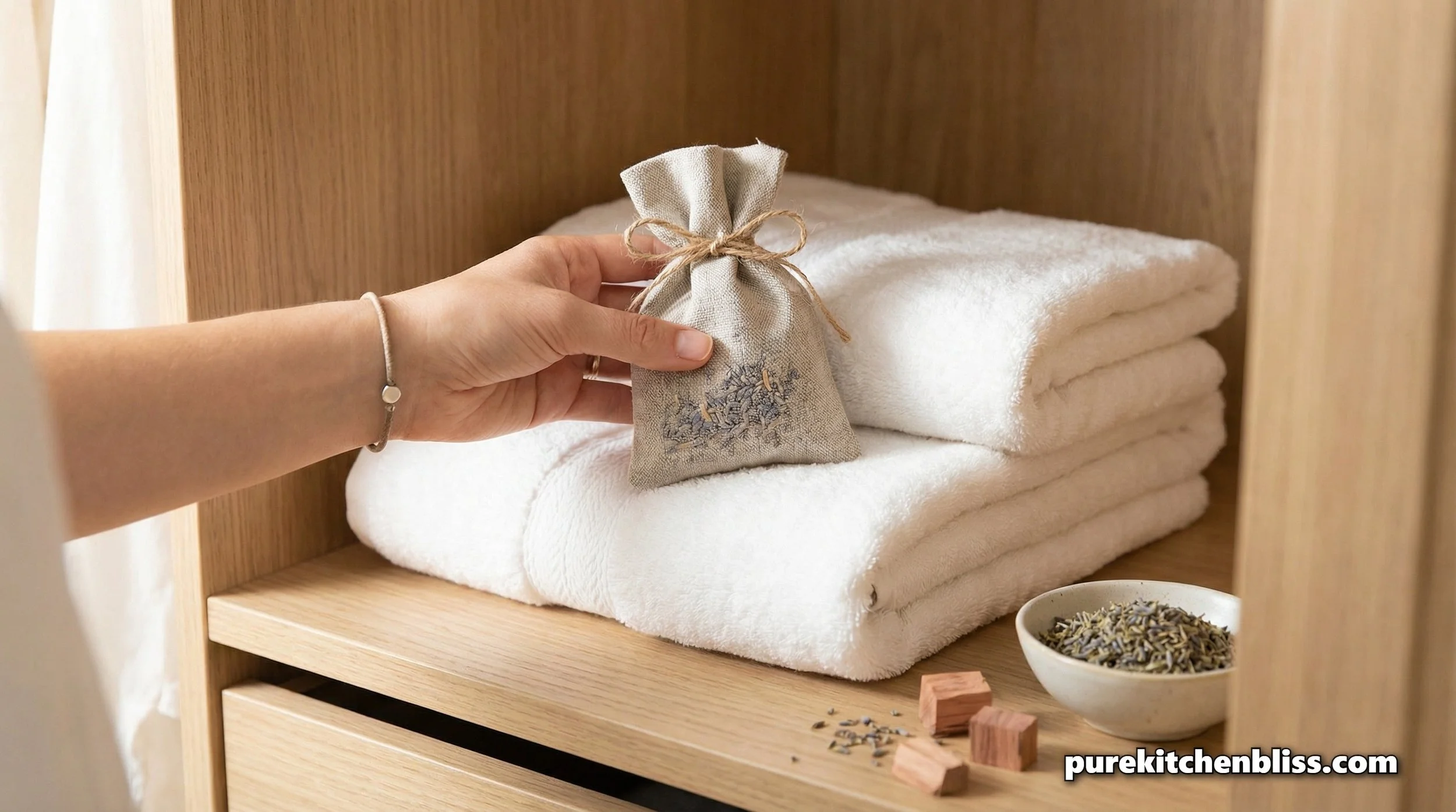
The Scented Barrier: Small linen bags filled with dried cedar chips or lavender buds act as a natural pest deterrent and moisture absorber. Place these in the corners of your shelves to maintain a "woody-fresh" profile that feels like a high-end boutique.
13. Budget Stewardship: When to Invest vs. When to Save
A high-performance home is not about spending the most money; it is about allocating resources where they provide the most "Structural Value."
Where to Invest: The "Primary Contact" Items
Spend your budget on the linens that have the most direct contact with your body for the longest duration.
Bed Sheets: High-quality long-staple cotton or European flax linen is worth the investment because it affects your sleep quality and lasts a decade.
Bath Towels: A heavy, 800 GSM (Grams per Square Meter) towel will outlast five cheap, "thin" towels, making it the more sustainable and economical choice over time.
Where to Save: The "High-Output" Items
Kitchen Tea Towels: Because these are exposed to the "Beautiful Chaos" of turmeric, red wine, and cast-iron soot, they have a higher turnover. Buy mid range "Flour Sacks" in bulk so you aren't afraid to use them for their intended purpose.
Cleaning Rags: These should never be bought. They are the "Third Life" of your retired bath towels and t-shirts.
14. The "End-of-Life" Protocol: Sustainable Disposal
Stewardship doesn't end when a towel is no longer fit for the bath. In a circular home ecosystem, we manage the disposal with intention.
Life Cycle One: The Primary Linen (Bath/Bed).
Life Cycle Two: The Secondary Use (Gym towels, pet towels, or car-wash cloths).
Life Cycle Three: The "Utility Rag" (Used for How to Degrease Cabinets).
Life Cycle Four: Textile Recycling. Never throw cotton or linen in the garbage. Many cities now have textile recycling bins where "un-salvageable" fabric is shredded into insulation or carpet padding.
15. The Final Inventory Checklist
[ ] Monthly: Quick Reset. Refold any toppled stacks and check for stale odors.
[ ] Quarterly: The "Kitchen Strip." Deep clean the culinary textiles to remove oil buildup.
[ ] Bi-Annually: The "Blank Slate" Audit. Remove everything and check for fiber fatigue.
[ ] Annually: The Humidity Check. Ensure your storage zones are dry and pest-free.
Conclusion: The Peace of the Organized Infrastructure
The Ultimate Linen Closet Audit is not a one-time chore; it is the establishment of a system that serves your family daily. By moving through the Audit, understanding the Material Science, and mastering the Geometry of the Fold, you have moved from "Beautiful Chaos" to a Sustainable Sanctuary.
When you open your linen closet and see a curated, fresh, and intentional space, it sends a signal to your brain that the house is "in hand." This is the foundational peace required for a high-performance life.