How to Strip Your Towels: The Ultimate Deep Reset for Absorbency
Have you ever noticed that even after a fresh wash, your towels feel slightly scratchy, less absorbent, or carry a faint, musty scent the moment they get damp? This isn't necessarily a sign that your towels are reaching the end of their life. Instead, it’s often a symptom of "Product Fatigue." Over months of daily use, towels accumulate a microscopic layer of body oils, mineral deposits from hard water, and, ironically, leftover residue from detergents and fabric softeners.
To restore your towels to their original boutique-level plushness, you need a "Deep Reset." In the world of home stewardship, this is known as towel stripping. This non-toxic process reaches deep into the fibers to extract the buildup that standard wash cycles leave behind.
1. Why Standard Washing Isn't Enough
Most of us were taught that more detergent equals cleaner laundry. However, modern high-efficiency (HE) washers use very little water. When we use too much soap, the machine cannot fully rinse it away. This excess detergent stays trapped in the loops of the terry cloth, attracting dirt and creating a "varnish" that repels water—the exact opposite of what a towel should do.
Furthermore, commercial fabric softeners are essentially a thin layer of silicone or oil designed to coat fibers to make them feel slippery. On a towel, this coating clogs the fiber's ability to absorb moisture. Stripping is the only way to dissolve this coating and return the cotton to its natural, thirsty state.
2. The Chemistry of Hard Water and "Grey" Towels
If you live in an area with hard water, your towels are facing a constant battle against minerals like calcium and magnesium. These minerals don't just sit on the surface; they bond with the soap molecules to create "soap scum" (lime soap).
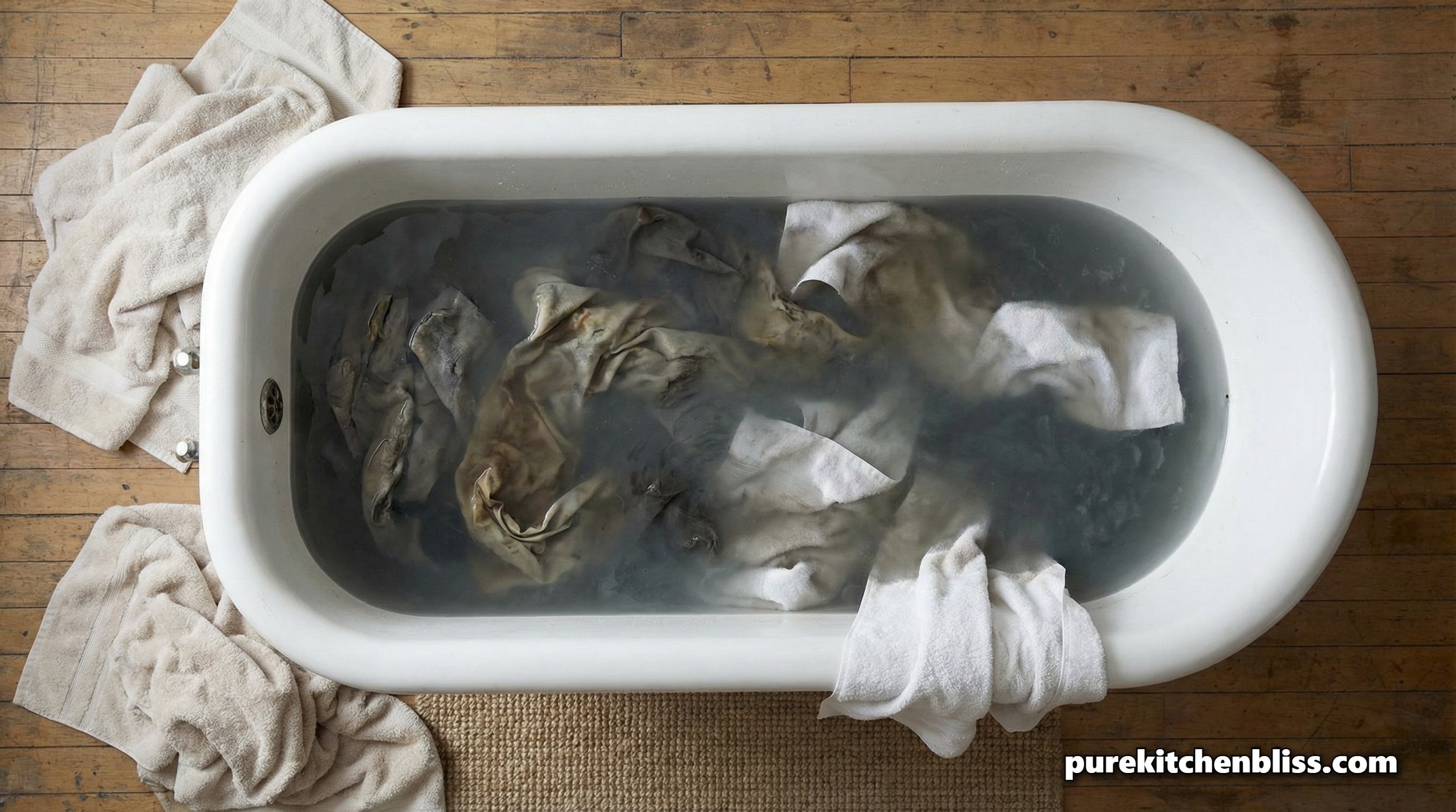
This chemical reaction turns white towels grey and colorful towels dull. It also makes the fibers brittle. When you "strip" your towels, you are using high-alkalinity boosters to break these mineral-soap bonds. By raising the pH of the water, we allow the minerals to detach from the cotton and dissolve into the water, which is why the soak water often looks so surprisingly dark.
3. The Non-Toxic Stripping Protocol
This process is a "slow burn" ritual. It requires time rather than elbow grease. We avoid harsh chemicals or bleach, which can weaken the structural integrity of the cotton, and instead use three simple, pantry stable ingredients.
The Ingredients:
Baking Soda: To lift odors and neutralize acids.
Washing Soda (Sodium Carbonate): A heavy duty booster that increases water pH to help dissolve oils.
Borax: A naturally occurring mineral that aids in breaking down hard water minerals.
The Step-by-Step Ritual:
The Thermal Base: Fill your bathtub or a large top-load washer with the hottest water your towels can handle. For white cotton, aim for at least 60°C (140°F).
The Mix: Add a 1/4 cup of Baking Soda, 1/4 cup of Washing Soda, and 1/4 cup of Borax. Stir until fully dissolved.
The Submerge: Place your clean towels into the water. Agitate them slightly by hand or with a wooden spoon to ensure the solution penetrates every loop.
The Dwell Time: Let them soak for at least 4 to 6 hours. As the water cools, the chemical reaction slows down, pulling the "Bio-load" out of the fibers.
The Extraction: Wring the towels out (the water will likely be a murky amber or grey).
The Final Rinse: Run the towels through a regular wash cycle with no detergent. Add a cup of white vinegar to the rinse cycle to help strip away any remaining minerals.
4. Troubleshooting: Color-Safe Stripping
A common concern is whether this process will ruin colored towels. While the high heat and alkalinity are aggressive, they are generally safe for modern, color-fast dyes. However, if you are stripping dark navy, charcoal, or forest green towels:
Reduce the Temperature: Use warm water (40°C / 105°F) instead of boiling.
Shorten the Soak: Limit the soak to 2 hours.
Salt Fixative: Add 1/2 cup of table salt to the soak. Salt acts as a mordant, helping to "lock" the dye into the fibers while the minerals are being stripped away.
5. Maintaining the Reset: The Physics of Drying
Once you have reset the "infrastructure" of your towels, how you dry them is just as important as how you wash them.
The Over-Drying Trap
High heat in the dryer can be just as damaging as mineral buildup. It "cooks" the cotton fibers, making them brittle and prone to snapping. This is why you often see "lint" in the trap, that lint is actually the broken pieces of your towel’s bones.
The Ritual: Use a medium-heat setting and remove the towels while they are still 5% damp. Shaking them out vigorously before folding allows the loops to stand up, creating that "hotel plush" feel.
The Role of Mechanical Agitation
Ditch the liquid softener forever. As we noted in our The Ultimate Linen Closet Audit, softener is the primary enemy of towel performance. Use wool dryer balls instead. They provide the mechanical agitation needed to "fluff" the cotton loops naturally without leaving a water-repellent film.
6. When to Strip vs. When to Retire
While stripping can perform miracles, it cannot fix broken fibers. As part of your stewardship, you must recognize when a towel has reached its end of life.
The Transparency Test: If you can see through the weave when holding it up to a window, the structural integrity is gone.
The Fragrance Test: If a towel still smells musty after a full strip and a vinegar rinse, the bacteria have likely colonized the "core" of the yarn.
The "Rag" Transition: When a towel is retired from the bath, it begins its second life. These make excellent heavy-duty cloths for your Range Hood Restoration or for mopping up spills during your Sunday Night Countertop Reset.
7. Conclusion: Restoring the Sanctuary Experience
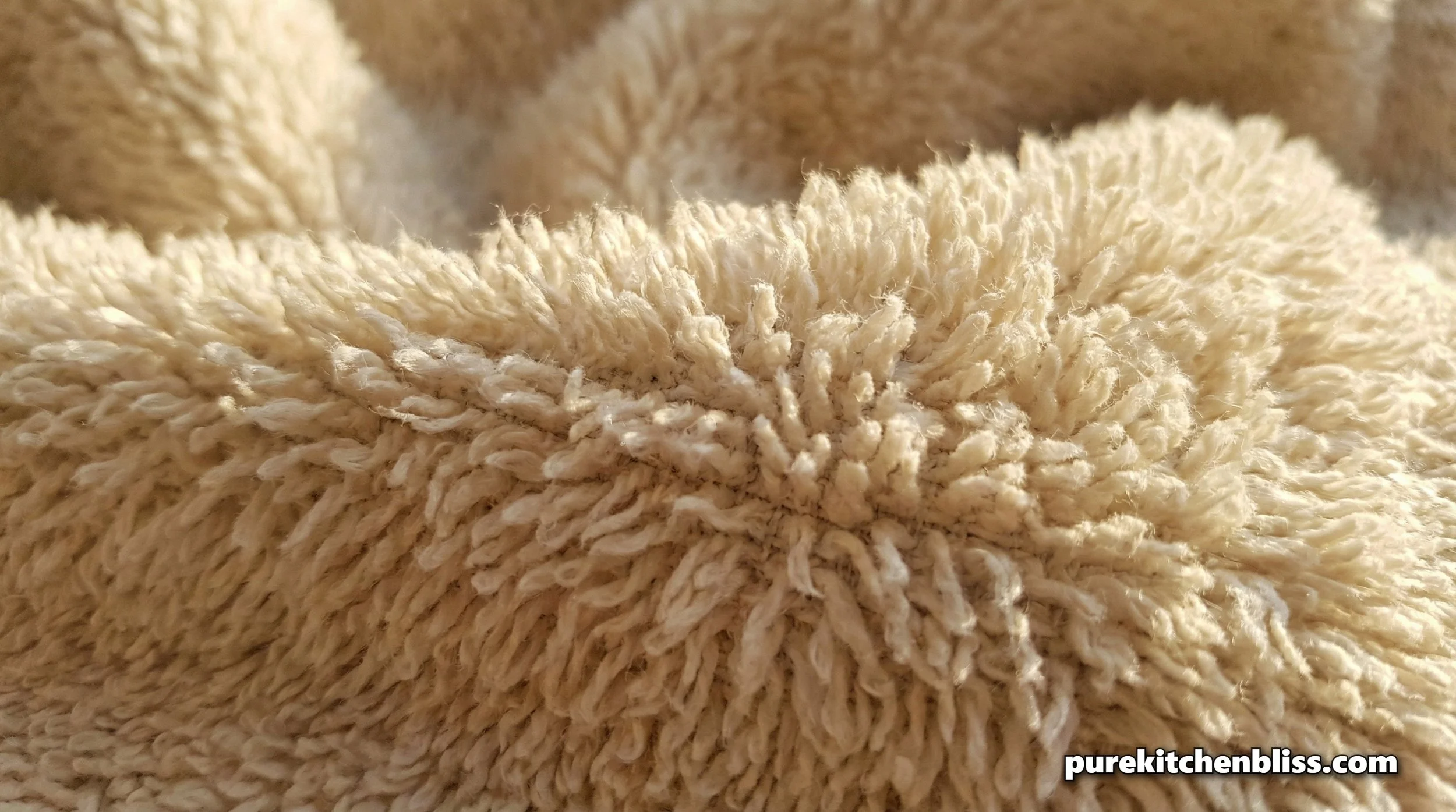
There is a specific kind of bliss in a perfectly soft, fresh-smelling towel. It elevates the simple act of bathing into a spa-like ritual. By taking the time to strip your towels twice a year, you aren't just cleaning; you are practicing intentional stewardship of your home’s soft infrastructure.
A sustainable sanctuary is built on these small, mindful resets. When we care for our materials properly, they care for us in return, providing a high-performance environment for the "Beautiful Chaos" of family life.
Explore More in Your Home Sanctuary:
To organize your newly refreshed towels: The Ultimate Linen Closet Audit
To find the perfect non-toxic scent for your bathroom: 5 Natural Ways to Scent Your Linen Closet
To deep-clean the rest of your kitchen textiles: How Often Should You Wash Tea Towels?