How I Organize My Fridge for Faster, Safer School Lunches
Transparency Note: We independently select these products based on research and user reviews. If you buy something through our links, we may earn a commission.
Every August, the same thing happens in my house. Four kids, four different school start times, and a fridge that turns into a demolition site by 7:15 in the morning. Somebody can't find the yogurt, somebody grabs the wrong water bottle, and I'm standing there with a coffee I haven't had a chance to drink yet, trying to remember whose lunch still needs an ice pack.
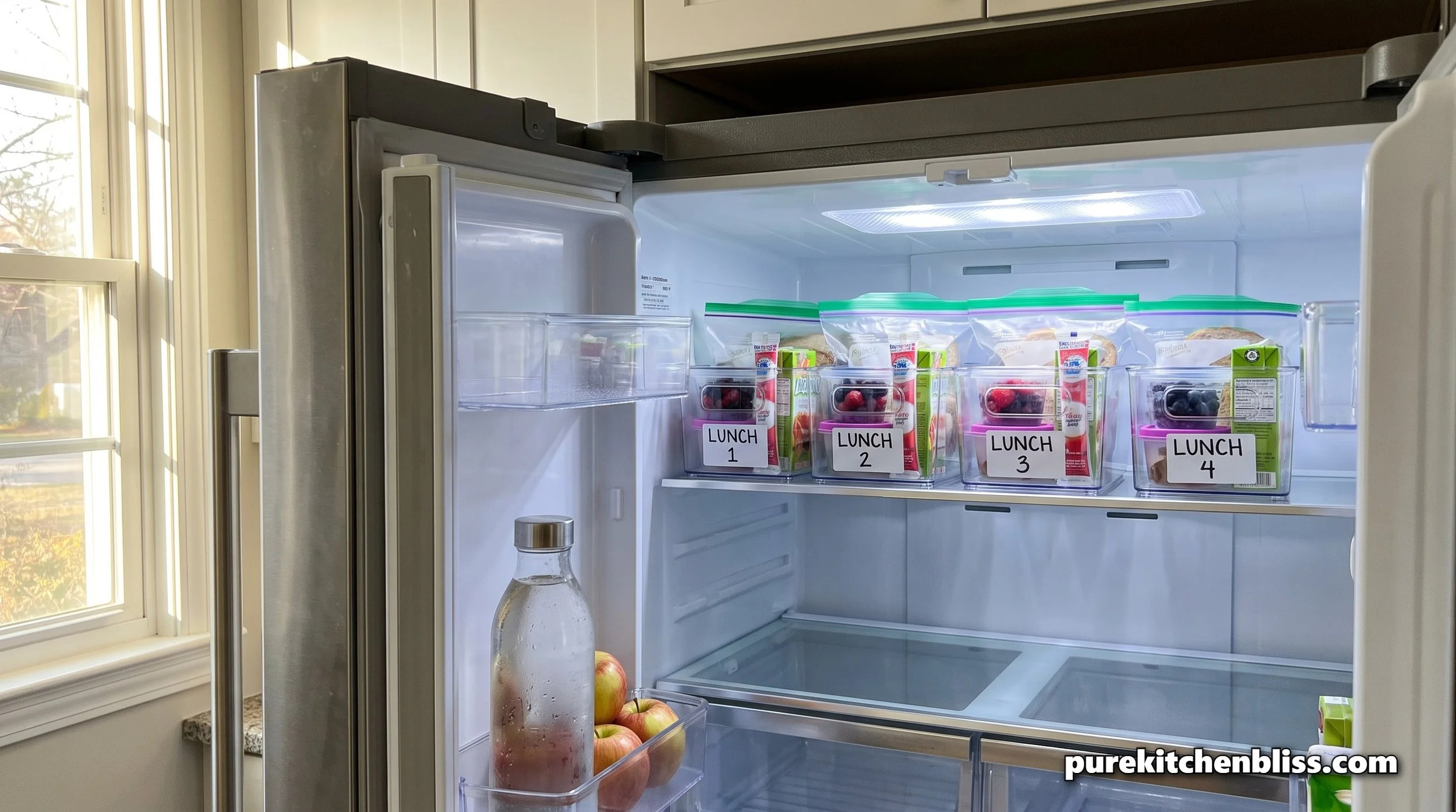
A few years ago I started treating the fridge the same way I'd treat a job site. You don't start framing without a plan for where the studs go, and you shouldn't stock a fridge without a plan for where the food goes either. Once I built dedicated zones and labeled them, lunch packing stopped being a scramble. This is the layout I use now, along with the food safety reasoning behind it, because the placement matters as much as what you buy.
Why fridge organization actually affects lunch safety
This isn't just a tidiness issue. The FDA Food Code defines a temperature danger zone between roughly 41°F and 135°F where bacteria multiply fastest, and populations can double in as little as 20 minutes under the right conditions. That is the range perishable lunch items pass through every time a fridge door sits open too long or a bag of deli meat gets buried behind a half used jar of salsa instead of sitting where it stays cold.
The USDA estimates more than 48 million cases of foodborne illness happen in the US every year, with tens of thousands of hospitalizations. Most of those cases are preventable with basic handling, and a fridge that stays reliably at 40°F or below is the first line of defense. A cluttered, disorganized fridge doesn't just look messy. It makes it harder to keep the coldest items where the temperature is most consistent, and easier to lose track of how long something has actually been sitting there.
Building a dedicated lunch zone
The top shelf of most fridges holds the most consistent temperature, which makes it the right spot for anything going straight into a lunch bag, pre-portioned snacks, yogurt tubes, cut fruit, sandwiches made the night before. I keep this shelf stocked with a row of clear, stackable bins so each kid can see their own lunch items without pulling out three other things to check. When I'm cutting apples or portioning produce for four lunches at once, having the right board actually speeds things up, something we get into in our wood versus plastic cutting board guide.
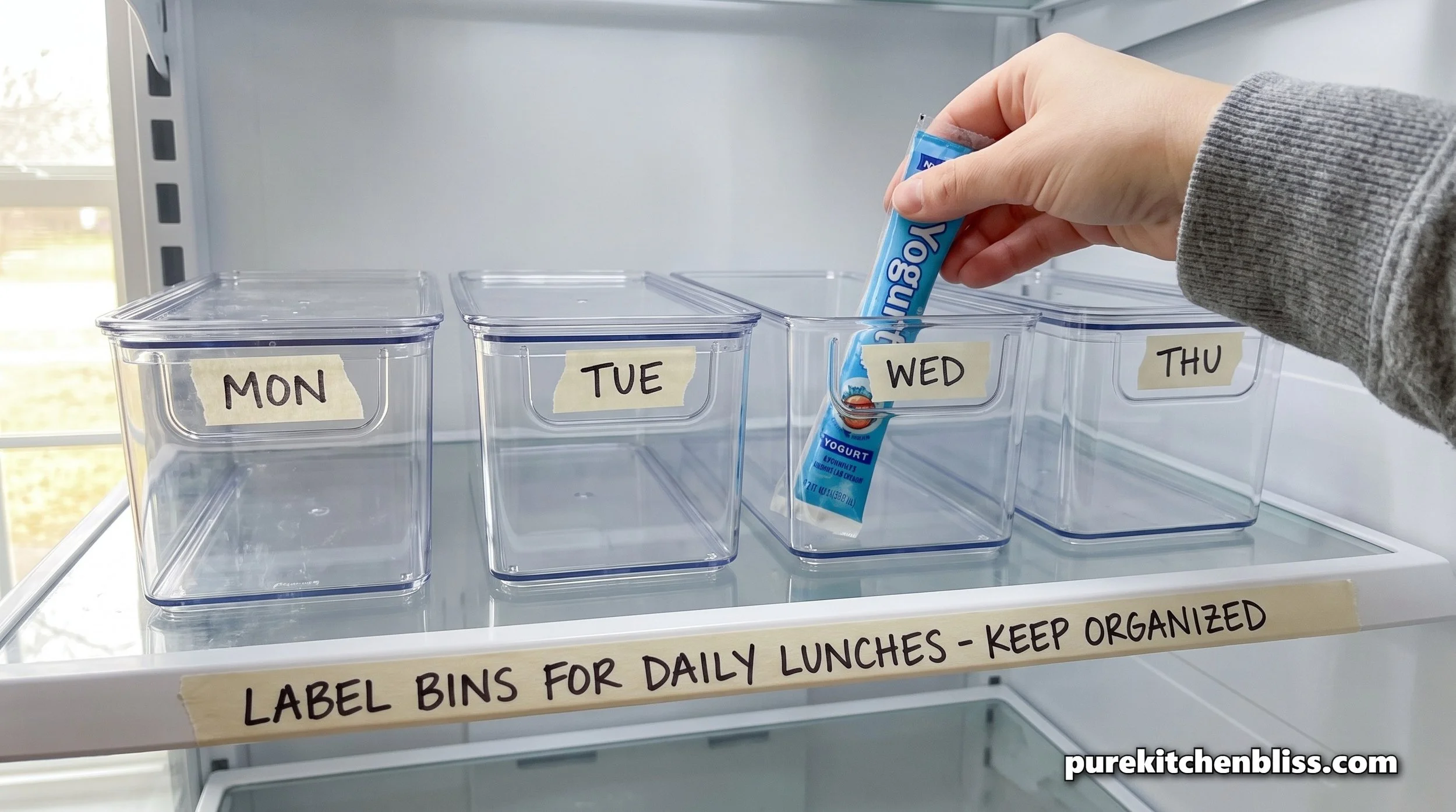
The door is the warmest, most temperature-variable part of the fridge because it's exposed every time it opens, so I only use it for condiments and drinks that don't need tight temperature control, never for milk, eggs, or deli meat. Crisper drawers stay reserved for produce, with high-humidity settings for anything leafy and low-humidity for fruit that spoils fast in a damp drawer. If you haven't looked at your fridge's shelf and drawer layout with this kind of intent before, our fridge and freezer organization guide covers the full setup in more detail. For the bins themselves, I've had good results with the ones covered in our best fridge storage containers roundup, and stackable clear bins like these are what I use for the lunch shelf specifically.
The pantry side, for items that don't need to compete for fridge space
Not everything in a lunch bag needs refrigeration, and treating every snack like it does just crowds out the items that actually require cold storage. Whole fruit, hard cheese, canned meat and fish, crackers, bread, and jerky are all shelf-stable options that USDA guidance lists as safe without refrigeration, as long as they're kept in sealed, clean packaging. I keep a dedicated pantry shelf at kid height stocked with these, in airtight containers like these so nothing goes stale or gets crushed at the bottom of a backpack before it even makes it to school. If you're also rethinking what those containers are made of, our guide to non-toxic cookware and dishes for kids walks through what to avoid and what's actually safe.
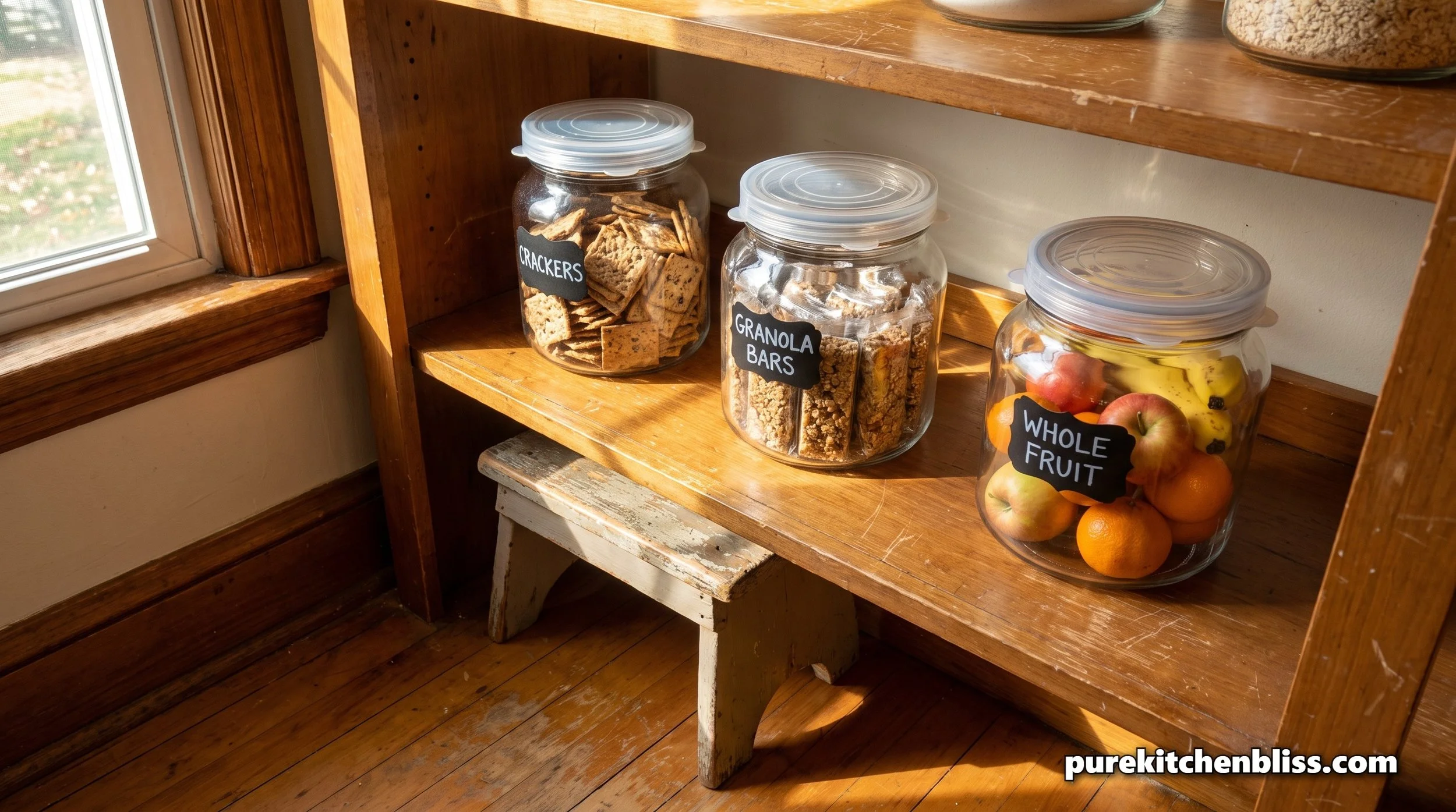
Splitting lunch supplies this way, cold items on one dedicated fridge shelf, shelf-stable items on one dedicated pantry shelf, means a kid or a rushed parent can build a full lunch without opening five different cabinets. It also means the fridge only holds what genuinely needs to be cold, which keeps that shelf less crowded and easier to keep at a safe temperature.
What I build, not just what I buy
As a carpenter, I'll admit I take this further than most people would. In our kitchen I installed a shallow pull-out shelf at counter height specifically for lunch assembly, so nobody's leaning into the fridge with the door open longer than it needs to be. If a full pull-out isn't practical in your kitchen, even a labeled bin pulled out onto the counter during assembly and put straight back accomplishes the same thing, less time with the fridge door open, less temperature swing.
The other habit that matters here has nothing to do with storage and everything to do with hands. The FDA's food safety framework starts with Clean before Separate, Cook, and Chill, and that includes washing hands before handling lunch food, not just before dinner prep. We cover the specifics of when and how in how often you should wash your hands while cooking, and the same guidance applies to assembling lunches in the morning.
Cold packs and safe transport, the part most people skip
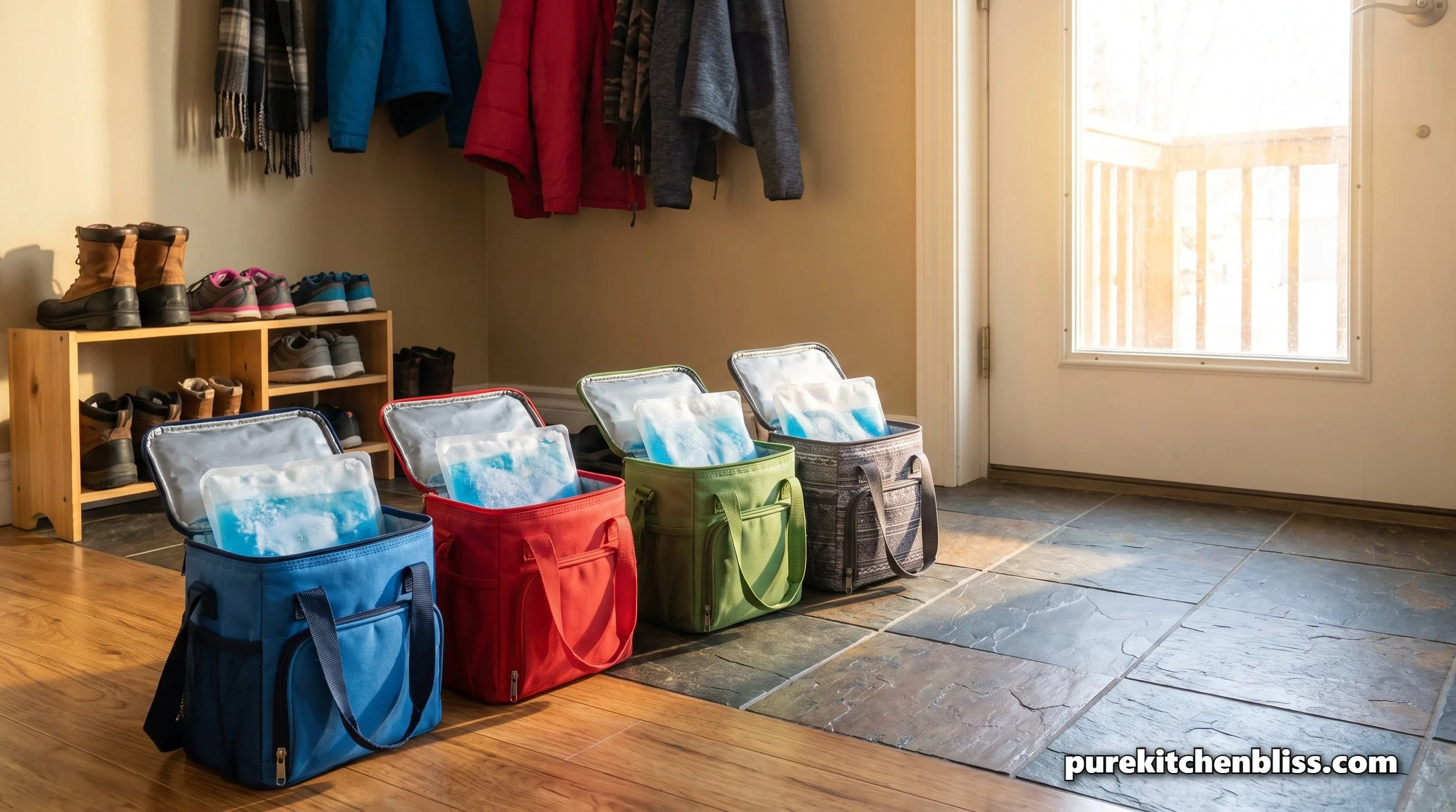
A well-organized fridge doesn't help much if the lunch bag warms up on the bus. USDA guidance recommends at least two cold sources per lunch bag, either two frozen gel packs or a gel pack combined with a frozen water bottle or juice box, to keep perishables at or below 40°F until lunchtime. I keep a set of reusable ice packs in the freezer at all times so there's never a scramble looking for one that's actually frozen.
Soft-sided insulated bags do a better job holding temperature than a paper bag, and freezing the empty bag overnight before packing it gives it a head start. We use insulated lunch bags for all four kids now, and it's made a noticeable difference in how cold the contents still are by lunchtime. If a classroom has a fridge available, USDA guidance also notes that storing the bag there with the lid unzipped lets cold air circulate faster than a fully sealed bag sitting at room temperature.
A five minute weekly reset
Every organization system falls apart without maintenance. Before the weekly grocery run, I do a five minute pass through both the lunch shelf and the pantry shelf, moving older items to the front, tossing anything past its safe date, and wiping up any spills before they turn into a bigger cleaning job. This first-in-first-out habit is standard practice in commercial kitchens for a reason, and it takes almost no time if you do it on a fixed schedule instead of waiting until something smells off.
| Fridge zone | Temperature behavior | Best for | Avoid storing here |
|---|---|---|---|
| Top shelf | Most consistent temperature | Ready to eat lunch items, cut fruit, yogurt, pre-made sandwiches | Raw meat or anything needing max cold |
| Middle shelves | Stable, slightly cooler than top | Deli meat, cheese, leftovers | Eggs long term (better on a shelf, not the door) |
| Bottom shelf | Coldest zone | Raw meat, poultry, fish (contains drips, prevents cross contamination) | Anything eaten without further cooking |
| Crisper drawers | Humidity controlled | High humidity: leafy greens. Low humidity: fruit | Mixing produce types in one drawer |
| Door | Warmest, most variable | Condiments, dressings, jams | Milk, eggs, deli meat |
What this setup actually gets you
None of this requires a kitchen renovation. It requires deciding where cold lunch items live, where shelf-stable items live, and sticking to it consistently enough that everyone in the house knows the system without asking. The temperature guidance behind it isn't complicated either, keep the fridge at 40°F or below, keep lunch bags below that same threshold with two cold sources, and don't let food sit in the danger zone longer than it has to. Once those two things are true, the rest is just knowing where to reach.