How Often Should You Really Wash Your Hands While Cooking?
We’ve all been there: you’re in the middle of a complex recipe, the pan is sizzling, and you realize you need to check your phone for the next step. Or maybe you just finished dicing a chicken breast and you’re about to reach for the salt cellar. In those high-pressure moments, the question always pops up: Do I really need to wash my hands again?
Handwashing is the most basic part of kitchen safety, but it’s also one of the most confusing. If you wash every single time you touch a different ingredient, you’ll end up with cracked, dry skin before the onions are even translucent. But if you skip a wash at the wrong time, you risk turning a nice dinner into a case of food poisoning.
To cook like an expert, you need to understand the "Critical Moments" of hand hygiene. It’s not about washing constantly, it’s about washing at the right times.
1. The Non-Negotiables: When You Must Use Soap
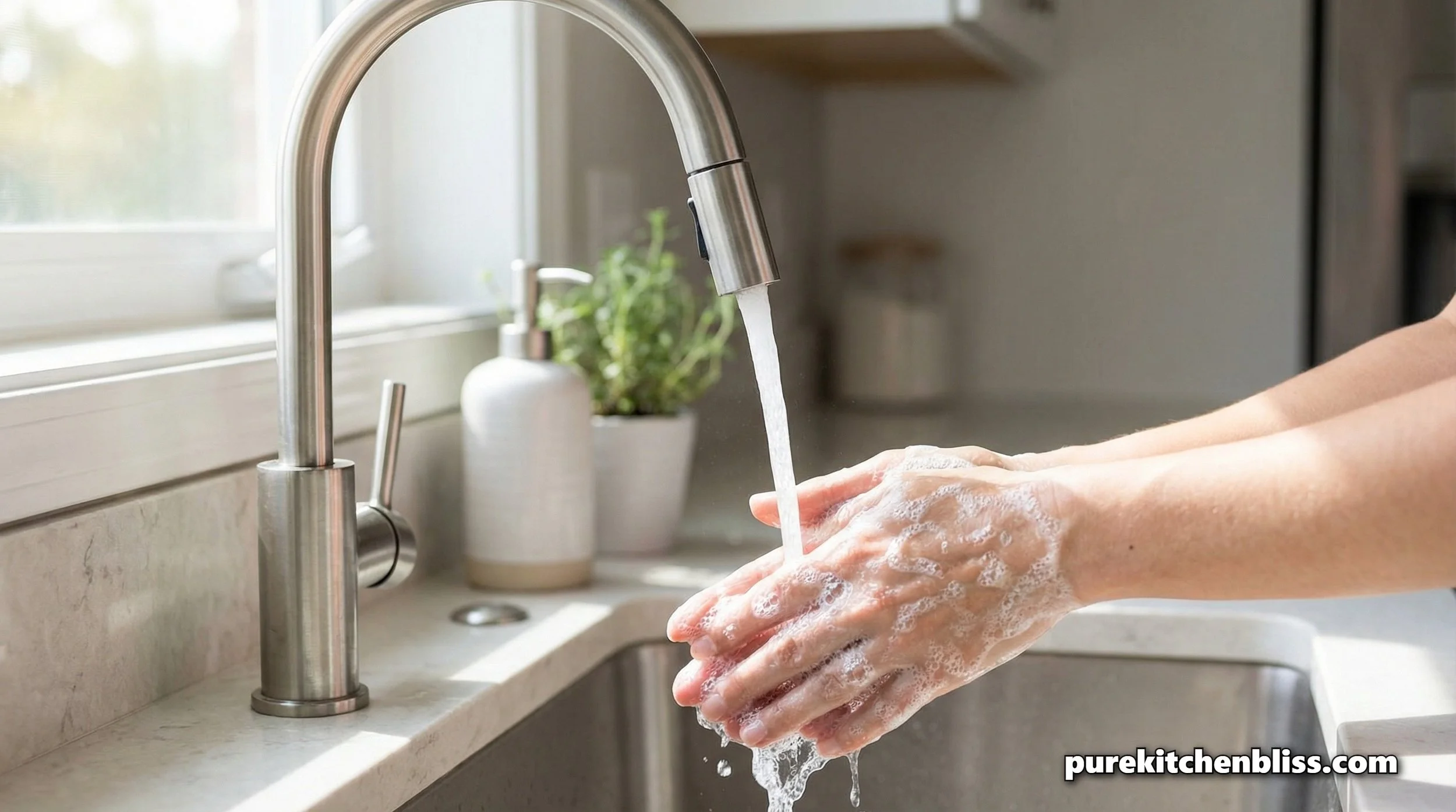
There are certain moments in the kitchen where a simple water rinse isn't enough. In these scenarios, you need to use warm water and soap for at least 20 seconds to break down the proteins and fats that trap bacteria.
After Handling Raw Proteins
This is the big one. Whether it’s chicken, beef, pork, or seafood, raw animal proteins can carry pathogens like Salmonella, Listeria, or E. coli. These bacteria are "sticky"—they cling to the oils on your skin. If you touch a cabinet handle or a spice jar after touching raw meat, you’ve just contaminated those surfaces for days.
After Touching "High-Germ" Surfaces
Your phone is the dirtiest thing in your kitchen. Studies have shown that cell phones can carry more bacteria than a toilet seat. If you pause your cooking to scroll through a recipe or answer a text, you must wash your hands before touching food again. The same goes for touching your hair, face, or the kitchen trash can lid.
Before You Start and After You Finish
It sounds obvious, but many people forget the "pre-game" wash. Your hands carry the germs of everything you’ve touched all day, doorknobs, steering wheels, keyboards. Always start with a clean slate to avoid bringing outside bacteria into your sanctuary.
2. The "Gray Areas": When a Rinse Is Enough
You don't always need to go through the full 20-second soap scrub. If you are moving between "low-risk" tasks, you can save your skin (and your time) with a simple water rinse.
Switching Between Vegetables: If you’ve just finished chopping carrots and you’re moving on to celery, a quick rinse under cold water is perfectly fine.
Handling Dry Goods: If you’re measuring out flour or pasta, your hands aren't picking up dangerous pathogens.
Wiping the Counter: If you’re just wiping up some spilled water or crumbs with a clean cloth, you generally don't need a full soap-and-water scrub afterward.
| The Action | Do You Need to Wash? | The Expert Reason |
|---|---|---|
| Handling Raw Meat/Poultry | YES (Mandatory) | Prevents the spread of Salmonella and E. coli to other surfaces. |
| Touching Your Phone/Face | YES | Phones are "germ magnets." Don't transfer those to your food. |
| Switching Between Veggies | Optional (Rinse Only) | If veggies are clean, a simple water rinse is usually enough. |
| Tasting with a Spoon | NO (Wash Spoon) | Just don't double-dip the spoon. Your hands stay clean here. |
3. The Science of the "20-Second Rule"
Why do experts insist on 20 seconds? It’s not just a random number. Soap doesn't actually "kill" all bacteria on contact. Instead, soap works as a surfactant. It loosens the bond between your skin and the microbes, grease, and dirt.
It takes about 15 to 20 seconds of mechanical friction (scrubbing) to physically lift those germs off your skin so they can be washed away by the water. If you just "splash and dash," the bacteria stay right where they are, tucked into the microscopic ridges of your fingerprints.
4. Protecting Your Hands: The "Chef’s Skin" Protocol
If you’re cooking a three-course meal, you might end up washing your hands ten times in an hour. This constant exposure to water and soap strips away the natural oils (sebum) that protect your skin. This leads to "contact dermatitis", red, itchy, and cracked skin that can actually become a hiding place for even more bacteria.
To keep your hands healthy, follow these expert tips:
Use "Superfatted" or Moisturizing Soap: Look for soaps that contain glycerin, aloe, or oils. These help replace some of the moisture lost during the wash. Avoid harsh "antibacterial" soaps; regular soap is just as effective at removing germs without being as hard on your skin.
The "Dab, Don't Rub" Rule: When you dry your hands, pat them dry with a clean towel instead of vigorously rubbing them. Rubbing creates micro-tears in the skin that lead to irritation.
Apply Lotion After the Meal: Don't apply heavy lotion while you’re still cooking (you don't want it getting in the food). But the moment the dishes are done and the kitchen is reset, apply a high-quality hand cream to repair the skin barrier overnight.
5. Cross-Contamination: It’s Not Just Your Hands
Even if your hands are perfectly clean, you can still spread germs if your "tools" are dirty. This is where your The Best Cutting Boards for Your Kitchen come into play.
The Spice Jar Trap: One of the most common ways people get sick is by touching a spice jar with "chicken hands," putting the jar back, and then touching it again two days later when they are making a salad.
The "Mise en Place" Solution: Professional chefs avoid this by practicing mise en place. They measure out their spices and prep their veggies before they ever touch the raw meat. This way, you only have to wash your hands once after the meat is in the pan, rather than constantly stopping and starting.
6. Hand Sanitizer: Does It Work in the Kitchen?
Hand sanitizer is a great backup, but it is not a replacement for washing your hands while cooking. Sanitizer works best on "clean" hands. If your hands are covered in flour, grease, or chicken juice, the alcohol in the sanitizer can't reach the skin to kill the germs. It just creates a "germy paste" on your hands. Use sanitizer for a quick refresh after touching a cabinet handle, but always use soap and water after handling raw food.
Conclusion: Cooking with Confidence Understanding when to wash your hands isn't about being a germaphobe; it’s about being an efficient, safe cook. By focusing your cleaning on the "Critical Moments", like handling raw meat or touching your phone, you protect your health without ruining your skin. A clean hand is the best tool in any kitchen sanctuary.
Explore More in Your Sanctuary:
Ensure your prep surfaces are safe: The Best Cutting Boards for Your Kitchen: Wood vs. Plastic
Give your plants the best start: How to Use Coffee Grounds for Your Plants Without Killing Them
Stay ahead of the 2026 trends: Kitchen Color Trends for 2026: What’s In and Why