Where is the Best Place to Store Coffee in Your Kitchen?
In the "Beautiful Chaos" of a busy home, the coffee station is often the high-traffic engine that powers the Monday Morning Momentum. It’s the ritual that centers the day. However, for many home enthusiasts, coffee storage is an afterthought. We spend significant time selecting the right roast or the perfect brewer, only to store the beans in a way that actively destroys their quality—on a sunny windowsill or in the damp environment of a freezer.
To maintain a sustainable sanctuary, we have to look at coffee as a living organic product. Coffee beans are highly porous, acting almost like sponges that absorb every odor and molecule of moisture in your kitchen. Protecting the "bones" of your coffee isn't just about taste; it's about respecting the materials in your pantry.
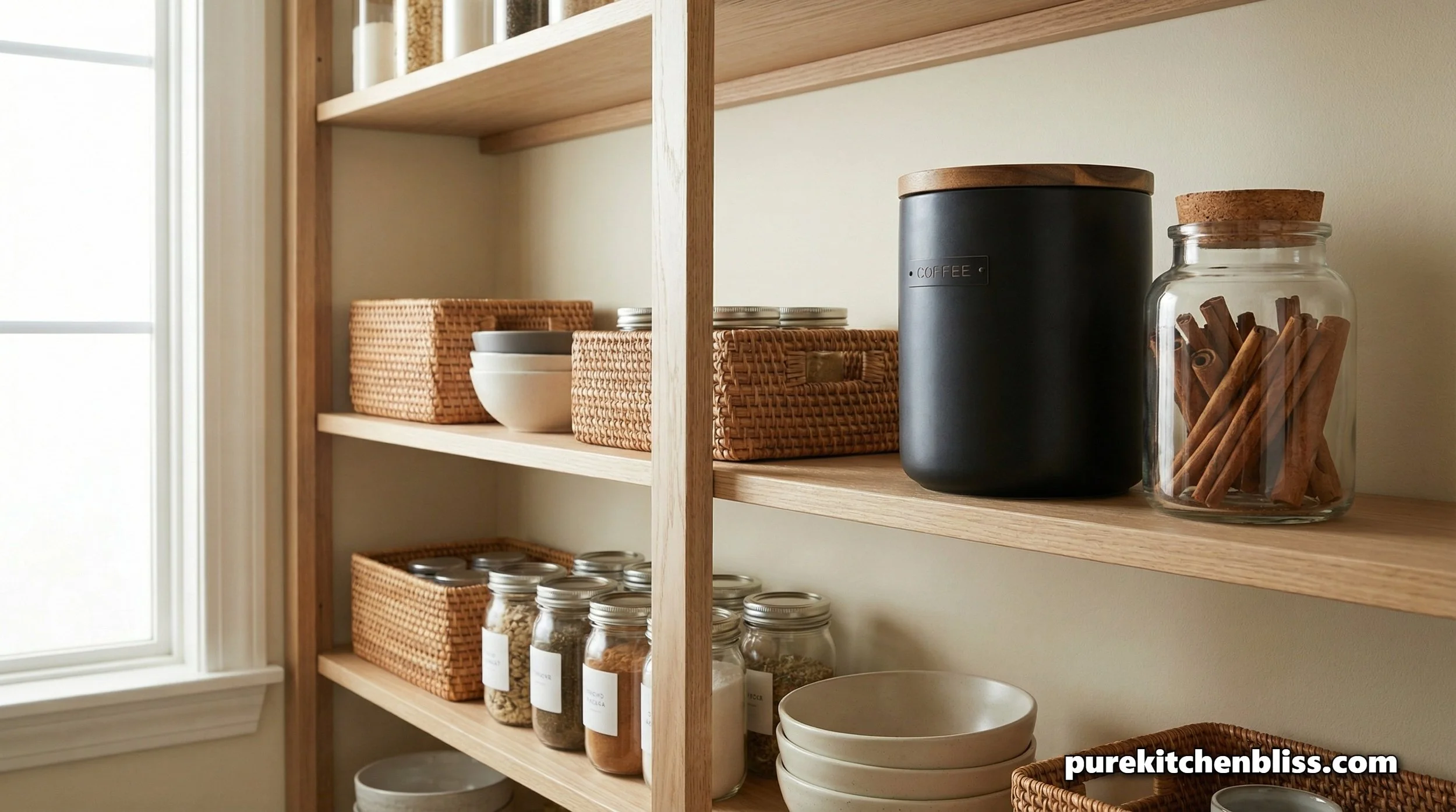
The Science of the "Pantry Peak"
The gold standard for coffee storage is a location that is cool, dark, and dry. While it is tempting to keep your beautiful coffee bags on display, environmental exposure is the primary cause of flavor decay.
The Heat Rule
Temperature stability is the most overlooked factor in kitchen organization. Never store coffee in a cabinet directly above or beside your oven, toaster, or dishwasher. These appliances create "micro-climates" of fluctuating heat. When coffee beans are heated and cooled repeatedly, the delicate lipids (oils) rise to the surface and go rancid. To protect your investment, find a "low-energy" zone in your kitchen, a pantry, or a lower cabinet away from the heat-producing infrastructure.
The Light Rule
UV rays are remarkably destructive. They trigger a process called photodegradation, which breaks down the chemical compounds and aromatic precursors in your beans. If you prefer the look of glass storage, perhaps using the techniques found in How to Clean and Style Glass Jars, ensure those jars live behind a closed cabinet door. Sunlight is the enemy of freshness.
Debunking the Freezer Myth
One of the most persistent myths in home kitchen management is that the freezer preserves coffee. From a home-stewardship perspective, the freezer is actually a high-risk environment for two specific reasons:
The "Odor Sponge" Effect
Because coffee is naturally deodorizing (a trait explored in 5 Creative Uses for Coffee in Your Kitchen), it will proactively absorb the scents of its surroundings. In a refrigerator or freezer, your beans act as a filter for the aromas of leftovers or frozen goods. This results in a "bio-load" of flavors that have no place in your morning cup.
The Condensation Trap
The real danger lies in "Thermal Shock." Every time you remove a bag of coffee from the freezer to make a pot, the temperature shift causes moisture from the warm kitchen air to condense instantly on the cold beans. This moisture begins to "cook" the oils and dilute the flavor profile before the coffee even reaches your grinder. For a high-performance kitchen, room temperature is always the superior choice.
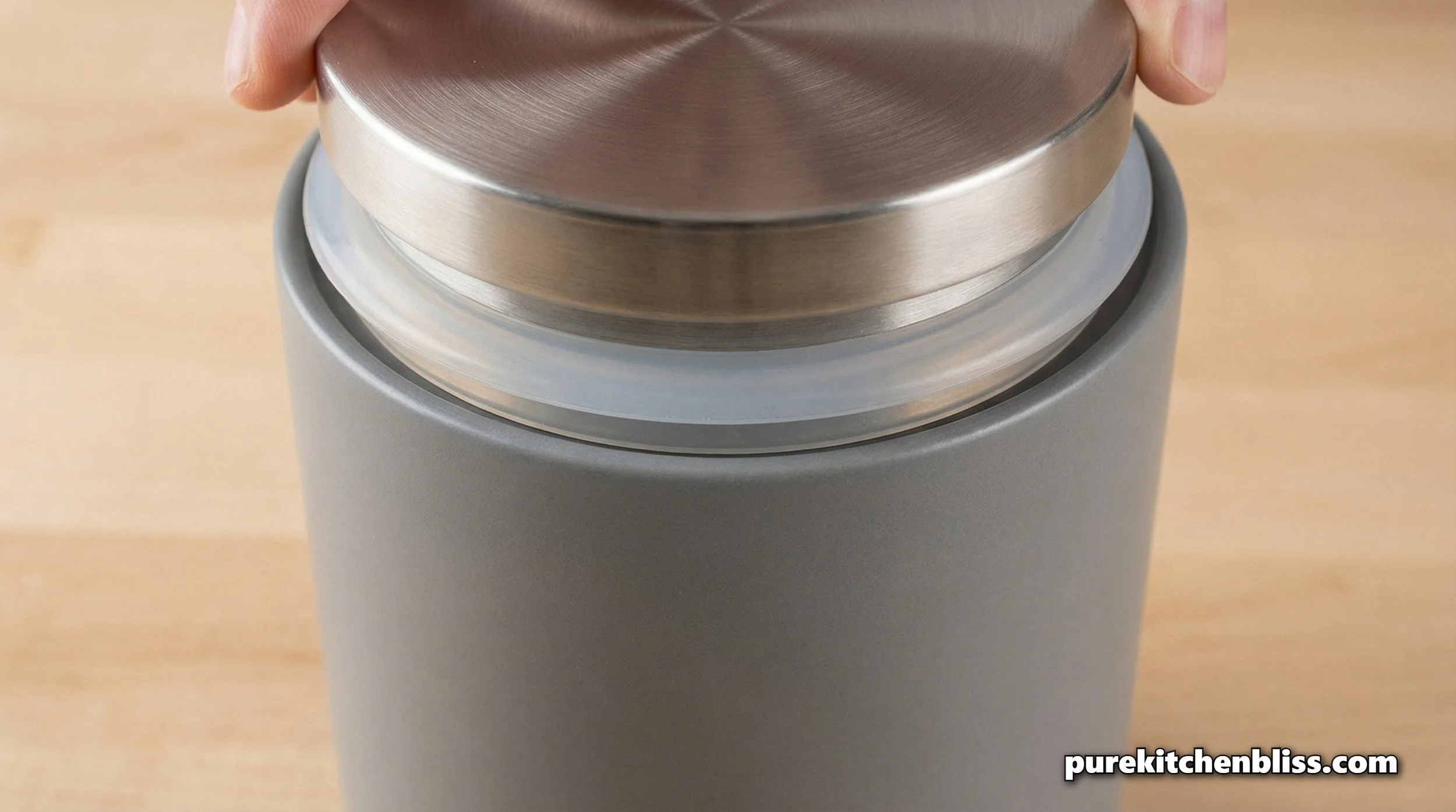
PRO TIP: THE SEAL INTEGRITY
If you are decanting your beans into a new vessel, prioritize a container with a high-quality silicone gasket. A truly airtight seal is your primary defense against the humidity and "kitchen air" that can dull your beans' vibrance.
Understanding Freshness Engineering
Freshly roasted coffee is a dynamic product. During the roasting process, gases—primarily Carbon Dioxide (CO₂), are trapped within the bean. In the days following the roast, the coffee needs to "off gas."
The Off-Gassing Infrastructure
If you seal fresh coffee in a perfectly airtight container without a way for gas to escape, the pressure can build up and affect the bean's structural integrity. This is why professional grade canisters often feature a one-way CO₂ valve. This piece of "freshness engineering" allows gases to exit the container without allowing oxygen to enter. Oxygen is the catalyst for oxidation, which turns a vibrant roast into a flat, papery-tasting experience.
The "Whole Bean" Advantage
If you are striving for a sustainable sanctuary, switching to whole beans is one of the easiest upgrades you can make. Once coffee is ground, the surface area increases by over 1,000%, exposing the interior to oxygen at an accelerated rate. By grinding only what you need for your immediate ritual, you preserve the internal "infrastructure" of the bean until the very last moment.
Staging the Coffee Station for Bliss
Organizing your kitchen is about balancing functionality with the "Beautiful Chaos" of family life. To keep your Sunday Night Countertop Reset effective, follow a "Staging" protocol.
Active vs. Primary Storage
Keep your mechanical gear—your grinder and brewer—on the countertop where they are easily accessible. However, keep your "Primary Storage" (the beans) tucked away in the dark sanctuary of your pantry. This reduces visual clutter and protects the beans from the steam and heat of the brewing process itself.
The Maintenance Wipe
Coffee dust is naturally oily and slightly acidic. Over time, these oils can settle on your surfaces and become difficult to remove. As part of your weekly rhythm, use a Non-Toxic Kitchen Degreaser to wipe down the station. This prevents the oils from staining your countertops and keeps the area smelling fresh rather than stale.
Conscious Consumption and Volume
In a high-output home, it is tempting to buy coffee in bulk. However, even the best storage can only slow down time; it cannot stop it. To maintain the highest purity in your sanctuary, adopt a "Fresh-In, Fresh-Out" philosophy.
Ideally, you should only purchase enough coffee to last your household for two weeks. This ensures that the beans never sit long enough for the lipids to degrade. If you do find yourself with a surplus, ensure it is sealed in its original bag with a heavy-duty clip and stored in the coolest, lowest spot in your pantry.
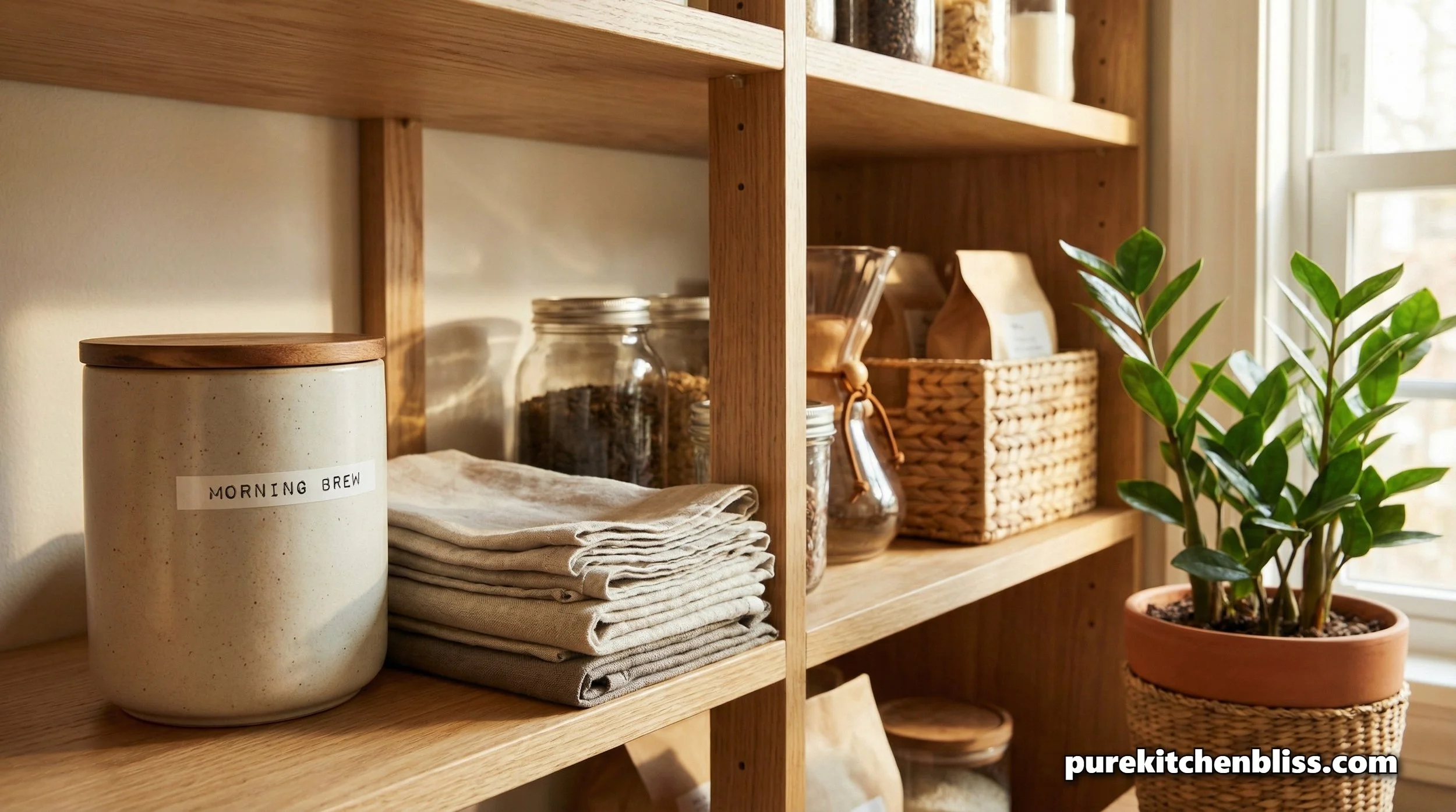
Conclusion: Protecting the Ritual
Your morning coffee is more than just a caffeine delivery system; it is a moment of peace before the day begins. By choosing a dedicated, dark pantry spot and avoiding the "Freezer Trap," you are practicing home stewardship that respects both the product and the process.
Protecting the ritual means protecting the materials. When you treat your coffee beans with the same care you give to your Zero-VOC Cabinet Finishes or your kitchen’s "bones," you create a more intentional, high-performance home.
Explore More in Your Kitchen Sanctuary:
To refresh the air after your morning brew: DIY Vodka Fabric Spray: The Sanctuary Mist
To find the perfect low-light plant for your coffee station: The ZZ Plant: Low-Maintenance Luxury
To keep your kitchen textiles as clean as your pantry: How Often Should You Wash Tea Towels?