Transparency Note: We independently select these products based on research and user reviews. If you buy something through our links, we may earn a commission.
The morning after Halloween, four separate candy hauls end up merged into one genuinely overwhelming pile on our kitchen counter, and every year I have to actually decide what to do with it before it just sits there for months, slowly going stale in whatever bag it landed in overnight. There's no single right answer here. Freezing it, donating it, or baking with it are all legitimate options, and which one makes sense depends mostly on how much candy you're actually dealing with and how fast you want the counter clear again.
Here's the full range of what actually works, starting with the sorting step that makes every option after it easier.
How much is actually "too much"
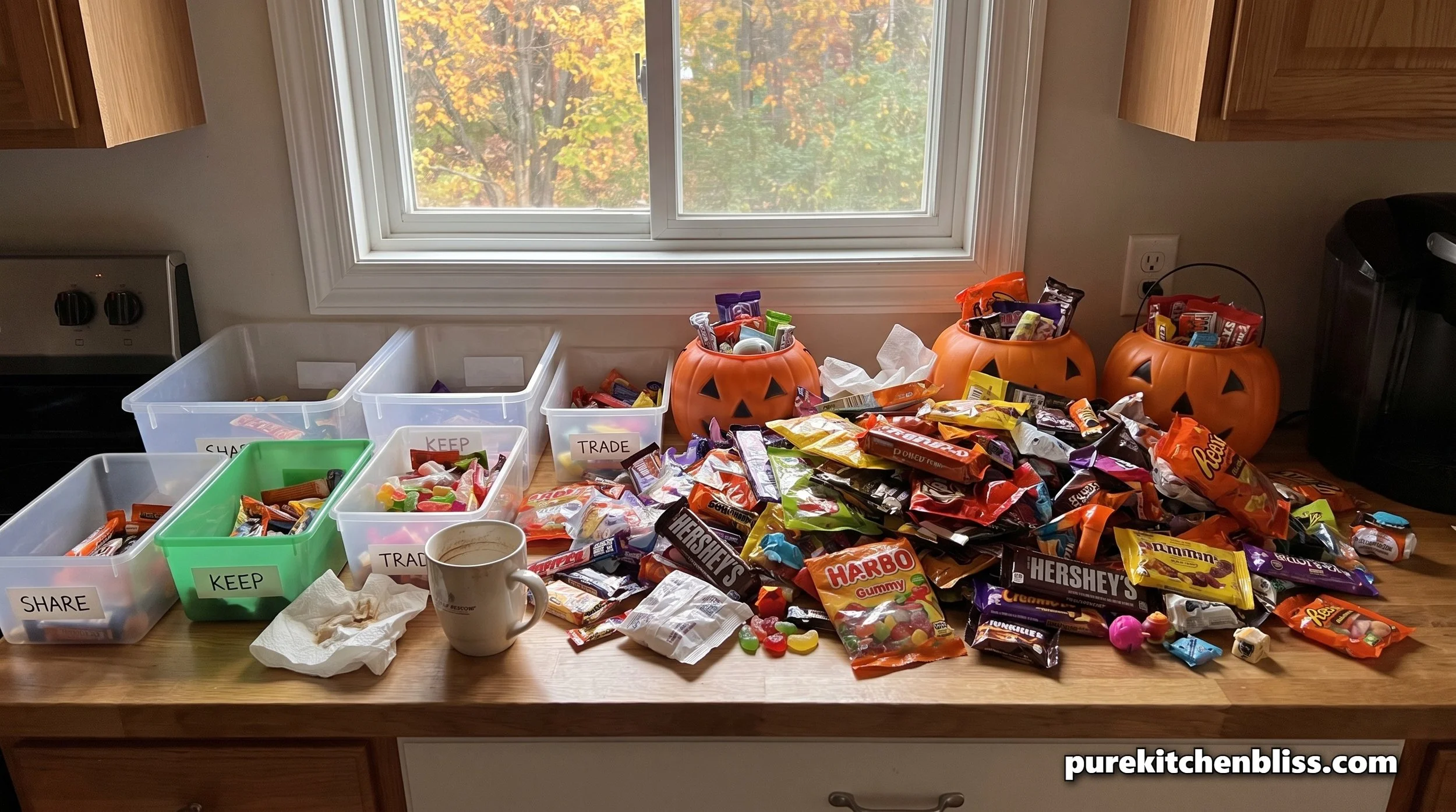
There's no official number here, but a rough sense of scale helps before deciding how aggressively to pare down. A single trick-or-treater in a typical neighborhood loop generally brings home somewhere between two and four pounds of candy over one evening, which sounds modest until you multiply it across several kids in the same house. With four kids in ours, that's realistically ten to fifteen pounds of candy arriving in a single night, more than any reasonable amount for a family to eat through before it goes stale or gets forgotten in a drawer. Seeing the number in pounds rather than just looking at a full pillowcase makes the decision easier, since it reframes the pile as a genuine quantity to manage rather than just a vague sense of having a lot.
Sort before you decide anything
If you went through our candy inspection and storage guide the night of, you've already done the safety pass, wrappers checked, choking hazards pulled for younger kids. The morning-after sort is different, it's about deciding what's actually staying in the house versus what's leaving, and doing that sort before picking a destination for the leftovers saves you from re-handling the same pile three or four times. I split it into three rough categories at this stage, keep for the family, donate, and toss anything that didn't pass inspection the night before, and only the "keep" pile gets a real storage decision made for it.
Letting kids actually choose what stays
With four kids, the sorting step works a lot better when each kid picks their own keep pile rather than a parent deciding for all of them at once. I give each kid a small, fixed container, not the whole haul, and whatever fits goes in, the rest moves toward donation or baking use. This does two things at once, it caps how much candy realistically stays in the house since the container size sets the limit rather than an argument, and it gives each kid actual ownership over the decision instead of feeling like candy is just being taken away from them without their input. Kids are also, in my experience, more willing to part with extra candy for a donation cause once they understand where it's actually going, troops overseas, a food bank, rather than just disappearing into a trash bag.
Freezing what you're keeping
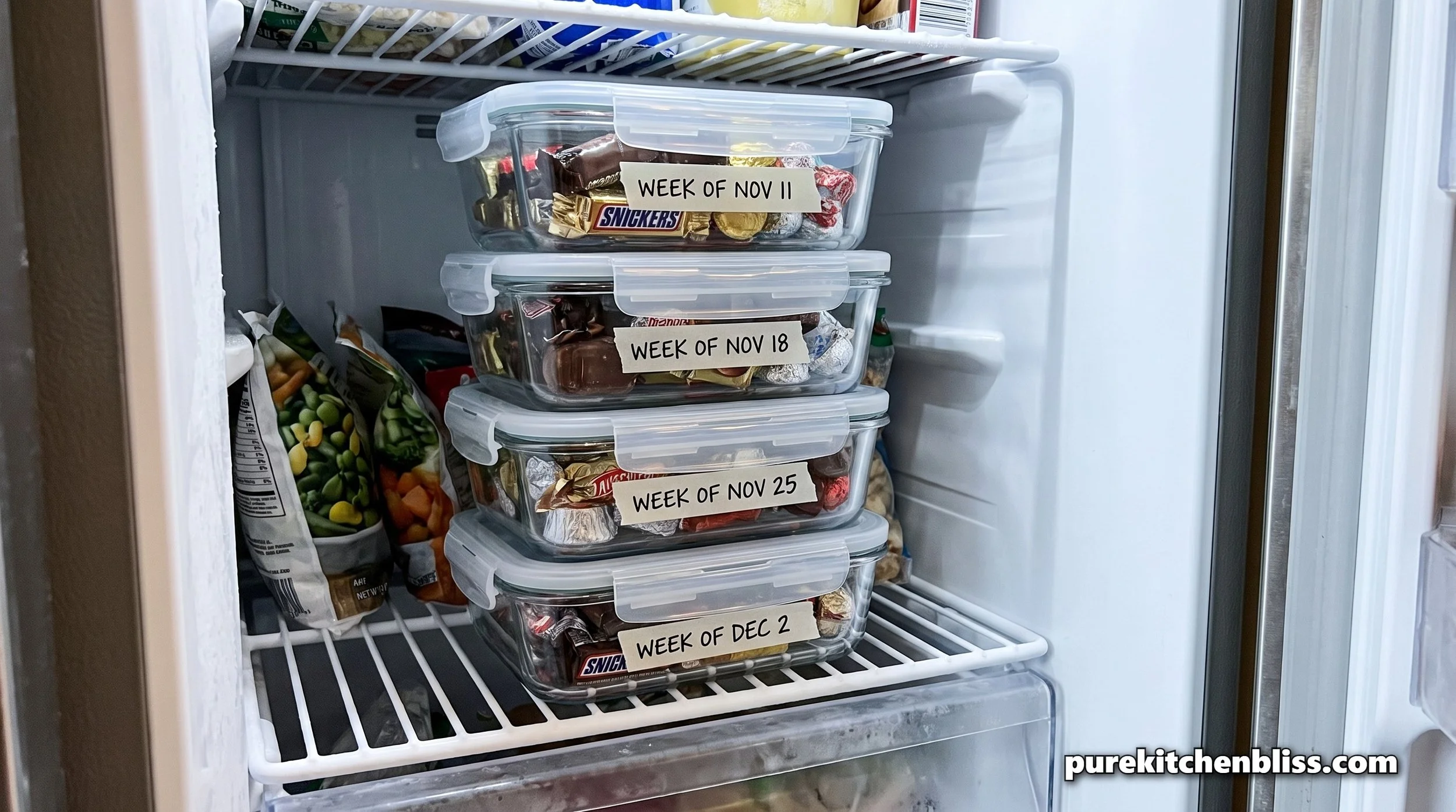
Chocolate freezes well for months if it's sealed tightly enough to prevent condensation on thawing, which we covered in more detail in our candy shelf life guide. For a family that genuinely wants to keep some candy around without it disappearing in a week, portioning it into freezer-safe airtight containers in smaller batches, a week's worth at a time rather than the whole haul in one bag, means you're not thawing and refreezing the same stash repeatedly, which does more to degrade texture than a single freeze-thaw cycle ever would. Hard candy and gummies don't need the freezer and generally shouldn't go in one, so this option really only applies to the chocolate portion of whatever's left.
Donating through a candy buyback program
The Halloween Candy Buyback program was started by a Wisconsin dentist, Chris Kammer, who began paying kids a dollar a pound for their leftover candy at his own practice and watched the idea spread nationally. What started with roughly 300 participating dentists in its first national year has grown to thousands of dental and orthodontic offices across the country now running some version of the same program each November. Collected candy typically gets shipped to Operation Gratitude, a nonprofit that packs care packages, Halloween candy included, for deployed troops, veterans, and first responders. Programs vary by office, some pay cash per pound, others offer toothbrushes, small prizes, or a raffle entry instead, so it's worth checking with a local dental or orthodontic office directly for their specific terms rather than assuming every buyback works identically. Weighing the donation pile on a kitchen scale before you go is worth doing too, since most buyback programs pay by the pound and it's a quick way to know what to expect walking in.
Shipping candy directly, if there's no local program nearby
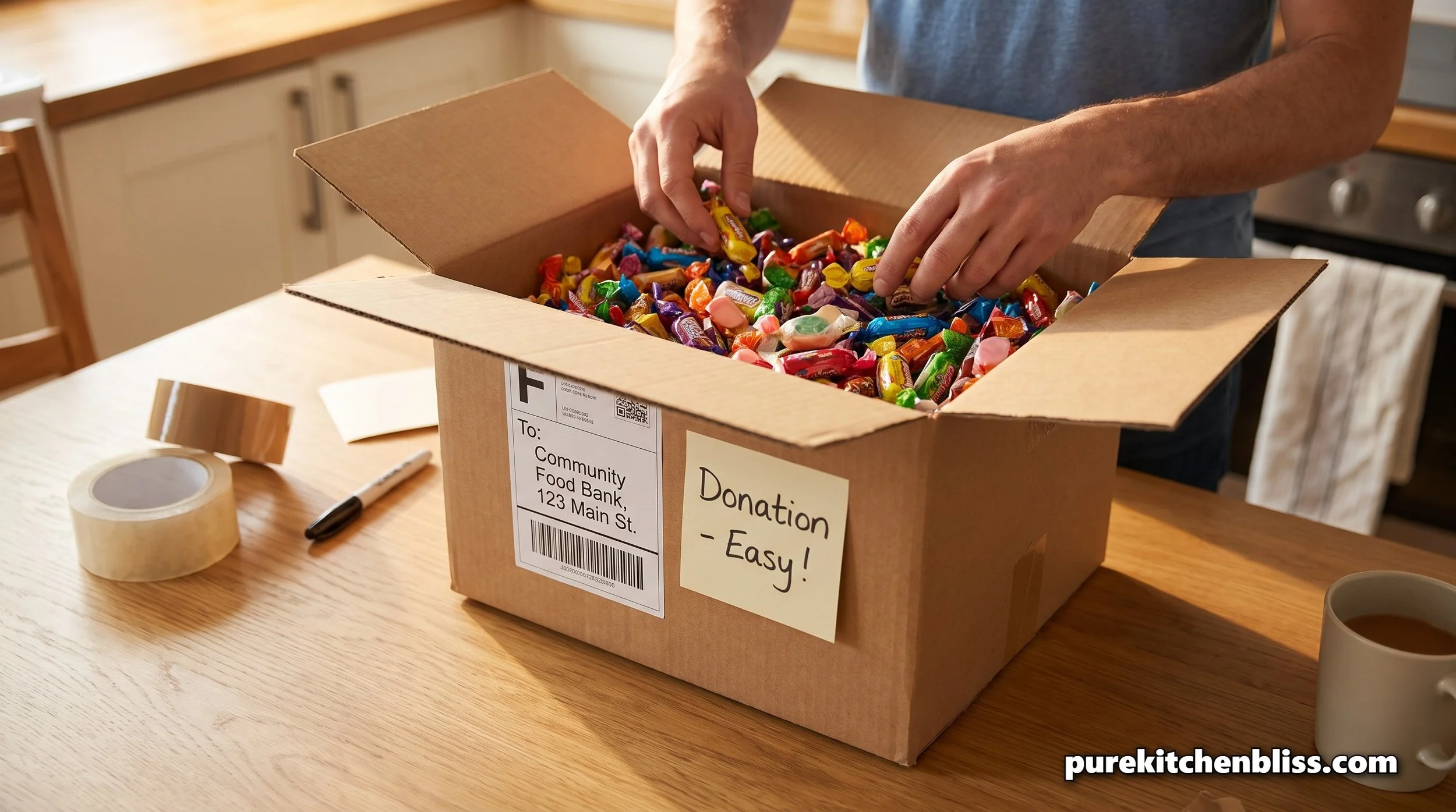
If you don't have a participating dentist nearby, several organizations accept mailed candy donations directly. Operation Shoebox, one of the more established options, accepts individually wrapped candy year-round for troop care packages, with a stated preference for heat-resistant candies, chocolate specifically holds up worse in transit and storage than hard candy or gummies do, which is worth keeping in mind when deciding what to box up versus what to keep at home. Most of these programs list a mailing address directly on their website along with an optional form for a thank-you note or donation acknowledgment, and none of them require sorting or weighing before shipping, just candy in its original wrapping, boxed and sent.
Local food banks and shelters
Some local food banks and shelters accept unopened, individually wrapped candy as part of general food donations, particularly around the holidays when demand for shelf-stable items rises. This option is more hit-or-miss than the dedicated candy programs above, since not every food bank has a policy for accepting candy specifically, so a quick call or a check of the organization's accepted-donations list before dropping anything off saves a wasted trip. If a local option does accept it, this is often the fastest way to get a large stash out of the house within days rather than waiting on a mail-in program's own timeline.
Baking with what's left instead of eating it as-is
Leftover candy is genuinely useful as a baking ingredient rather than just something to eat straight from the wrapper. Chopped chocolate bars fold into cookie dough or brownie batter in place of standard chocolate chips, and a mix of chopped candy bars, pretzels, and a melted chocolate base makes a quick bark that uses up a surprising volume in one batch. If you're leaning into any of the healthier baking approaches we covered in our baking swaps guide, using up leftover candy as a mix-in rather than a base ingredient is actually a reasonable way to control portions, a little chopped candy spread through a full batch of cookies goes further than the same amount eaten piece by piece straight from the bag.

A rotation habit that actually prevents the pile-up next year
The real fix for the day-after overwhelm isn't a better sorting system, it's not letting candy accumulate unmanaged in the first place. We keep a running rule that candy older than about a month gets moved to one of the options above rather than sitting indefinitely, which keeps the volume manageable year round instead of turning into a once-a-year crisis of deciding what to do with a genuinely enormous backlog. Pairing this with the pantry zone we set up in our fridge and pantry organization guide means the candy has one consistent home with a built-in review point, rather than spreading across counters and drawers where it's easy to lose track of how much is actually there.
What not to donate
Anything with a torn or resealed wrapper, homemade treats, or candy that's already past the point covered in our shelf life guide shouldn't go into any donation stream, dentist buyback programs and shipping organizations are working with volume and can't individually inspect every piece the way you did the night you sorted it. Keep the donation pile limited to commercially wrapped, unopened, still-fresh candy, and handle anything questionable the way you would any other candy that failed inspection, which is to say, it doesn't leave the house at all.
| Option | Effort | Best for |
|---|---|---|
| Freeze in portions | Low | Chocolate you genuinely want to keep, spread out over months |
| Dentist candy buyback | Medium | Large hauls, cash or prize incentive for kids |
| Ship to Operation Shoebox or similar | Medium | No local buyback program nearby |
| Local food bank | Low | Fast, in-person drop-off, call ahead first |
| Bake it into cookies or bark | Medium | Smaller leftover amounts, portion control |
What this actually comes down to
There's no single correct answer for what to do with leftover Halloween candy, it depends on how much you have and how fast you want it gone. Freeze the chocolate you're genuinely keeping in small portions, donate the rest through a buyback program, a direct shipment, or a local food bank, and use whatever's left as a baking ingredient rather than eating through it piece by piece. The habit that actually prevents this from becoming an annual crisis is setting a rough time limit on how long candy sits around unmanaged in the first place, and letting each kid have real ownership over their own keep pile.