Transparency Note: We independently select these products based on research and user reviews. If you buy something through our links, we may earn a commission.
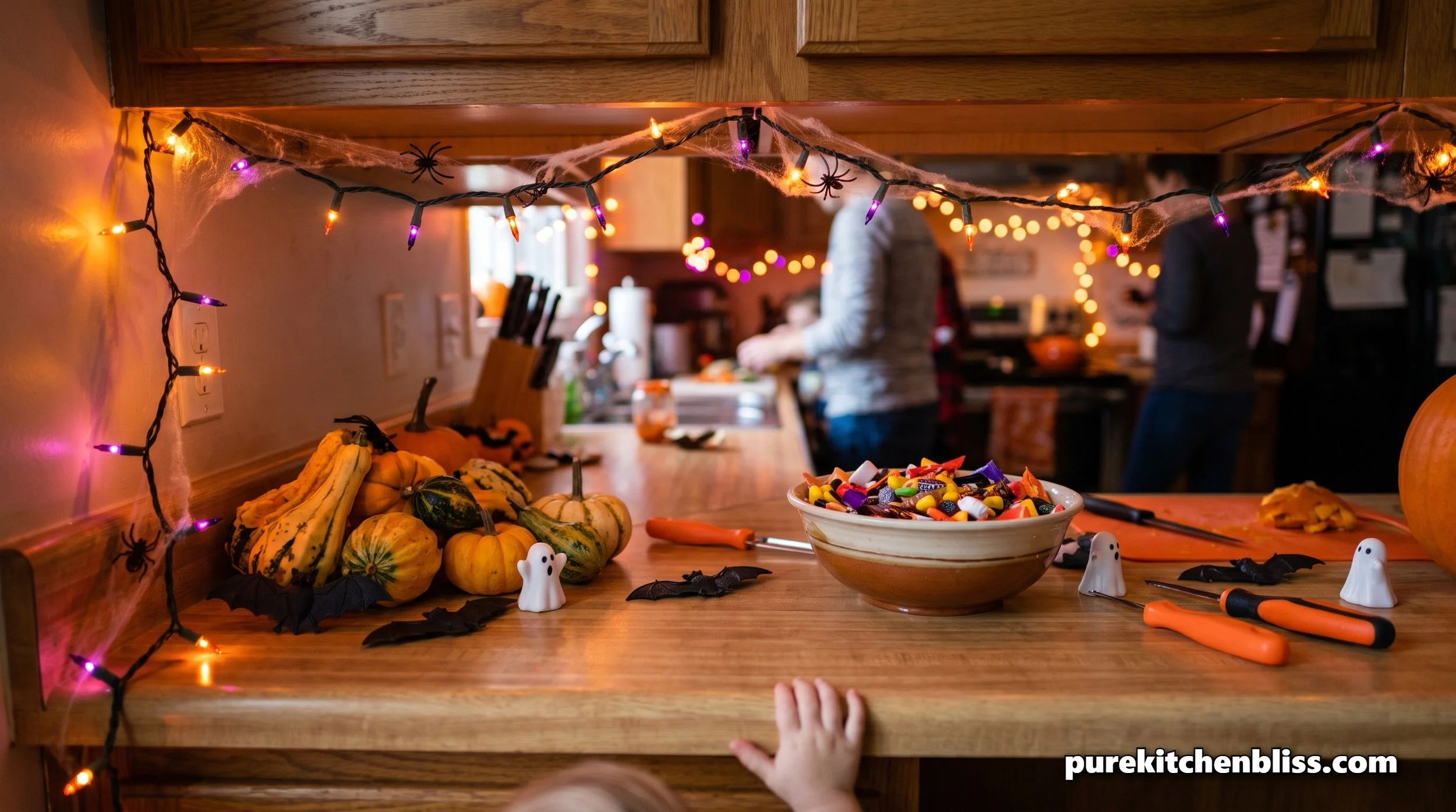
For about three weeks every fall, our kitchen turns into a genuinely different room. Candy shows up in bulk, small decorations get spread across every counter, carving tools sit out between projects, and string lights get looped around the window over the sink. Most of that is fine for a nine-year-old and genuinely risky for a two-year-old, and with four kids spanning a wide age range, I've learned to look at the kitchen through the eyes of whichever kid is smallest at the moment, not the one who's been trick-or-treating unsupervised for years already.
Most Halloween safety advice is written for one night, the porch, the walk around the neighborhood. This is about the kitchen specifically, and the three or four weeks that room actually spends full of seasonal stuff before, during, and after Halloween itself.
What the injury data actually shows
State health department data compiled around Halloween consistently shows a similar pattern year to year. In one recent breakdown from the Illinois Department of Public Health, roughly a quarter of Halloween-related injuries came from falls, putting up or taking down decorations, tripping on a costume, or missing a step while trick-or-treating, and another fifth involved lacerations, ingestions, or allergic reactions tied to costumes, pumpkins, or decorations specifically. About 10 percent of all injuries counted were in kids six and under, a disproportionate share given how few of the actual decorating and carving tasks that age group is doing themselves. That last number is really the whole argument for childproofing the kitchen specifically, since young kids aren't the ones creating the hazards, they're just moving through a space that adults set up with an older kid or an adult's judgment in mind.
Candy storage, revisited for reach and height
We covered inspection and general storage in our candy inspection and storage guide, but the childproofing angle adds one more layer, height and reach specifically. A sealed container on a low pantry shelf is fine for keeping candy organized and fresh, but if that shelf sits within a toddler's reach, sealed just means harder to open, not inaccessible. I keep the actual Halloween haul on a shelf that requires a step stool even for our older kids, not because the older ones can't be trusted, but because a two or three year old finding an unsealed bag left out for even a few minutes is a different risk than an older sibling grabbing an extra piece. Hard candy specifically is a documented choking risk for kids under five, so it's worth treating candy storage as a genuine childproofing task, not just an organization one, especially in the first few days right after Halloween when the volume in the house is highest.

Small decor pieces, and why they're a recurring recall category
Halloween decorations show up on CPSC recall lists more often than most people realize, and small parts are the consistent theme. Decorate-your-own pumpkin kits with plastic ears, eyes, and accessories have been recalled specifically for choking hazards, and even something as small as a novelty eraser shaped like a pumpkin has triggered a federal warning for being sized to lodge in a young child's airway. The federal small parts rule is specific here, anything that fits inside a cylinder roughly the size of a small child's throat is prohibited for products intended for kids under three, and products meant for slightly older kids, ages three to eight, are required to carry a choking hazard warning label rather than being banned outright. Practically, that means checking the packaging on any small Halloween craft kit or decoration for an age label before it ends up loose on a kitchen counter where a younger sibling can reach it, the same way you'd already check a toy.
Checking whether decor already in your house has been recalled
Seasonal decorations often live in a storage bin for eleven months and come back out without anyone thinking to check whether anything's changed since last year. Recalls happen after a product's already been sold and used for a season or two in plenty of cases, which means a decoration you've safely put up for the last three Halloweens could theoretically be on a more recent recall list without you knowing. CPSC.gov keeps a searchable recall database, and a quick search by product type, decoration, novelty light, pumpkin kit, before pulling last year's bin out of storage takes a few minutes and occasionally turns up something worth tossing rather than reusing. This is a habit worth building into the same weekend you pull the Halloween bins down from storage, not something to think about only when buying something new.
Button batteries are the hazard most people miss entirely
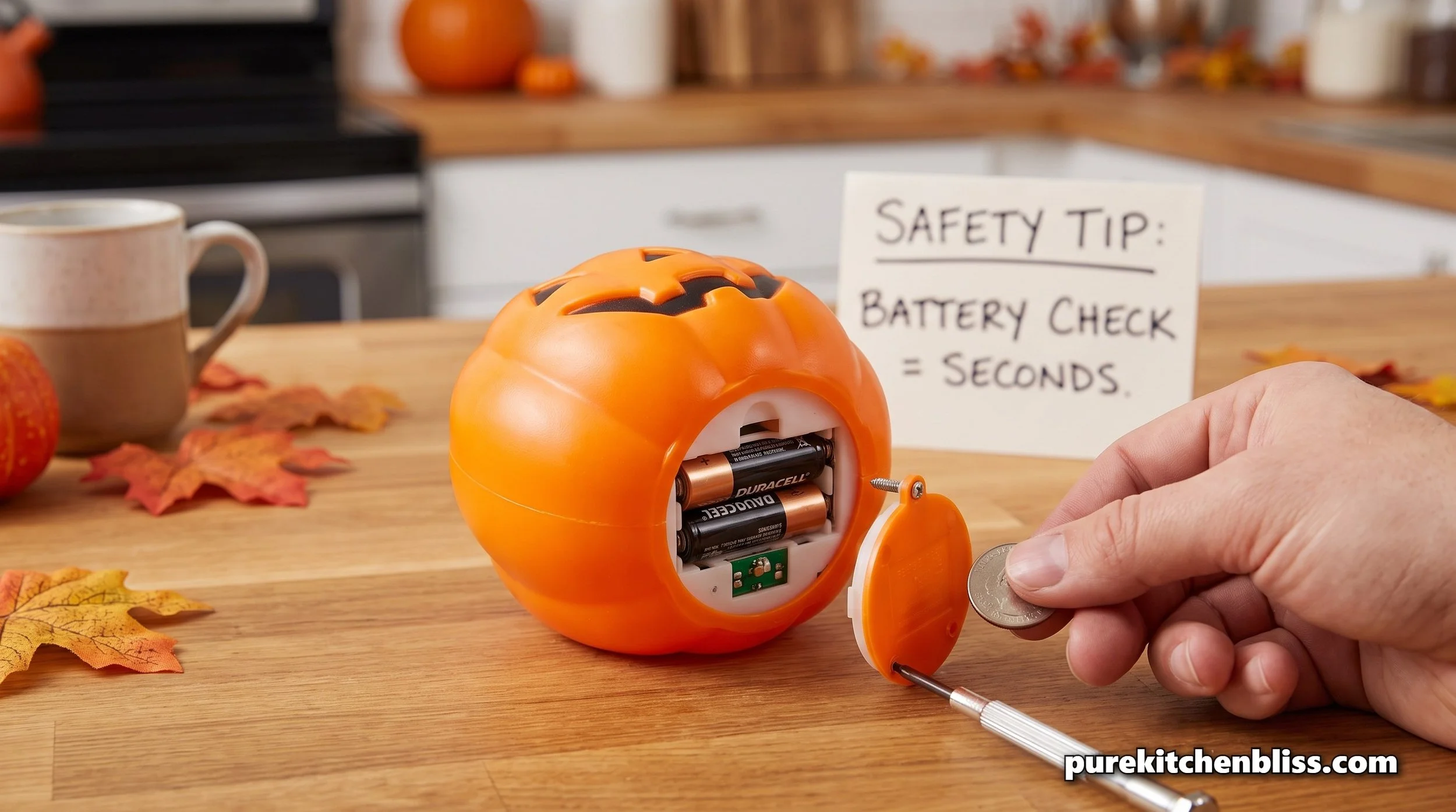
Light-up Halloween decorations, gel window clings, small novelty items, and blinking pins have all been recalled specifically for button battery ingestion risk, including a 2016 recall of over 100,000 Halloween-themed LED window clings sold nationwide for exactly this reason. A swallowed button battery is arguably a more urgent hazard than most food allergy or choking scenarios discussed elsewhere in Halloween safety content, since the battery can cause internal chemical burns within hours if it lodges in the esophagus. Before any light-up decoration goes up in the kitchen, check that the battery compartment is secured with a screw rather than a simple snap-open lid, and if it isn't, that decoration goes somewhere well out of reach rather than on a low counter or windowsill.
Carving tools between uses
A carving knife or scoop left out on the counter between pumpkin sessions is an easy thing to forget about once the actual carving is done for the day, especially with several pumpkins in progress across a few evenings. I keep our carving kit in a specific drawer that closes fully rather than leaving tools sitting on the counter where they were last used, and that drawer is one of the few in our kitchen with an actual child safety lock on it seasonally, even though it normally holds nothing more dangerous than serving utensils the rest of the year. If you're setting up carving for the first time this season, our note on carving tool choice in the pumpkin seed roasting guide covers which knives actually work better for kids to handle under supervision.
Cords, string lights, and the outlets they're plugged into
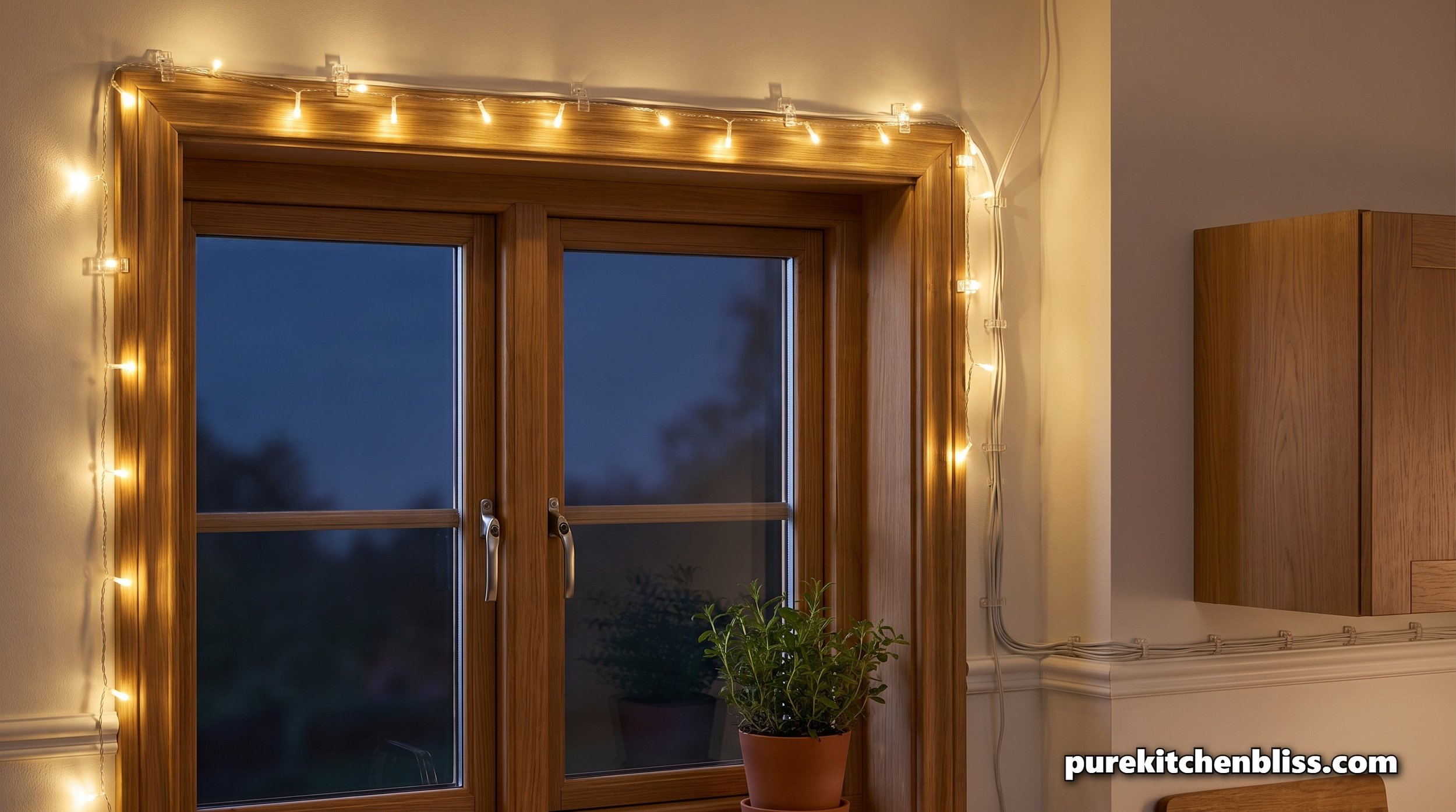
String lights looped around a kitchen window or a doorway add a real trip hazard at floor and counter height that isn't there the rest of the year, and the CPSC's standing guidance is to check every string, new or old, for cracked sockets, frayed wire, or loose connections before plugging anything in, discarding damaged sets rather than patching them. Only use lights carrying a recognized safety testing label, and keep cords run along a wall or secured with tape rather than draped loose across a walkway where a running kid in a bulky costume could catch a foot on it. Outlet covers on any kitchen outlet that isn't in constant daily use are worth checking too if a toddler is in the house, since a decorative light plugged in and unplugged repeatedly through the season means more outlet access than usual.
Candles and costumes, briefly
We covered candle placement and clearance in detail in our jack-o-lantern candle safety guide, but it's worth repeating the core childproofing point here, keep any open flame away from landings, doorways, and anywhere a costume with billowing sleeves or a long skirt could brush against it. If kids are getting dressed in the kitchen before heading out, that's specifically the moment to make sure any lit candle is somewhere they're not walking directly past mid-costume-adjustment.
The night itself brings its own version of this problem
Halloween night specifically adds a chaos factor that doesn't exist the rest of the season, a constant stream of doorbell rings, kids running in and out to grab more candy for the bowl, and often extra family or neighbors moving through the kitchen at the same time. That's exactly the environment where a normally reasonable setup, candy on a counter for easy refilling, a decoration near the door, gets temporarily riskier just because supervision is split between answering the door and everything else happening in the house. If you know the evening is going to be busy with visitors, it's worth doing a five minute pass through the kitchen specifically before trick-or-treating starts, making sure nothing that was fine sitting out during a quiet afternoon of decorating is still sitting in the same accessible spot once the house fills up with extra activity and extra kids who don't know your usual house rules.
A quick reach-height check before Halloween week starts
The fastest way I've found to catch what I've missed is genuinely getting down to a toddler's eye level and looking at the kitchen from there, counters, shelves, and decorations all read differently from three feet off the ground than they do from a standing adult's view. Anything within easy reach at that height, loose candy, small decor pieces, a carving tool left out, gets moved up or put away before the season really gets going, rather than reacting after something's already been found on the floor.
| Hazard | Highest risk age | Fix |
|---|---|---|
| Loose or sealed candy on a low shelf | Under 5 | Store above toddler reach, not just sealed |
| Small decor pieces / craft kits | Under 3 | Check age label before it's out on a counter |
| Light-up decorations with button batteries | Under 4 | Screw-secured battery compartment only |
| Carving tools left on the counter | Under 8 | Closed, locked drawer between uses |
| Frayed or loose string light cords | All ages (trip risk) | Inspect before use, secure cords off the floor |
What this actually comes down to
None of this requires treating your kitchen like a hazard zone for a month. It requires storing candy above toddler reach rather than just sealed, checking small decorations for age labels and secured battery compartments, checking older decor against the current recall list before reusing it, keeping carving tools in a closed drawer between uses, inspecting cords before they go up, and taking five minutes to look at the room from a smaller kid's eye level before the season fills the counters. The data is consistent that young kids carry a disproportionate share of Halloween injuries relative to how little of the actual decorating they're doing, which is exactly the gap a few minutes of setup closes.