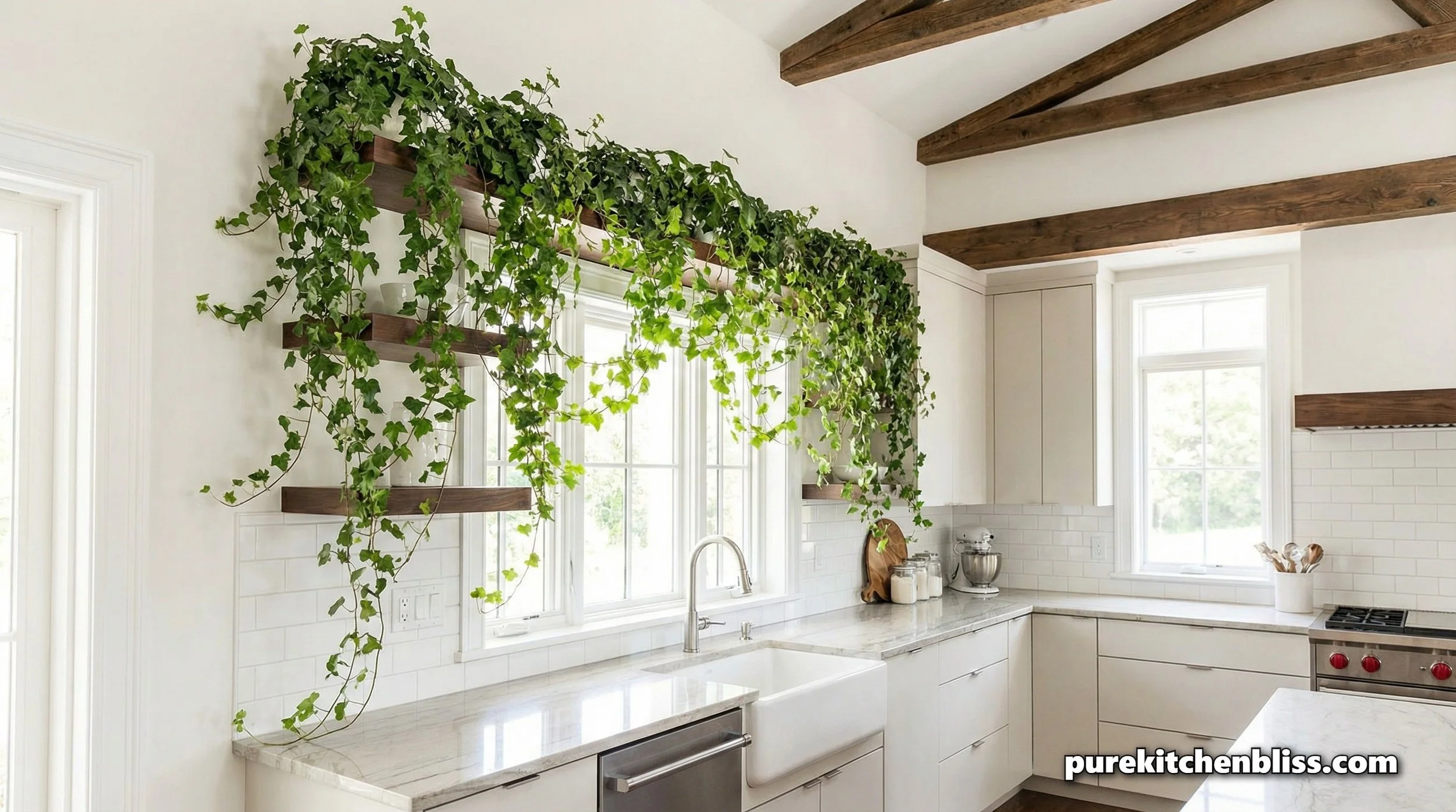
English Ivy Mastery: The Kitchen’s Biological Mold Inhibitor
Transparency Note: We independently select these products based on research and user reviews. If you buy something through our links, we may earn a commission.
In a high-performance kitchen, moisture is a constant byproduct. Between the steam from the dishwasher and the boiling pots on the stove, humidity levels can fluctuate wildly, often creating a breeding ground for microscopic mold spores. As a father of four, keeping the air quality of our sanctuary pure is my top priority.
Enter the English Ivy. While many see it as a classic exterior vine, in the kitchen, it serves a critical structural purpose. Studies, including those from the American College of Allergy, Asthma, and Immunology, have shown that English Ivy can reduce airborne mold particles by as much as 78%. It is the "biological filter" your high-moisture zones need.
The Infrastructure of Humidity
English Ivy thrives in the exact conditions that often plague kitchens: cool air and consistent moisture. However, because it "breathes" through its leaves, it requires a specific environment to remain an effective filter.
Step 1: Secure a High-Density Specimen
To maximize the mold-inhibiting benefits, you need a plant with high leaf density. Sparse, spindly ivy won't have the surface area necessary to scrub your air effectively.
SECURE YOUR AIR PURIFIER
Not all Ivy is created equal. We’ve sourced a nursery-direct English Ivy known for its rapid growth and high leaf count—the exact specs needed for a kitchen filter. Check Price: [Lush 6" Hanging English Ivy - Shop Now on Amazon] [Line Block]
Placement: High-Altitude Air Scrubbing
In the kitchen layout, English Ivy performs best when it is elevated.
The Steam Zone: Place your Ivy near the sink or above the dishwasher (but not directly in the path of a heat vent). It will drink in the ambient steam, keeping its leaves hydrated.
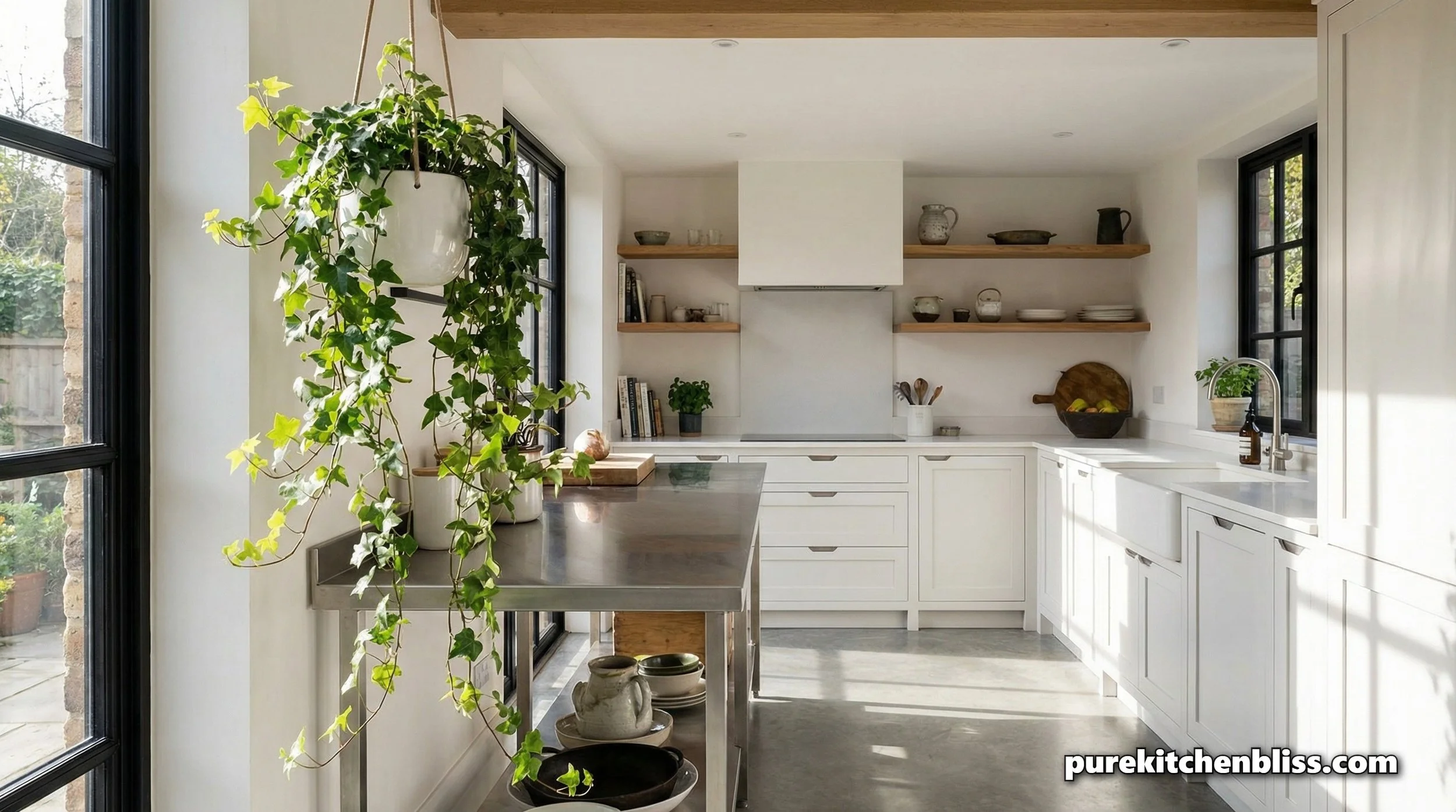
The Trailing Aesthetic: Use it on top of open shelving or in a hanging planter. This keeps the vines away from curious pets (English Ivy is toxic if ingested) and allows the leaves to catch rising mold spores.
THE ELEVATION ESSENTIALS
To get the most out of your Ivy's trailing nature, you need a stable, high-end hanging system that won't damage your ceiling or cabinetry. Curator’s Choice: Ceramic Hanging Planter with Adjustable Cotton Rope
Hydration: The "Mist and Soak" Protocol
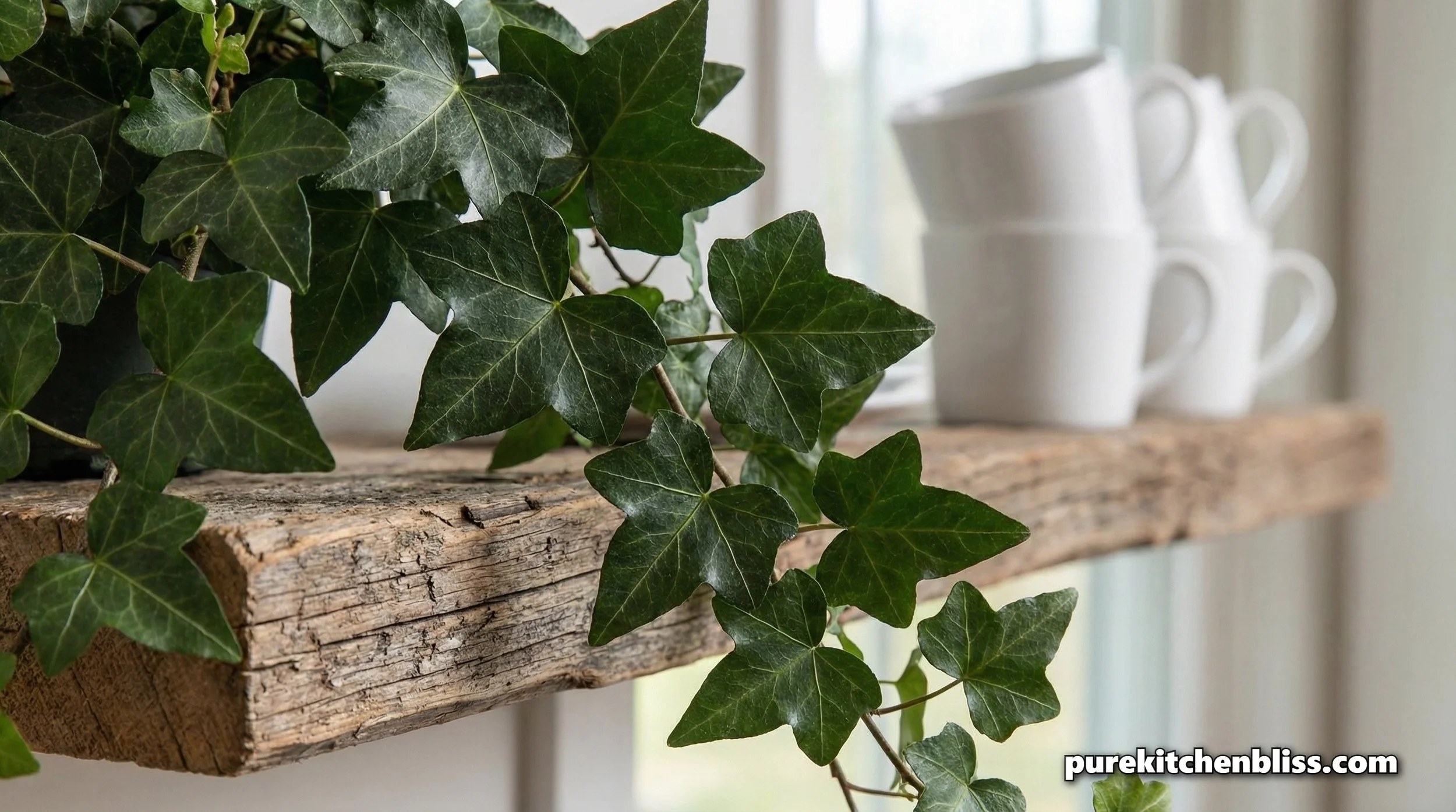
Unlike the Snake Plant or ZZ, English Ivy does not like to be bone-dry. It prefers a consistent, "damp-but-not-soggy" foundation.
The Mist Ritual: Because kitchens can sometimes have dry heat, I recommend misting your Ivy twice a week. This mimics its natural forest environment and prevents the leaves from becoming brittle.
The Soak: Water when the top inch of soil feels dry. Ensure you are using a pot with a drainage hole to prevent the "bones" of the plant from rotting.
MAINTENANCE RITUAL: THE SINK RESET While you’re performing your Sunday Reset, take your Ivy to the sink for a quick "rain shower." It washes away kitchen grease and resets the plant's filtering capacity. Read More: The Sunday Night Countertop Reset: A Ritual for Kitchen Bliss
Maintenance: Managing the Growth
English Ivy is a fast mover. To keep it looking like a "Curated" feature rather than an overgrown jungle, you must manage its growth.
The Prune: Snip any yellowing leaves or stems that have grown too long. This encourages the plant to fill out at the base, increasing its air-scrubbing density.
The Drainage Check: Because Ivy likes more water, it’s prone to root rot if the drainage is clogged. Always ensure your pot is functioning as a proper piece of infrastructure.
The English Ivy Mastery Toolkit
To turn your kitchen into a mold-resistant sanctuary, equip yourself with these professional essentials:
The Plant: Live English Ivy - Extra Full 6" Hanging Basket
The Moisture Tool: Continuous Fine-Mist Glass Sprayer (For Leaf Hydration)
The Foundation: Organic All-Purpose Potting Soil with Root-Boost
The Safety: Heavy-Duty Brass Ceiling Hook (Secure your greenery)
Conclusion: A Breath of Fresh Air
The English Ivy is the ultimate functional vine for the modern kitchen. It’s a classic aesthetic that works double-time as a biological mold inhibitor. By integrating one into your high-moisture zones today, you’re investing in the long-term air quality and purity of your home.