Top 3 Herbs to Grow in Your Kitchen (And How to Keep Them Alive)
Transparency Note: We independently select these products based on research and user reviews. If you buy something through our links, we may earn a commission.
There is a specific kind of frustration that comes with buying a plastic clamshell of fresh basil or parsley from the grocery store, only to have it turn into a slimy, black mess in the fridge within 48 hours. When you cook often, fresh herbs aren't just an accessory, they are the finishing touch that elevates a home cooked meal into something truly special.
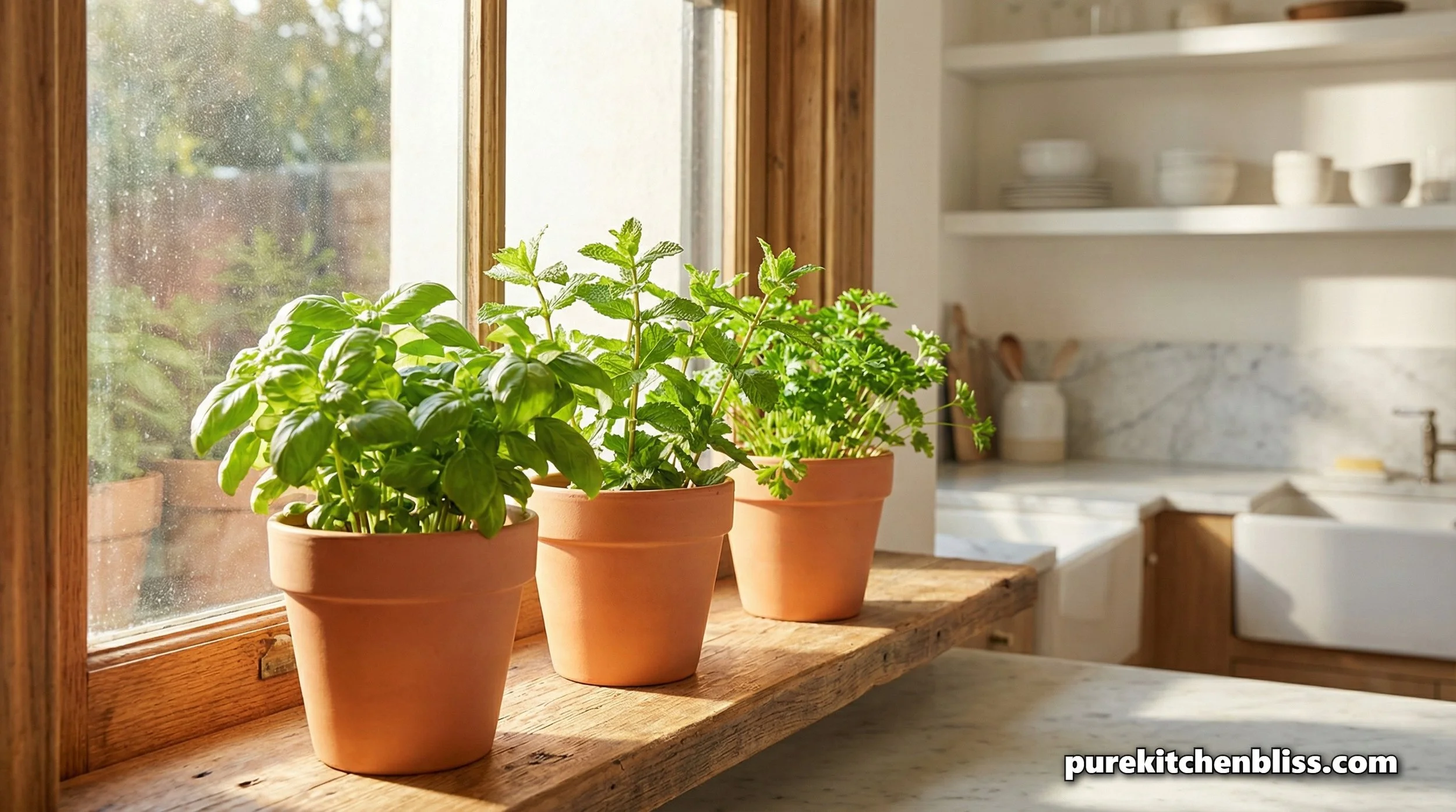
But for many, indoor herb gardening feels like a losing battle. Plants grow "leggy," turn yellow, or die overnight. The secret isn't a "green thumb"; it’s understanding the mechanical needs of these plants. You are essentially building a small scale infrastructure for food production on your windowsill. If you give them the right light, the right drainage, and the right pruning technique, you can have fresh herbs year-round.
Here are the top three herbs to start with and the expert way to care for them.
Basil: The Sun-Soaking Diva
Basil is the king of kitchen herbs, but it is also the most demanding. It is a tropical plant that craves two things: intense light and consistent moisture. If you treat it like a houseplant that can sit in the corner, it will fail.
The Setup: Basil needs at least 6 to 8 hours of direct sunlight. A south-facing window is your best asset here. If your kitchen is dark, you may need a simple LED grow light clipped to the shelf.
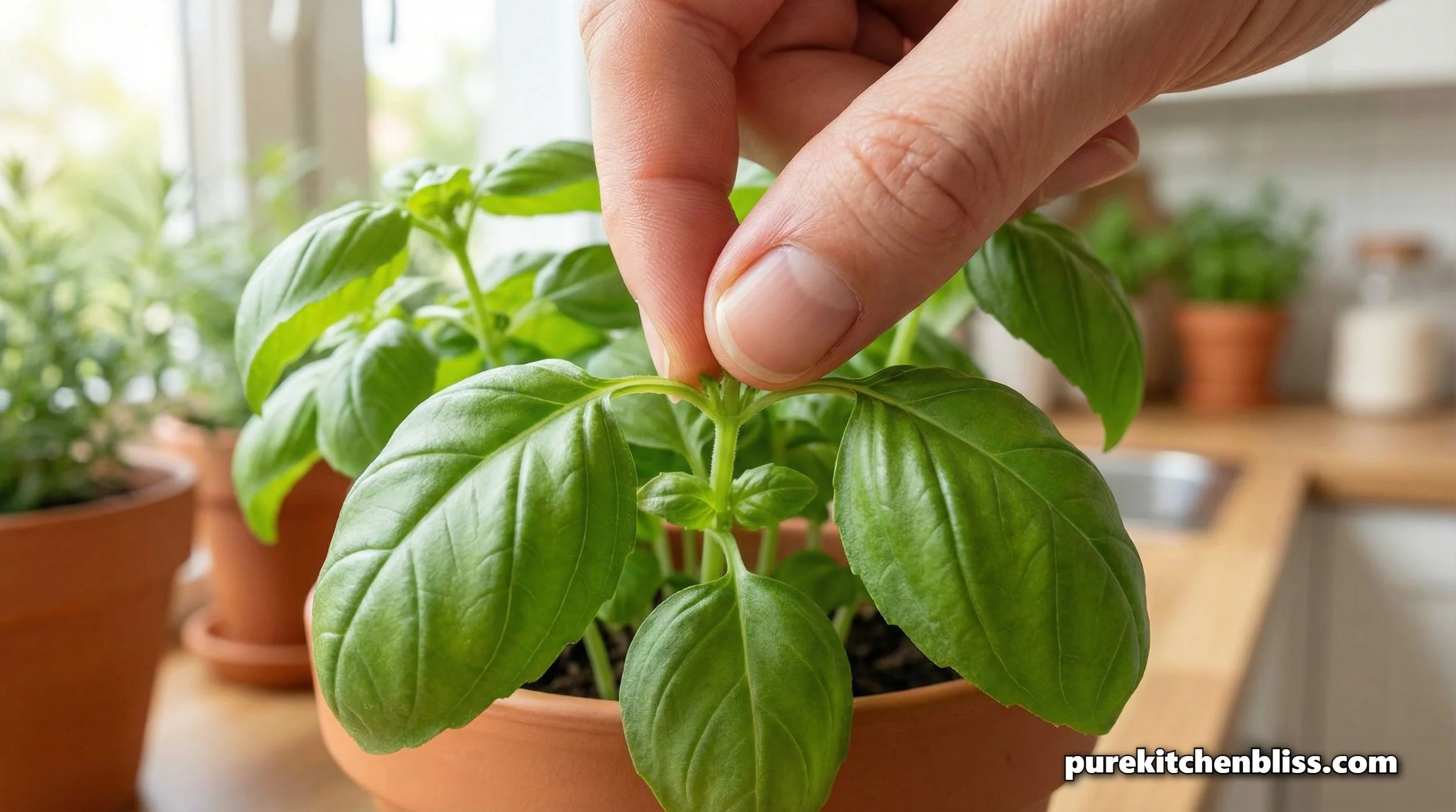
The Expert Hack (The Pinch): The biggest mistake people make is harvesting from the bottom of the plant. If you want a bushy, productive basil plant, you must "pinch back" the top. When you see a set of leaves growing, look for the little "node" where the stem splits. Use your fingers to nip the stem off right above that node. This forces the plant to send out two new stems from that point, effectively doubling your harvest and keeping the plant compact instead of "leggy."
Mint: The Aggressive Survivor
If basil is a diva, mint is a tank. It is one of the easiest herbs to grow, which makes it perfect for beginners, but it has a dark side: it is incredibly aggressive. Mint sends out "runners" (underground stems) that will quickly take over any space they are given.
The Setup: Because mint is so vigorous, never plant it in the same pot as other herbs. It will choke them out. Give mint its own dedicated pot. It prefers slightly more consistent moisture than basil; if the soil dries out completely, mint will wilt dramatically (though it usually bounces back).
The Expert Hack: Harvest mint by cutting the stems close to the soil line. This encourages the plant to put up thick, new growth rather than trailing, spindly stems. If you find your mint is growing too fast, don't worry about "killing" it, you can harvest up to a third of the plant at once, and it will regrow within weeks.
Parsley: The Slow-Burner
Parsley is a biennial, meaning it grows through one full season, rests, and then finishes its life cycle in the second. It’s incredibly hardy and tolerates lower light levels better than basil or mint, making it a great choice for kitchens that don't get blazing sun all day.
The Setup: Parsley has a deep taproot, so it needs a pot that is at least 6 to 8 inches deep. It isn't as thirsty as basil, but it doesn't like to dry out entirely.
The Expert Hack: When harvesting parsley, always work from the outside in. The older leaves are on the outside of the bunch, and the "heart" (the center) is where the new growth comes from. By snipping the outermost stalks at the base, you keep the plant looking tidy and ensure the center has the space to push out new, fresh leaves.
| Herb | Light Needs | Watering Habit | Best Use |
|---|---|---|---|
| Basil | Full sun (6-8 hours). | Keep soil damp, not soggy. | Pesto, caprese, pastas. |
| Mint | Bright, indirect light. | Keep consistently moist. | Teas, cocktails, salads. |
| Parsley | Partial sun/shade. | Water when top inch is dry. | Garnishes, stews, sauces. |
The Foundation: Infrastructure Basics
If your herbs keep dying, the problem is likely one of these three things:
Drainage is Not Optional
Never, ever use a pot without a drainage hole at the bottom. If there is no hole, water will sit in the bottom, turn stagnant, and cause "root rot." If you have a beautiful ceramic pot you love that has no hole, use the "pot-in-pot" method: keep the herb in its cheap plastic nursery pot (which has holes) and slip that inside your decorative pot. When you water, take the plastic pot out, water it, let it drain in the sink, then put it back.
Potting Mix vs. Garden Soil
Never dig up dirt from your backyard and bring it inside. Backyard soil is too heavy, compacts easily in pots, and is often full of outdoor pests and fungal spores. Buy a high-quality "indoor potting mix" at the garden center. It’s designed to be lightweight, airy, and free of the diseases that will kill an indoor herb setup.
The "Touch Test"
Stop watering on a schedule. Your kitchen is not a laboratory; its temperature and humidity change daily. Instead, follow the "Touch Test." Stick your finger one inch into the soil. If it feels damp, don't water. If it feels dry, give it a drink. This is the only way to avoid the cycle of "drowning" and "dehydrating" that kills most kitchen plants.
Troubleshooting Common Failures
My plant is turning yellow: This usually means you’re overwatering. The roots are suffocating because they can’t get enough oxygen. Let the soil dry out for a few days.
My plant is growing long and spindly (Leggy): Your plant is "reaching" for light. Move it to a brighter window or lower your grow light closer to the plant.
My plant has little bugs: This is often a sign of poor airflow or "wet" soil. Let the surface dry out more between waterings and consider using a small oscillating fan in your kitchen to improve air circulation.
Conclusion: Freshness at Your Fingertips Growing herbs in your kitchen is about more than just convenience, it’s about changing the way you cook. When you have a living plant on your counter, you’re more likely to grab a handful of fresh parsley to finish a dish or toss some basil into a sauce. It’s a small, manageable infrastructure project that pays off in flavor every single day.
Want to keep your kitchen running at its best?
Optimize your cold storage: How to Organize Your Fridge and Freezer for Maximum Freshness
Fix those hidden sink smells: How to Fix a Smelly Kitchen Sink and Keep It Clean
Keep your wood prep surfaces safe: The Best Cutting Boards for Your Kitchen: Wood vs. Plastic