DIY Fruit Fly Trap: The Non-Toxic Apple Cider Vinegar Solution
When a fruit fly swarm hits your kitchen, the "beautiful chaos" of family life can quickly feel a bit less blissful. My first instinct as a builder is always to look for the most efficient, non-toxic tool to solve the problem. You don't need industrial-strength aerosols to clear your air; you just need to understand the biology of the pest and a few basic pantry staples.
This DIY trap is a specialized tool for the "Extraction Phase" of our cleaning protocol. It targets the active adults using the scent of fermentation and a simple trick of physics to ensure they can’t escape. In this guide, we will break down the material science of the bait, the engineering of the vessel, and provide a "Pure Recipe Card" for your home records.
1. The Material Science of the Bait
Not all lures are created equal. While fruit flies are opportunistic, their sensory receptors are specifically tuned to the chemical signatures of fermentation.
Apple Cider Vinegar (ACV): This is the gold standard. Unlike white vinegar, ACV contains the malic acid of the original apples, creating a complex, sweet, and pungent aroma that mimics a rotting fruit "motherload."
The "Fermentation Fly-By": If you are out of ACV, you can use red wine or beer. However, these often contain higher levels of ethanol which can evaporate too quickly. ACV remains the most stable lure for a 72-hour period.
The "Sweetener" Myth: Many DIY guides suggest adding sugar. In my testing, sugar doesn't add much value if your ACV is high quality. The flies aren't looking for sweetness; they are looking for the acidic byproduct of decay.
2. The Engineering of the Vessel
The "bones" of your trap matter as much as the bait. You have two primary choices for the entry system: The Funnel or The Barrier.
The Funnel Method: By rolling a piece of paper into a cone and placing it in the jar, you create a "one-way street." The flies follow the scent down the wide opening but struggle to find the small exit hole from the inside.
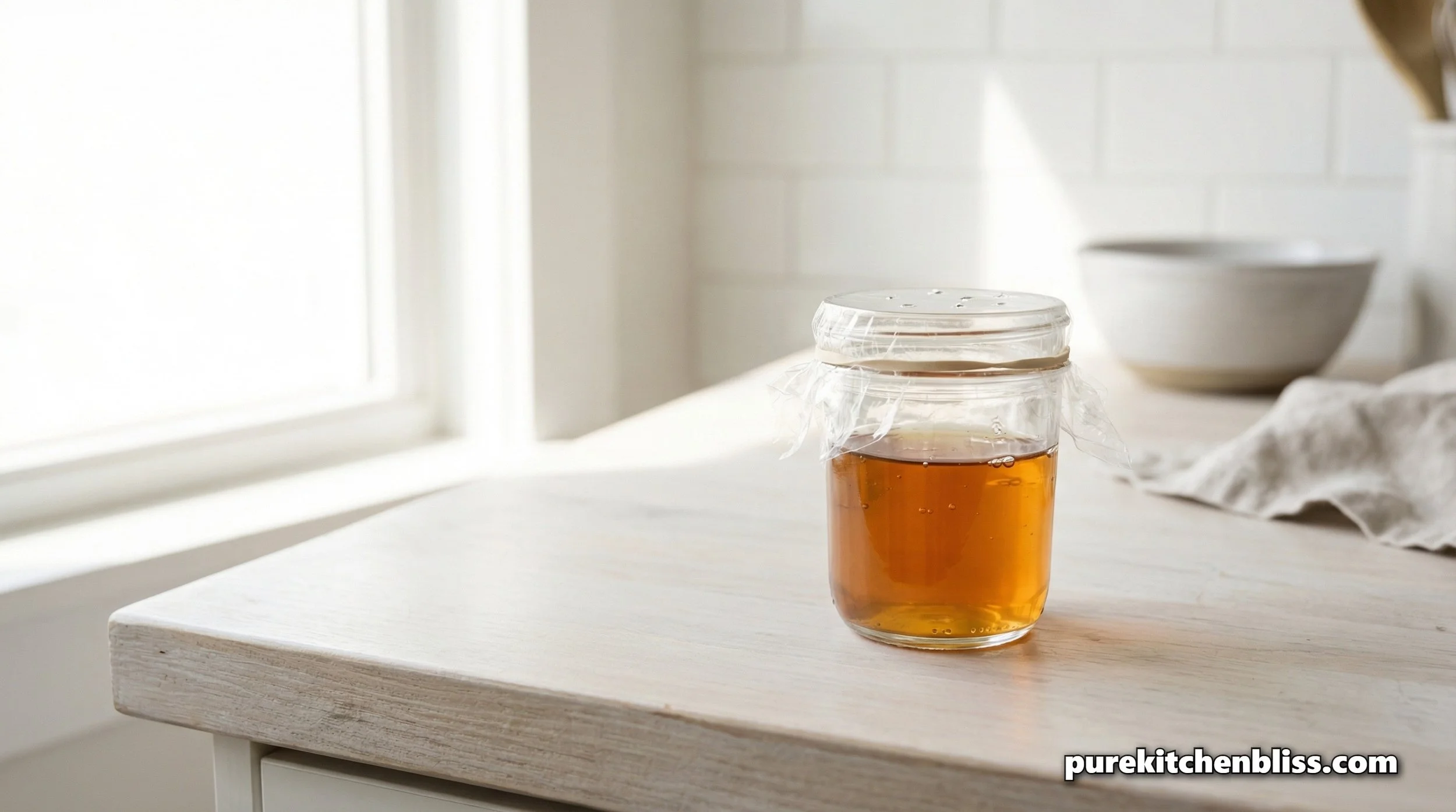
The Barrier Method (The "Pure" Choice): Using plastic wrap with tiny pinpricks. This is often more effective for high-volume swarms because it prevents the vinegar from evaporating too quickly, keeping the scent "trap" active for longer.
The DIY Fruit Fly Trap
Yield: 1-2 VesselsA non-toxic, "Zero-VOC" extraction tool to clear active swarms from the kitchen sanctuary.
The Pure Ingredients
- 1/2 Cup Apple Cider Vinegar: The primary lure.
- 1-2 Drops Dish Soap: The surfactant (breaks surface tension).
- Small Glass Jar: A recycled mason jar or ramekin.
- Plastic Wrap & Rubber Band: To seal the containment.
- 1 Toothpick: For creating precision entry points.
The Restoration Process
- Prepare the Vessel: Ensure your jar is clean and free of old residues.
- Add the Lure: Pour the ACV into the jar.
- Activate the Trap: Add the dish soap.
- Secure the Seal: Stretch plastic wrap over the mouth and snap the rubber band in place.
- Precision Entry: Use the toothpick to poke 5-8 small holes.
3. Tactical Placement & Environmental Factors
Placement is where most homeowners fail. If you put the trap in the middle of a drafty kitchen, the scent will dissipate before it reaches the "patrol."
The Sink "Sump": Place a trap directly behind your faucet. This intercepts flies as they emerge from the biofilm in your drains.
The "Counter-Scent" Strategy: Ensure there is no competing "bait" nearby. If you have a bowl of overripe peaches next to the trap, the flies will choose the peaches every time. Move all fruit to the fridge during the 72-hour extraction period.
Lighting Matters: Fruit flies are phototactic, they move toward light. Placing your trap in a sunlit window or under a bright under-cabinet LED can increase the catch rate significantly.
4. Maintenance: The Clean-Out Ritual
As a builder, I treat every tool with a maintenance schedule. A fruit fly trap is not a "set it and forget it" device.
The 4-Day Reset: After 96 hours, the vinegar can begin to lose its potency, and the soap may settle. Empty the jar, perform a How to Unclog a Drain flush with hot water, and start fresh.
The Disposal: Always dump the trap contents directly into the drain and follow with boiling water to ensure any eggs or larvae caught in the liquid are fully neutralized.
The Sanctuary Supply List
The Vinegar: Organic Raw Apple Cider Vinegar
The Soap: Eco-Friendly, Fragrance-Free Dish Soap
The Detail Tool: Sustainable Bamboo Toothpicks
Conclusion: Restoring the Flow
Building your own tools to manage the "beautiful chaos" of the kitchen is a hallmark of a sustainable home. This DIY trap is a simple, effective way to reclaim your space while keeping your air quality pure. Once the active swarm is gone, you can get back to the real work of the kitchen sanctuary.
Next Steps for Your Kitchen Sanctuary:
To eliminate the breeding ground hidden in your pipes: [How to Unclog a Drain With Baking Soda and Vinegar]
To learn how to manage the "Wet vs. Dry" waste streams: [How Often Should You Change Your Kitchen Garbage?]
For a deeper look at pest-prevention hygiene: [How to Get Rid of Fruit Flies: The Non-Toxic Protocol]