Jack-o-Lantern Candle Safety in a Real Kitchen
Transparency Note: We independently select these products based on research and user reviews. If you buy something through our links, we may earn a commission.
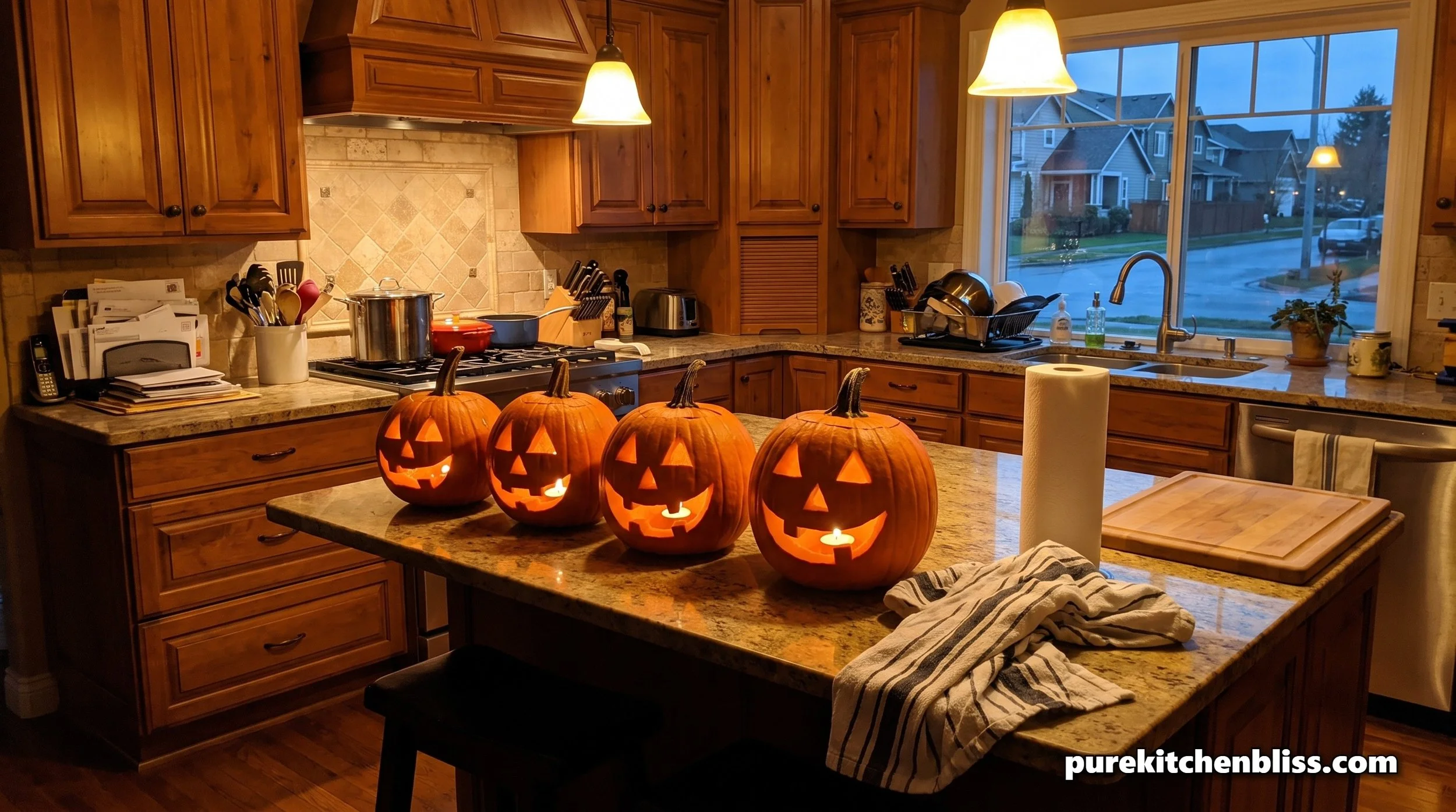
Every year our four carved pumpkins end up on the kitchen island for a few days before they move to the porch, because that's where the kids actually want to look at them while they eat breakfast. Most Halloween fire safety advice is written with the front porch in mind, a wide open space with nothing flammable nearby. A kitchen island is a completely different environment, surrounded by dish towels, paper towel rolls, cabinet finishes, and four kids who don't always remember to keep their sleeves away from an open flame.
I've spent enough time on renovation sites to think about fire risk in terms of what's actually flammable and how close it sits to a heat source, not just whether a candle is lit or not. Here's what the fire data says, and where a jack-o-lantern is and isn't safe to sit once it's inside a working kitchen rather than out on a porch step.
What the fire data actually says
According to the National Fire Protection Association, between 2018 and 2022 an annual average of 835 home structure fires began with decorations, resulting in three deaths, 30 injuries, and 14 million dollars in direct property damage. Nearly half of those fires, 47 percent, happened because a decoration sat too close to a heat source, and roughly a third started with candles specifically. Those numbers cover all home decorations year round, not just jack-o-lanterns, but Halloween candle decorations are exactly the pattern the data describes, an open flame placed close to paper, fabric, or dried plant material for hours at a stretch, often unattended.
Why a kitchen specifically raises the stakes
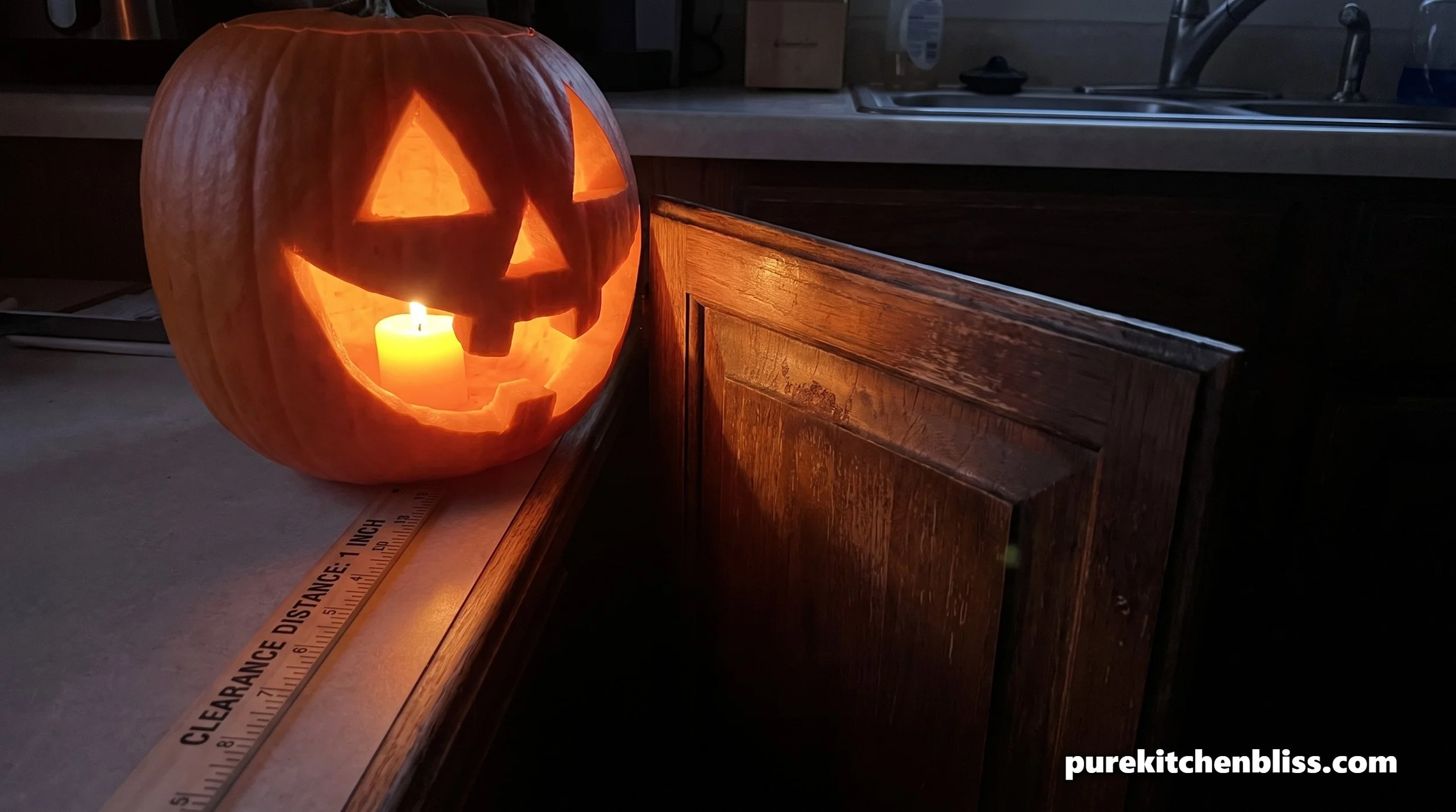
A front porch has almost nothing flammable within arm's reach of a jack-o-lantern. A kitchen island usually has several things: paper towel rolls, dish towels, potholders, sometimes a stack of napkins or a cardboard takeout box within a foot or two of wherever the pumpkin ends up sitting. Cabinet finishes matter here too. Most kitchen cabinetry is built with a lacquer, polyurethane, or conversion varnish topcoat, and while none of these ignite easily from a candle at a normal distance, a knocked-over pumpkin with a lit candle inside sitting directly against a cabinet face for even a minute is a genuinely different risk than the same candle six inches further away on an open counter. Distance and clearance do more work here than most people assume.
Carving safety comes first, before the candle question
Before any of this matters, the carving itself is where most kitchen-table Halloween injuries actually happen, and it's worth a word since it's usually happening in the same kitchen the candle will end up in. Standard carving knives that come in pumpkin kits are often thin, flexible, and require more sawing force than a proper kitchen knife, which is exactly the combination that leads to slips. I've had better luck handing kids a small, serrated knife meant for the job along with a scoop for the guts, and doing the initial top cut and any structural cuts myself rather than handing over that step. A stable, non-slip surface underneath the pumpkin matters as much as the knife itself, a pumpkin that shifts mid-cut is how a controlled cut turns into an uncontrolled one.
Real candle versus battery or LED
The NFPA's own recommendation is direct on this point, glow sticks or battery-operated candles are the safest choice for lighting a jack-o-lantern, and if you do choose a real candle, to do so with extreme caution. Flameless LED tea lights have gotten genuinely convincing over the last several years, warm colored light, a flickering effect, and enough brightness to light up a carved pumpkin from the inside just as well as a real flame does from a few feet away. The honest tradeoff is the smell and the slight visual difference up close, a real candle has a warmth and movement to the flame that LED hasn't fully replicated, but for a kitchen specifically, where the pumpkin is going to sit for hours near towels and cabinetry while everyone's attention is elsewhere, that tradeoff isn't close for me.
What real wax does to your counters and cabinets
This is the part that rarely makes it into fire safety guides, because it's a materials question, not a fire risk one, but it's worth knowing before you commit to real candles on a kitchen surface. Hot wax dripped onto natural stone, granite or marble specifically, can soak into the pores if the stone isn't well sealed, leaving a stain that's genuinely difficult to fully remove without a professional poultice treatment. On a wood or laminate countertop, wax usually hardens on the surface and can be scraped off with a plastic scraper once cooled, but doing that repeatedly on a finished wood surface will dull the topcoat over a season of use. Butcher block counters are the worst case, since wax that soaks into open wood grain before it hardens is close to permanent. If you're using real candles, a small tray or plate underneath the pumpkin catches drips before they ever touch the actual surface, which is a five-second habit that saves a genuinely annoying cleanup or repair later.
If you do use a real candle anyway
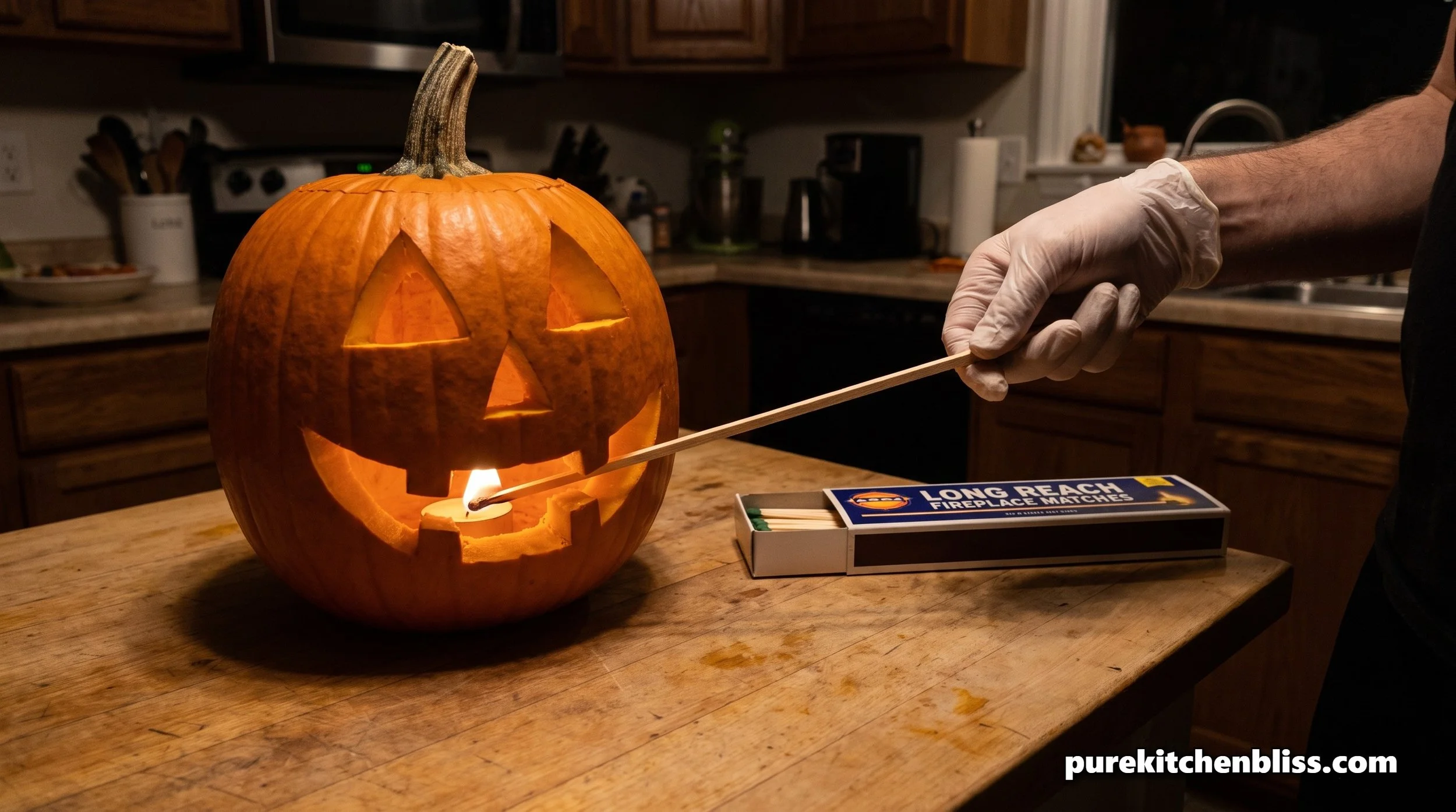
If a real flame is non-negotiable for you, the NFPA's specific guidance is to light it with long fireplace-style matches or a utility lighter rather than a standard match, since reaching down into a carved pumpkin with a short match puts your hand closer to the flame than necessary. Keep it well attended any time it's lit, meaning someone is actually in the room, not just within earshot. Extinguish it completely before leaving the kitchen for the night, and never leave it burning unattended overnight on a counter, which is exactly the scenario that turns a decoration into the kind of fire the NFPA data describes.
Where not to put it in a kitchen
Skip anywhere near the stove, obviously, but also skip directly under upper cabinets, next to a paper towel holder, or on a stack of napkins or placemats, all common kitchen counter clutter that a lit jack-o-lantern gets pushed up against without anyone thinking twice about it. An island or open counter section with at least a foot of clearance on every side, away from anything paper or fabric, is the safer spot. If your kitchen has curtains near a window counter, that's another zone to avoid entirely, fabric that can catch a breeze from an open window is a bad neighbor for an open flame.
If the pumpkin is also greeting trick-or-treaters
A lot of kitchens open directly onto an entryway or a window that faces the front walk, which means the same jack-o-lantern doing duty as a kitchen decoration is also visible to, or sometimes moved to greet, kids coming to the door. If yours ends up near an entry point at any point in the evening, keep it well off the actual walkway itself, since a lit pumpkin sitting where a trick-or-treater in a bulky costume might brush against it on the way up the steps is a bad combination. The same NFPA guidance about keeping exits clear of decorations applies just as much to a kitchen door that doubles as the Halloween entrance as it does to a front porch, if that door is also a fire exit for your own family, nothing decorative should ever be blocking it, even partially, even for one night.
Electrical decorations deserve the same attention
If your Halloween kitchen setup goes beyond a single candle, string lights around a window, a fog machine, a sound system for a spooky playlist, the electrical side carries its own real risk. Fire departments responded to an estimated average of 46,700 home fires involving electrical failure or malfunction each year between 2015 and 2019, and overloaded outlets from stacking too many seasonal decorations onto one circuit is a common contributor. Spread decorations across multiple outlets rather than daisy-chaining power strips into a single kitchen outlet already carrying the fridge or a countertop appliance, and unplug anything decorative overnight rather than leaving it running while everyone sleeps. As a carpenter, the thing I'd add here that most safety checklists skip is checking whether the outlet you're using is actually a kitchen small-appliance circuit already carrying real daytime load from a coffee maker or toaster, adding a string of lights to that same circuit on top of normal morning appliance use is a more realistic overload scenario than most people picture.
Supervision matters more than placement
Even a well-placed candle isn't fully safe without supervision, particularly with kids in the house. The NFPA's guidance is specific that children should be watched at all times when candles are lit, and in a kitchen that's genuinely easy to lose track of, since the room sees constant foot traffic and everyone assumes someone else is keeping an eye on it. If your kids are getting into costume in the kitchen before heading out to trick-or-treat, that's an added layer worth thinking about too, billowing or loosely woven fabric near an open flame is exactly the combination fire safety guidance warns against, so it's worth doing costume changes somewhere other than directly next to a lit jack-o-lantern. I've made it a habit that whoever is the last adult in the kitchen before bed does a specific check, candle out, not just dimmed or low, before the lights go off for the night.
What I actually do
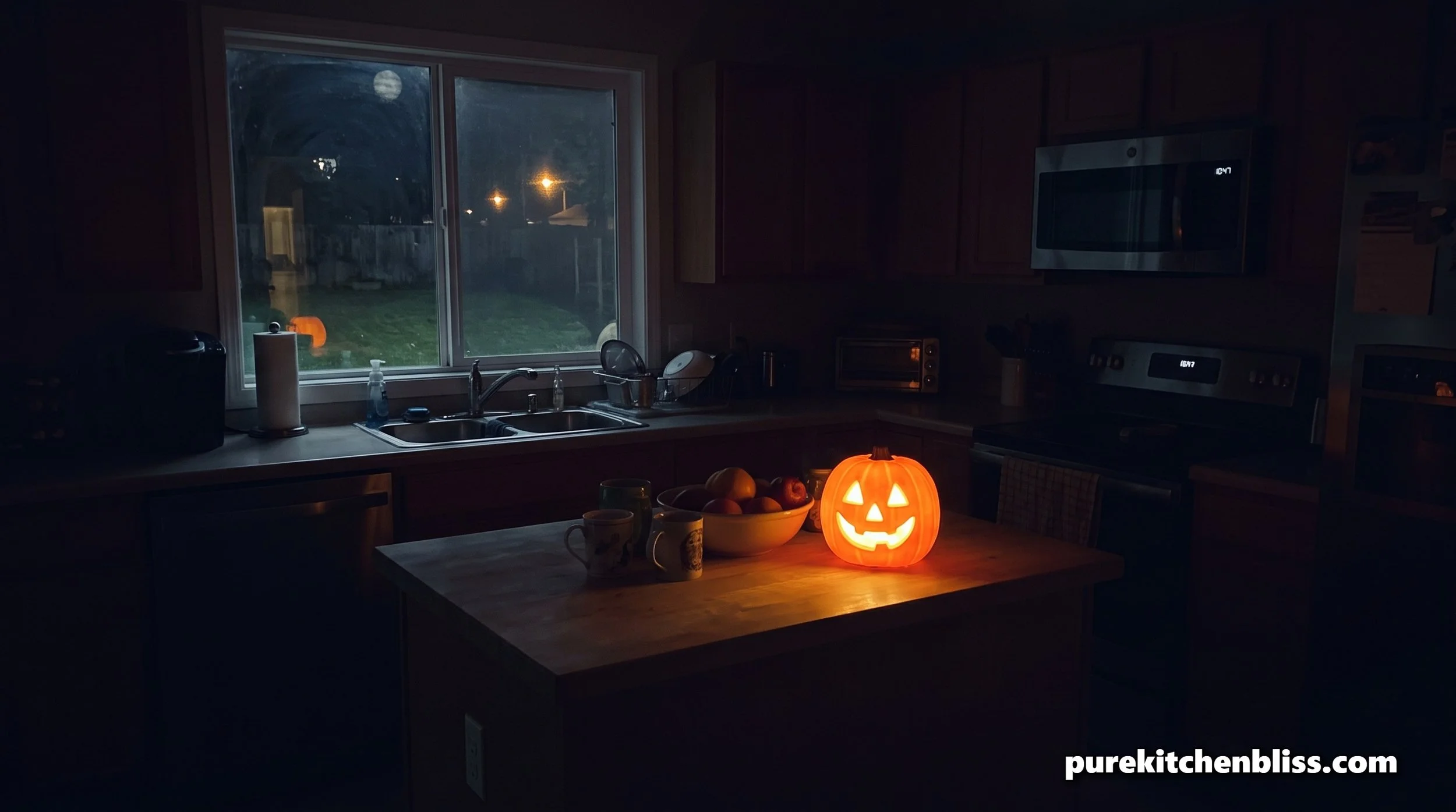
We've switched to flameless LED tea lights for all four pumpkins the last several years, which means the display can stay lit through the evening without anyone needing to babysit an open flame in a room four kids are constantly walking through. For anyone who wants something a bit brighter and steadier than a flickering tea light, a dedicated battery-operated jack-o-lantern light designed specifically for the job works well too. I still keep a small kitchen fire extinguisher mounted near the stove regardless, which is just good practice for a kitchen year round, not something specific to Halloween.
If you're already thinking about lighting and electrical placement in the kitchen, we cover the fuller install and clearance considerations in our under-cabinet lighting guide, and the same fire-conscious approach to kids and open heat sources shows up in our toaster safety guide for kids. If you're also sorting through the Halloween haul this week, our candy inspection and storage guide is the other seasonal kitchen safety piece worth pairing with this one.
| Option | Fire risk | Best for |
|---|---|---|
| Real candle | Requires active supervision, clearance from cabinets and paper products, wax damage risk | Short, attended display only |
| Flameless LED tea light | No open flame, no wax | Multi-day kitchen display, unattended evenings |
| Battery jack-o-lantern light | No open flame, brighter and steadier than a tea light | Kitchens wanting a more visible glow |
| Glow sticks | No open flame, no electrical component | Kid-safe, low cost, single-night use |
What this actually comes down to
A jack-o-lantern on a front porch and the same jack-o-lantern on a kitchen island are not the same fire risk, because the kitchen has more flammable clutter within reach and more foot traffic moving past it. The NFPA's own recommendation, battery or LED lighting over an open flame, holds up especially well in a kitchen specifically, and if you do go with a real candle anyway, clearance from cabinets and paper products, a tray to catch wax, active supervision, and a real extinguish-before-bed habit are what actually keep the display from becoming a statistic instead of a decoration.