Why I Refuse to Use Particleboard in My Kitchen Builds (And What I Use Instead) 🪵
I have spent more than twenty years running a custom carpentry shop and cutting apart old, failing kitchens. Over that time, I have seen exactly what happens to a home when you build a room out of cheap, mass-market materials.
If you walk into a big-box store or look at a budget cabinet line online, the sales pitch always focuses on the outside. They show you a beautiful, flawless Cloud Dancer porcelain color palette or a clean shaker door style. But as a carpenter, I don’t care about a pretty veneer face if the core skeleton of the cabinet box is garbage.
The biggest culprit in modern home construction is particleboard (sometimes dressed up with fancy names like "furniture board" or "compressed engineered wood"). It is the undisputed choice for cheap, mass-produced cabinetry.
But in my shop, I have a strict, non-negotiable rule: I completely refuse to run particleboard through my saws for a kitchen build. In a house with four kids, our kitchen handles constant physical impact, high humidity, and heavy weight loads. Building a long-term kitchen on a foundation of particleboard is a recipe for structural failure. Today, I’m giving you my unfiltered carpenter’s warning on why this material is a ticking time bomb, and the two heavy-duty alternatives I use instead to build a kitchen that lasts 20 years.
The Anatomy of Particleboard: Why It Fails Under Pressure 🔬
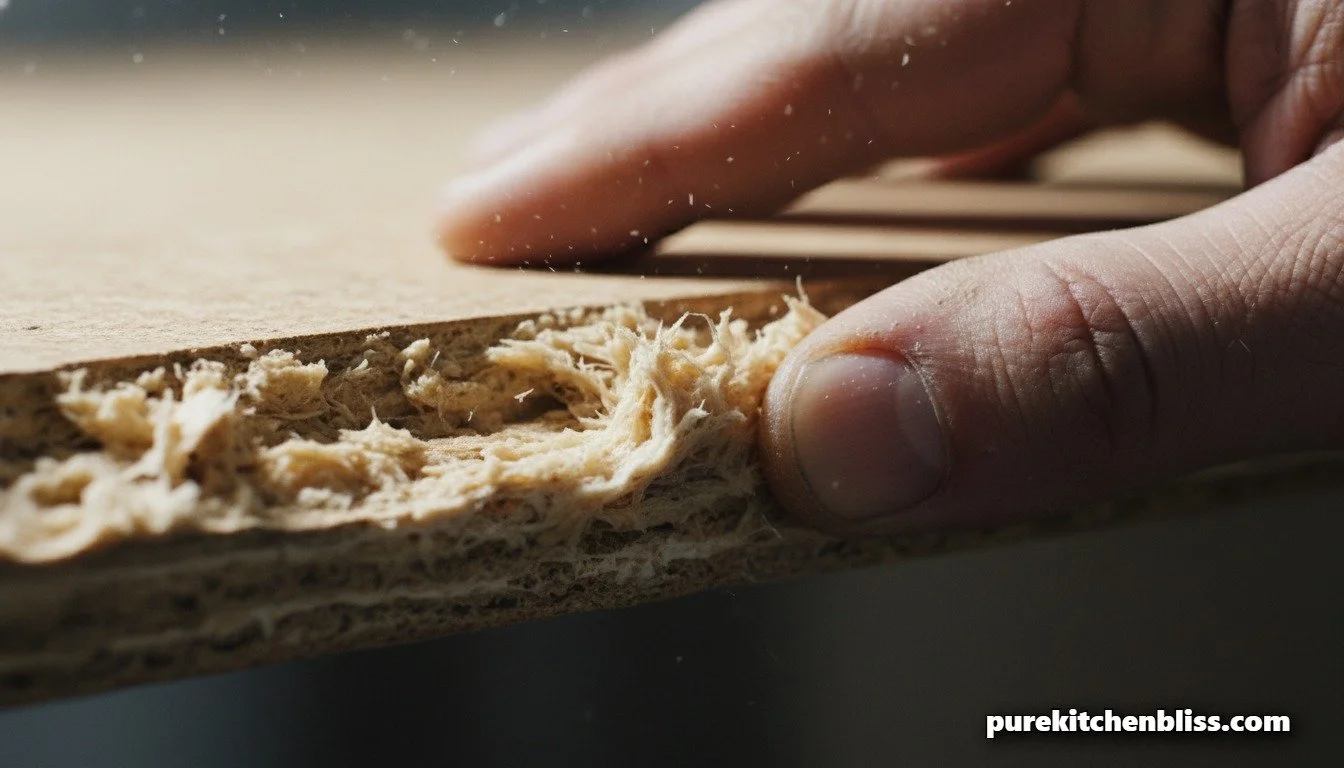
To understand why particleboard is structurally dangerous in a kitchen footprint, you have to look at how it is manufactured. Particleboard is essentially a giant sheet of compressed garbage. It is made by taking wood shavings, sawdust, and fine wood chips, mixing them with a heavy dose of synthetic glue, and pressing the mixture into sheets.
The Mechanical Weakness: Because it is made of tiny, randomized sawdust particles instead of continuous, interlocking wood fibers, particleboard has almost zero natural tensile strength.
The Screw-Holding Problem: If you try to screw a heavy-duty, fluid-dampened hinge or a heavy-duty undermount drawer slide into a particleboard wall, the threads of the screw don't bite into solid wood grain. They bite into tiny chips of sawdust held together by glue. Over time, from the constant slamming of cabinet doors by four kids, the wood fibers around the screw break down. The screws rip out, leaving a hollow, crumbling hole that can never be securely patched.
The Water Trap: Turning Your Cabinets into Oatmeal 🌊
A kitchen is a wet environment. Between steam from a boiling pot, splashes from a multi-tiered workstation sink, and the inevitable hidden pipe leak, your cabinets will get wet at some point.
The Sponge Effect: Particleboard is highly hydro-absorbent. If water gets past the thin laminate edge banding, the raw sawdust inside absorbs the moisture like a sponge.
The Delamination: As the wood fibers absorb water, they swell up rapidly. But because they are compressed under intense factory pressure, they cannot shrink back down when they dry out. The board expands, the structural glues dissolve, and the panel laminates split apart, turning the bottom of your cabinet box into something resembling damp oatmeal. Once a particleboard cabinet box swells from water damage, its structural load-bearing capacity drops to zero.
Structural Comparison: Particleboard vs. My Top 2 Materials
| Performance Metric | Mass-Market Particleboard | Cabinet-Grade Plywood | Wheatstraw Agrifiber (2026) |
|---|---|---|---|
| Screw-Holding Power | Very Poor (Crumbles over time) | Excellent (Bites solid grain) | Extreme (Dense resin bond) |
| Moisture Tolerance | Failing (Swells permanently) | High (Resists short leaks) | Maximum (Natural silica barrier) |
| Formaldehyde Risk | High (Heavy toxic off-gassing) | Low (If specified NAF-grade) | Zero (100% Toxin-Free) |
Alternative #1: 3/4-Inch Cabinet-Grade Plywood 🏗️
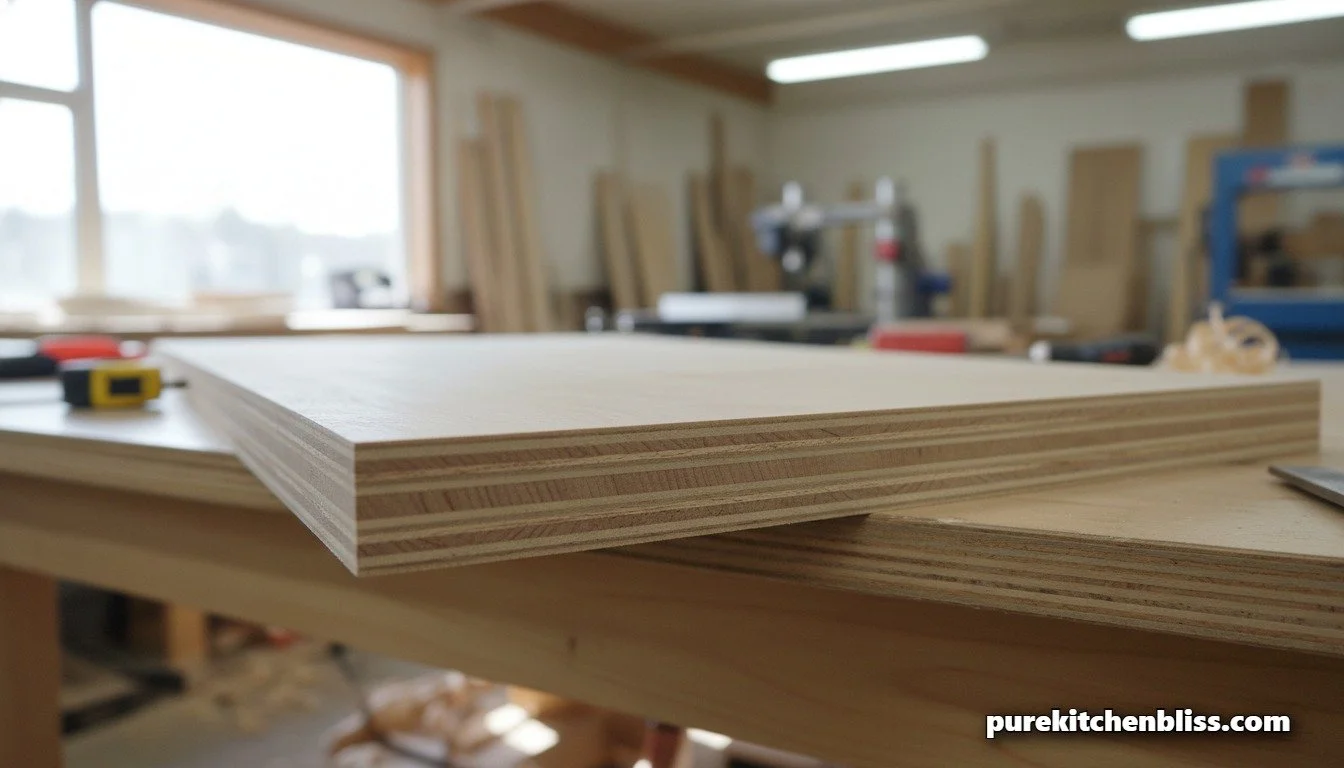
When I am building custom perimeter cabinet boxes that have to support heavy granite or quartz countertops, my traditional go-to material is 3/4-inch multi-layer hardwood plywood (usually birch or maple).
The Layer Advantage: Plywood is made by gluing thin sheets of solid wood veneer together in alternating, 90-degree cross-grain patterns.
The Mechanical Strength: Because the wood grain runs in alternating directions, the panel cannot expand or contract easily. When you drive a screw into plywood, the threads cut directly into interlocking layers of real wood grain. It holds its grip forever, preventing your cabinet doors from sagging or dropping out of alignment.
The Safety Note: To keep your air clean, always specify NAF (No Added Formaldehyde) plywood to prevent chemical vapors from leaching into your family footprint.
Alternative #2: Wheatstraw Agrifiber (The Eco Heavyweight) 🌾
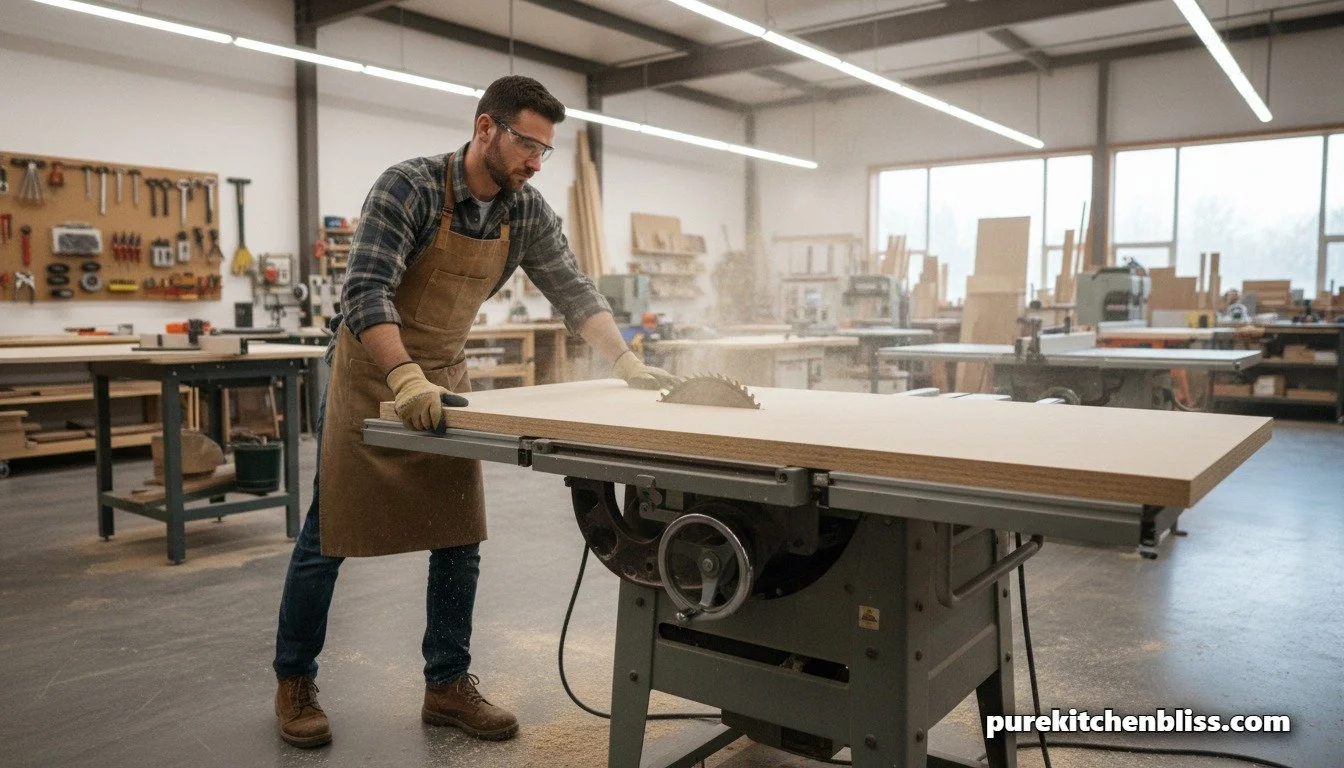
If you want to step up to the absolute cutting edge of 2026 home building, you need to look at Wheatstraw Agrifiber panels. This is the primary engineered board I am running in my shop to replace wood fiberboards entirely.
The Material: It is made from the leftover agricultural stalks of harvested wheat, compressed with an advanced polyurethane binder.
The Structural Edge: Wheat straw naturally contains a high level of silica, which acts as nature's waterproof shield. Agrifiber panels do not swell or delaminate when exposed to humidity or standing water.
The Health Bonus: Because it uses bio-based resins instead of cheap industrial glues, it is 100% formaldehyde-free. It gives you a rock-solid, incredibly dense board that holds hardware beautifully while acting as a foundational pillar for a non-toxic kitchen sanctuary.
The Carpenter's Advice 🛠️
When a contractor hands you a estimate for your kitchen remodel, look closely at the fine print. If it simply says "wood cabinets," look them in the eye and ask: "What material is the cabinet carcass box constructed from?" If the answer is particleboard, run the other way.
Paying a little extra upfront for high-quality plywood or wheatstraw agrifiber isn't an aesthetic luxury—it’s an investment in structural insurance. It is the only way to build a tough, family-proof kitchen that stands square, holds its hardware, and keeps your family safe for decades.
Next Up: Want to see the exact step-by-step method I use to repair and reinforce weak cabinet joints when cheap hardware fails? Check out our How I Fix a Sagging Kitchen Drawer That Was Built with Cheap Hardware!.