What to Do With Your Herb Garden Before It Bolts at the End of Summer
Transparency Note: We independently select these products based on research and user reviews. If you buy something through our links, we may earn a commission.
Every August our basil goes from thriving to bolting almost overnight once the real heat sets in, tiny flower buds appearing at the top of the plant seemingly out of nowhere, and for a few seasons I lost a genuinely large chunk of the harvest just watching it happen without any real plan in place. Once a plant bolts, the flavor shifts noticeably, often turning bitter, and the plant redirects its energy into seed production instead of leaf growth, which means the window for good flavor closes faster than most people expect once the trigger hits.
The fix isn't complicated, but it does require actually doing something before the plant flowers rather than after. Freezing, drying, and a couple of other preservation methods each suit different herbs, and matching the right method to what you're actually growing is the difference between a freezer stocked with usable flavor all winter and a counter full of wilted, wasted herbs.
Why herbs bolt when they do, and why flavor changes once they have
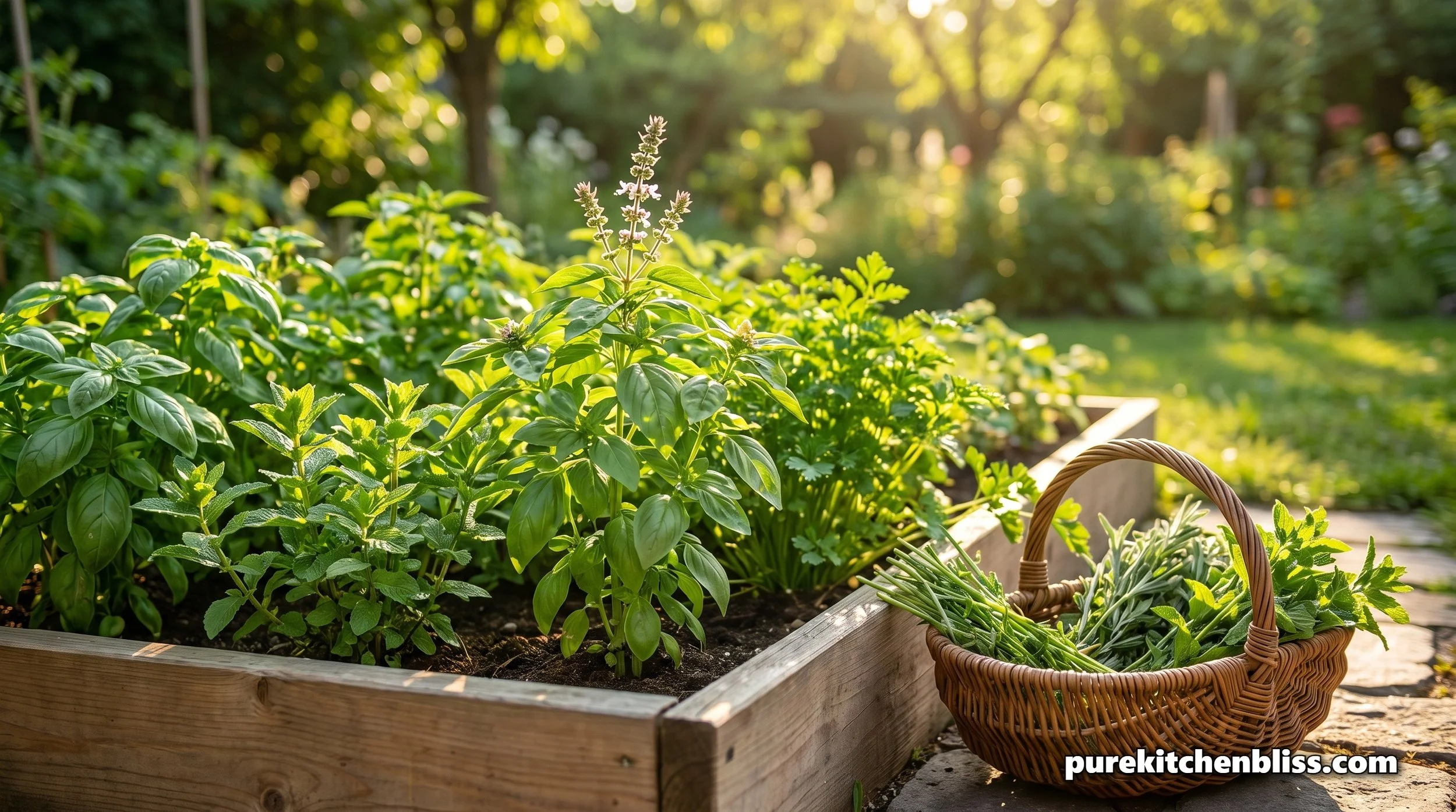
Bolting is triggered by a combination of heat and daylength, the plant essentially reading environmental cues that tell it the growing season is ending and it's time to switch from vegetative growth to reproduction. Once that switch flips, the plant's chemistry shifts along with it, energy that was going into leaf production redirects toward flower and seed development, and the leaves themselves change in the process. Basil in particular tends to turn noticeably more bitter once it bolts, since the plant concentrates different compounds once it's focused on reproduction rather than leaf growth, which is why a lot of home gardeners describe late-season basil as tasting "off" compared to a June harvest even when the leaves still look perfectly green.
This isn't unique to basil. Cilantro is famous for bolting fast in heat, and mint, while more resilient than basil overall, still shifts in flavor intensity once it flowers. The practical upshot is that flavor quality has a real deadline tied to the plant's biology, not just to how the leaves look, so waiting until a plant "looks done" before harvesting for preservation usually means you've already missed the best flavor window by a couple of weeks. Pinching off the center growing stem periodically through the season delays this, encouraging the plant to bush out sideways instead of racing upward toward flowering, but once a plant is determined to bolt, heat and daylength eventually win regardless of how diligent the pinching has been.
Harvest the whole plant before it flowers, not a little at a time
During the regular growing season, the standard advice is to harvest conservatively, taking no more than a third of any plant at once so it keeps producing. Toward the end of the season, that logic flips entirely. Once a plant is showing early signs of bolting, buds forming, stems starting to elongate and stretch upward, the better move is to harvest the entire plant in one go rather than continuing to nibble at it gradually, since whatever you don't take before the flip fully happens is going to lose flavor quality regardless of whether you eventually get around to using it.
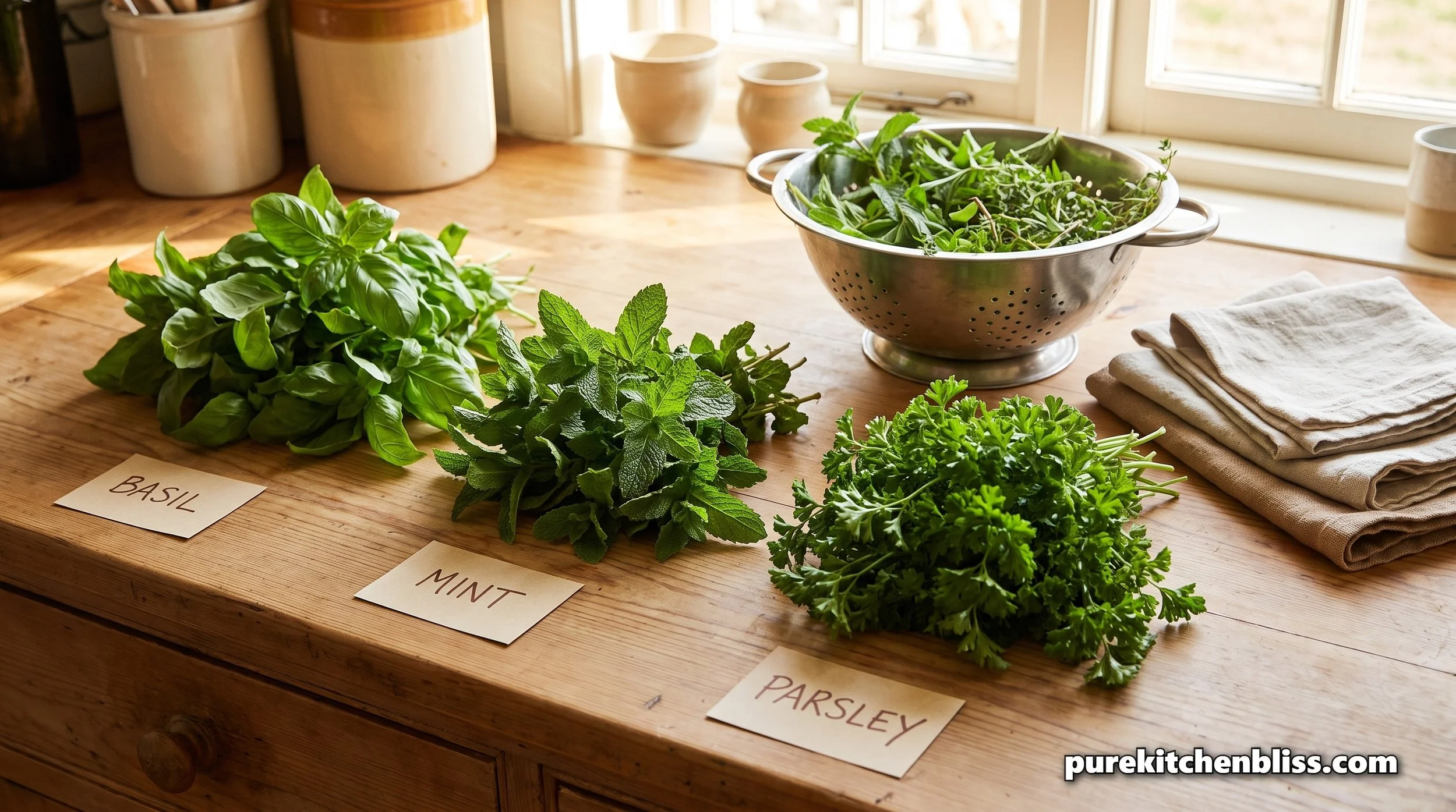
If you've been growing basil, mint, or parsley from our kitchen herb growing guide, this end-of-season harvest is really the payoff moment for everything you've been doing all summer, and it's worth treating as a dedicated kitchen project rather than an afterthought squeezed in between other things. Set aside a couple of hours specifically for it, wash everything thoroughly to remove garden soil and any lingering insects, and pat it fully dry before deciding which preservation method each herb is actually going to get.
Freezing in oil, the method that works for most tender herbs
Freezing in oil is the most reliable preservation method for tender, leafy herbs like basil, parsley, cilantro, and oregano, all of which tend to lose color and flavor badly when dried by hanging. Fill an ice cube tray about two-thirds full with finely chopped herbs, pour olive oil over the top until the herbs are fully covered, and freeze for at least three to four hours before popping the cubes out and transferring them to a labeled freezer bag. Cubes made this way keep for a solid six months in the freezer, and the format is genuinely convenient, drop a cube straight into a hot pan when you're cooking rather than needing to thaw and measure anything separately.
Basil specifically benefits from a slightly different variation if you want a smoother result. Pureeing the leaves with olive oil in a food processor, roughly a tablespoon of oil per cup of packed basil, before freezing produces something closer to an unseasoned pesto base than whole chopped leaves in oil, which works well stirred into soups, sauces, or vinaigrettes later in the season. Whether you go with whole chopped leaves or a puree really comes down to how you plan to use it later, chopped cubes are more versatile for general cooking, while the puree version is faster to incorporate into a specific dish. Either version handles moderately well in a food processor even with a fairly large harvest, so this method scales up reasonably well if you're working through several plants worth of basil at once rather than a small handful.
Which herbs freeze on the stem, and which need to be stripped first
Not every herb needs the ice cube treatment. Sturdier, woodier herbs like rosemary and thyme actually freeze well as whole sprigs, wrapped loosely in foil in small bundles and frozen for up to six months. They come out limp once thawed, which makes them a poor choice for anything you're serving raw or as a garnish, but they still carry plenty of flavor for cooked dishes, soups, roasts, braises, where texture doesn't matter and the herb is going to soften in the cooking liquid anyway regardless of its starting condition.
Tender leafy herbs, basil, mint, cilantro, and parsley, generally do better stripped from their stems before freezing, since the stems on these varieties don't hold up well and can turn the whole preserved batch stringy or fibrous once thawed. If you're working through a lot of mint from our mint growing guide, stripping the leaves first also makes it much easier to portion accurately into ice cube trays, since whole sprigs with stems attached don't pack down evenly the way loose chopped leaves do.
| Herb | Best method | Shelf life |
|---|---|---|
| Basil | Freeze in oil (chopped or pureed) | 6 months frozen |
| Mint | Freeze in oil, stripped from stems | 6 months frozen |
| Parsley | Freeze in oil or dehydrate | 6 months frozen, 6-12 months dried |
| Rosemary / Thyme | Freeze whole sprigs, or dehydrate | 6 months frozen, 6-12 months dried |
| Oregano / Sage | Dehydrate (dries well, holds flavor) | 6-12 months dried |
| Cilantro | Freeze in oil only (dries poorly) | 6 months frozen |
Drying, and why it doesn't work for every herb
Drying is the traditional go-to preservation method, but it genuinely doesn't suit every herb equally well. Herbs with thick, succulent leaves and high moisture content, basil, cilantro, mint, and tarragon among them, tend to lose color and flavor fast when air dried, often turning black or dull rather than staying green, which is why hanging a basil harvest to dry is one of the more common beginner mistakes in herb preservation. Herbs with less water content, oregano, thyme, sage, and rosemary, dry beautifully by comparison and hold both color and flavor well through the process.
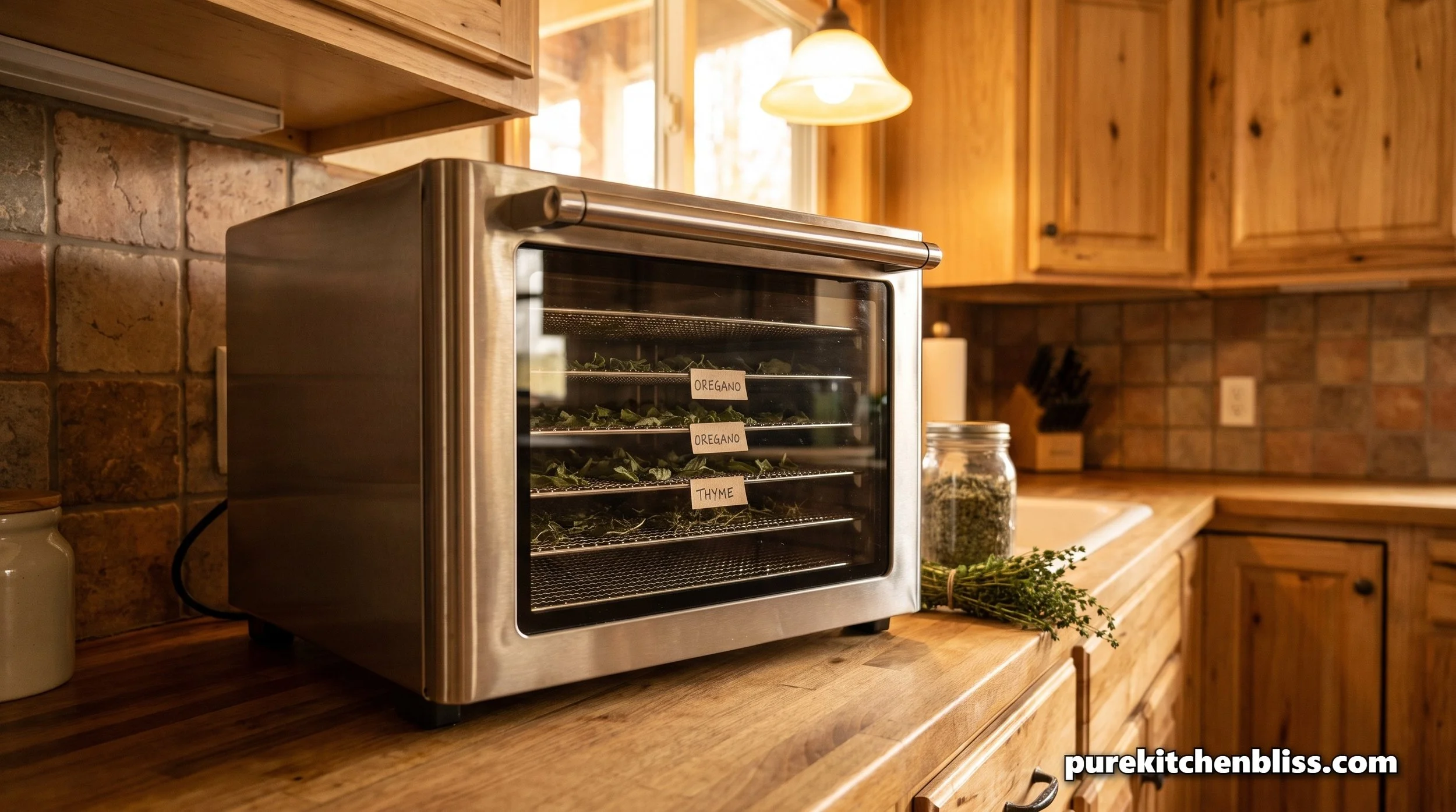
A food dehydrator set between 95 and 115°F gives more consistent results than air drying for the herbs that do dry well, since it removes moisture at a low, controlled temperature with steady airflow, typically taking one to four hours depending on the herb and how humid your kitchen is that day. If you're air drying instead, University extension guidance recommends conditions above 85°F with humidity below 60 percent for good results, and a paper bag with the stems poking out and holes punched for airflow works better than an open hang, since it keeps dust off the leaves while they dry over one to two weeks. Once herbs are fully dry, leaves crumbling and stems snapping rather than bending, a brief heat step, 160°F for 30 minutes or 175°F for 15, or a 48 hour freeze at 0°F, takes care of any insect eggs that might have hitched a ride from the garden before the herbs go into long-term storage.
Herb butter, and a use for the extra that goes beyond cooking
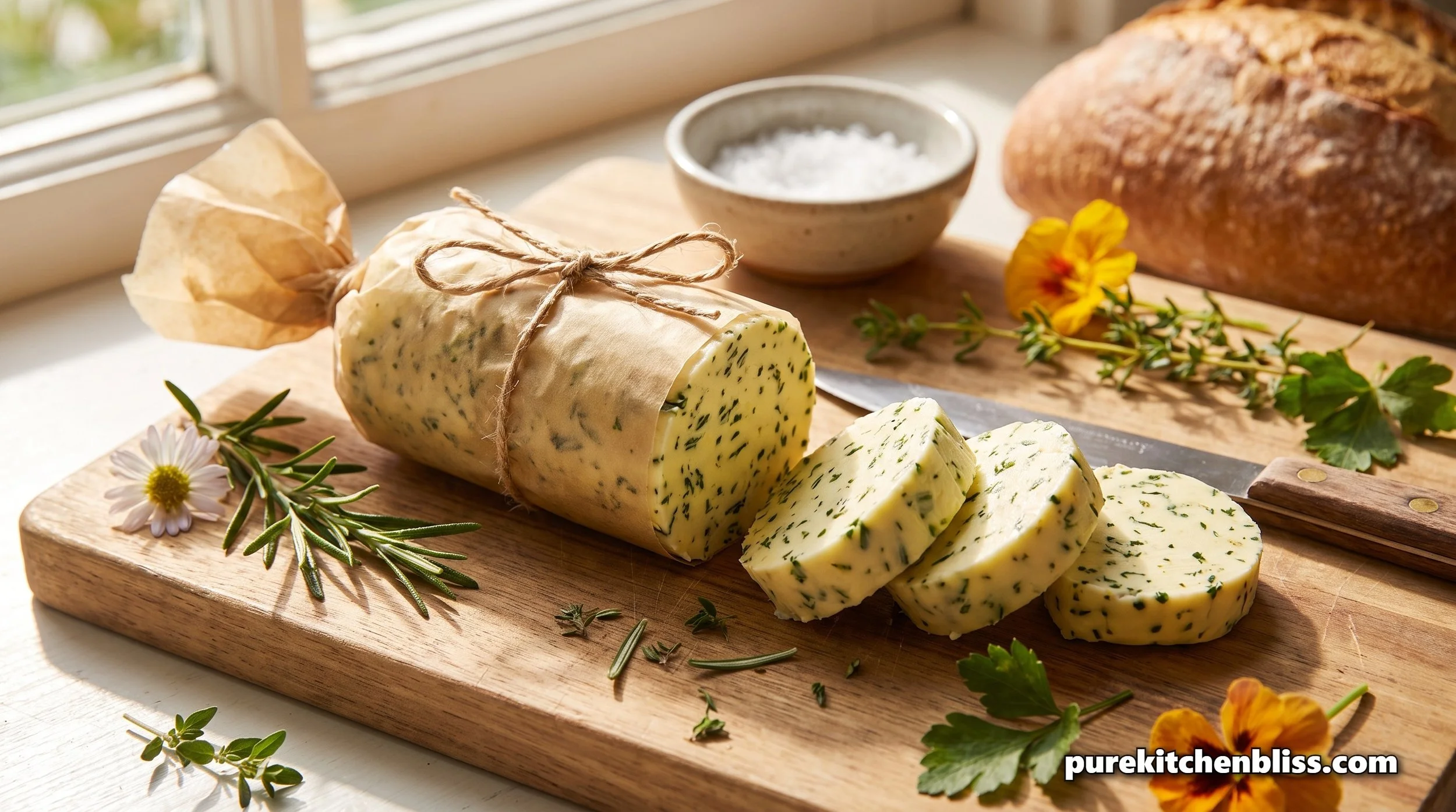
Herb butter is worth making with whatever doesn't fit into the freezer or dehydrator, and it's a genuinely easy way to use up a large harvest fast. Mix about two tablespoons of finely chopped fresh herbs into a full stick of softened, unsalted butter, add a pinch of salt, and shape it into a log using parchment paper before refrigerating for a couple of hours until firm. It keeps about two weeks in the fridge or four to six months frozen, and slicing off a coin as needed means you always have a flavor boost ready for vegetables, meat, or bread without measuring anything fresh.
If your mint harvest is bigger than what your kitchen needs this year, it's worth knowing mint has a genuine second life beyond cooking, herbal bath soaks and infusions are a common use for extra mint, and our sister site's guide to natural bath products for sensitive skin covers the same kind of ingredient thinking applied to skincare rather than the kitchen, worth a look if you're the type of gardener who ends every August with more mint than any one household can realistically eat through.
What I actually use to get through a big harvest
A countertop food dehydrator earns its space in our kitchen specifically during this two week stretch every August, since it handles a much bigger volume in one pass than trying to air dry everything the traditional way. For freezing, silicone ice cube trays with lids are worth the small upgrade over an old plastic tray, since the lid keeps other freezer smells from getting into the oil while the cubes set. Once herbs are fully dried, small glass spice jars keep them fresher longer than a plastic bag, since glass doesn't absorb odors or let in light the way plastic does over months of pantry storage. For general fridge and freezer organization while you're working through a big harvest in stages, our fridge storage container roundup covers options that keep the in-progress herbs organized rather than spreading across every shelf while you work.
What this actually comes down to
Bolting isn't a sign your herb garden failed, it's a predictable biological trigger tied to heat and daylength, and the fix is acting on the whole plant before it flowers rather than waiting for the leaves to look obviously bad. Freeze tender herbs in oil, freeze sturdy stemmed herbs whole, dry the herbs that actually hold their color and flavor when dried, and turn whatever's left into herb butter. Matched correctly, this gets you through winter with real garden flavor instead of starting from scratch with store-bought herbs come spring.