Do You Even Wash the Inside of Your Kettle? The Chalky, Hidden Truth 🫖🧼
Let’s be completely honest for a second. If I asked you when you last washed the inside of your kitchen kettle, you’d probably give me a blank stare.
It’s one of those silent kitchen laws most people take for granted: "It only holds clean water, and that water is constantly boiling, so the inside must be completely sterile, right?" 🤨
As a coffee shop owner, and a dad of four, I’m here to tell you that this logic is a massive trap. While boiling water does a fantastic job of killing off active bacteria, it does absolutely nothing to get rid of the geological chemistry hiding inside your water line. In fact, boiling water actively accelerates the problem.
If you peer inside your kettle right now and see a rough, chalky white film, or weird gray flakes swirling around the bottom of the basin, your kettle isn’t clean. It’s suffering from severe mineral calcification.
Today, we’re ignoring the old myth that kettles wash themselves. Let’s break down the actual science of why your kettle needs a regular interior flush, how it impacts your energy bill, and the simple 10-minute shop hack to make it look brand new.
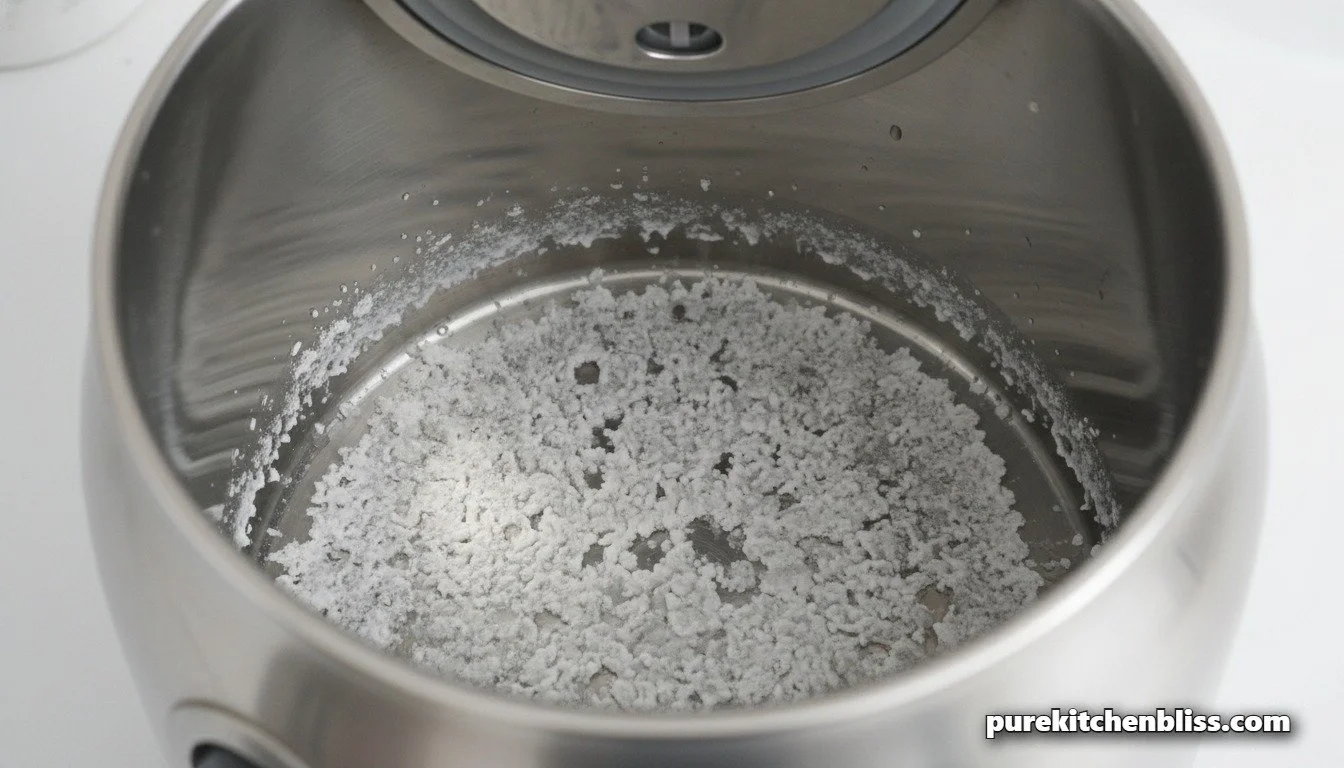
1. The Chemistry: What is that White Crust? 🧪
Every drop of water that flows out of your kitchen faucet carries a tiny load of dissolved minerals it picked up from the ground, mostly calcium carbonate and magnesium.
The Physics: When you turn your kettle on, the water vaporizes and turns to steam, but the minerals cannot evaporate. Instead, they separate from the liquid and solidify, bonding directly to the hottest part of the machine: the metallic floor covering the heating element.
The Name: In the building trades, we call this limescale (or hard water scale). It isn't inherently toxic to drink, but it acts like a layer of crusty plaster slowly growing inside your appliance.
2. Shop-Owner Logic: Why Scale Kills Efficiency ⏱️
In my coffee shop, we run intensive water-softening arrays because scale build-up is the number one killer of high-end commercial boilers. The exact same mechanical rules apply to your countertop kettle.
The Insulation Barrier: Limescale is an incredibly poor conductor of heat. When a thick layer of white crust builds up over the internal heating element, it acts like a thermal blanket.
The Damage: Your kettle has to work twice as hard to push heat through that chalky barrier into the water. This forces your machine to run longer, spiking your daily electricity usage and drastically shortening the lifespan of the heating element until it prematurely burns out. If your kettle has started making loud, erratic popping sounds while heating, that’s the sound of trapped water pockets exploding beneath a thick wall of scale.
3. Structural Breakdown: Clean Kettle vs. Scaled Kettle
| Performance Metric | The Crusty, Scaled Kettle | The Descaled Sanctuary Kettle | Dad-Tested Score |
|---|---|---|---|
| Boil Velocity | Slow (Insulated by mineral wall) | Instant (Direct metal contact) | ⭐⭐⭐⭐⭐ |
| Beverage Flavor | Flat, slightly chalky or metallic | Crisp, bright, and pure | ⭐⭐⭐⭐⭐ |
| Water Clarity | Cloudy (Floating white flakes) | 100% Crystal clear | ⭐⭐⭐⭐ |
4. The Flavor Profile: Fixing "Flat" Tea ☕
If you are a coffee or tea enthusiast, you are wasting your money on premium beans or loose-leaf blends if you pour water from a scaled kettle over them.
The Taste Trap: As water sits on top of a calcified plate, it continuously dissolves trace bits of old mineral sediment back into your mug. This alters the pH of the water, making your morning brew taste flat, muddy, or distinctively metallic.
The Visual Ruin: If you’ve ever noticed an oily-looking sheen floating on top of your tea, or little white specks resting at the bottom of your favorite mug, you are literally looking at chips of detached scale. Cleaning the inside restores your water to its purest state, aligning perfectly with a high-end home beverage hub.
5. The 10-Minute Cleaning Blueprint: The Citric Acid Secret 🍋
Don't you dare go under your sink and grab a harsh chemical steel-wool pad to scrub the inside of your kettle. Scratching the polished interior steel plate creates micro-grooves that make it even easier for new minerals to latch onto next time. We let chemistry do the heavy lifting.
The Frequency: Give your kettle a deep clean once a month (or every two weeks if you live in a severe hard-water zone).
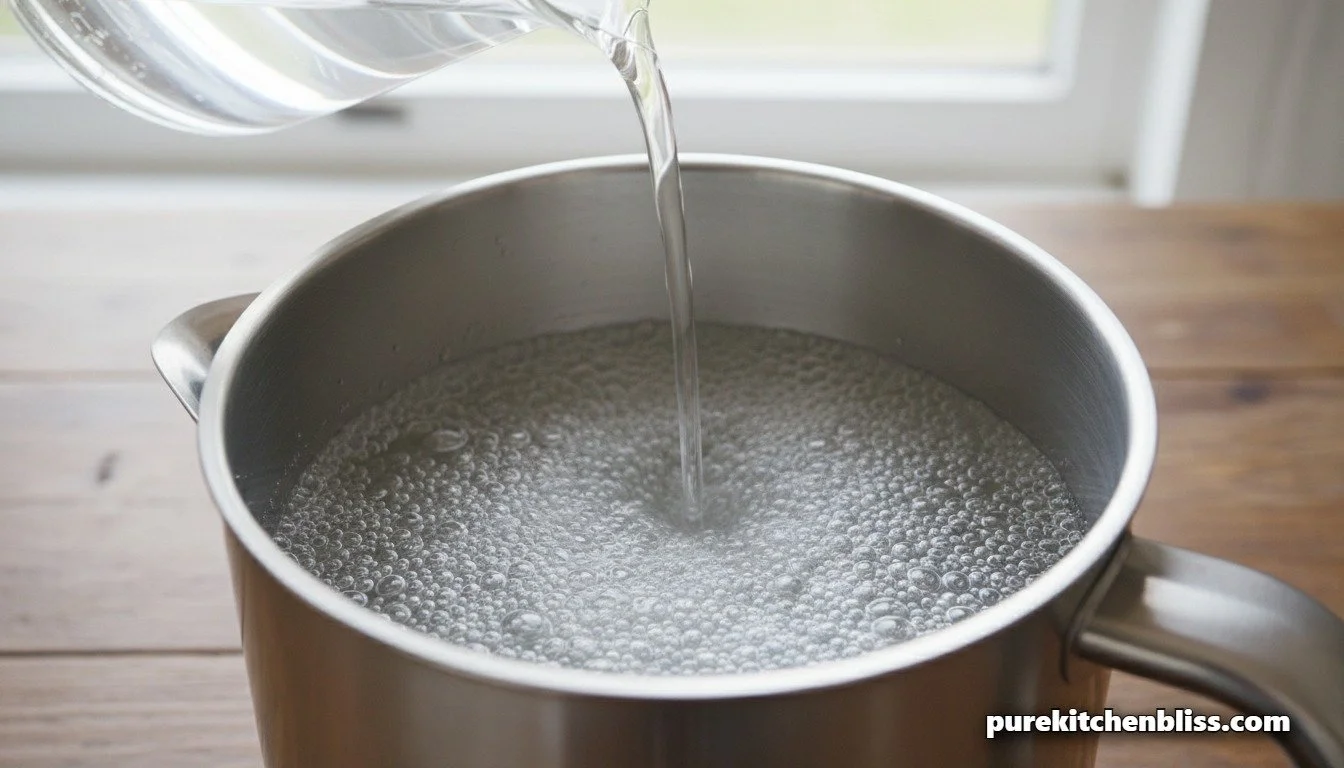
The Method: 1. Fill the kettle halfway with a 50/50 mix of water and plain white vinegar (or add 2 tablespoons of food-grade citric acid powder to a full tank of water if you hate the smell of vinegar). 2. Bring the solution to a complete, rolling boil, then click the machine off. 3. Let it sit un-bothered for 20 to 30 minutes. The warm acid will dissolve the calcium matrix completely without any scrubbing. 4. Dump the liquid out. You’ll see the bare metal sparkling like new. Rinse it thoroughly with fresh water, boil one final clean batch of pure water to purge any lingering scent, and dump it out.
The Permanent Infrastructure Solution 🛠️
If you are tired of constantly fighting scale cycles, the permanent fix is to look at your primary water infrastructure. Installing a high-efficiency sediment filter on your secondary lines or switching to a dedicated boiling water faucet that routes incoming lines through an integrated inline scale-inhibitor is the absolute best way to build a maintenance-free workspace.
When you look after the hidden, small engines of your home, you protect your wallet and your health. Take ten minutes this weekend, flash out your kettle, and reclaim the bright, pure flavor of your morning brew!
Next Up: Ready to step up your water game and completely clear your countertops for good? Check out our The Death of the Kettle: Why Boiling Water Taps are the #1 "Clear the Counter" Upgrade!.