Transparency Note: We independently select these products based on research and user reviews. If you buy something through our links, we may earn a commission.
If you walked into my coffee shop on a busy morning, you’d see a high-speed, streamlined assembly line. Every single tool has a dedicated purpose, and there isn't a square inch of wasted counter space. But for years, home kitchens have been held hostage by a clunky, slow piece of 19th-century technology: The Electric Kettle. 🛑
In a house with four kids, our morning routine is like running a small commercial enterprise. Between filling oatmeal bowls, rushing to use my Breville Bambino, prepping afternoon thermoses, and sterilizing baby gear, waiting 5 to 7 minutes for a traditional kettle to boil isn't just an annoyance, it's a bottleneck in our workflow.
In 2026, the ultimate luxury isn't a flashy marble pattern; it's a completely clear countertop. That is why I have officially declared the electric kettle dead. As a builder, the number one infrastructure upgrade I am installing this year is the Integrated Boiling Water Tap. It gives you instant 212°F water straight from the spout, safely tucks the mechanical footprint under the sink, and lets you reclaim your workspace. Let’s look at the mechanical breakdown of why this shift is rewriting modern kitchen design.
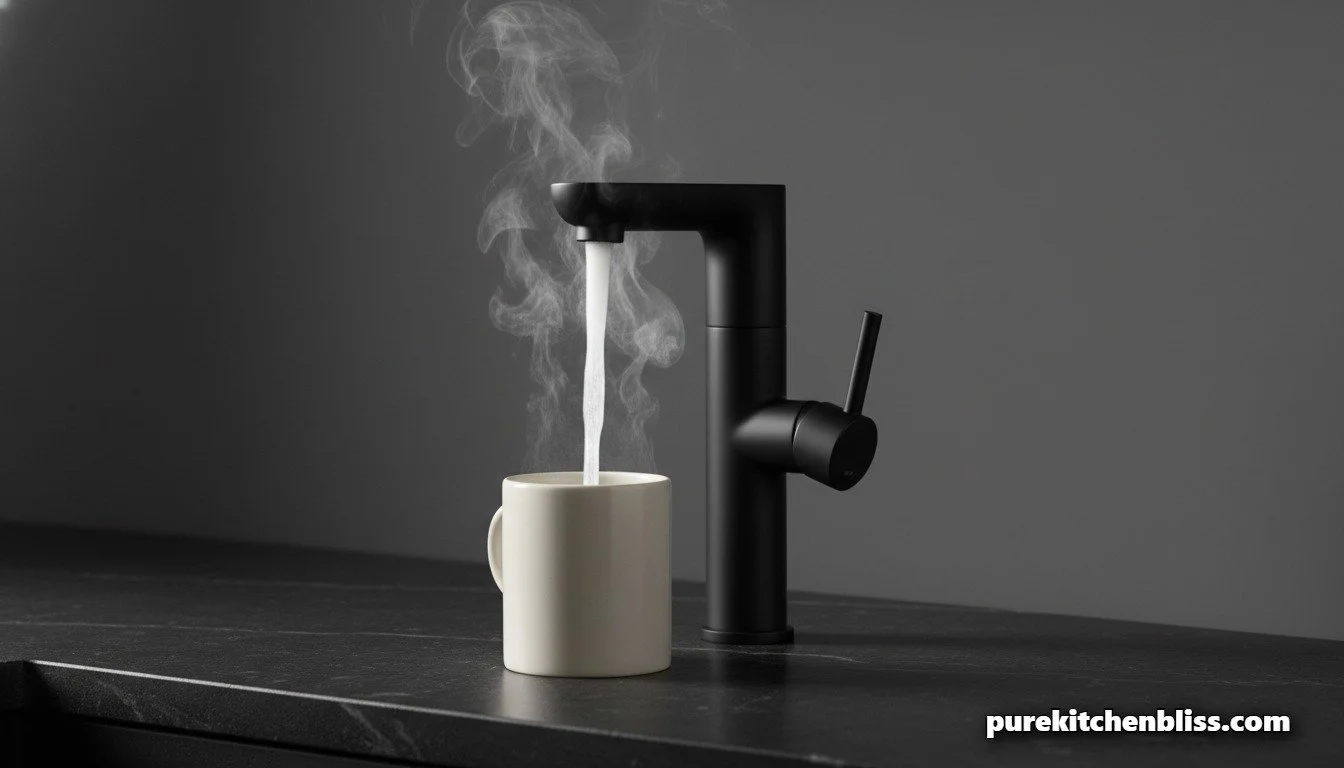
1. The Commercial Shift: Reclaiming the Visual Runway 🏗️
The biggest challenge when creating a true kitchen sanctuary is managing visual clutter. Every cord, plug, and appliance sitting on your counter adds stress to the eye.
The Footprint: An electric kettle requires a base, a cord, and a permanent parking space near an electrical outlet.
The 2026 Infrastructure Alternative: Systems like Quooker or InSinkErator move the entire heating engine beneath the counter line. A compact, vacuum-insulated titanium tank sits tucked away adjacent to your waste plumbing, leaving nothing on display but a singular, elegant architectural faucet.
The Carpenter’s View: By routing the power and water supplies beneath the deck, you maximize your workspace and can fully appreciate your premium stone or end-grain wood surfaces without an ugly black power cord running across the grain.
2. Shop-Owner Efficiency: The Time and Energy Calculus ⏱️
Most people think a boiling water tap is an energy hog because it keeps water hot all day. But when you look at the commercial data, the physics actually favors the tank.
The Kettle Waste: Think about how you use a standard kettle. You fill it up with three cups of water, boil it, pour out one cup for your tea, and let the other two cups sit and grow cold. You are paying to heat that extra water over and over again.
The Tank Efficiency: Modern 2026 instant-hot tanks utilize specialized vacuum insulation (similar to a premium thermos). It requires a tiny, baseline holding current—costing pennies a day—to maintain the water at a constant boil. When you tap the lever, it dispenses the exact ounce profile you need, meaning your water waste drops to zero.
3. Comparison: Traditional Electric Kettles vs. Integrated 100°C Taps
| Performance Metric | Standard Countertop Kettle | Integrated Boiling Tap (2026) | Efficiency Rating |
|---|---|---|---|
| Wait Time | 5 - 7 Minutes (Dependent on volume) | Instantaneous (0 Seconds) | ⭐⭐⭐⭐⭐ |
| Countertop Clutter | High (Requires base station & cords) | Zero (Completely flush deck) | ⭐⭐⭐⭐⭐ |
| Water Waste | High (Frequent over-boiling) | None (Dispenses precise ounces) | ⭐⭐⭐⭐ |
4. The Father’s Safety Audit: Toddler-Proof Engineering 🛡️
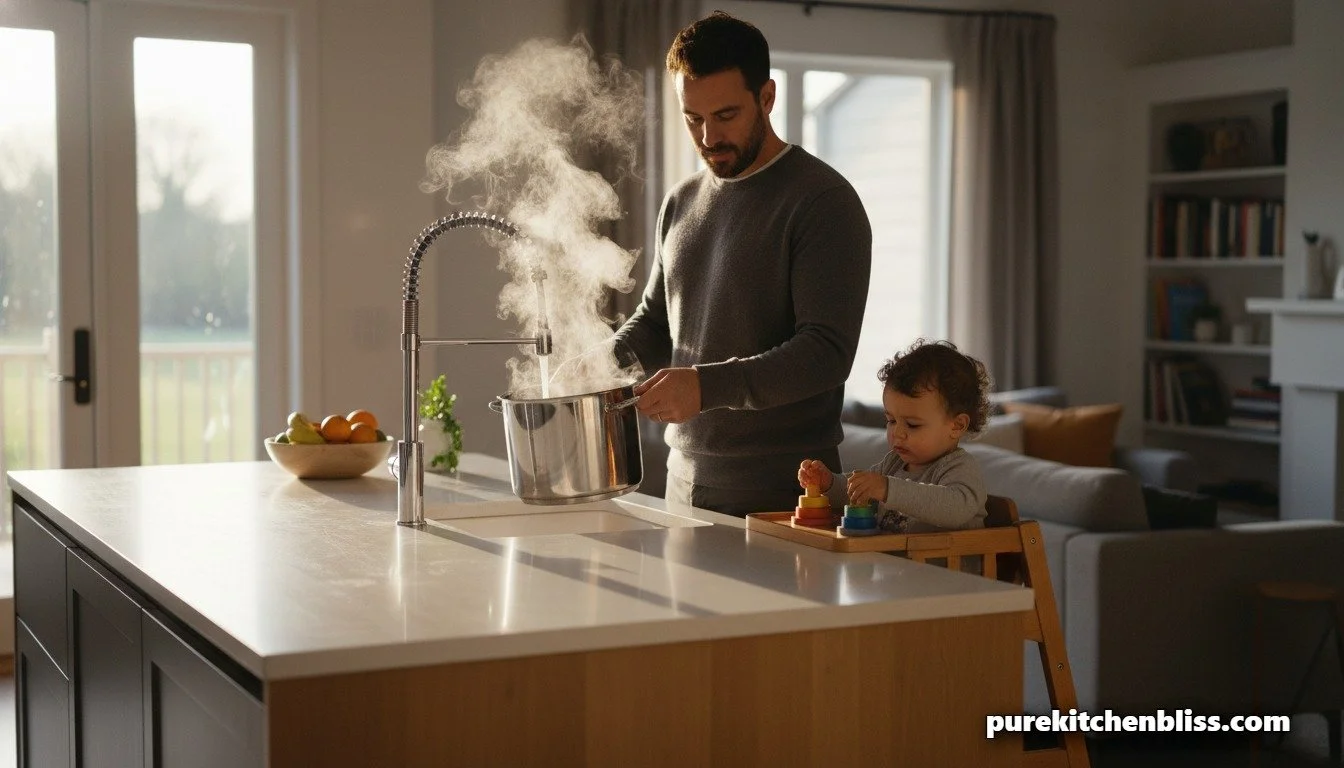
When I talk to parents about installing an instant boiling tap, the number one fear is always: "What if my kid turns it on?" It’s a completely valid worry. A standard kettle can be knocked off a counter by a stray elbow, spilling scalding water everywhere. But a fixed boiling water tap is actually far safer if you choose the right mechanics.
The Safety Lockout: Commercial-grade 2026 systems do not use a standard turn lever for boiling water. They utilize a distinct, push-and-turn mechanism or an electronic safety ring.
The Flow Control: Unlike a regular tap that pours a solid, heavy stream, boiling taps use an aerated spray pattern. Because the water is mixed with fine air bubbles, it doesn't splash or surge outward if it hits a bowl, protecting little hands from accidental scalds. This safety configuration pairs perfectly alongside a dedicated multipurpose workstation sink.
5. Installation Reality: The Builder’s Checklist 🛠️
Adding an instant hot tap isn't as complicated as a complete plumbing overhaul, but you need to ensure your infrastructure can support it. Here is my straightforward builder checklist:
The Power Spec: These tanks require a dedicated grounded 110V or 120V outlet inside your sink cabinet. If you don’t have one, this is the perfect time to pull power wires from your existing island loop using high-performance flush-mounted pop-up outlet tech.
The Pressure Check: Instant hot systems perform best when your home's water line operates between 30 and 70 PSI. If your pressure is too low, the flow will stutter as the water hits boiling temperature.
The Carbon Layer: Always place an inline carbon and scale filter right before the tank intake. This stops calcium and hard minerals from crusting up the internal heating elements, ensuring your system runs smoothly for a decade.
When you remove the step of waiting for water to boil, your entire kitchen cadence speeds up. You gain physical space on your counters, eliminate safety hazards from hanging cords, and bring true professional efficiency into your home.
Next Up: Want to see how to pair this clean countertop look with an advanced, hidden workspace? Check out our The Rise of the Scullery: Why 2026 is Moving the Mess Behind a Secret Door!.