The Teal Pumpkin Project, Explained for the Kitchen
Transparency Note: We independently select these products based on research and user reviews. If you buy something through our links, we may earn a commission.
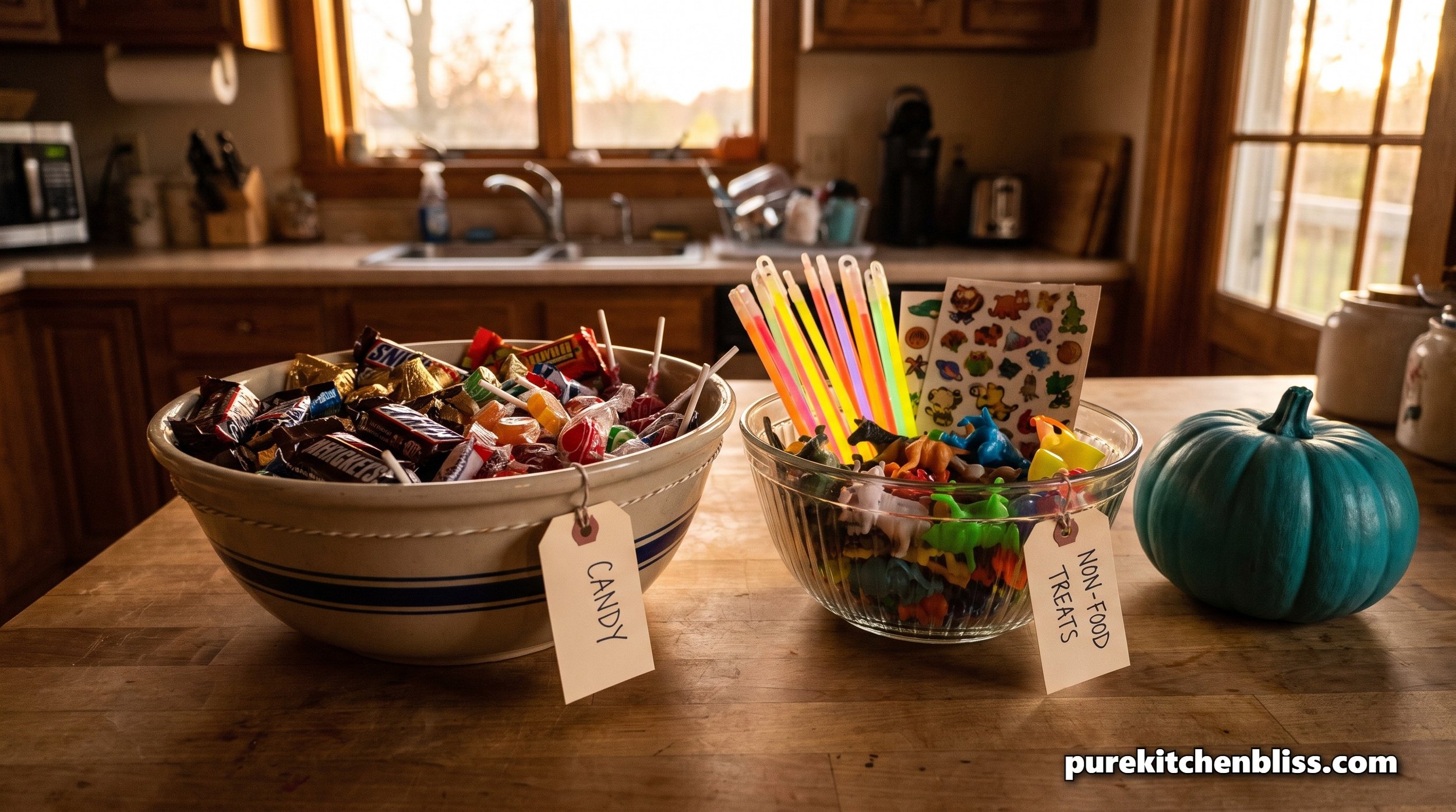
A few kids on our street can't eat most of what ends up in a typical Halloween bowl, and it's easy to forget that until you're standing at the door watching a kid's face fall because everything you're handing out is off limits. The Teal Pumpkin Project is the simplest fix I've seen for that, a non-food option sitting right alongside the candy, so no kid has to skip your house or stand there while a parent checks every wrapper.
Most articles explain the porch side of this well enough, paint a pumpkin teal, put a sign out. What's missing is the kitchen side, how to actually set up the two-bowl system, where to store everything, and the cross-contact basics worth knowing if you're also baking anything allergy-friendly at home this season.
What the Teal Pumpkin Project actually is
The project is run by FARE, Food Allergy Research and Education, and it started in 2012 as a local awareness effort before FARE expanded it nationwide. Teal is the official color associated with food allergy awareness, similar to how pink represents breast cancer awareness, which is why a teal-painted pumpkin or a teal sign on your door has become the visual shorthand for "we have non-food treats here too." Participating doesn't mean giving up candy entirely, it means adding a second option so kids managing food allergies, celiac disease, diabetes, or other conditions that make candy off limits still get to participate fully in trick-or-treating instead of standing at the edge of it.
How big this has actually gotten
What started as a local effort from a food allergy community group in Tennessee is now active in all 50 US states and on six continents, according to FARE. In 2022, CVS Pharmacy signed on as the project's exclusive retail partner, which is a meaningful signal of how mainstream this has become since it means teal pumpkin branded products are now stocked at a national chain rather than something you have to seek out or DIY entirely on your own. FARE estimates roughly one in 13 children in the US lives with a food allergy, which works out to about two kids in a typical elementary school classroom, a number worth sitting with next time you're deciding whether the extra bowl is worth the effort.
Who this actually helps, beyond food allergies
It's easy to assume this is purely a food allergy initiative, but FARE's own messaging is broader than that, and it's worth understanding why. Kids managing diabetes need to track sugar intake carefully, and a bowl of candy at every house makes that genuinely hard to navigate on one night. Kids with celiac disease can't safely eat most conventional candy due to shared manufacturing lines, even when the ingredient list itself looks fine. Some kids with sensory processing differences or autism find certain candy textures aversive and would rather have a small toy anyway. None of these situations get talked about as often as food allergies specifically, but the same two-bowl setup covers all of them without you needing to know which condition applies to which kid at your door.
The same idea works for classroom and school parties
Halloween in the kitchen isn't limited to the one night of trick-or-treating. A lot of families are also prepping something for a classroom party or a school parade earlier in the week, and the same two-track thinking applies there, arguably with even higher stakes since a classroom is a closed environment where one allergic reaction affects the whole room's plans, not just one kid at one door. If you're sending in something for a class party, checking with the teacher about any known allergies in the room before you even start prepping saves a wasted batch of something that can't actually be served. Non-food options work just as well here, stickers, small erasers, pencils, or a class-wide non-food activity sidesteps the allergen question entirely rather than trying to make something safe for every possible restriction in one recipe.
Why this is actually a kitchen prep issue
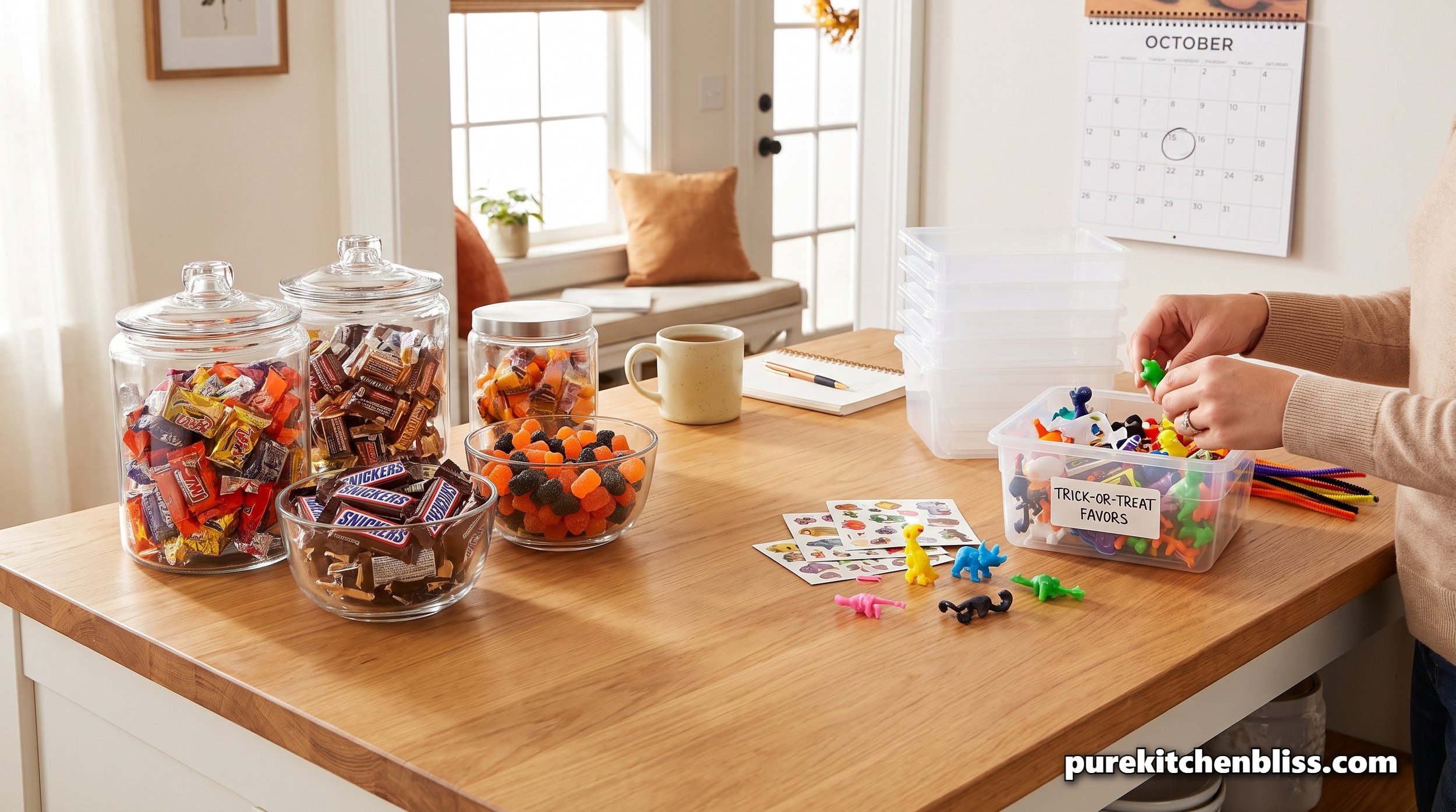
Most of the actual work for this happens in the kitchen days before Halloween, not on the porch that night. That's where the two bowls get filled, where everything gets checked and sorted, and where cross-contact between allergen foods and anything else in the house is worth thinking about if you're also handling ingredients for allergy-friendly baking at the same time. Food allergies affect a meaningful number of families, FARE cites more than 33 million people in the US living with food allergy, and the nine major allergens under federal labeling law, milk, eggs, peanuts, tree nuts, wheat, soy, fish, shellfish, and sesame, cover a huge share of what's actually in a standard candy bowl.
The two-bowl system, done properly
The setup itself is simple, but a few details make it actually work at the door. Keep the two bowls visually distinct, not just physically separate, so a kid glancing at your porch table can tell at a glance which is which without having to ask or dig through candy to find the toys. Placing the teal pumpkin or sign clearly next to the non-food bowl, rather than somewhere else on the porch, keeps the visual cue tied directly to the option it represents. And offer both, always, rather than treating the non-food bowl as a replacement, since plenty of kids at your door will still want candy and shouldn't have to choose a side to be included.
What actually makes a good non-food treat, and one hazard to watch for
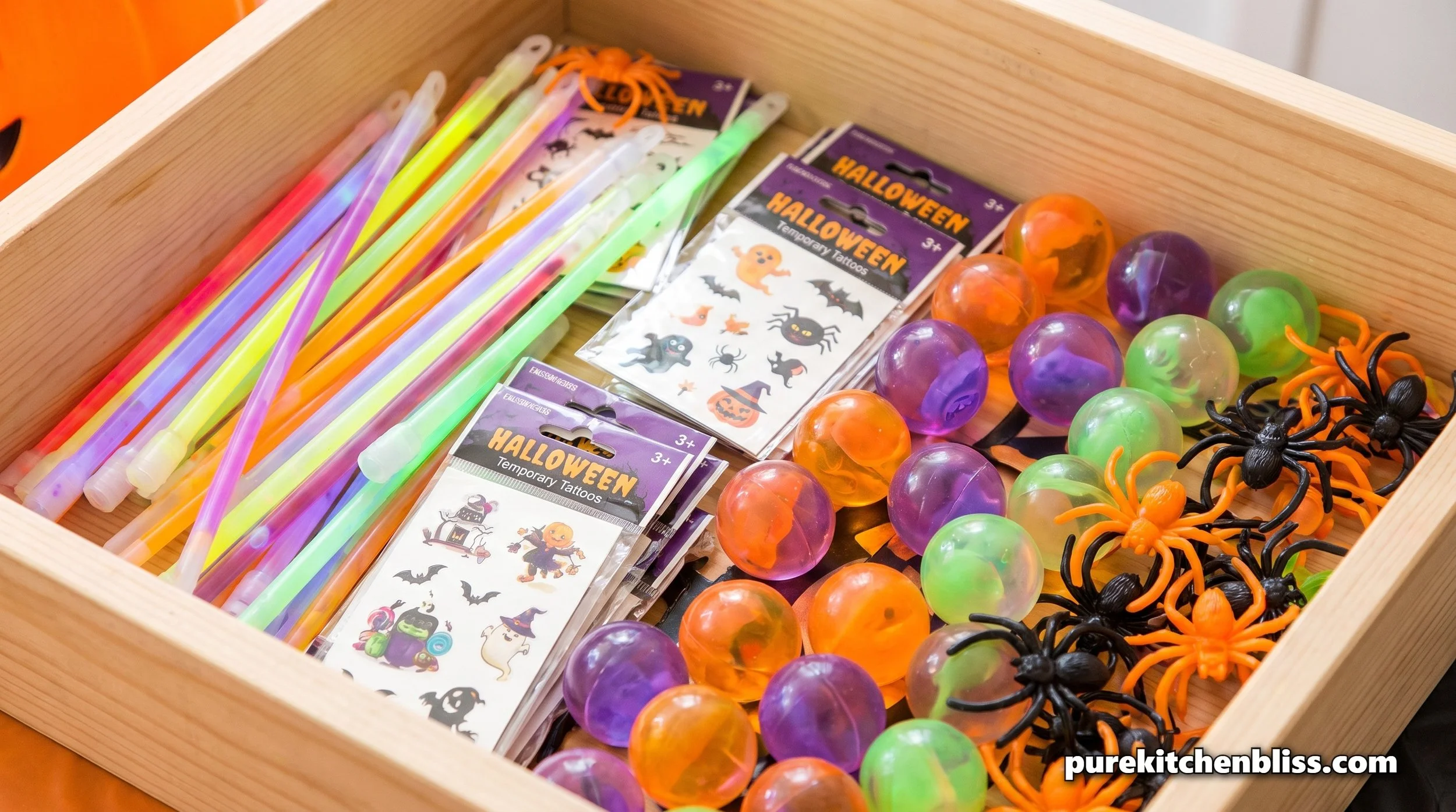
Glow sticks, bubbles, stickers, small notepads, pencils, temporary tattoos, spider rings, and bouncy balls are all reliable, low-cost options that work across a wide age range. The goal is something that feels genuinely fun to receive, not a consolation prize, a kid managing a food allergy doesn't want the "sorry, you can't have candy" bin, they want something that competes on its own terms with what's in the other bowl. One thing worth flagging while you're sorting the non-food bin, the same choking hazard logic that applies to hard or round candy applies here too, small toys under about an inch and a quarter across are a genuine risk for kids under three, so if your neighborhood sees a lot of very young trick-or-treaters, size the toys accordingly rather than assuming small automatically means safe just because it isn't food. Buying in bulk keeps the cost close to what you'd spend on candy anyway, and since none of it expires, whatever doesn't get handed out this year rolls straight into next year's supply with zero waste.
A few non-food options worth skipping
Not every non-food option is actually a safe swap. Items with small button batteries, some light-up toys and novelty items included, carry a real ingestion risk for younger kids if the battery compartment isn't securely screwed shut, and that risk is arguably more serious than most food allergy reactions since a swallowed button battery can cause internal burns within hours. Latex balloons are worth skipping too if you know a latex allergy is a possibility in your area, since it's a less commonly discussed allergy but a real one. And small bead-based toys or anything with pieces that separate easily fall into the same choking category as tiny hard candy, worth avoiding for the youngest trick-or-treaters regardless of how appealing they look on the shelf at the store.
Storing it before and after Halloween
Since none of this is perishable, storage is really about keeping it organized rather than keeping it safe, but a dedicated bin still matters. I keep the non-food treats in a separate labeled container from the candy year round, both so it's easy to find again next October and so nobody in the house mistakes the toy bin for a snack drawer when they're digging around for something else. The same kind of storage bin we use for pantry organization the rest of the year works fine here, and honestly having a genuinely reusable, non-expiring stock is one of the more practical parts of participating, you're not restocking from zero every single year the way you are with candy.
If you're baking allergy-friendly treats at home too
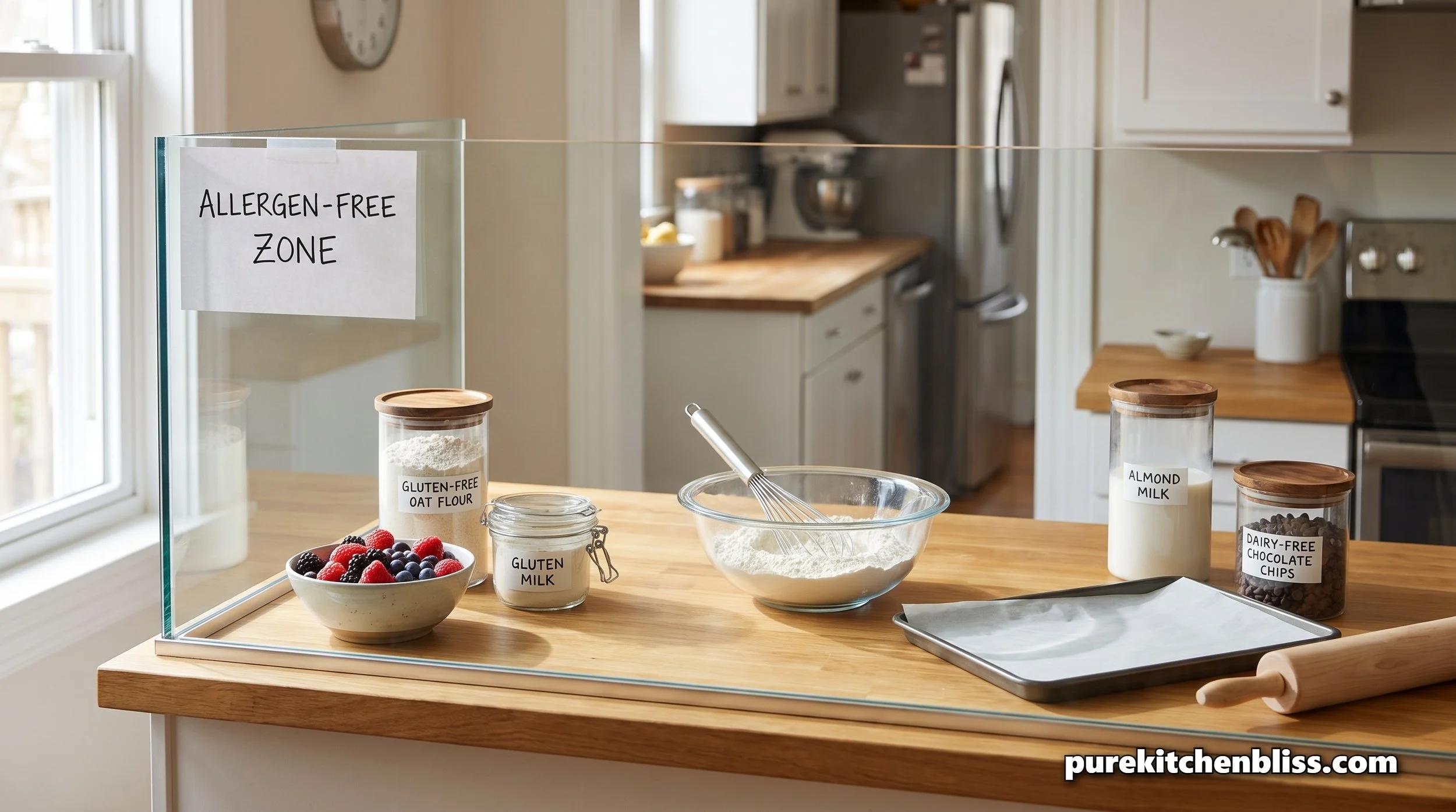
Some families take this further and bake something allergy-friendly to hand out instead of, or alongside, packaged non-food items, which is a genuinely nice gesture but comes with a real cross-contact consideration. If your regular kitchen handles peanut butter, tree nuts, or other major allergens on a normal basis, a batch meant to be truly allergen-free needs clean surfaces, clean tools, and ideally to be made before anything else that day rather than after, since trace residue on a cutting board or mixing bowl is enough to matter for someone with a serious allergy. We cover related material and ingredient safety questions for kids in our non-toxic cookware and dishes guide, which is worth a look if you're setting up any kind of dedicated allergen-safe prep space in your kitchen.
Checking what's already in your candy bowl
If you're also handing out regular candy alongside the non-food option, it's worth knowing which common treats carry the biggest allergen footprint so you're not accidentally making the candy bowl itself harder to navigate for kids without a severe allergy but with a milder sensitivity. Chocolate and peanut-based candies carry the highest overlap with major allergens, while hard candy and most gummy candy tend to be free of the big nine, though always worth checking a specific brand's label rather than assuming based on category. If you went through our candy inspection and storage guide already this season, the same sorting habit extends naturally to flagging allergens while you're already checking wrappers for tampering.
| Allergen | Common in |
|---|---|
| Milk | Chocolate candy, caramel, toffee |
| Peanuts / tree nuts | Peanut butter cups, many chocolate bars, some candy processed on shared lines |
| Wheat / soy | Cookies, some chocolate fillers and stabilizers |
| Egg | Some candy coatings, nougat |
| Sesame | Less common in mainstream candy, more relevant for homemade treats |
| Hard candy / most gummies | Generally free of the major nine, but always check the label |
Adding your address to the map
FARE maintains an interactive map where participating households register their address, which lets families managing food allergies plan a trick-or-treat route in advance rather than guessing which houses will actually have something safe. It takes a few minutes to register and costs nothing, and it's the one step in this whole process that only needs to happen once a year rather than every single Halloween from scratch.
What this actually comes down to
None of this requires overhauling your whole Halloween setup. Two clearly labeled bowls, a visible teal pumpkin or sign, a reusable stock of good non-food treats sized appropriately for the ages likely at your door, stored the same way you'd store anything else in the kitchen, and a little extra care if you're baking anything allergen-free at home. The families who actually need this notice the difference immediately, and it costs the rest of the neighborhood almost nothing to provide.