Setting Up a Fall Treat or Cider Station
Transparency Note: We independently select these products based on research and user reviews. If you buy something through our links, we may earn a commission.
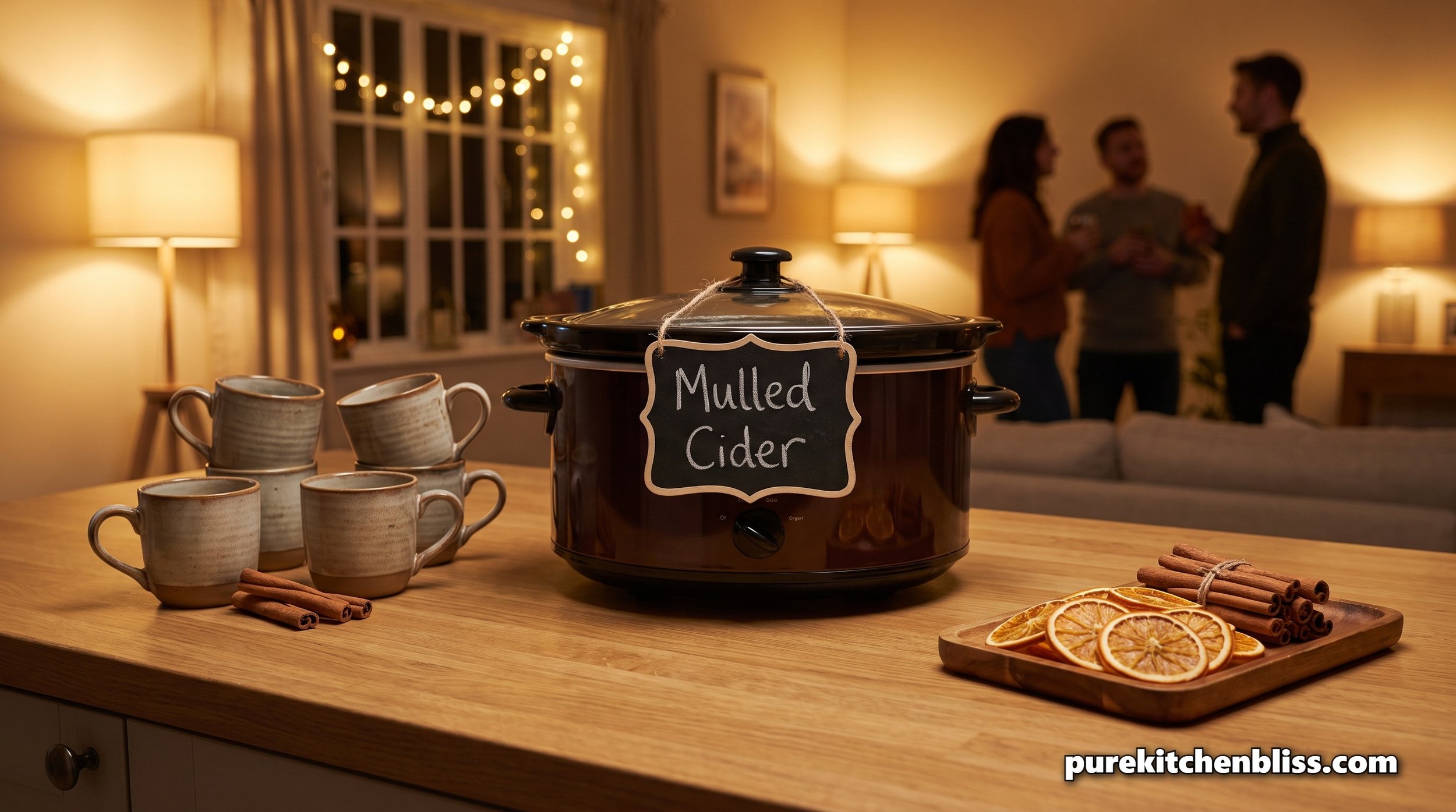
Trick-or-treat night in our house means a steady stream of neighbors, kids, and parents moving through the kitchen for two straight hours, and nobody has time to stand at the stove ladling cider into mugs one at a time while also handing out candy at the door. A few years back we set up a dedicated station on the counter instead, a slow cooker, a stack of mugs, and a small garnish tray, and it changed the whole evening from chaotic to actually manageable.
The part most fall station setups get wrong isn't the aesthetics, it's the food safety basics of holding a hot drink at a safe temperature for hours without babysitting it. Here's how I actually set ours up, including the temperature specifics that keep it safe the whole evening.
Why a station beats a stovetop pot
A pot simmering on the stove needs someone standing near it, stirring occasionally and watching that it doesn't boil over or scorch on the bottom. A slow cooker set to warm does the same job without supervision, and it frees up your actual stovetop and your attention for whatever else the evening needs, dinner, the door, four kids getting into costumes. It also holds a more consistent temperature over hours than a stovetop burner left on low, since a stove flame that's slightly too high can slowly reduce and concentrate the cider over an evening in a way a slow cooker's warm setting won't.
Where the station actually goes
Placement matters more than people think, and it's the one part of this I'd genuinely call a carpenter's read rather than a styling choice. Put the station on a counter section away from the main kitchen thoroughfare, not directly in the path between the fridge and the stove, or you'll have kids reaching for mugs while someone else is trying to carry a hot dish through the same three feet of floor. An island end or a stretch of counter near a wall outlet works better than the main prep zone, both for outlet access for the slow cooker and because it keeps the actual cooking side of the kitchen clear if you're also making dinner while the station runs. If your kitchen has a peninsula or a secondary counter near the entry, that's often the better spot entirely, since it keeps the traffic from a station full of excited kids away from wherever hot pans or knives are actually in use that evening.
The food safety specifics that actually matter
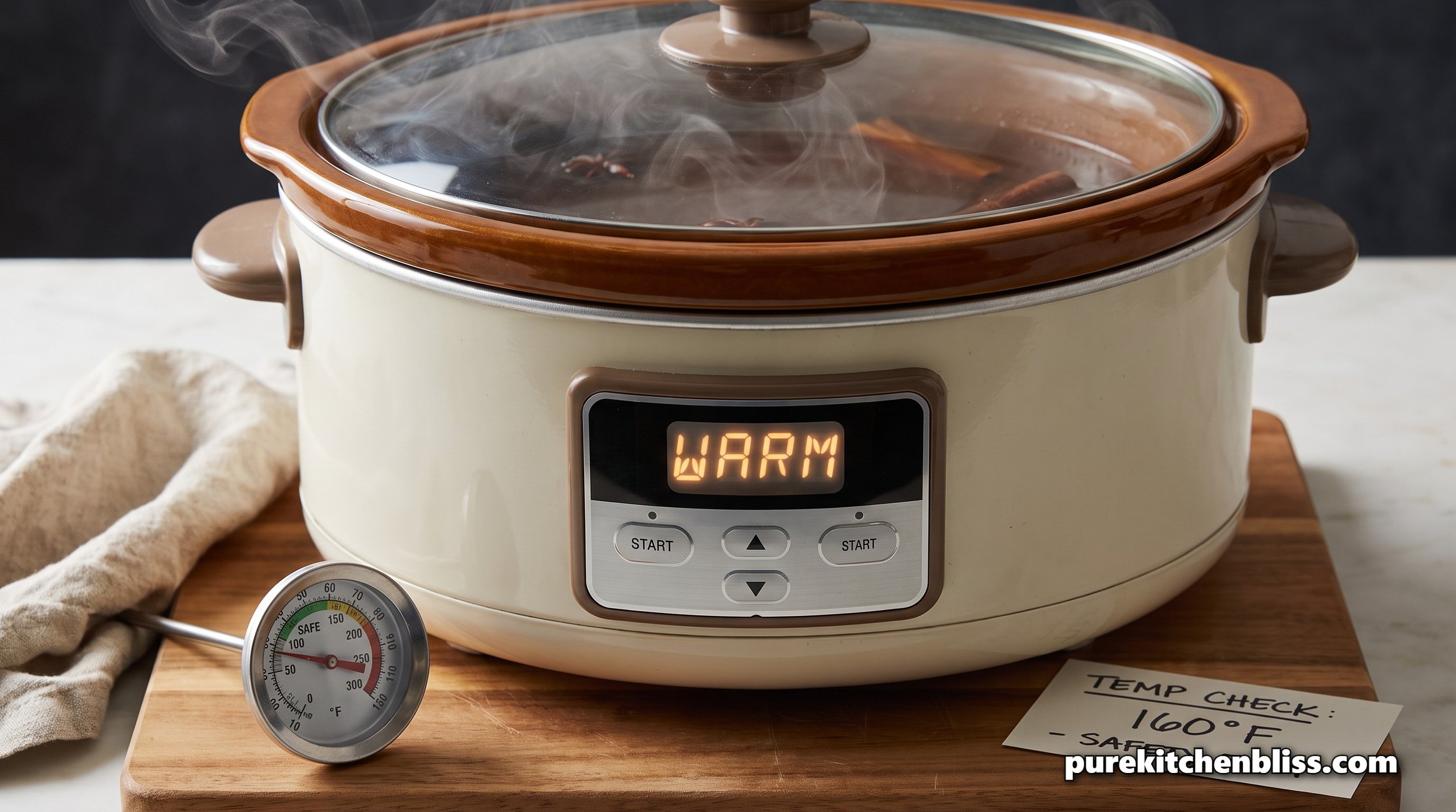
Hot beverages held for serving need to stay above 140°F to stay out of the temperature danger zone where bacteria grow fastest, the same general food safety principle that applies to any hot-held food at a party. A slow cooker's warm setting is built to hold right around that range, which is exactly why it's the right tool for a multi-hour station rather than a stovetop pot that someone has to keep checking. If you're making cider from scratch with fresh, unpasteurized apple cider rather than the pasteurized grocery store kind, know that a proper simmer during the mulling process functions as a rough pasteurization step in itself, but it's still worth using pasteurized cider as your base if you're serving a mixed crowd of kids and adults, since you don't want to rely on cook time alone for that.
Most slow cooker cider recipes hold safely on warm for up to about four hours, which covers a typical trick-or-treat window comfortably. Leftovers store in the fridge for three to four days in an airtight container, and reheat fine on the stovetop or in the microwave rather than needing to go back into the slow cooker specifically.
The hot cocoa version, for kids who don't want cider
Not every kid wants cider, so we run a second, smaller slow cooker for hot cocoa right alongside it most years, since the two drinks need different handling. Milk-based hot cocoa is more prone to scorching on the bottom of a slow cooker insert than cider is, so I stir it more frequently, every 30 to 45 minutes rather than leaving it fully alone, and I keep it on the lower end of the warm setting if the unit has any range at all. Dairy-based drinks also don't hold quite as long as cider does before the texture starts to change, a thin skin forming on top or the milk starting to separate slightly, so I treat the cocoa's safe serving window as closer to two to three hours rather than the fuller four hours cider handles well. Toppings for the cocoa station, marshmallows, crushed candy cane, a shaker of cinnamon, go on their own small tray separate from the cider garnishes so the two stations don't get their toppings mixed up by kids moving quickly between them.
Building the actual station
I keep the footprint small and deliberate rather than spreading it across the whole counter. The slow cooker sits centrally with a ladle resting on a small dish beside it, not directly in the cider, since a ladle handle sitting in hot liquid is both a minor scald risk for smaller hands and just unpleasant to grab. Mugs get stacked to one side in a simple, stable stack, no more than four or five high, since a taller stack becomes its own hazard once kids start reaching for the top one. A small tray keeps garnishes contained instead of scattered loose across the counter, cinnamon sticks, orange slices, whole cloves for anyone who wants to build their own mug rather than taking it as poured.
Keeping cups and mugs organized before and after
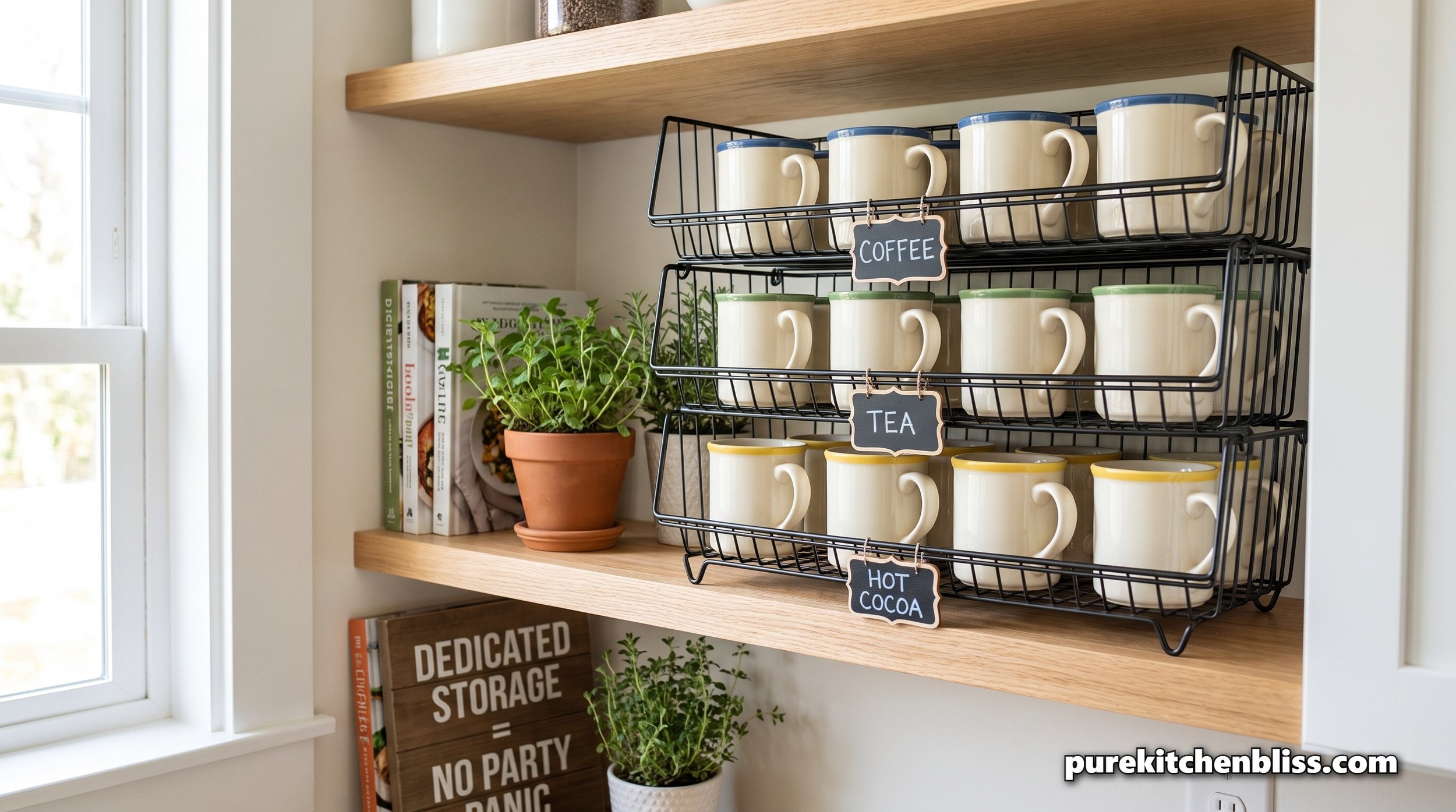
Running out of clean mugs halfway through the evening defeats the whole purpose of a hands-free station. I keep a dedicated shelf just for this kind of entertaining stack, separate from our everyday mug rotation, so there's always a full set ready before guests start arriving. A stackable mug rack keeps them from toppling into a pile the way a loose cabinet shelf tends to, and it makes restocking mid-evening from the dishwasher faster since everything has one obvious home instead of getting shoved wherever there's space.
Ceramic, glass, or disposable for a bigger crowd
For a small family evening, our regular ceramic mugs work fine and go straight into the dishwasher after. Once the guest list grows past a handful of families, though, I switch to a stack of sturdy paper cups instead, not because ceramic isn't safe, but because a counter full of unwashed mugs by 9pm becomes its own problem, and small kids handling hot liquid in a heavier ceramic mug is a real drop risk that a lighter insulated paper cup avoids. Glass is the one material I'd actively skip for a kids' station regardless of crowd size, a dropped glass mug on a tile or hardwood kitchen floor is a genuinely bad outcome in a room full of kids in costumes and bulky shoes moving around quickly.
Keeping the adult version separate
If part of your crowd is adults who want a splash of something stronger in their cider, keep that entirely separate from the main station rather than spiking the shared slow cooker itself. A small side tray with a bottle of spiced rum or bourbon, set slightly apart from where kids are filling their own mugs, keeps the base cider genuinely kid-safe while still letting adults doctor their own without anyone needing to ask or explain. This is also just simpler logistically, one shared pot that's safe for everyone, with optional add-ins available only to whoever chooses to reach for them.
What I actually use
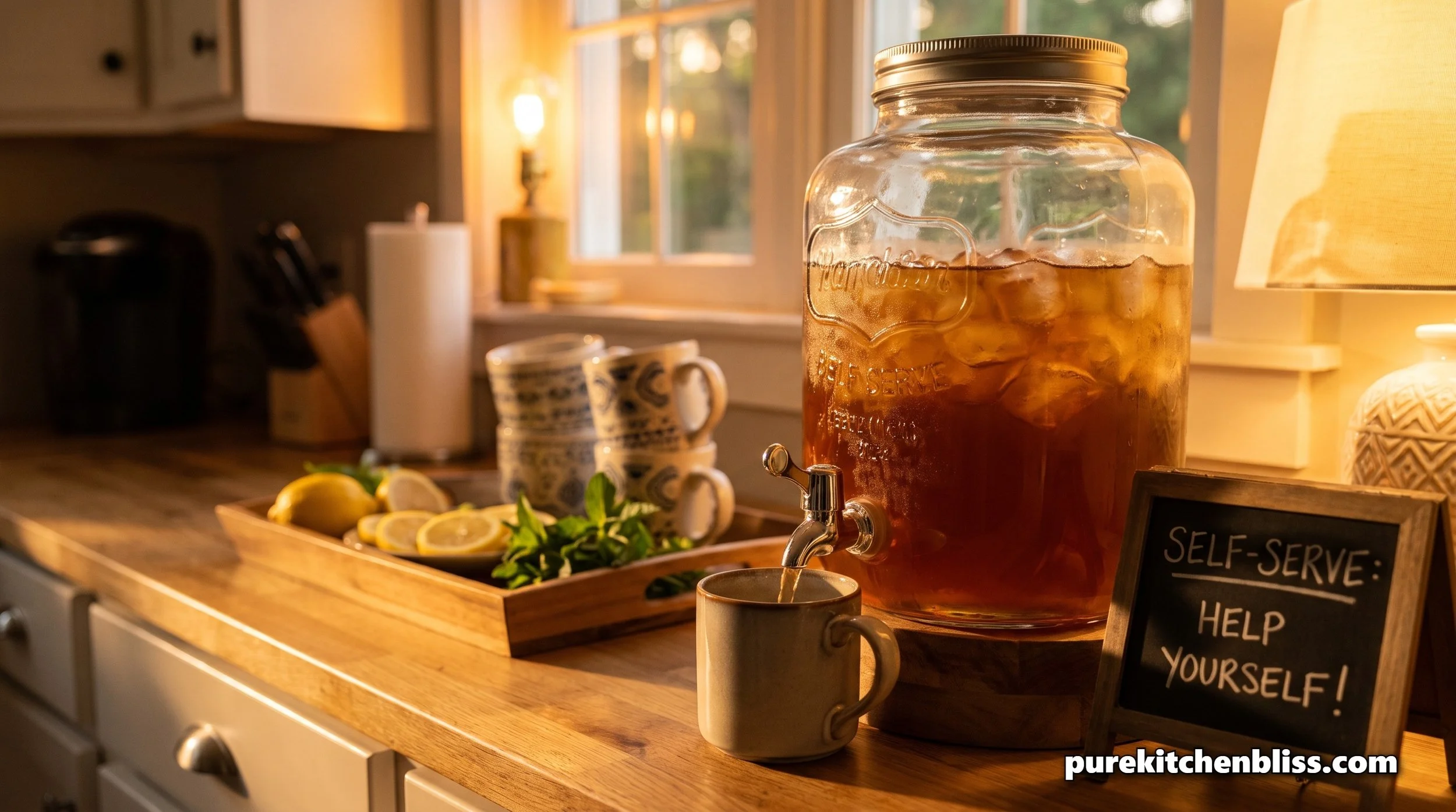
A basic slow cooker works fine, but if you're setting this up as a recurring fall tradition rather than a one-off, a beverage dispenser with a spigot is worth considering as an alternative to a slow cooker and ladle combination, since it lets kids self-serve without handling a hot pot or a ladle at all, just a tap and a mug underneath. Either way, I keep a small instant read thermometer in a kitchen drawer nearby for the first setup of the evening, checking that the cider has actually come up to a safe serving temperature before the station officially opens rather than assuming the equipment is doing its job correctly.
If you're building this into a permanent kitchen feature
A seasonal station like this works fine set up temporarily on a counter for one evening, but if hot drinks are a regular thing in your house beyond just Halloween, it's worth thinking about a more permanent setup the same way you'd think about any other kitchen zone. We cover the fuller case for a dedicated year round setup in our guide to the rise of the kitchen coffee niche, and the practical build-out details in our home coffee station setup guide. For garnish and mug storage beyond a single evening, our fridge storage container roundup covers containers that work well for keeping cut citrus and spices fresh between uses.
| Item | Purpose | Notes |
|---|---|---|
| Slow cooker (or dispenser) | Holds cider above 140°F for hours | Set to warm, verify with a thermometer at setup |
| Ladle or spigot | Serving without hands in hot liquid | Rest ladle on a dish, not in the pot |
| Mug rack or stack | Keeps cups stable and accessible | Max 4–5 mugs per stack |
| Garnish tray | Contains cinnamon, citrus, cloves | Separate tray for cocoa toppings |
| Adult add-in tray | Keeps spirits separate from shared pot | Positioned apart from kids' reach |
Cleanup, so the night doesn't end with a mess
A slow cooker liner makes cleanup considerably faster, since mulled cider with citrus and spices simmered in for hours can leave a stubborn residue on the actual insert otherwise. I strain out the solids, cinnamon sticks, cloves, orange peel, before storing any leftovers, both for texture and because leftover spices continuing to steep in the fridge overnight tend to make the cider more bitter by the next day. Mugs go straight into the dishwasher rather than sitting in the sink overnight, since a countertop full of used mugs the next morning is its own kind of chore nobody wants to face before coffee.
What this actually comes down to
The station works because it removes a person from the loop, nobody has to stand there pouring, and it stays safe because the equipment holds a genuinely safe serving temperature for hours instead of relying on someone remembering to check a pot on the stove. Keep the footprint small, place it away from the main cooking traffic, separate the kid-safe base from any adult add-ins, pick cup material based on crowd size rather than just aesthetics, and give mugs and garnishes their own dedicated spot so the whole thing runs itself for the two busiest hours of the night.