Transparency Note: We independently select these products based on research and user reviews. If you buy something through our links, we may earn a commission.
After sitting down to a big dinner with four kids, the kitchen counters are always piled high with plates, mixing bowls, and pots. In a large household, cleanup is a massive daily operation. For a long time, I assumed that standing at the sink and hand washing everything was the most sustainable, eco-friendly way to handle the chore. It just felt more intentional than running a machine.
But as a builder who looks at utility loops and water infrastructure, I decided to look closely at the actual volume numbers.
The reality is that running a modern, fully loaded Energy Star-certified dishwasher is up to 5 times more water-efficient than washing your dishes by hand.
When you look at the mechanical data, the old-school assumption completely falls apart. If you want to lower your home's environmental footprint, reduce your utility bills, and save time, you need to understand the true math behind your cleanup routine. Today, I'm breaking down the water efficiency mechanics of dishwashing, and sharing the best zero-waste swaps if you do have to scrub a heavy pan by hand.
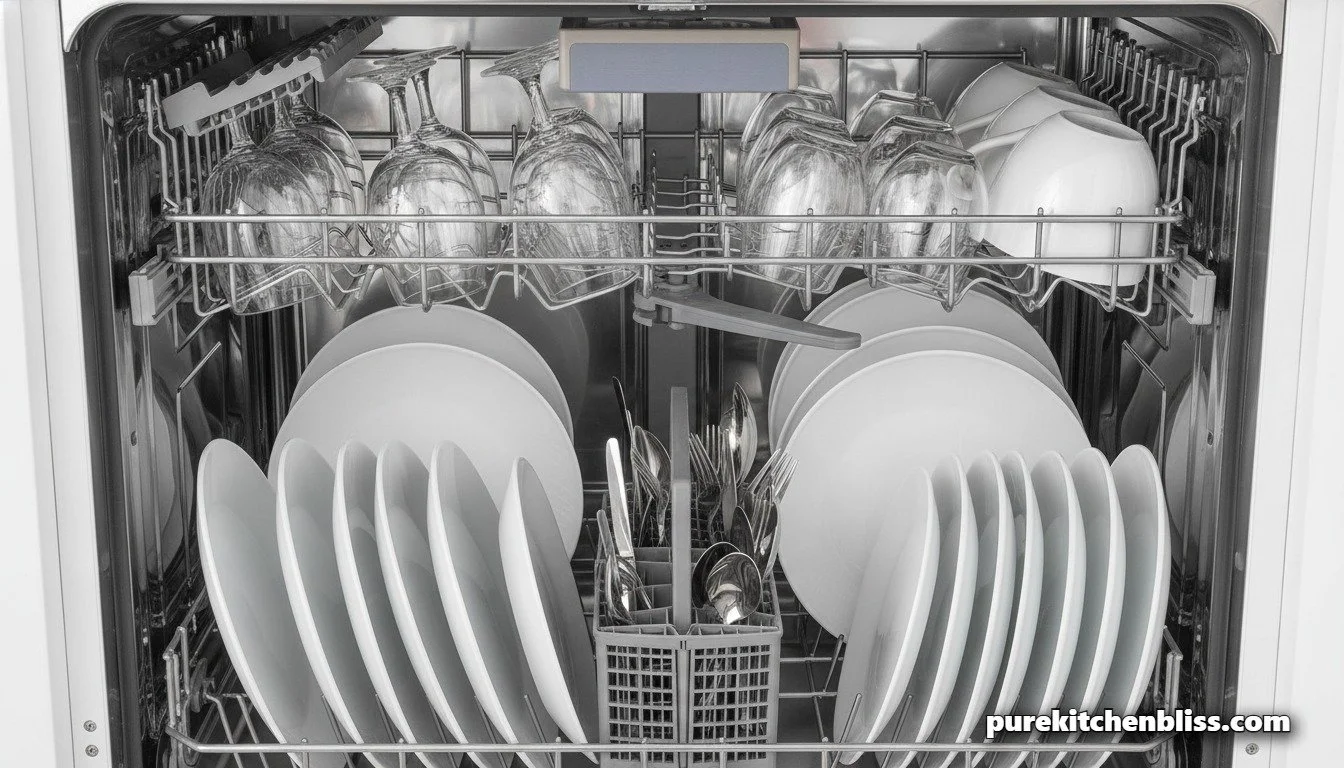
The True Water Math: Machine vs. Sink 📊
The difference in resource consumption between manual washing and machine engineering comes down to continuous flow versus recycled water loops.
The Manual Drain: When you leave the kitchen tap running continuously while scrubbing and rinsing a sink full of dishes, you can easily pull up to 20 gallons of heated water down the drain in a single session.
The Machine Efficiency: In contrast, a modern Energy Star-certified dishwasher doesn't fill the entire basin with water. Instead, it pumps in a tiny amount of water—as little as 4 gallons per full cycle, and heats it precisely, spraying it through high-pressure rotating arms and filtering it continuously throughout the clean. You physically cannot match that level of hydraulic efficiency with an open tap, making a full load the perfect partner for keeping your overall kitchen power draw low and sustainable.
If You Must Hand Wash: The Two-Basin Protocol 🚰
Of course, there are always heavy cast-iron skillets, delicate chef's knives, or large cutting boards that simply cannot go into the dishwasher. If you have to hand wash these items, you need to change your mechanical habits to protect your water loop.
The Technique: Stop letting the faucet run. Instead, if you have a divided basin, fill one side with warm, soapy water for scrubbing and the other side with clean water for rinsing. If you have an open single-basin setup, you can pair this method with a high-pressure commercial faucet to rinse items in quick, targeted bursts, keeping your water footprint small.
My Equipment Evaluation: Continuous Tap Flow vs. Efficient Machine Rinsing
| Cleanup Method | Continuous Running Tap | Energy Star Fully Loaded Machine | The Environmental Resource Win |
|---|---|---|---|
| Water Consumption | ~20 Gallons per average sink load | ~4 Gallons per entire heavy cycle | Saves up to 16 gallons of water every dinner rush |
| Energy Draw | High (Constantly draining hot water tank supply) | Low (Internal heater optimizes precise water volume) | Lowers monthly gas or electric utility footprints |
| Scrubber Lifespan | Short (Synthetic plastic sponges shed microplastics) | N/A (Relies entirely on targeted spray arrays) | Completely cuts down plastic waste streams |
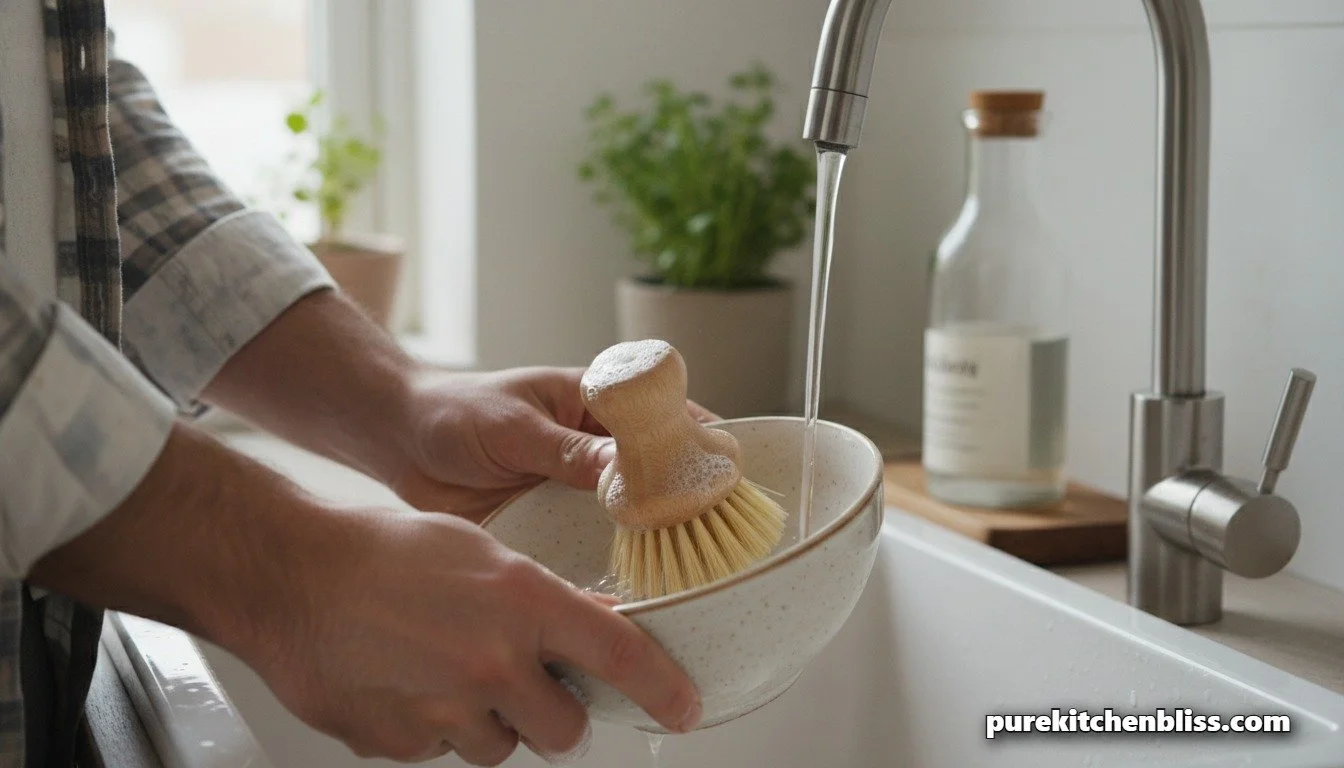
Ditch Synthetic Sponges for Biodegradable Fiber 🌿
Aside from water volume, the tools you use at the sink have a major environmental impact. Traditional bright green-and-yellow kitchen sponges are made from synthetic plastics and polyurethane, which cannot be recycled. As they wear down, they shed microscopic plastic particles directly into our water systems and eventually sit in landfills for centuries.
The Swap: I switched our hand-washing station over to sisal, bamboo, or walnut-shell scrub brushes.
The Value: These natural plant-fiber materials provide excellent mechanical scrubbing power to cut through dried grease without scratching your nonstick finishes or wearing down your delicate stone surfaces. When they finally wear out, they are completely biodegradable, meaning they can be tossed straight into your backyard pile to break down into rich soil alongside your countertop compost scraps.
The Amazon Shopping Blueprint 🛒
If you want to transition your cleanup routine away from high-waste plastics and optimize your sink efficiency, you can grab these specific zero-waste tools directly on Amazon:
The Eco Dish Brush Set: The Subekyu Natural Bamboo Dish Scrub Brush (2-Pack) is an exceptional plastic-free upgrade. You get ergonomic wood handles fitted with durable, plant-based sisal and palm fibers that chew through baked-on food stains without creating a single piece of microplastic waste.
The Walnut Sponge Alternative: If you prefer a classic sponge shape over a wooden handle brush, the Scotch-Brite Greener Clean Non-Scratch Scrub Sponges are made entirely from 100% plant-based fibers and recycled walnut shells, giving you awesome scrubbing torque while remaining completely sustainable.
Managing an eco-friendly household is all about looking past old assumptions and trusting the true mechanical numbers. By loading your dishwasher completely before hitting start, practicing the two-basin rule for hand washing, and swapping out synthetic plastic sponges for natural wood and sisal fiber tools, you can easily lower your water footprint, save money, and keep your entire kitchen cleanup process incredibly lean and green!
Next Up: Want to see how to target your other major kitchen waste loops and lower your monthly appliance power draw for under twenty bucks? Check out our How to Make Your Kitchen Eco-Friendly on a Budget!