Transparency Note: We independently select these products based on research and user reviews. If you buy something through our links, we may earn a commission.
When people think about starting a home composting routine, they usually love the environmental idea of keeping organic food waste out of landfills. But almost immediately, the practical hesitation sets in: the smell.
Nobody wants a kitchen island that smells like rotting vegetables, and nobody wants a cloud of fruit flies buzzing around their food prep zone, especially when you have a big family running through meals every day.
In a house with four kids, our kitchen produces a massive amount of coffee grounds, apple cores, eggshells, and vegetable scraps. If you just throw those scraps into an open container under the sink, you are setting yourself up for a nightmare.
But as a builder, I look at decomposition as a basic mechanical process. Kitchen composting doesn't smell if you properly balance moisture and airflow, keeping the organic matter from rotting anaerobically (without oxygen).
You don’t need an expensive, loud electric composting machine sitting on your counter to go green. By using a couple of smart containment setups and a zero-dollar layout trick, you can start composting today without a single bad odor. Here is the exact routine we use to keep our kitchen fresh.
The Charcoal Filter Setup 🪟
If you want to keep your composting scraps right on the counter where you do your food prep, you have to control the airflow. When organic material is completely cut off from oxygen, it goes anaerobic, which is what creates that sour, unpleasant garbage smell.
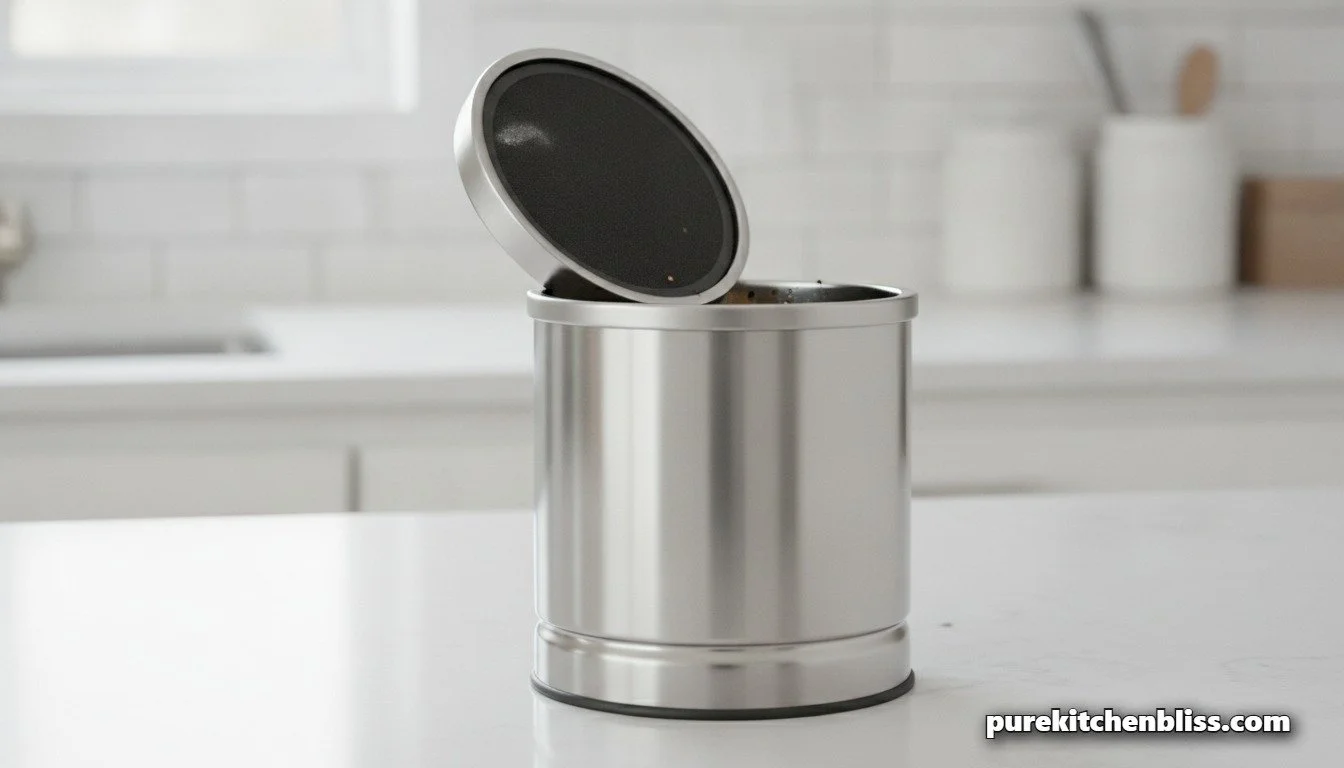
The Tool: I picked up a simple Utopia Kitchen Stainless Steel Compost Bin (1.3 Gallon) for our counter.
The Infrastructure: These bins are designed with small ventilation holes in the lid to keep air circulating, but they are fitted with a thick, replaceable activated charcoal filter directly underneath the dome. The charcoal acts as a natural odor trap, absorbing and neutralizing scent molecules completely before they can escape into your kitchen. It gives you all the benefits of airflow without any of the odor leaks, keeping your air as clean as a natural kitchen workspace.
The Zero-Dollar Technique: Freeze Your Scraps ❄️
If you don’t want another bin sitting out on your matte Cloud Dancer stone surfaces, or if you live in a warm climate where fruit flies are a constant battle, you can bypass the countertop completely using my favorite kitchen hack.
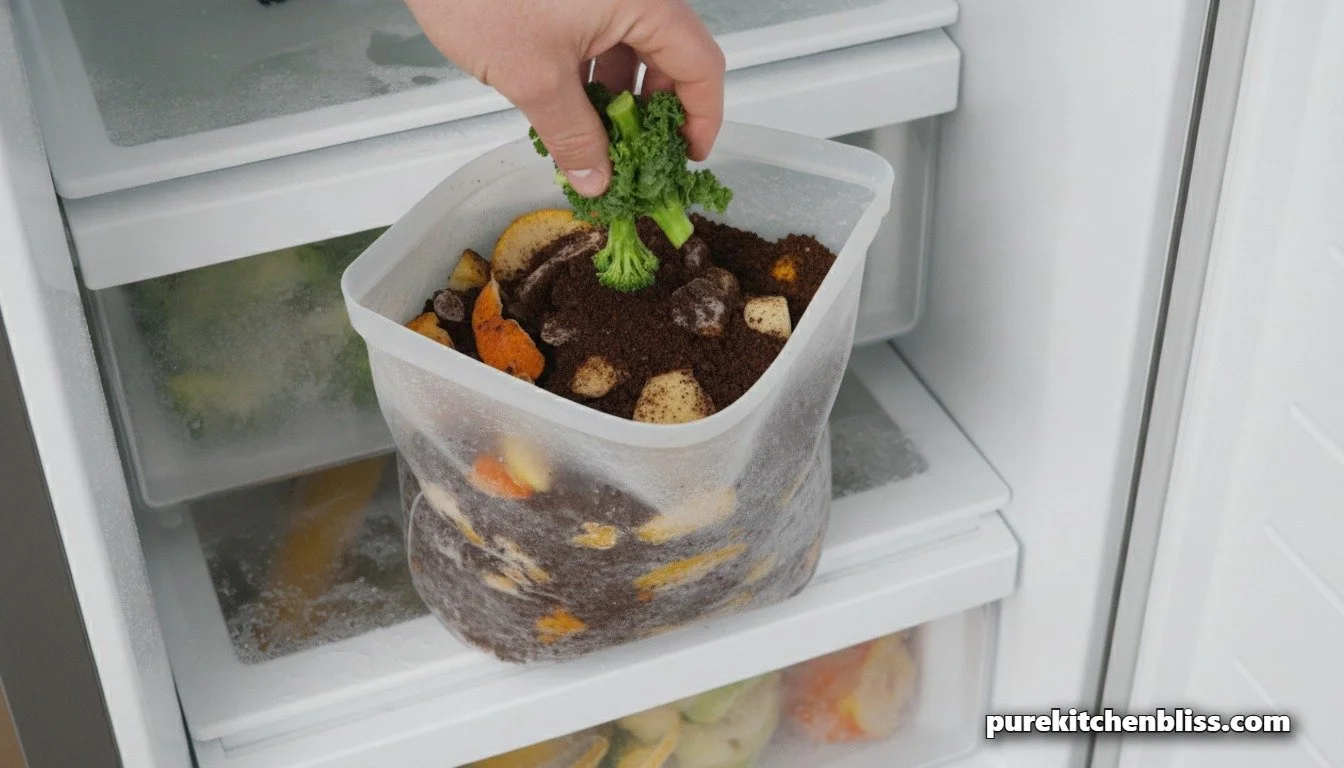
The Routine: Keep a reusable silicone bag or an old upcycled plastic container directly inside your freezer. Every time you chop onions, peel carrots, or finish a pot of coffee, toss the scraps straight into the frozen zone.
The Physics: Freezing completely halts the decomposition process. The food scraps remain perfectly preserved in a solid state, meaning there is physically zero opportunity for odors, liquid leaks, or fruit flies to develop. On pickup day or when you’re ready to walk out to your outdoor bin, you just dump the frozen block straight into the waste pile. It is a completely free, foolproof system for a busy family.
My First-Person Evaluation: Open Trash Scraps vs. Zero-Smell Compost Containment
| Storage Method | Standard Scrap Disposal | The Zero-Smell Composting Swap | The Everyday Benefit |
|---|---|---|---|
| Odor Management | High (Anaerobic rot under the sink) | Zero (Neutralized by carbon or paused by freezing) | Keeps kitchen smelling completely fresh |
| Pest & Fly Prevention | Poor (Attracts fruit flies instantly) | Excellent (Completely sealed or frozen solid) | Eliminates bug infestations entirely |
| Waste Management | Messy (Leaky trash bags) | Clean (Self-contained or solid blocks) | Protects cabinet bases from sticky spills |
Maintaining the Balance Outdoors 🍂
If you are moving your scraps to a backyard pile rather than a city green bin, you have to apply that same mechanical moisture balance outside to keep your neighbors happy.
The Ratio: Every time you dump a bucket of wet, green food scraps (nitrogen) into your pile, you need to blanket it with a heavy layer of dry, brown materials (carbon), like dry autumn leaves, shredded cardboard, or clean sawdust from the carpentry workshop floor.
The Result: Covering the wet food blocks the odor, prevents pests from digging into the pile, and ensures the material breaks down into clean, rich soil for your garden.
Eco-Friendly Upgrades 🛒
If you're ready to integrate a clean composting setup into your sustainable routine alongside your reusable bar mop towels, you can grab these specific odor-blocking tools on Amazon:
The Starter Bin: The Utopia Kitchen Stainless Steel Compost Bin is a heavy-duty, rust-resistant option that looks incredibly sharp on a counter and holds over a gallon of scraps without letting a single scent molecule escape.
The Replacement Filters: To keep your countertop setup working perfectly long-term, pick up a pack of Fresh Air Charcoal Compost Bin Replacement Filters. Changing the carbon pad every six months ensures your ventilation path stays completely odor-free.
Starting a sustainable, eco-friendly kitchen routine shouldn't feel like a chore, and it definitely shouldn't compromise your home's air quality. By utilizing a simple charcoal-filtered bin or keeping your veggie scraps tucked safely in the freezer, you can eliminate food waste smoothly, protect your surfaces, and keep your household running clean and odor-free!
Next Up: Want to see the full layout of budget-friendly, zero-waste kitchen upgrades I use to run our family kitchen for under twenty bucks? Check out our How to Make Your Kitchen Eco-Friendly on a Budget!