Transparency Note: We independently select these products based on research and user reviews. If you buy something through our links, we may earn a commission.
After roasting the seeds from four pumpkins every year, I've stood there looking at all that leftover flesh, the actual carved-out walls and lid, and wondered whether tossing it is genuinely necessary. It feels wasteful, and pumpkin is a legitimately useful cooking ingredient the rest of fall. The honest answer from food safety experts is more specific than a flat yes or no, and it depends entirely on what that pumpkin has already been used for before you consider eating any of it.
Short version up front, if it's already been carved into a jack-o-lantern and left out as a decoration, especially with a candle lit inside it, the answer from every food safety expert I found on this is no, don't eat it. If you're thinking ahead before carving, there's a real way to get both the decoration and a usable ingredient out of the same pumpkin. Here's the full breakdown.
What food safety experts actually say
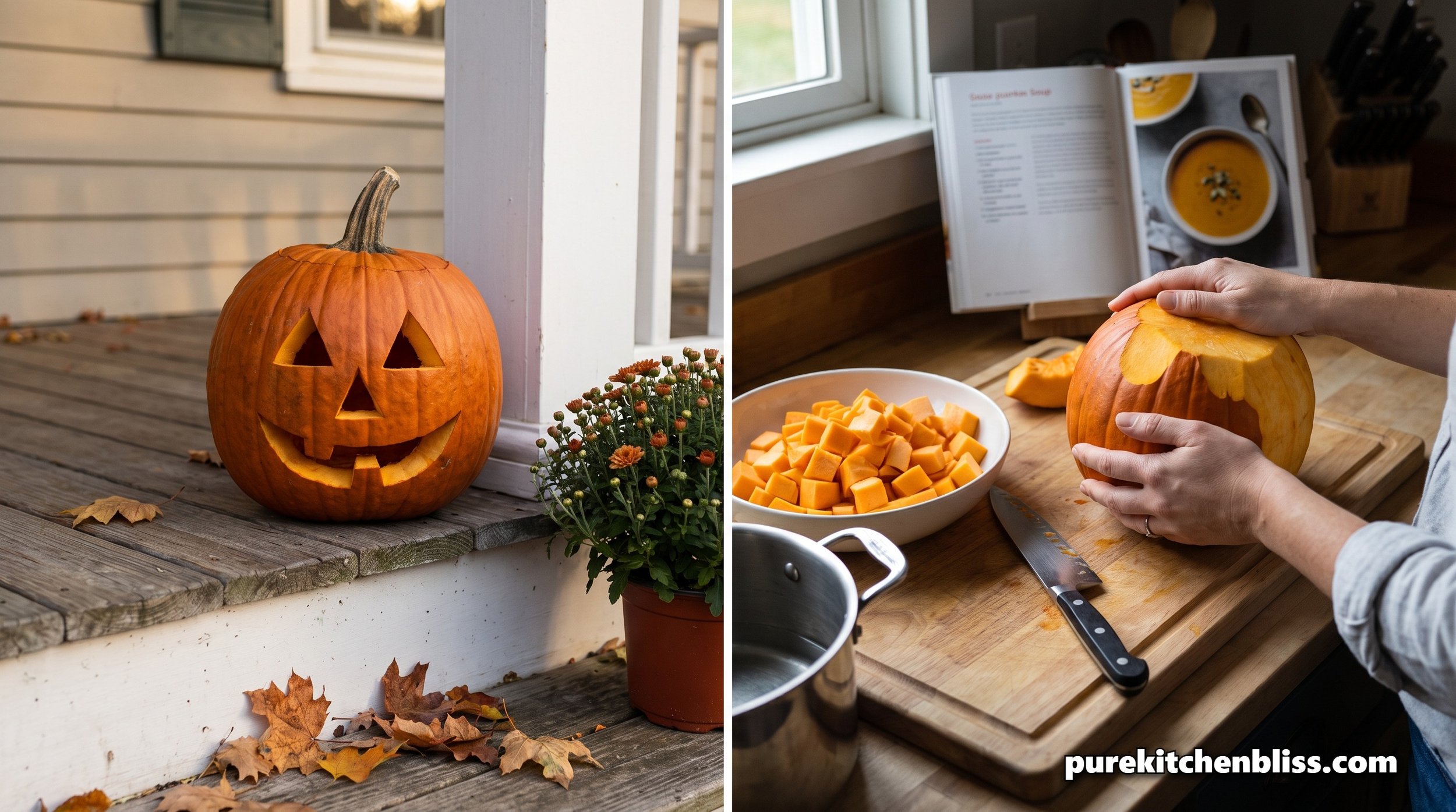
Kimberly Baker, a food systems and safety program director at Clemson University, has been direct about this in interviews around Halloween, pumpkins are a low-acid vegetable, and once cut and left at room temperature, pathogens present on the surface or introduced during carving grow rapidly on the exposed flesh. Jonathan Deutsch, a food and hospitality management professor at Drexel University, classifies a cut pumpkin the same way any professional kitchen would, as a time and temperature controlled for safety food, meaning it needs to be cooked immediately or refrigerated and used within a couple of days to stay safe. Norman Hunt IV, a chef and certified ServSafe manager, puts a number on it, once you cut into a pumpkin, it needs to stay below 40°F if you want to use it for cooking later. None of that is Halloween-specific caution, it's the same standard any cut, low-acid produce gets held to in a professional kitchen, pumpkin just doesn't usually get carved and left on a porch the way other cut vegetables would.
Why a lit jack-o-lantern is a worse case than just cutting one open
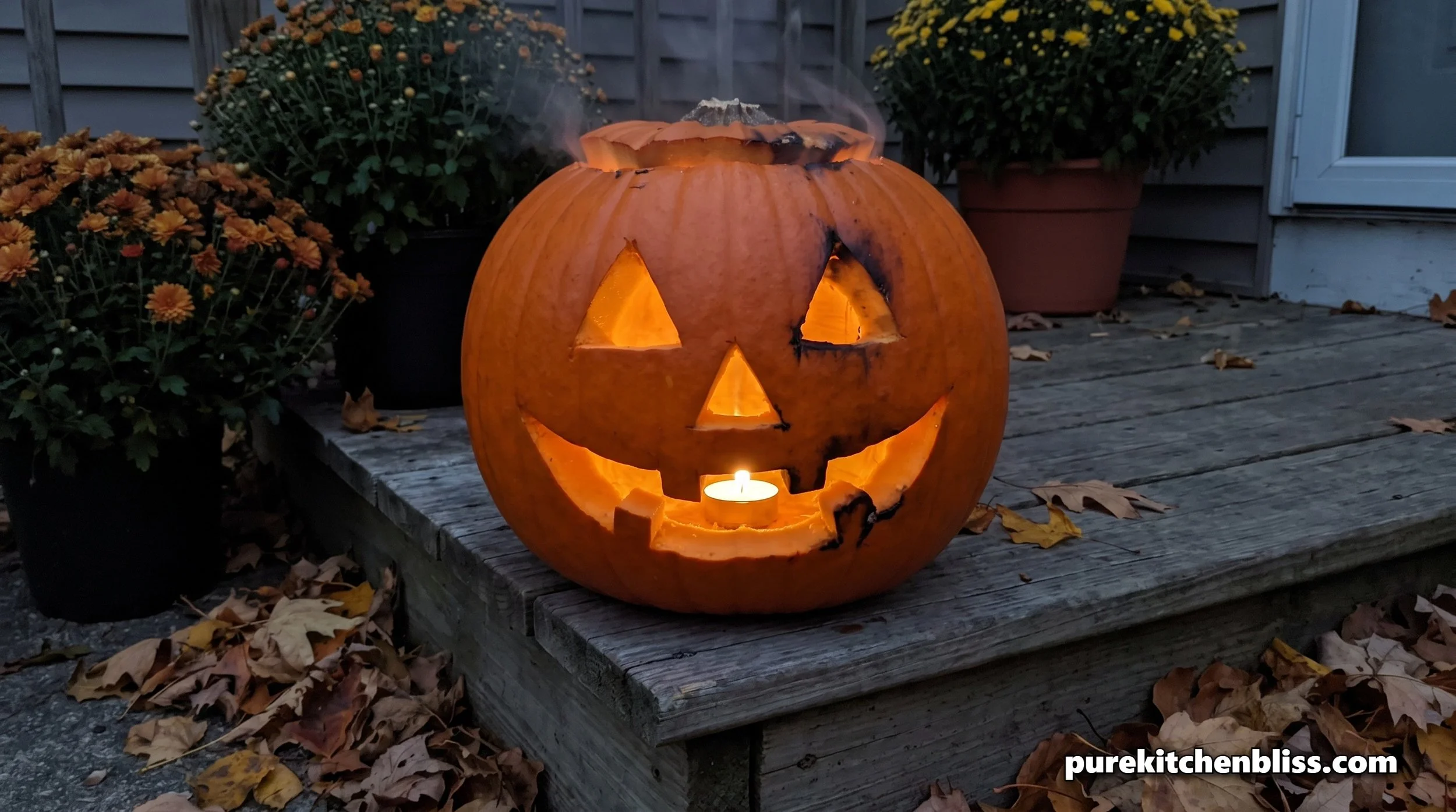
A jack-o-lantern that's been sitting outside with a candle burning inside compounds the basic cut-produce problem in a few specific ways. The candle's heat pushes the interior temperature well above the 40°F threshold for hours at a stretch, right in the range where bacteria doubles fastest. Sitting outdoors, even overnight when temperatures drop, daytime sun exposure and general outdoor conditions bring dust, insects, and whatever else has crawled in or around the opening into contact with the exposed flesh. And realistically, most carving sessions don't follow kitchen food-safety protocol in the first place, hands aren't always washed first, the pumpkin itself often isn't washed before cutting, and the knife or scoop used may not be a dedicated food prep tool. Experts I found on this were consistent that keeping the jack-o-lantern indoors instead of outside doesn't meaningfully change the risk calculation either, the exposure and handling issues exist regardless of location.
Don't rely on how it looks
One thing every source on this was consistent about, visible mold or an obviously rotten spot is a clear stop sign, but the absence of visible mold doesn't mean a jack-o-lantern is fine to eat. Pathogens that cause foodborne illness aren't necessarily visible, and a pumpkin that's been sitting out for a week can look perfectly intact on the surface while carrying real risk on the interior flesh. This is different from a lot of common food safety heuristics, checking a piece of chicken for smell or a cut apple for browning, where visible signs do a reasonably good job of flagging a problem. With a decorative pumpkin, the visible condition and the actual safety of the flesh underneath just aren't reliably connected, which is part of why the blanket recommendation from food safety researchers is so consistent regardless of how good a specific pumpkin looks after Halloween.
Carving pumpkins and pie pumpkins aren't actually the same vegetable
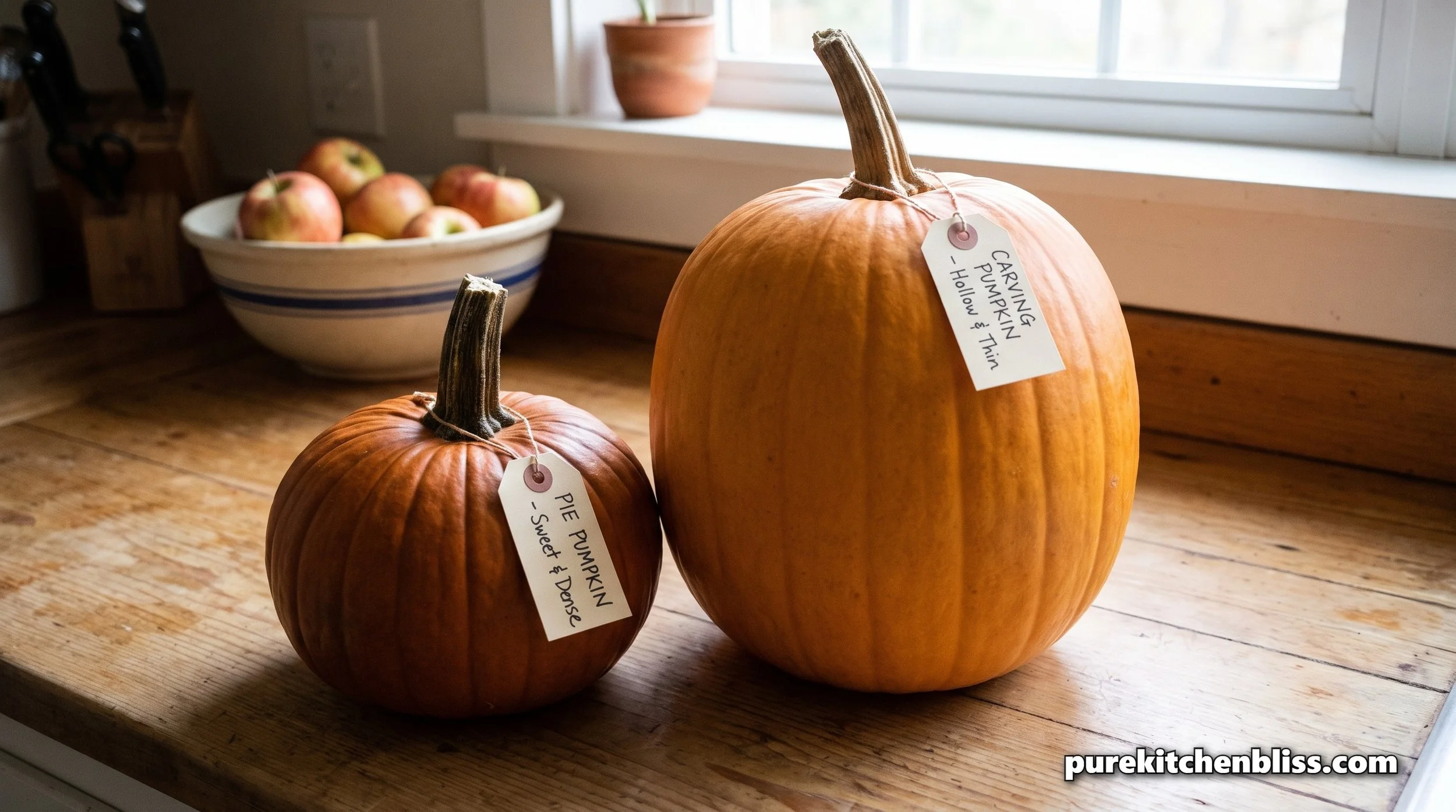
Separate from the food safety question, there's a variety issue worth knowing. Michigan State University Extension points out that the large, thin-walled pumpkins typically sold for carving, Howden and similar varieties, aren't the same cultivar as the smaller, denser pie pumpkins bred specifically for cooking. Carving varieties are bred for size and a clean, easy-to-cut shell, not for flavor or texture, and the flesh tends to be more watery and less naturally sweet than a proper pie pumpkin. Even in a scenario where a carving pumpkin was handled with full food safety in mind the entire time, the result cooked up is genuinely less pleasant to eat than pumpkin from a variety actually bred for the table.
The seeds are a completely different situation
It's worth being clear that this whole caution is specific to the flesh, not the seeds. Seeds get scooped out, rinsed thoroughly, and cooked at real heat before eating, which is a fundamentally different food safety situation than raw flesh sitting exposed inside a lit jack-o-lantern for days. That's why our pumpkin seed roasting guide doesn't carry the same warning this article does, cleaning and roasting seeds addresses contamination concerns directly through washing and heat in a way that just leaving flesh exposed in a decorative pumpkin never does.
The safer approach, if you're thinking ahead before you carve
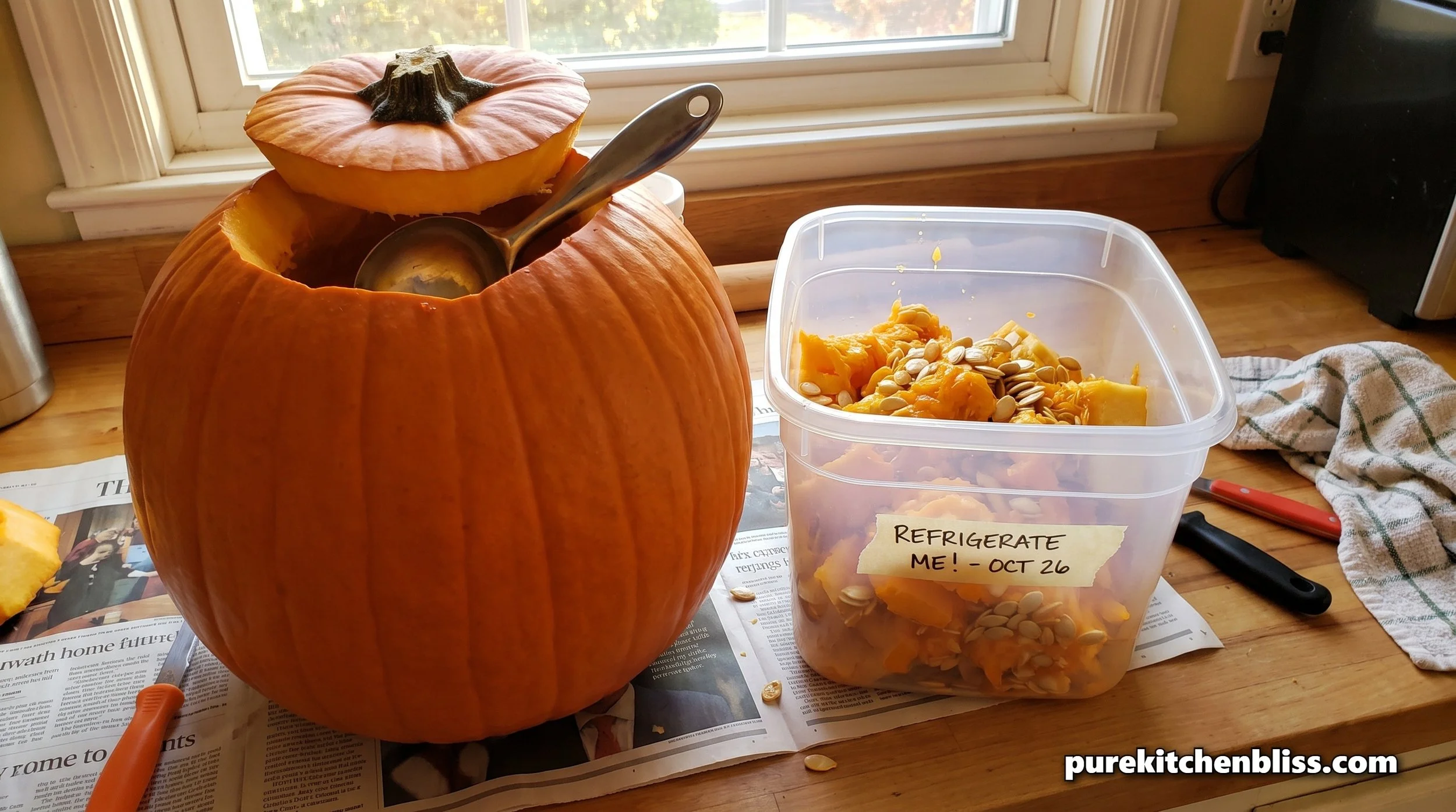
If getting a usable ingredient out of the same pumpkin matters to you, the move is to plan for it before carving starts, not after the jack-o-lantern's already been sitting out for days. Scoop out the seeds as usual, then carve out as much flesh as you reasonably can from the interior while leaving about a half inch of wall intact to keep the pumpkin's shape and structural integrity for the face carving itself. Refrigerate that scooped flesh immediately, in a sealed container, below 40°F, rather than leaving it out on the counter while you finish the rest of the carving project. Used within a couple of days, that flesh is genuinely fine to cook with, since it never spent time exposed at room temperature or outdoors the way the finished jack-o-lantern itself will. This only works if the flesh comes out before the pumpkin becomes a lit, sitting-out decoration, once that happens, the same rules from the section above apply to whatever's left inside it.
If your jack-o-lantern already sat out, here's what to actually do with it
If the pumpkin's already been carved, lit, and displayed for any real length of time, the honest recommendation from every food safety source on this is to not eat it, full stop, regardless of how fine it looks on the outside. Composting is the better use for a spent jack-o-lantern rather than the trash, since pumpkin breaks down well and returns something useful to a garden rather than a landfill, but that's a waste-reduction choice, not a food safety one. If you're also dealing with stains from the original carving session, our guide to getting pumpkin stains off counters and cutting boards covers the cleanup side of the same project.
If you want pumpkin to actually cook with, buy a second one
The straightforward fix, and the one I actually use, is buying a dedicated pie pumpkin or sugar pumpkin separately from whatever gets carved for display. It costs a few extra dollars, but it sidesteps both the food safety question and the flavor and texture disappointment of cooking with a carving variety. That second pumpkin never gets touched by carving tools or sits out as a lit decoration, it goes straight from the store into the kitchen and gets treated like any other fresh produce, washed, cut on a clean surface, and refrigerated or cooked promptly.
Reducing waste without the food safety tradeoff
If food waste is the actual concern driving the question, composting a spent jack-o-lantern accomplishes that goal without the food safety risk of eating it. A countertop compost bin makes it easy to break the pumpkin down into smaller pieces before it goes out to an outdoor pile or a municipal compost program, and pumpkin, being mostly water and organic matter, breaks down faster than a lot of other yard waste. This is really the honest resolution to the food waste guilt that prompts the "can I eat this" question in the first place, there's a genuinely useful destination for a spent jack-o-lantern that doesn't require eating something that isn't safe to eat.
| Pumpkin type | Safe to eat? | Why |
|---|---|---|
| Pie / sugar pumpkin, uncut | Yes | Bred for flavor and texture, no exposure risk |
| Carving pumpkin, flesh removed and refrigerated before display | Yes, within a couple days | Never exposed at room temperature or outdoors |
| Carved but not lit or displayed long | Risky, not recommended | Still cut and exposed at room temperature |
| Jack-o-lantern, lit and displayed for days | No | Heat, outdoor exposure, and handling all compound risk |
| Seeds from any carving pumpkin | Yes, if cleaned and roasted | Washing and heat handle the contamination concern separately |
What this actually comes down to
A pumpkin that's been carved, lit, and left out as a decoration isn't safe to eat afterward, regardless of appearance, that's a consistent position from food safety researchers across multiple universities. The workaround is planning ahead, scoop and refrigerate flesh before the carving becomes a displayed jack-o-lantern, or simpler still, buy a separate pie pumpkin for cooking and let the carving pumpkin do its job as a decoration without the added pressure of also needing to become dinner.