A lot of people notice that their nonstick frying pans, baking sheets, or waffle makers start losing their slick surface after just a few months of use. Even if you are incredibly careful, never using sharp metal utensils, always hand-washing them with a soft sponge, and storing them with protectors, food still starts sticking to the center of the pan.
In my shop and kitchen experience, the culprit usually isn’t your cooking temperature or your washing technique. It is that yellow aerosol cooking spray can sitting in your pantry.
With four kids in the house, we go through a lot of quick breakfasts and weeknight stir-fries. For a long time, grabbing a can of commercial nonstick spray seemed like the easiest, fastest way to coat a skillet or a 4-slice Belgian waffle grid before throwing down batter.
But as a builder, I tend to look at the chemistry of how different coatings interact under heat. Once you realize what is actually inside an aerosol canister, you’ll understand why it is slowly destroying your expensive cookware.
Today, I’m breaking down the basic chemistry of why aerosol sprays ruin nonstick finishes, and the simple, refillable tool I switched to instead to keep our pans perfectly slick for years.
The Chemistry: Lecithin and Propellants 🔬
When you buy a standard bottle of cooking oil, you are getting 100% pure oil. But when you buy an aerosol spray can, the manufacturer has to add specific chemicals to make the liquid thin enough to mist out of a tiny plastic nozzle under intense pressure.
The Ingredient: To keep the solution stable, these sprays rely heavily on an emulsifier called lecithin. They also use chemical propellants like butane or propane to force the liquid out of the can.
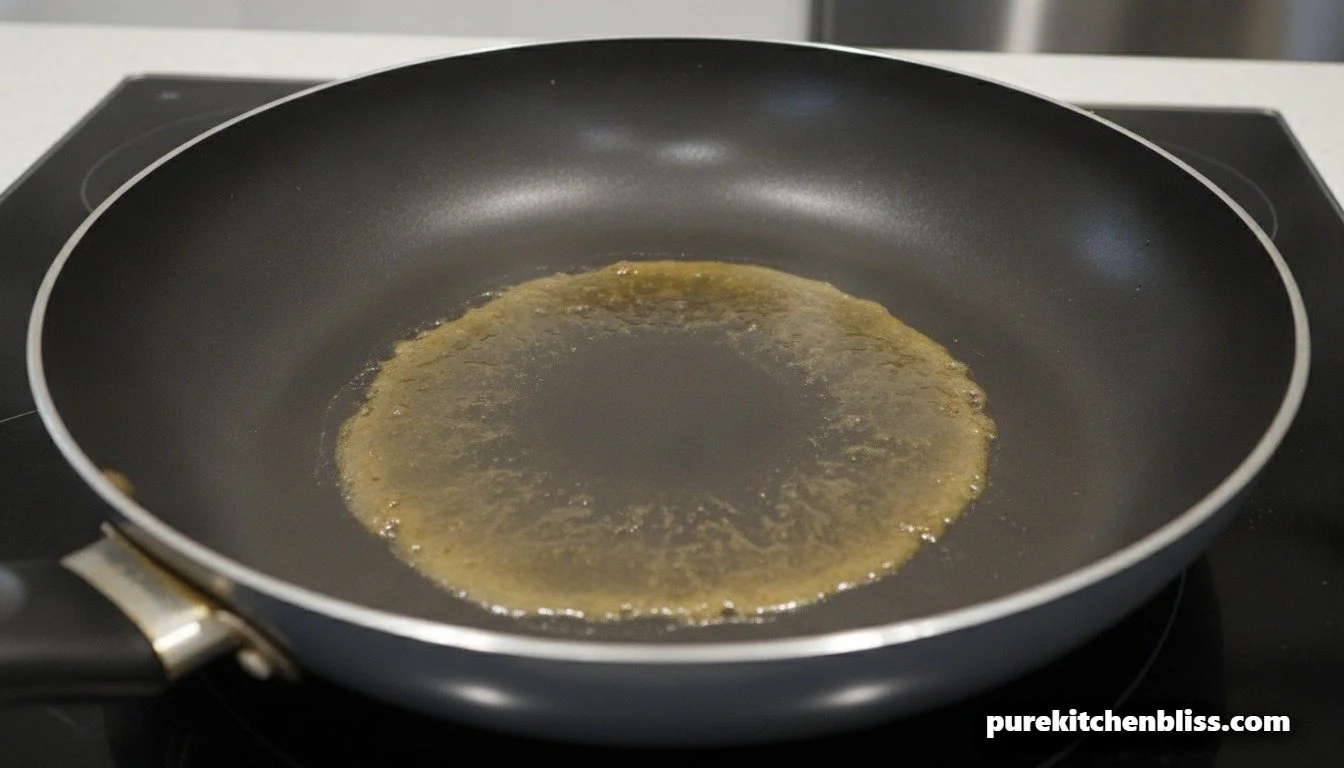
The Polymerization: When you spray that mixture into a cold skillet and crank up the heat, the chemical propellants flash off, but the lecithin undergoes a process called polymerization. Under standard cooking temperatures, lecithin bakes directly into the microscopic pores of your pan's nonstick coating, forming a tough, invisible, plastic-like layer.
The Sticky Trap 🕸️
The real issue with this baked-on lecithin layer is that it cannot be washed away with regular dish soap and water.
The Build-up: Every single time you use the spray, you add another microscopic layer of carbonized chemical residue. Eventually, this buildup forms a sticky, gummy film over the factory nonstick finish.
The Irony: Instead of helping food slide off, this residue acts like glue, trapping eggs and proteins and causing them to stick to the pan. If you try to scrub this gummy layer off using harsh steel wool or abrasive powders, you end up permanently scratching and ruining the delicate nonstick coating underneath, which is why I always recommend avoiding abrasive tools in your daily kitchen cleaning inventory.
My Equipment Evaluation: Aerosol Canisters vs. Refillable Misters
| Performance Feature | Commercial Aerosol Cooking Sprays | Pure Refillable Oil Misters | The Structural Impact |
|---|---|---|---|
| Ingredient Purity | Low (Contains lecithin, butane, propane) | 100% Pure (Your choice of olive or avocado oil) | Eliminates chemical additive residue entirely |
| Coating Protection | Poor (Bakes a gummy film into pan pores) | Excellent (Lubricates coating naturally) | Extends cookware life by several years |
| Waste Footprint | High (Single-use pressurized metal cans) | Zero (Reusable glass or aluminum bottle) | Keeps trash pull-outs empty and clean |
The Solution: Switching to a Mechanical Oil Mister 🛢️
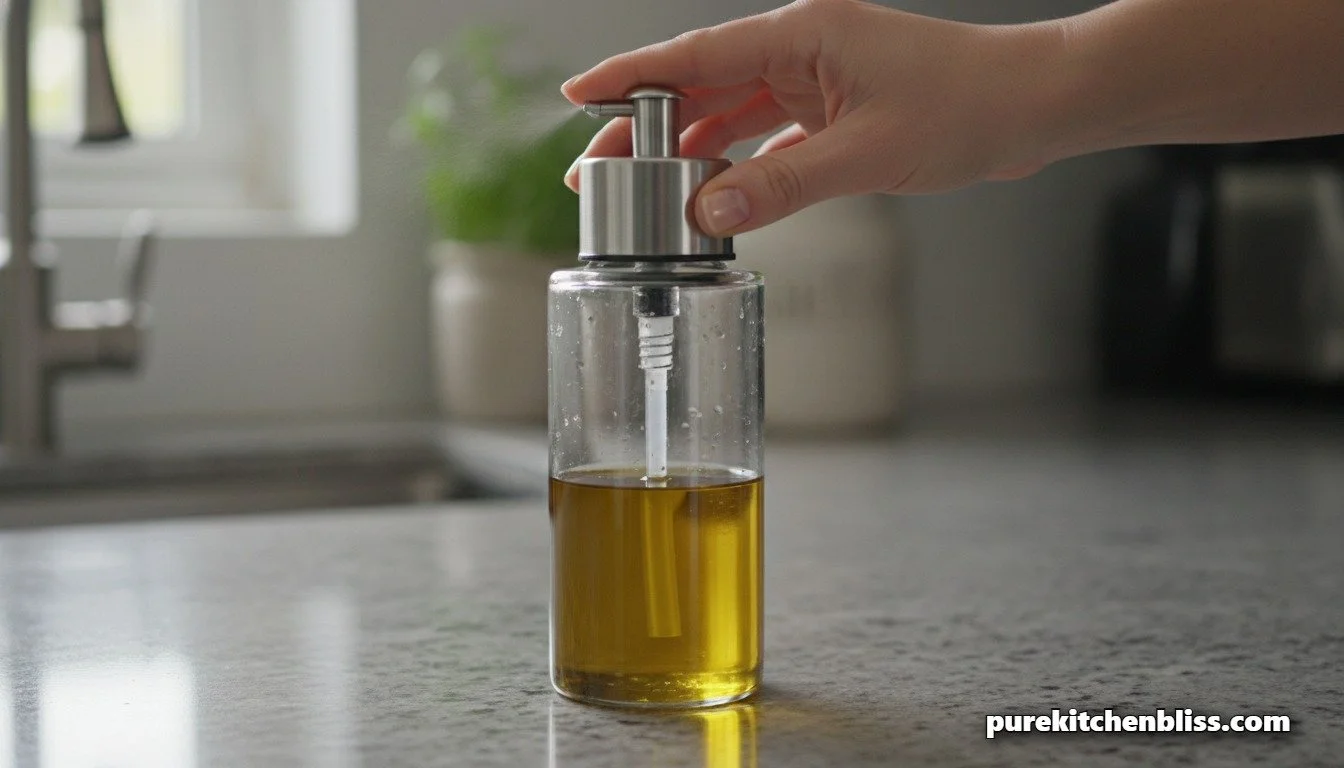
To protect our cookware and get that clean, even mist without the chemicals, I completely ditched the aerosol cans and bought a simple, pump-style Refillable Glass Oil Mister.
How it Works: These bottles don't use chemical propellants or compressed gas to create a spray. Instead, you fill the bottle halfway with your own pure cooking oil, pop the cap on, and pump it up and down a few times by hand.
The Physics: Pumping forces regular room air into the top chamber of the bottle, building up natural mechanical pressure. When you press the spray nozzle, that pressurized air pushes the 100% pure oil out in a beautiful, even mist.
The Cost Bonus: It lets you choose exactly what quality oil your family is eating, whether it's extra virgin olive oil or high-heat avocado oil. Plus, because you just refill it from a larger bottle, you stop paying for single-use aerosol cans and keep your kitchen's waste management zones clear of pressurized metal trash.

My Recommendations on Amazon 🛒
If you want to make the switch and clear those chemical propellant cans out of your pantry, here are the two specific tools I suggest based on their build quality and nozzle mechanics:
The Top Pick: The Evo Oil Sprayer Bottle Set is a favorite in a lot of busy kitchens. It uses an ergonomic trigger design that sprays a precise, fan-shaped mist of pure oil with every pull, completely eliminating the need for hand pumping or aerosols.
The Classic Pump: The Misto Brushed Aluminum Oil Sprayer is a reliable, budget-friendly staple. It features a heavy-duty aluminum body that protects the oil from light degradation, and it uses a simple cap-pump mechanism to build up a perfectly steady, even spray.
The Maintenance Takeaway 🛠️
When you invest in high-quality kitchen gear—whether you are sourcing a premium set of multi-clad skillets, installing a multi-tiered workstation sink, or picking out custom cabinetry finishes the daily products you use to maintain that gear matter.
Taking a minute to ditch the chemical aerosol cans in favor of a basic, refillable oil mister is a tiny adjustment that saves your cookware from a permanent, gummy film. It keeps your food pure, protects the factory finishes on your pans, and ensures your breakfast equipment works perfectly for years to house the daily family rush!