Transparency Note: We independently select these products based on research and user reviews. If you buy something through our links, we may earn a commission.
Warm thermos lunches are one of the biggest back-to-school trends this year, and most of the content around it treats "it's in a thermos" as a food safety guarantee in itself. It isn't. A University of Texas study tested more than 700 preschoolers' packed lunches roughly an hour and a half before lunchtime and found less than two percent of the perishable meat, vegetable, and dairy items were sitting at a genuinely safe temperature, even though nearly half the lunches included an ice pack.
Here's what's actually happening physically inside a thermos, why the claim printed on the box often doesn't match real-world conditions, the one step that meaningfully changes the outcome, and how to know whether your specific morning-to-lunchtime timeline is actually safe or not.
The danger zone math that actually applies to a school day
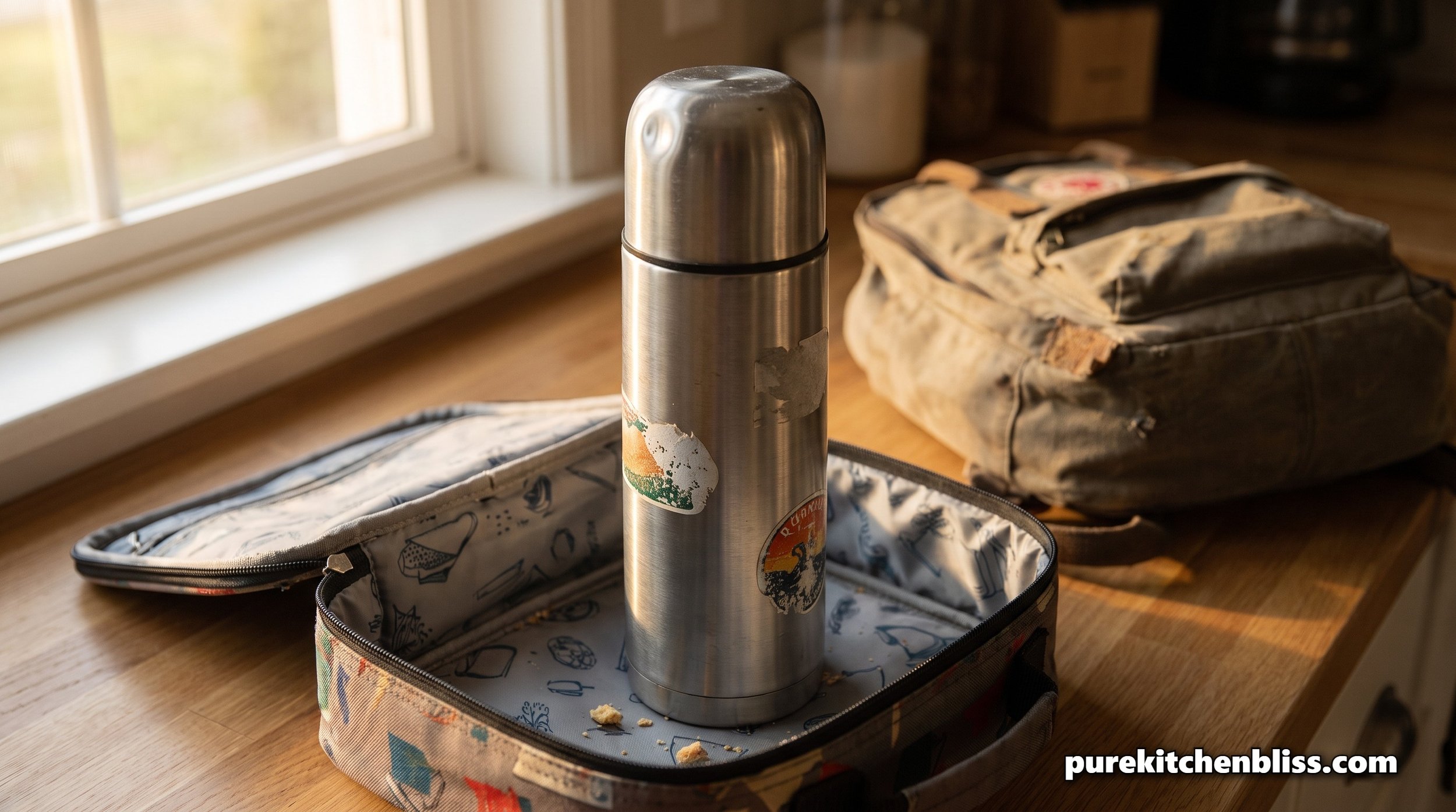
The USDA defines the "danger zone" as 40°F to 140°F, the range in which foodborne bacteria multiply fastest, and the standard rule is that perishable food shouldn't sit in that range for more than two hours, or one hour if the surrounding temperature is above 90°F. That two-hour window sounds generous until you map it onto an actual school morning. A lunch packed at 7am and eaten at noon has already been sitting for five hours, more than double the safe window, regardless of whether it's technically "in" a thermos or not.
This is the math most hot-lunch content skips entirely. The container matters, but the clock matters just as much, and a lot of families are unknowingly packing lunches that were never going to make it through a normal school schedule safely, container quality aside.
The study that should change how you think about this
Fawaz Almansour, a doctoral researcher at the University of Texas at Austin, led a study published in the journal Pediatrics that directly tested this question rather than relying on manufacturer claims. Checking packed lunches roughly 90 minutes before lunchtime, the study found more than 90 percent of perishable items were sitting outside the safe temperature range. Researchers described the results as "a shock," and the detail that stands out most is that using an ice pack didn't reliably fix the problem, 45 percent of the lunches in the study included one, and the food was still landing in unsafe territory regardless.
This study specifically examined cold-holding rather than hot thermos lunches, but the underlying lesson applies directly to the hot side of the same problem, packing something correctly at the moment it leaves the kitchen doesn't guarantee it's still safe five hours later, and a lot of the confidence parents place in insulated containers isn't backed by what actually happens over a real school day.
Why "it's in a thermos" isn't automatically safe
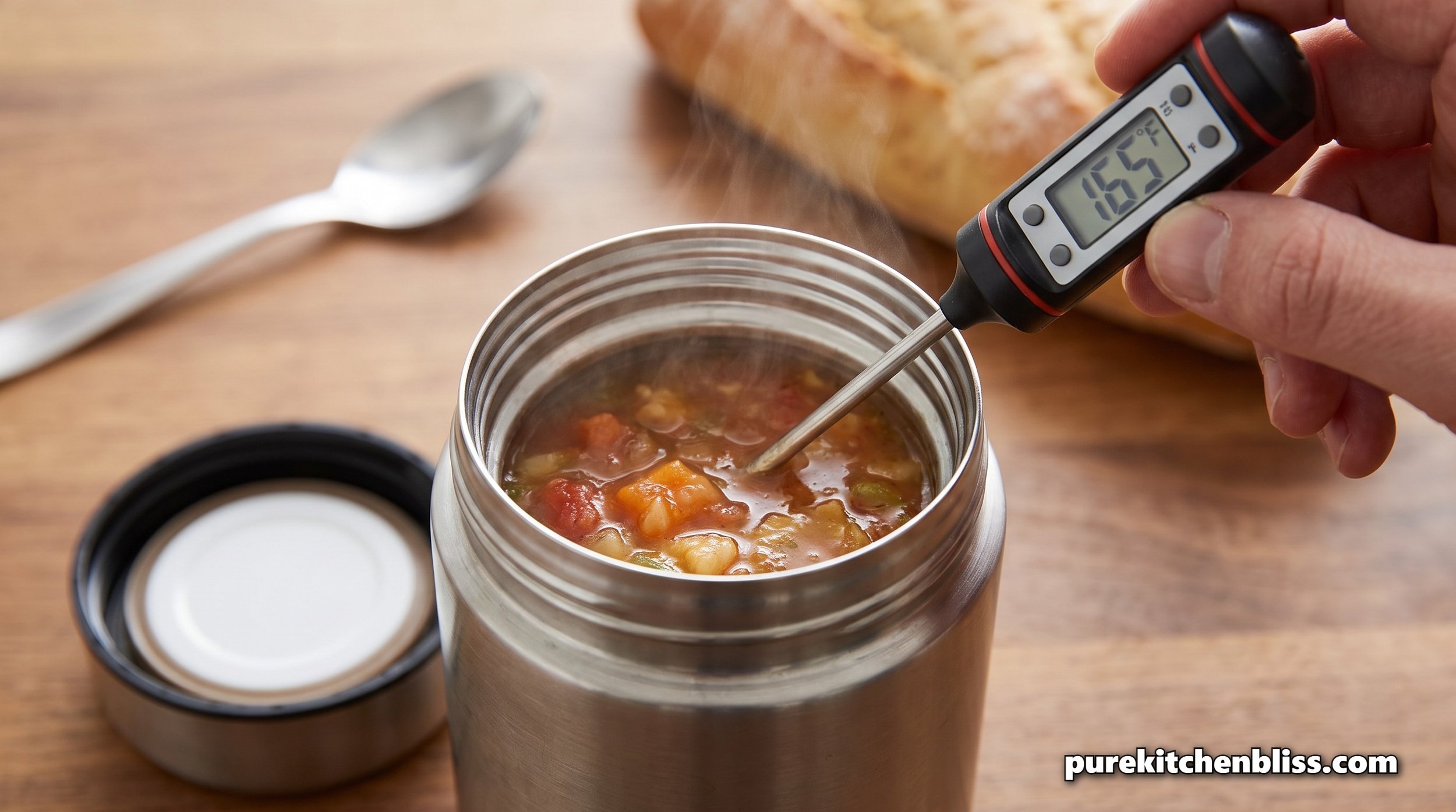
There's a genuine tension between how thermoses get marketed and what independent testing actually finds. Manufacturer content routinely claims a properly used food jar keeps food hot for five to seven hours or more. Independent commentary from parents and food bloggers who've actually tested this is considerably more skeptical, one widely shared account flatly states that most thermoses "cannot sustain" a safe hot-holding temperature for the length of a typical school day, and specifically warns against bento-style products that combine hot and cold sections in one container, since both sides tend to drift toward the danger zone rather than staying at their intended temperature.
The physics explains why the gap between claim and reality exists. A cold stainless steel jar pulls heat directly from your food the moment it goes in, the metal has to warm up before it can stop acting as a heat sink, and that initial heat loss happens before the thermos ever gets a chance to do its actual insulating job. Skip that step, and you're starting the whole countdown from a lower temperature than you think.
The one step that actually changes the math, preheating
Fill the thermos with boiling water, seal it, and let it sit for five to ten minutes before you use it. Pour that water out immediately before adding your actual hot food. This single step eliminates the initial heat-sink problem described above, and independent side-by-side testing has found a properly preheated food jar keeps food hot one to three hours longer than the identical jar filled cold, roughly two to three hours of hot-holding without preheating, compared to five hours or more with it done correctly. This is, without real competition, the single most important step in this entire process, and it's also the one step most casually packed lunches skip entirely.
Filling the thermos as full as possible also genuinely helps, a fully packed container holds heat noticeably better than a half-empty one, since there's less empty air space for heat to escape into inside the jar.
| Method | Hot-holding time | Safe for |
|---|---|---|
| No preheat, food warm (not piping hot) | Under 2 hours | Not recommended for school lunch |
| No preheat, food reheated to 165°F | 2-3 hours | Very early lunch periods only |
| Preheated 5-10 min, food reheated to 165°F | 5+ hours | Most standard school lunch schedules |
| Preheated, jar filled full, food 165°F+ | 5-7+ hours (manufacturer testing) | Longer or later lunch schedules, still test at home first |
Getting the food hot enough before it even goes in
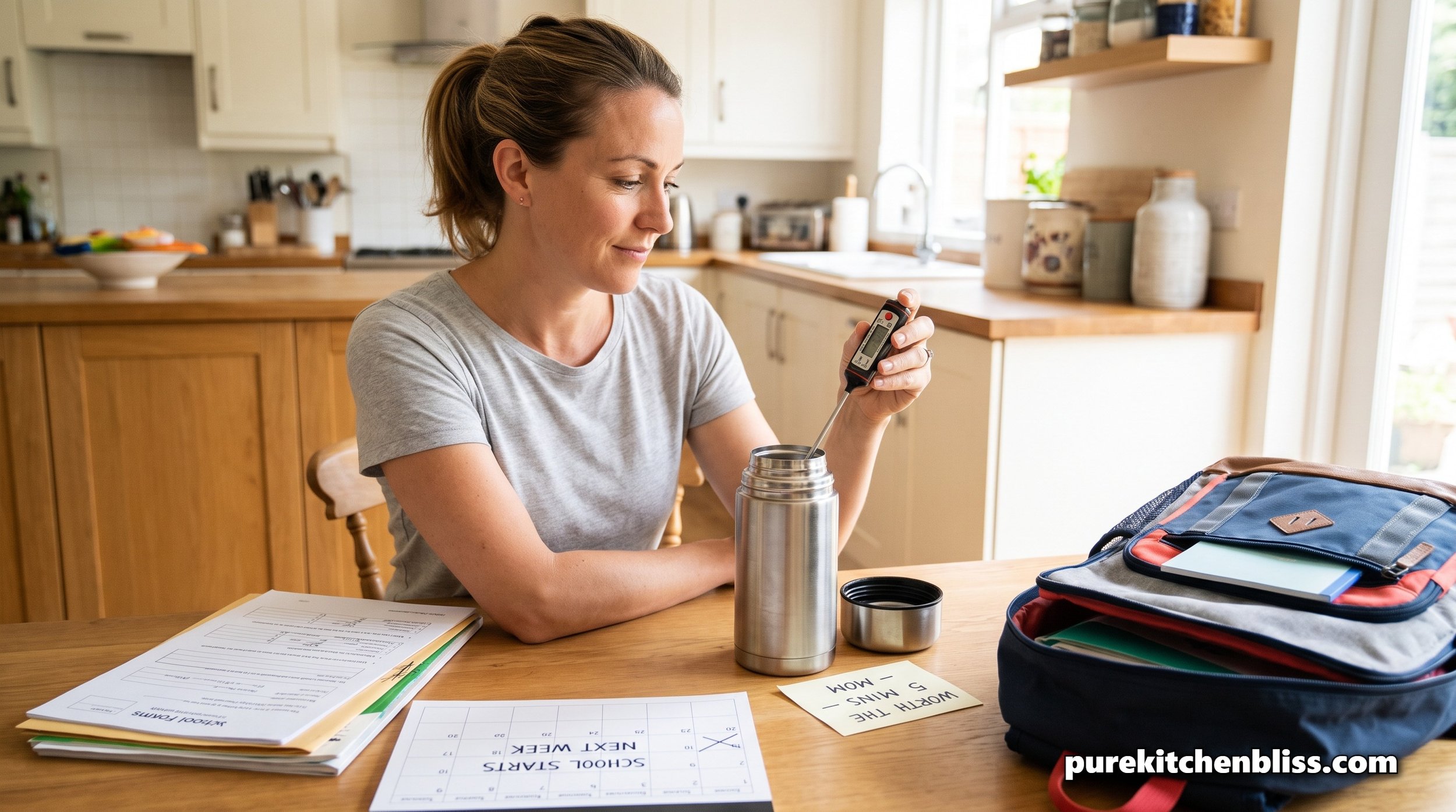
Food needs to be genuinely, aggressively hot at the moment it goes into the preheated thermos, reheated to at least 165°F and checked with an actual food thermometer rather than judged by feel. A useful rule of thumb from food safety educators is that the food should be too hot to taste right at that moment, if you can comfortably taste-test it straight from the pot, it isn't hot enough to survive the hours ahead. This matters as much as the preheating step itself, a lukewarm start with a perfectly preheated thermos still won't hold a safe temperature through a full school day.
The rice problem nobody flags specifically
Keith Warriner, a food science professor at the University of Guelph, points to one ingredient that deserves particular caution in a hot lunch specifically, rice. Rice naturally carries spores of Bacillus cereus, and cooking doesn't destroy those spores the way it kills most other bacteria, extended cooking has essentially no effect on them. If cooked rice sits in the danger zone for any real stretch, those spores can germinate and produce a toxin, which means a rice-based lunch, fried rice, a rice bowl, chicken and rice, carries a specific risk profile that a pasta or bread-based lunch doesn't, regardless of how well the thermos itself performs.
This isn't a reason to avoid rice in a packed lunch entirely, it's a reason to be especially rigorous about preheating and hot-food temperature specifically when rice is involved, since the margin for error is genuinely smaller with this particular food.
Testing your own setup before trusting a marketing claim
The number printed on a thermos box, "keeps food hot for 7 hours," is a manufacturer's best-case claim under controlled conditions, not a guarantee for your specific container, your specific reheating habits, and your specific school's lunch schedule. Running one real test at home, preheating and packing a thermos exactly the way you would for school, then checking the internal temperature with a food thermometer at the actual time your child would be eating it, tells you far more than anything printed on the packaging. If it's still reading above 140°F at that point, your setup genuinely works. If it's dropped into the danger zone, that's worth knowing before it happens with a real lunch rather than discovering it as a pattern of unexplained stomach issues.
The realistic verdict, when it works and when it doesn't
A properly preheated, genuinely full thermos, packed with food reheated to at least 165°F, works reliably for schools with an earlier lunch period, roughly four hours or less between packing and eating. For schools with a later lunch period, or for any lunch packed the night before rather than the same morning, the safety margin gets considerably thinner, and skipping the preheat step in that situation is a meaningfully bigger risk than it would be on a shorter timeline. If a hot lunch comes home partially eaten, the leftover portion should be discarded rather than saved, food that's been sitting at an uncertain temperature for hours isn't worth the risk of a second exposure.
If you're already thinking through hygiene habits around meal prep more broadly, our guide to handwashing while cooking covers the same basic food safety discipline that applies just as directly to packing a lunch as it does to preparing dinner.
What to send instead when you're genuinely unsure
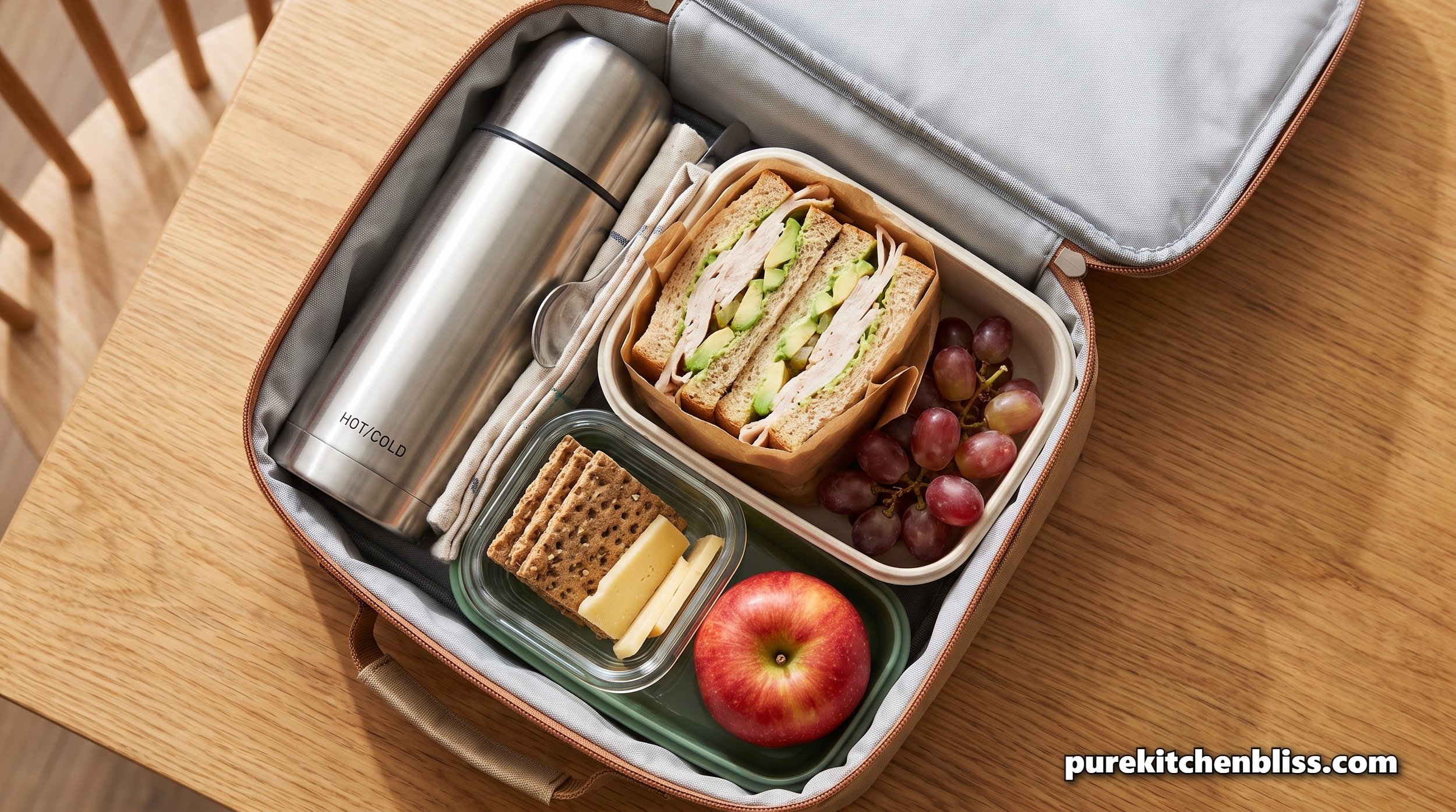
Not every part of a packed lunch needs temperature control at all, and leaning on room-temperature-safe foods for a longer school day removes a real category of risk rather than trying to manage it. Peanut butter and jelly, crackers, chips, dried fruit, cheese that's been well-chilled right up until packing, and whole fruit like apples, oranges, or bananas are all genuinely safe to sit at room temperature for a full school day without the same danger zone math applying at all. Reserving the thermos specifically for situations where you've actually tested your setup, and filling the rest of the lunch with foods that don't need that level of vigilance, is a reasonable middle ground if a later lunch schedule makes the hot-holding math genuinely tight.
If cold-pack storage is more your household's routine than hot lunches, our fridge and freezer organization guide covers freezing juice boxes and ice packs ahead of time, which the University of Texas study found still isn't a guarantee on its own but is a genuinely important part of the layered approach that actually works.
What I actually use for this
An instant-read food thermometer is worth owning specifically to run the at-home test described above before trusting any thermos with a real school lunch. A genuinely well-reviewed vacuum-insulated food jar performs meaningfully better than a cheap bento-style hot-and-cold combo container, worth the extra cost given what's actually riding on it. An insulated lunch bag adds a real secondary layer of protection around the thermos itself, and a set of reusable gel ice packs handles the cold side of a mixed lunch. If you're organizing fridge space for pre-chilled lunch components ahead of a busy week, our fridge storage container roundup covers options that keep everything cold right up until the moment it's packed.
What this actually comes down to
A thermos is a genuinely useful tool, but it isn't a safety guarantee printed on the label, and the University of Texas study is a real, sobering reminder that good intentions and an insulated container don't automatically add up to a safe lunch five hours later. Preheat it every single time, get the food aggressively hot before it goes in, fill the jar full rather than half, and be specifically cautious with rice-based dishes given the Bacillus cereus risk. Test your actual setup once at home with a real thermometer rather than trusting the number on the box, and lean on room-temperature-safe foods to fill out the rest of the lunch if your school's timeline makes the hot-holding math genuinely tight.