Transparency Note: We independently select these products based on research and user reviews. If you buy something through our links, we may earn a commission.
Every kitchen remodel conversation eventually lands on this question, open shelving or closed cabinets, and most of what's written about it stops at aesthetics with a passing warning about dust. What actually determines whether open shelving works in your kitchen has more to do with what's behind the wall and how you actually cook than which look you prefer on Pinterest.
As a carpenter who's installed both, I've seen open shelving done well and I've seen it pulled out of a wall by an overloaded stack of stoneware. Here's the honest breakdown, including the structural details most design content skips entirely, the maintenance reality, and where the resale data actually lands.
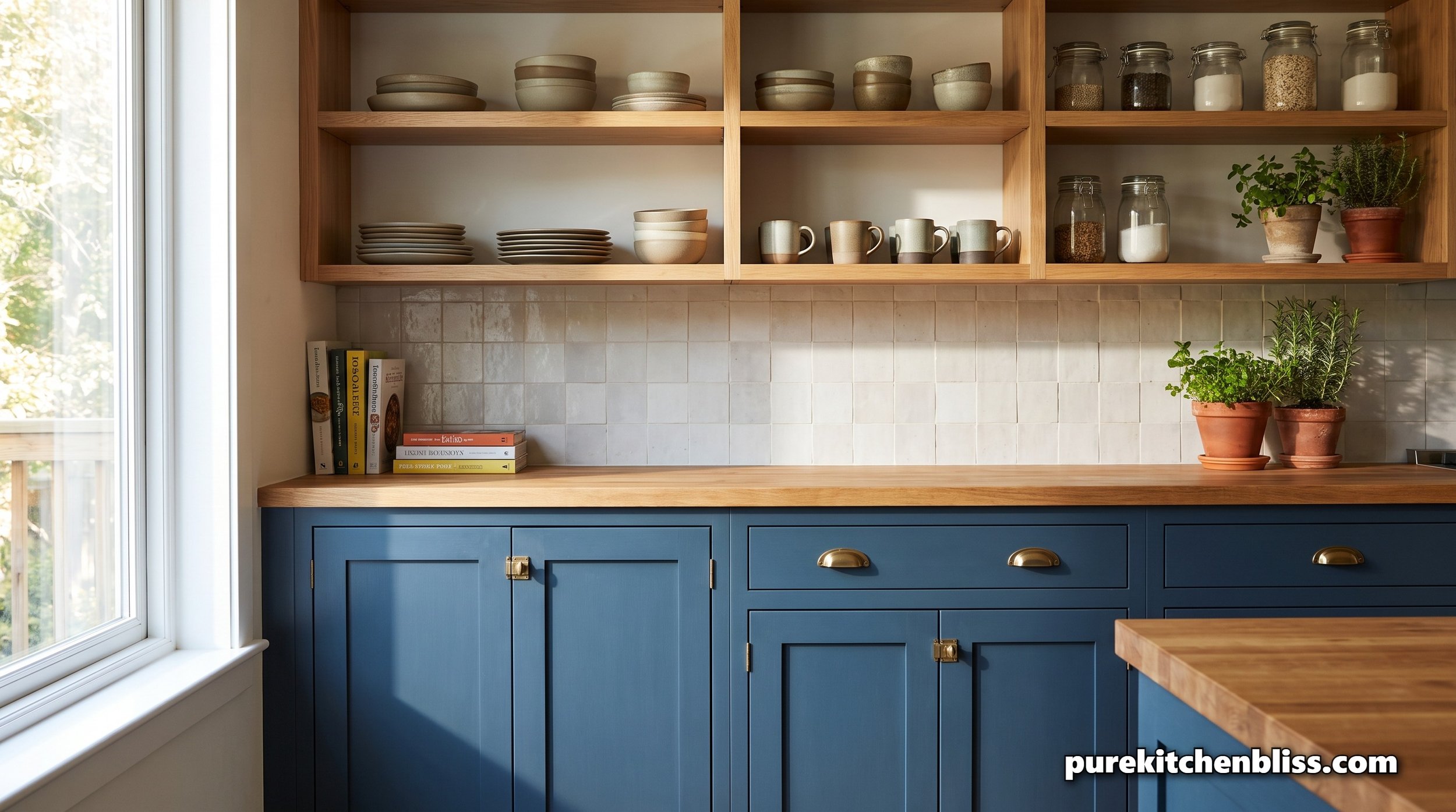
What actually holds a shelf up
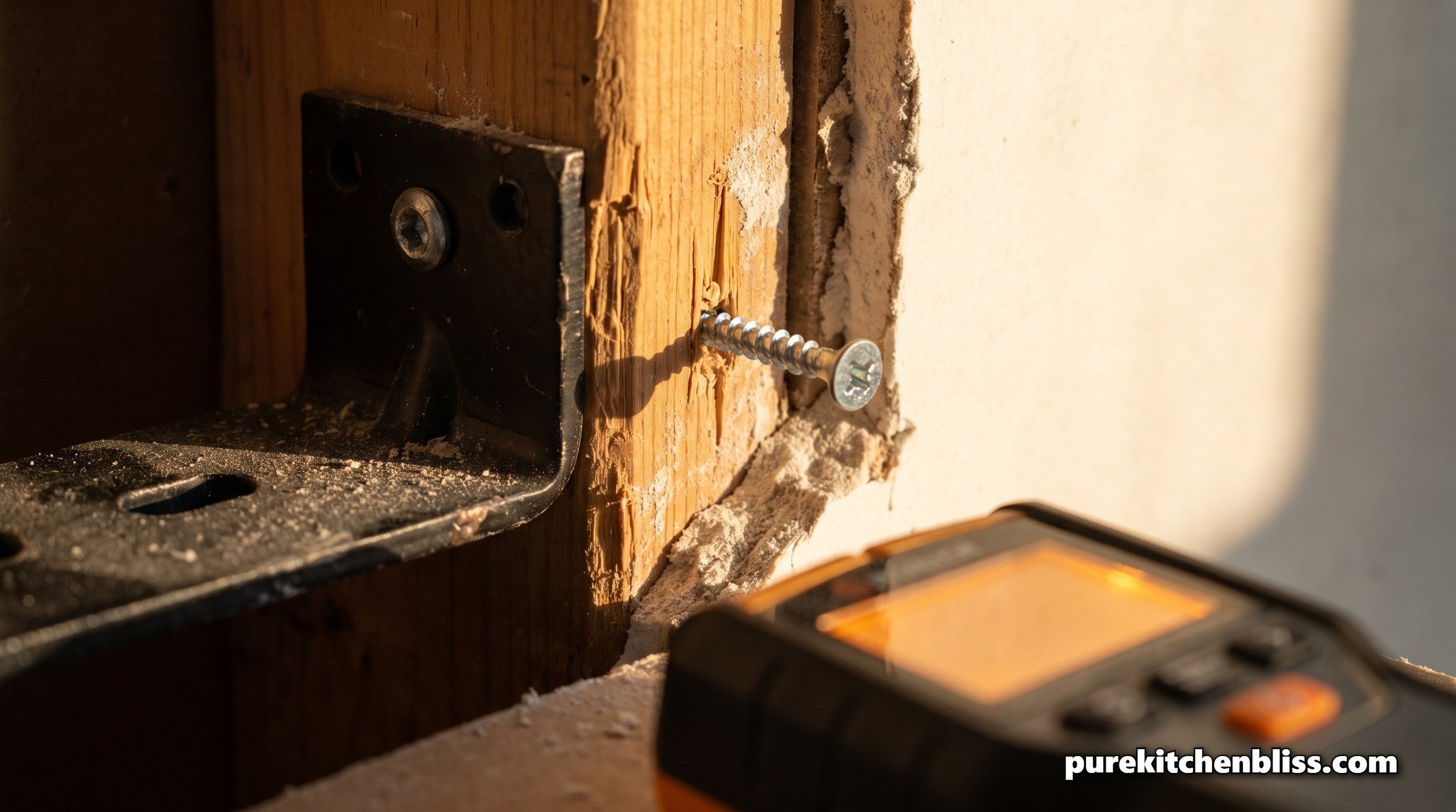
This is the part almost no design article covers, and it's the difference between a shelf that lasts decades and one that eventually pulls loose. Wall studs typically sit 16 inches on center, and a shelf bracket needs to land directly on a stud, or on solid blocking installed specifically for this purpose during a renovation, to carry real weight safely. A drywall anchor rated for 50 pounds sounds like plenty until you actually weigh a stack of ceramic dinner plates, a set of six can easily run 15 to 20 pounds on its own, and that's before adding bowls, mugs, or cast iron on the same shelf.
If you're planning open shelving during a renovation rather than retrofitting it into an existing wall, this is the moment to add horizontal blocking, a solid piece of lumber fastened between studs at the exact height the shelf will mount, before the drywall goes up. That gives you a full-width solid backing to anchor into rather than relying on hitting two studs 16 inches apart and hoping the bracket spacing lines up. Retrofitting into finished drywall without that blocking means locating studs precisely with a stud finder and accepting that your shelf length and bracket spacing are dictated by where the studs actually are, not where you'd ideally want them.
The dust and grease reality, and why distance from the stove matters
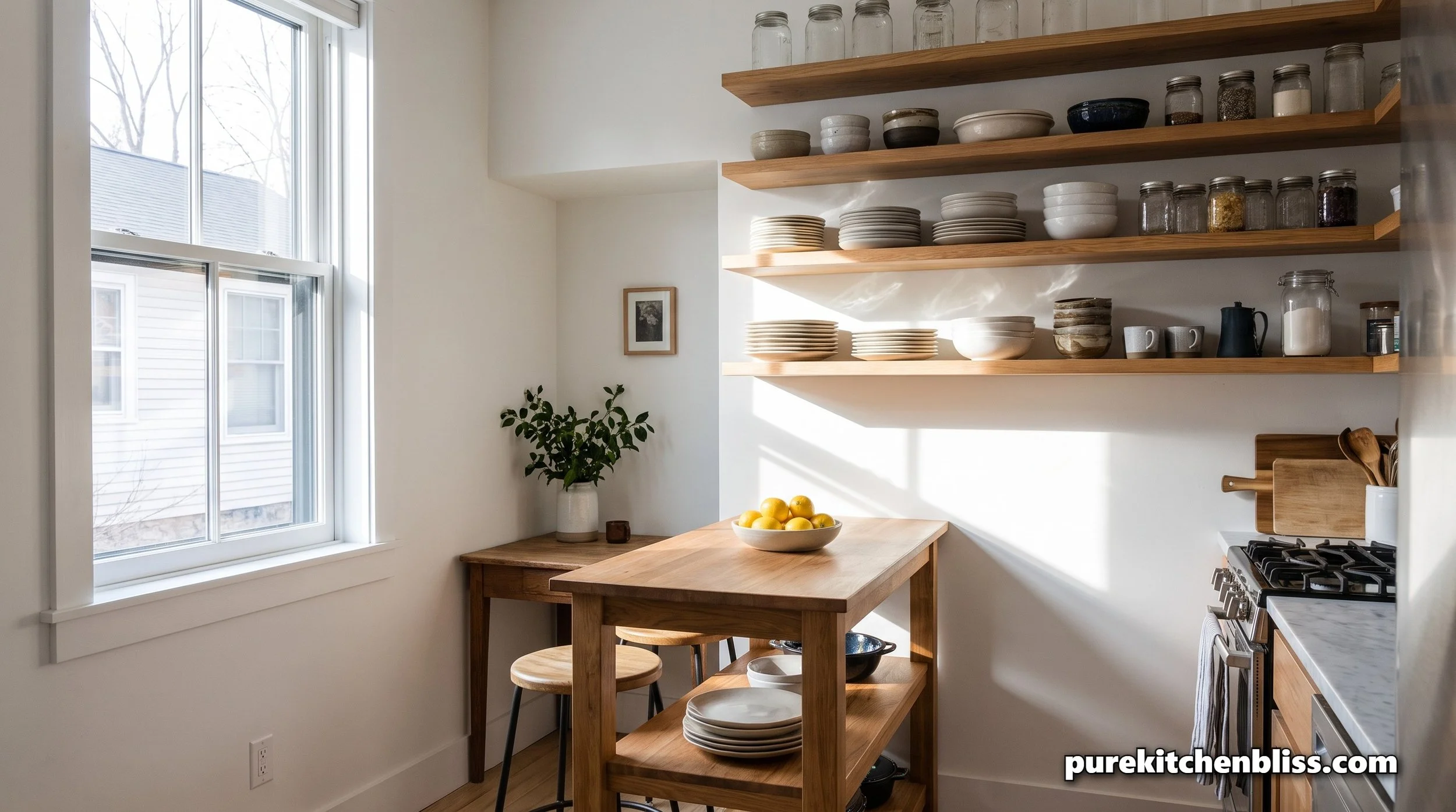
Open shelving genuinely does collect more debris than a closed cabinet, and it's not just decorative dust. Aerosolized grease from cooking settles on any exposed surface within several feet of the stove, and that combination of grease and dust creates a stickier film than dust alone, one that a quick wipe doesn't fully remove the way it would on a closed cabinet door that only needs occasional cleaning. Distance matters here more than people expect, open shelving positioned well away from the cooktop, on an opposite wall or a good distance from where oil actively splatters, collects meaningfully less of this film than a shelf mounted directly above or beside the range.
If you're already running a weekly kitchen reset, open shelving near a cooking zone genuinely needs to be part of that routine, not an occasional deep clean, since letting that grease film sit and build up week over week makes it progressively harder to remove later.
What the resale data actually shows
Real estate professionals and kitchen remodeling sources are fairly consistent on this point, closed cabinets appeal to a broader range of buyers and tend to hold resale value better than open shelving, which some buyers see as high-maintenance or as a stylistic choice that won't match their own taste. That doesn't mean open shelving tanks a home's value, it means it's a more polarizing choice than cabinetry with doors, which is inherently more neutral and easier for a buyer to picture filled with their own things rather than someone else's curated dishware.
If resale in the next several years is a real consideration, that's a legitimate reason to lean toward closed storage for the bulk of your kitchen, or to treat open shelving as a smaller accent element rather than your primary storage strategy. If you're not planning to sell anytime soon, this concern matters a lot less, and the decision comes down to your own daily use and preference instead.
Where each format genuinely wins
Open shelving earns its keep in a few specific situations, small kitchens where the visual openness genuinely makes the room feel larger, kitchens with a strong existing color or material story where displaying dishware adds to the design rather than looking cluttered, and households that actually use their dishware often enough that it doesn't sit collecting dust between uses. It's also meaningfully cheaper, since you're skipping cabinet doors, hinges, and the additional millwork that closed cabinetry requires.
Closed cabinets win for larger households with more kitchenware to store, for anyone who doesn't want the daily maintenance of open shelving, and for kitchens with heavier day-to-day cooking activity that puts more grease and steam into the air near storage. If your household includes young kids reaching for dishes, closed cabinets with a latch also add a real practical safety layer that open shelving doesn't offer.
The hybrid approach, and how to actually split it
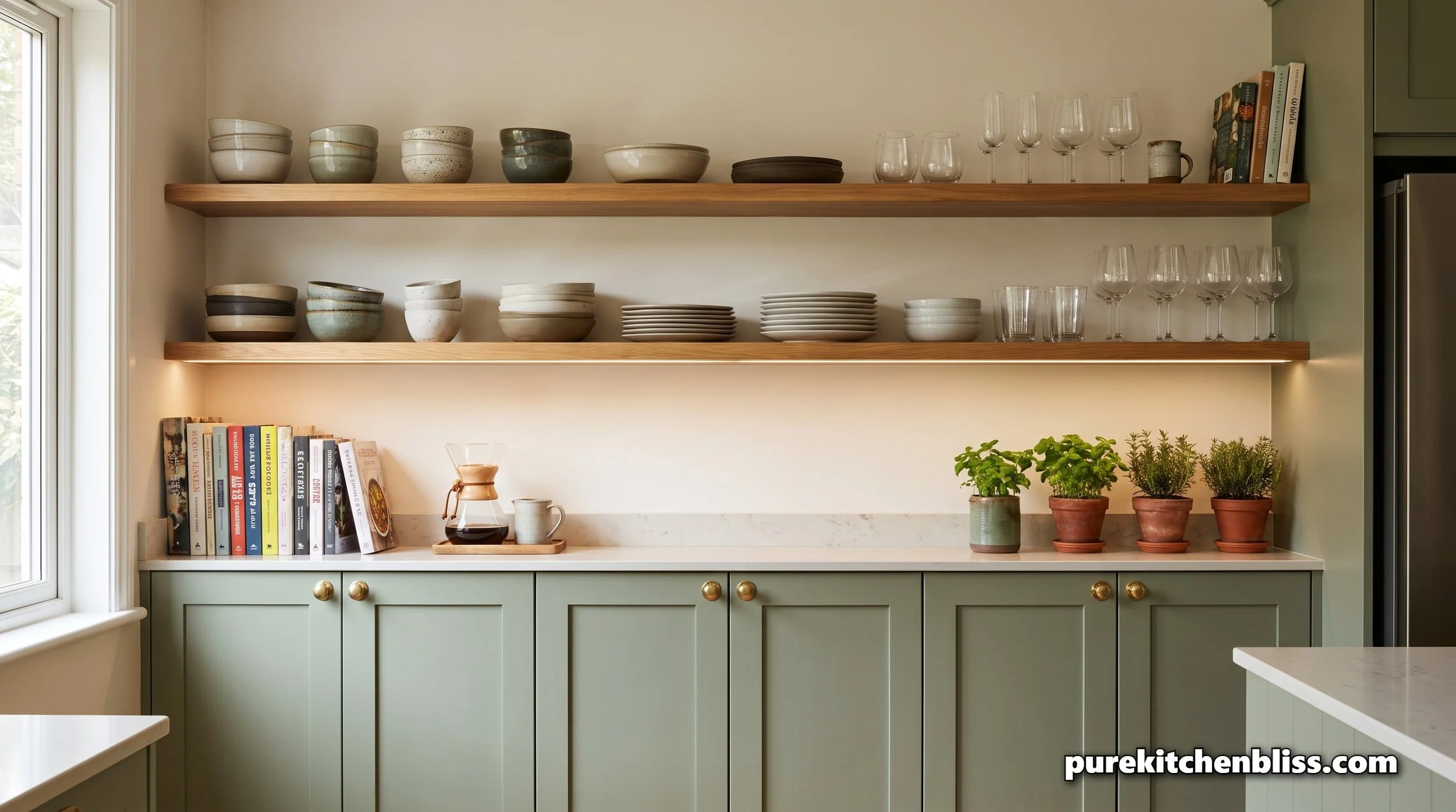
Most kitchens don't need to pick one format exclusively, and a hybrid layout, open shelving on top with closed cabinets below, is increasingly the default in new kitchen designs for good reason. It puts frequently used, display-worthy items within easy reach on open shelves while keeping bulk storage, less attractive cookware, and anything you don't want a buyer or a guest evaluating tucked behind doors below. This split also solves the dust problem partially on its own, since lower cabinets near counter height are further from where grease aerosolizes off a stovetop than upper shelving directly in the cooking zone would be.
A reasonable starting ratio is roughly 30 percent open, 70 percent closed, open shelving for one focal wall or a section away from the stove, closed cabinets for the rest. That keeps the visual benefit of open shelving without turning daily dust management or resale concerns into a bigger project than they need to be.
What you actually need if you're installing this
A reliable stud finder is non-negotiable before mounting anything, guessing at stud location is how shelves end up pulled loose from the wall months later. For the shelves themselves, heavy duty floating shelf brackets rated well above what you actually plan to store give real margin for the weight of ceramic and cast iron, rather than brackets rated right at your expected load with no buffer. If you're pairing open shelving with closed cabinets below, soft-close hinges are worth the upgrade cost, since they prevent the slamming that loosens cabinet joints over years of daily use. And if lighting is part of the plan for the open section, our under-cabinet lighting guide covers install and clearance considerations that apply just as well to lighting mounted under an open shelf.
| Factor | Open shelving | Closed cabinets |
|---|---|---|
| Cost | Lower, no doors/hinges needed | Higher, more materials and labor |
| Maintenance | Weekly wiping, more near a stove | Occasional, contents stay dust-free |
| Resale value | More polarizing, narrower buyer appeal | Broader buyer appeal, safer resale bet |
| Small kitchens | Makes the room feel more open | Can feel heavier in a tight space |
| Installation | Must anchor into studs or blocking | Standard cabinet mounting, more forgiving |
What this actually comes down to
Open shelving and closed cabinets aren't really competing on style alone, the real decision comes down to what's behind your wall, how close a shelf sits to your stove, whether resale is on your near-term horizon, and how much daily maintenance you're actually willing to keep up with. A hybrid split handles most of these tradeoffs at once, and if you do go with dedicated open shelving, anchoring it properly into studs or blocking is the one step that determines whether it's still holding up in five years or pulled loose from the wall in six months.