Transparency Note: We independently select these products based on research and user reviews. If you buy something through our links, we may earn a commission.
With four kids constantly helping in the kitchen, we've had our share of minor burns and cut fingers over the years, and the pattern is consistent, the bathroom medicine cabinet is stocked for scraped knees and headaches, not for what actually happens at a stove or a cutting board. Kitchens produce a specific, predictable injury profile, mostly burns, followed by cuts, and a generic first aid kit isn't built with either one specifically in mind.
The bigger issue isn't even having the right supplies, it's knowing what to actually do in the first sixty seconds, since the wrong instinct, ice on a burn, butter on a scald, is common enough that it's worth walking through what genuinely helps versus what just feels like it should.
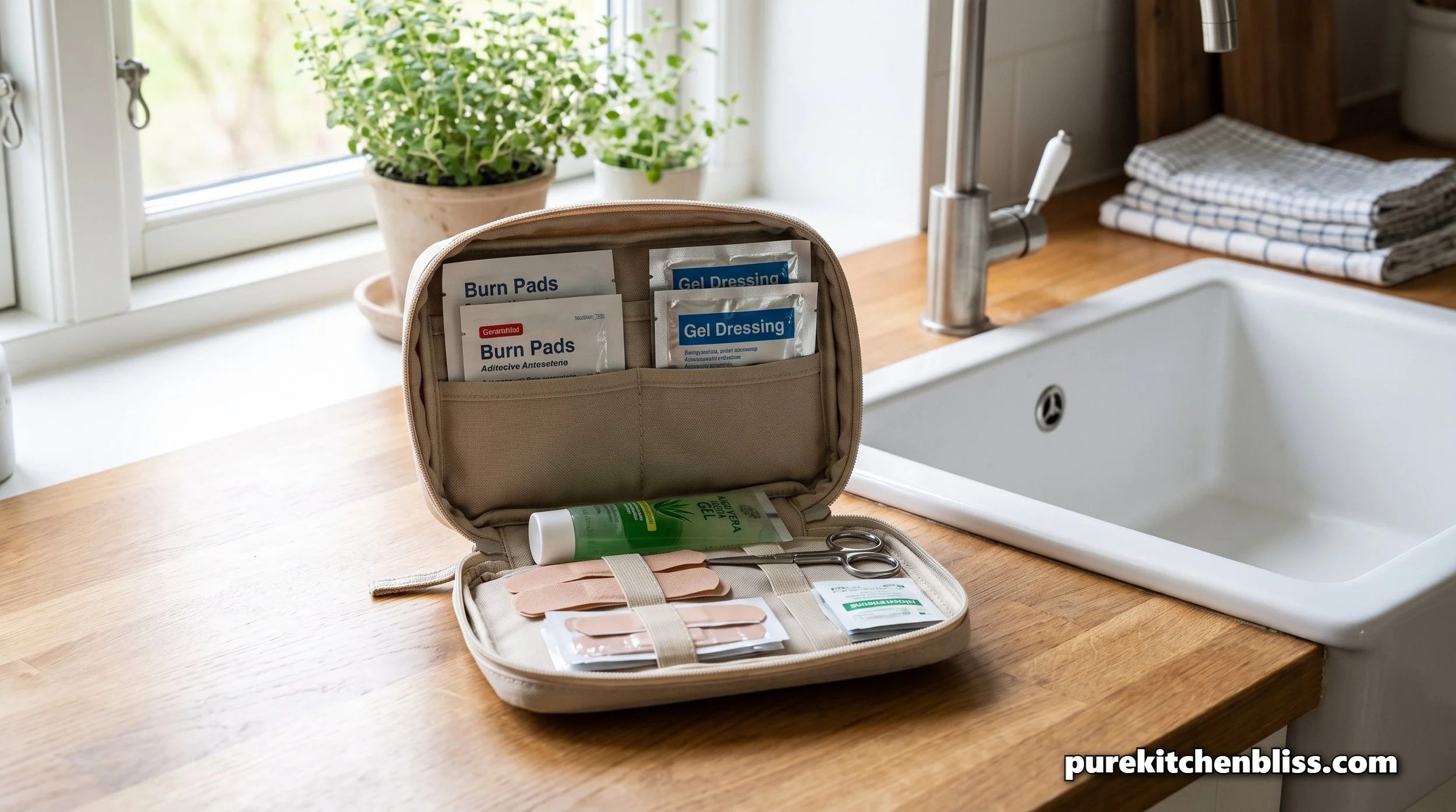
Why a kitchen needs its own kit
Most household first aid kits are built around the injuries that happen in a bathroom or a yard, small cuts, scrapes, splinters. A kitchen's injury profile skews differently, burns dominate, from a hot pan handle, a splash of boiling water, or steam off a lid, and cuts from knife work are the second most common category. Both of those benefit from immediate response, and a kit stored two rooms away in a bathroom cabinet adds exactly the kind of delay that makes a minor burn worse than it needed to be.
Keeping a small, dedicated kit in a kitchen drawer near the sink, not directly under it where it can get damp from occasional leaks, means the response starts within seconds of an injury rather than after a walk down the hall. This is the same logic behind mounting a fire extinguisher where you'll actually reach it in an emergency, proximity to the injury is a real factor in outcome, not just convenience.
Burns: the first sixty seconds actually matter
The first, most important step for any minor burn is cool running water, not ice and not ice water, held over the burn for a full 10 to 20 minutes. That duration is the part almost everyone cuts short, most people rinse for ten or fifteen seconds and stop once the initial sting fades, but the full window is what actually stops the burn from continuing to damage deeper tissue, since heat retained in the skin keeps causing injury well after the initial contact ends. Ice or ice water is worse than doing nothing in this specific case, since extreme cold can cause additional tissue damage on top of the burn itself.
While the burn is cooling, assess what you're actually dealing with. A first-degree burn is red, painful, and involves only the top layer of skin, similar to a sunburn, and it turns white briefly when you press on it. A second-degree burn goes deeper, into the dermis, and typically blisters with a moist or shiny appearance. Small first-degree burns and second-degree burns smaller than about two inches across, roughly the size of a quarter, are generally manageable at home. Anything larger, anything on the face, hands, feet, or genitals, or anything that looks white, blackened, or leathery rather than red, needs medical attention, and a third-degree burn is a genuine emergency requiring immediate care rather than home treatment.
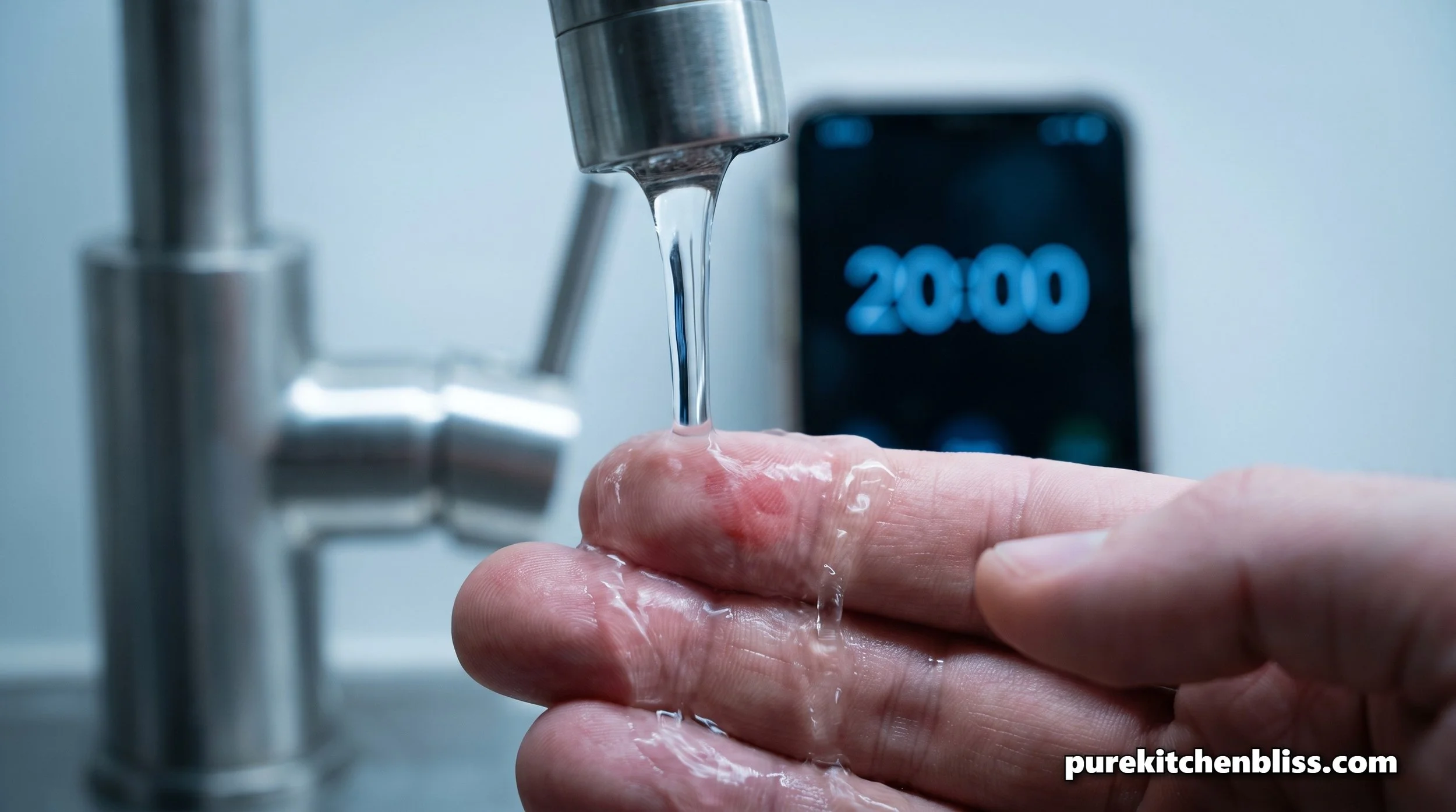
What not to put on a burn, and why the myths persist
Butter, oil, toothpaste, and ice all show up constantly in burn folk remedies, and all four make things worse rather than better. Butter and oil trap heat against the skin instead of releasing it, which can deepen the burn rather than cooling it, and they also introduce contamination risk to what's essentially an open wound once blistering starts. Toothpaste carries the same contamination problem along with ingredients that can irritate already-damaged skin. Once the burn has been properly cooled, a plain, unscented moisturizing lotion helps with the healing skin, but nothing goes on during the actual cooling phase beyond water itself.
For a burn that does blister, resist the urge to pop it deliberately, an intact blister is a genuinely effective barrier against infection while the skin underneath heals. If a blister does break on its own, gently clean the area and cover it rather than picking at the remaining loose skin, which increases infection risk unnecessarily.
Cuts: pressure first, and knowing when it's a stitches situation
For most kitchen cuts, direct, firm pressure with a clean cloth or gauze for several minutes stops the bleeding, and elevating the injured hand above heart level while applying pressure speeds that process along. If bleeding hasn't slowed noticeably after five to twenty minutes of continuous direct pressure, that's a signal to seek medical care rather than continuing to wait it out at home. A cut longer than about half an inch, one with jagged rather than clean edges, or one on or near a joint where movement will keep reopening it, generally needs stitches or at minimum a professional look rather than a bandage and hoping for the best.
Once bleeding is controlled, clean the cut gently with water, apply a thin layer of antibiotic ointment, and cover it with a bandage sized to the actual wound rather than whatever's left in the box. Watch for increasing redness, swelling, warmth, or pus over the following days, those are infection signs that warrant a follow-up rather than waiting to see if it resolves on its own.
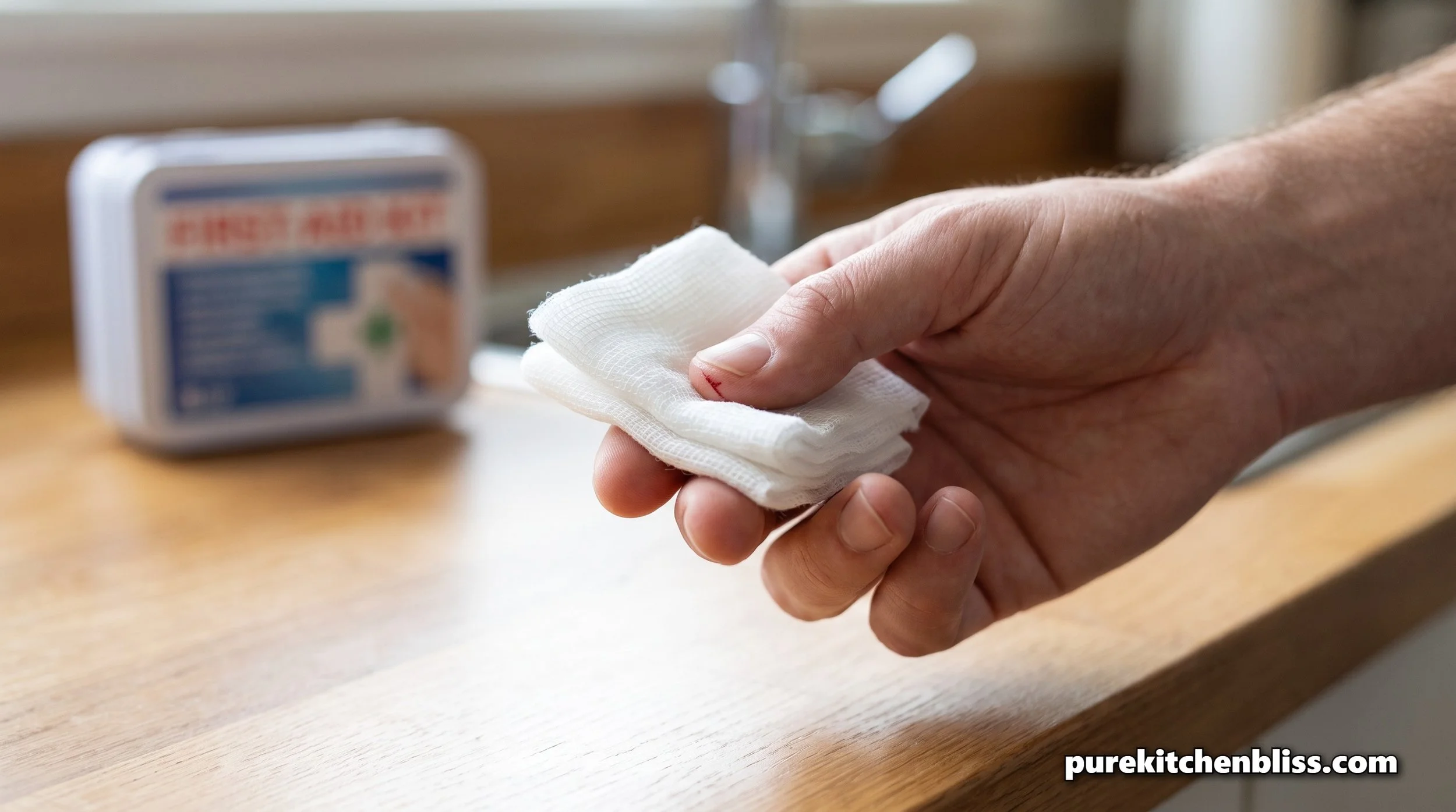
What actually belongs in the kit
A standard adhesive bandage works fine for a small cut, but it's the wrong tool for a burn, since regular bandages can stick to healing burn tissue and tear it away on removal. A hydrogel burn dressing is worth keeping specifically for this reason, it's a water-based gel pad designed for burns that continues a cooling effect after the initial water rinse, keeps the wound in a moist healing environment that produces less scarring than letting it dry out, and lifts off cleanly without pulling at healing skin the way a standard bandage would. It's a genuinely different product from a regular adhesive bandage, not just a fancier version of the same thing.
Beyond the burn dressing, a small kit should include sterile gauze and medical tape for cuts that need more coverage than a standard bandage provides, a pair of fine-point tweezers for pulling out a stray glass shard or a splinter from a cutting board, and a pack of disposable nitrile gloves so whoever's providing first aid isn't doing it bare-handed, both for their protection and to keep the wound cleaner. An instant cold pack is worth including too, not for burns, but for the occasional bump or bruise from a dropped pot or a cabinet door, a genuinely separate use case from anything involving heat.
Keeping it stocked and where it actually lives
A first aid kit that's missing its one essential item when you need it is functionally the same as not having one at all. Checking expiration dates on ointments and gel dressings once a year, and restocking anything used immediately rather than waiting until the next injury reveals the gap, keeps the kit actually ready. If you're already running a weekly kitchen reset, adding a quick first aid kit check to that same routine on a monthly or seasonal basis means it never becomes an afterthought, the same logic used for testing smoke alarms and checking a fire extinguisher's gauge in our kitchen fire safety guide.
If kids are old enough to help with cooking in your house, walking them through where the kit lives and the basic cool-water-first step for a burn is worth doing before an incident happens, not after. Our kids and kitchen fire safety guide covers a lot of the same prevention-first thinking for younger kids specifically.
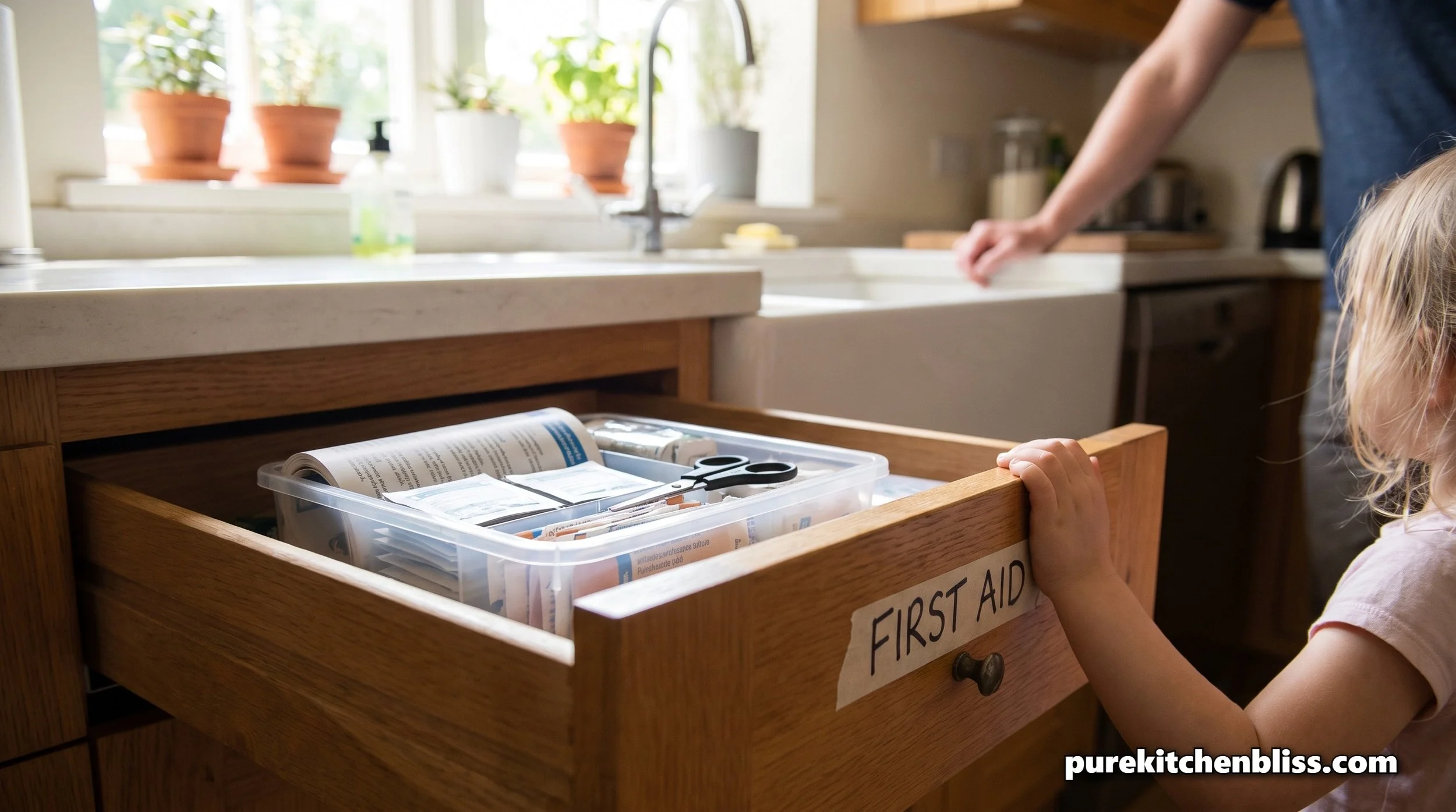
What I actually keep stocked
A box of hydrogel burn dressings sits at the front of our kit specifically because burns are the most common injury in this house, and having the right dressing on hand beats reaching for a standard bandage that's genuinely the wrong tool. A sterile gauze and adhesive bandage variety kit covers everything from a small nick to a cut that needs real coverage. A pair of fine-point tweezers handles glass and splinters that come up more often than you'd think in a kitchen with kids constantly underfoot. And a box of disposable nitrile gloves lives right in the kit itself, since digging through a separate drawer for gloves while someone's bleeding defeats the purpose of having a fast, dedicated kit in the first place.
| Burn severity | Signs | Response |
|---|---|---|
| First-degree | Red, painful, no blister, whitens under pressure | Cool water 10-20 min, moisturizer once cooled, home care |
| Second-degree, small (under ~2 in) | Blistering, moist/shiny skin | Cool water 10-20 min, hydrogel dressing, monitor for infection |
| Second-degree, large or sensitive area | Blistering over a wide area, or on face/hands/feet/genitals | Cool water, cover, seek medical care |
| Third-degree | White, blackened, or leathery skin, may be painless | Cool, wet dressing, call 911 / ER immediately |
What this actually comes down to
Most kitchen injuries are minor, but the right response in the first minute genuinely changes the outcome, cool running water for a full 10 to 20 minutes on a burn, direct pressure and elevation on a cut, and knowing the specific signs that mean it's time to stop treating it at home. A kit built around what actually happens in a kitchen, a proper burn dressing instead of a standard bandage, gloves, tweezers, and gauze, kept somewhere you'll actually reach in the moment, does more good than a generic first aid box pulled from a bathroom shelf two rooms away.