Transparency Note: We independently select these products based on research and user reviews. If you buy something through our links, we may earn a commission.
Every fall my hands take a beating from two directions at once, woodworking projects picking back up in the shop and a genuinely higher volume of dishes in the sink as the whole family shifts toward soup, stew, and slow-cooked meals. For years I assumed cracked, dry hands were just the cost of the season, something you lived with until spring. They're not, and once I actually looked into why it happens, the cause turned out to be more about surfactant chemistry and water temperature than about cold air itself, which means it's fixable with specific changes rather than just tolerable until the weather turns.
This isn't a generic "moisturize more" article. It's the actual mechanism behind why dish soap and hot water damage skin faster than almost anything else in a normal household routine, and the specific, evidence-backed changes that address that mechanism directly instead of layering lotion over a problem that keeps recurring every single day.
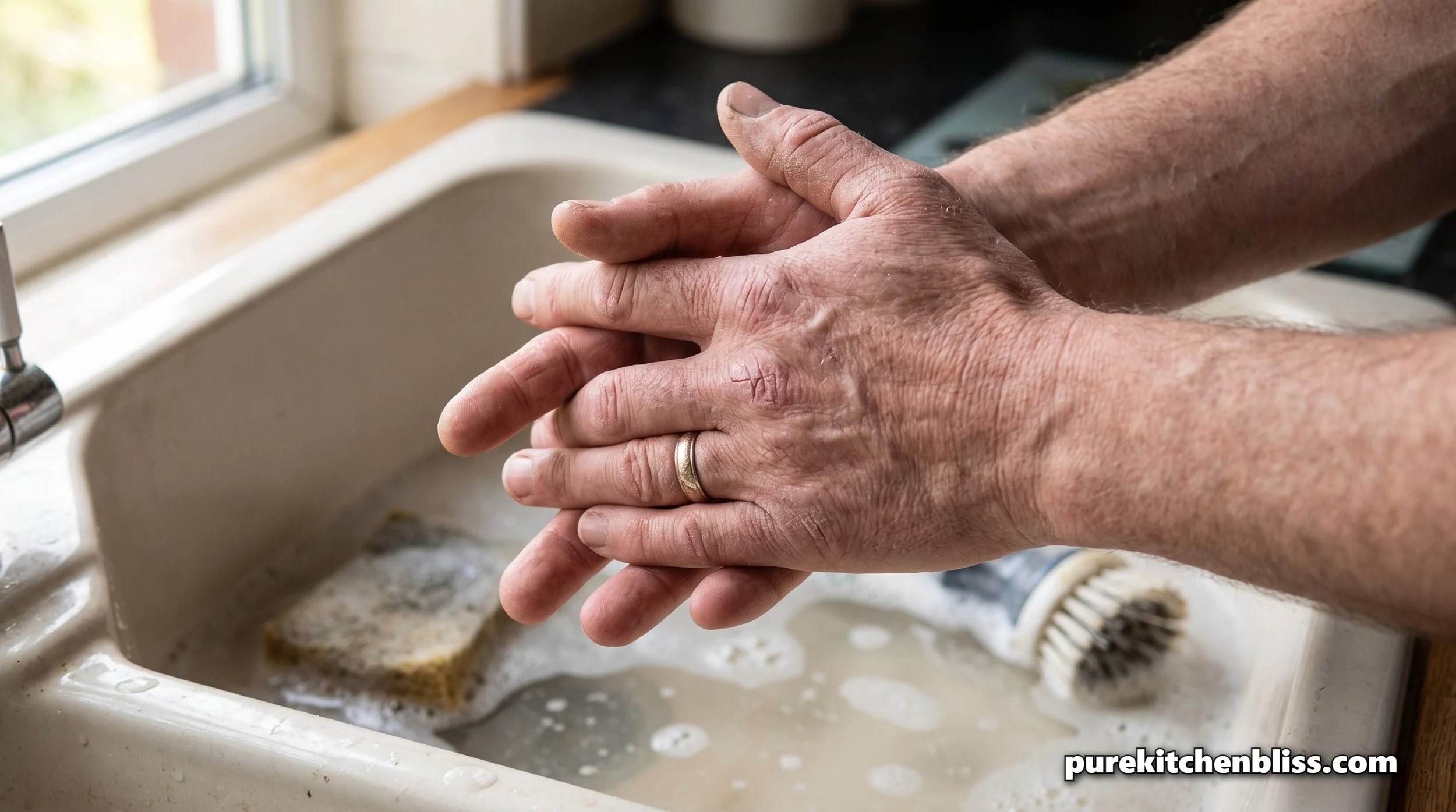
Why fall specifically makes this worse
Indoor heating is the biggest seasonal factor most people don't think about. Furnaces and forced-air heat pull humidity out of indoor air far more aggressively than most people realize, and indoor relative humidity in a heated home during winter can drop to levels closer to a desert than what your skin experienced all summer. That drier ambient air means your skin is already losing moisture to the environment before you've even turned on the tap, so any additional stripping from dishwashing has less of a reserve to work against. This is worth understanding as a carpenter too, since the same forced-air systems that dry out skin also dry out wood trim and cabinetry throughout a home over a heating season, which is part of why a lot of interior wood damage shows up disproportionately in winter and early spring rather than any other time of year.
The dishwashing itself also genuinely increases in fall and winter. Soups, stews, roasts, and baked goods mean more pots, more mixing bowls, and more hands-in-the-sink time than the salads and grilled meals that dominate summer cooking. On top of that, cold and flu season drives more frequent hand washing throughout the day, each instance stripping a little more of the same protective barrier that dishwashing is already working against. None of these factors alone would be a big deal, but stacked together across a normal fall week, they add up to a meaningfully harder environment for your hands than any other season delivers.
I notice this most directly moving between the shop and the kitchen on a typical fall Saturday, sanding and handling wood pulls moisture out of skin in its own way, and by the time I'm at the sink doing dinner dishes that evening, my hands are already starting from a depleted baseline before the dish soap even touches them. If your fall routine involves any combination of yard work, more frequent hand washing, and more time at the sink, you're likely stacking the same combination of stressors without necessarily connecting them to a single seasonal pattern.
What's actually happening to your skin barrier
Your skin's outer barrier works on what dermatologists describe as a brick and mortar structure, protein-filled cells acting as the bricks, held together by a lipid layer acting as the mortar. That lipid mortar is what actually keeps water in and irritants out, and it's precisely what dish soap is engineered to dissolve, since the same surfactant chemistry that breaks down grease on a dinner plate doesn't distinguish between food residue and the natural oils on your hands. Sodium lauryl sulfate, a common ingredient in dish soap, is such a reliable, well-documented skin irritant that researchers actually use it as a positive control in dermatological testing, meaning when a study needs a substance guaranteed to irritate skin for comparison purposes, SLS is the standard choice.
Once that lipid mortar is compromised, the damage compounds rather than staying static. Skin that's already lost some of its barrier function loses moisture faster on the next exposure, which is why hands that start the fall in decent shape can deteriorate noticeably within a few weeks of daily dishwashing without any real recovery time in between. Left unaddressed, this progression moves from a persistent tight, rough feeling to visible flaking, then to redness and, in more serious cases, to actual cracks and fissures at the knuckles, which are both painful and slower to heal since they keep reopening with every subsequent exposure to soap and water.
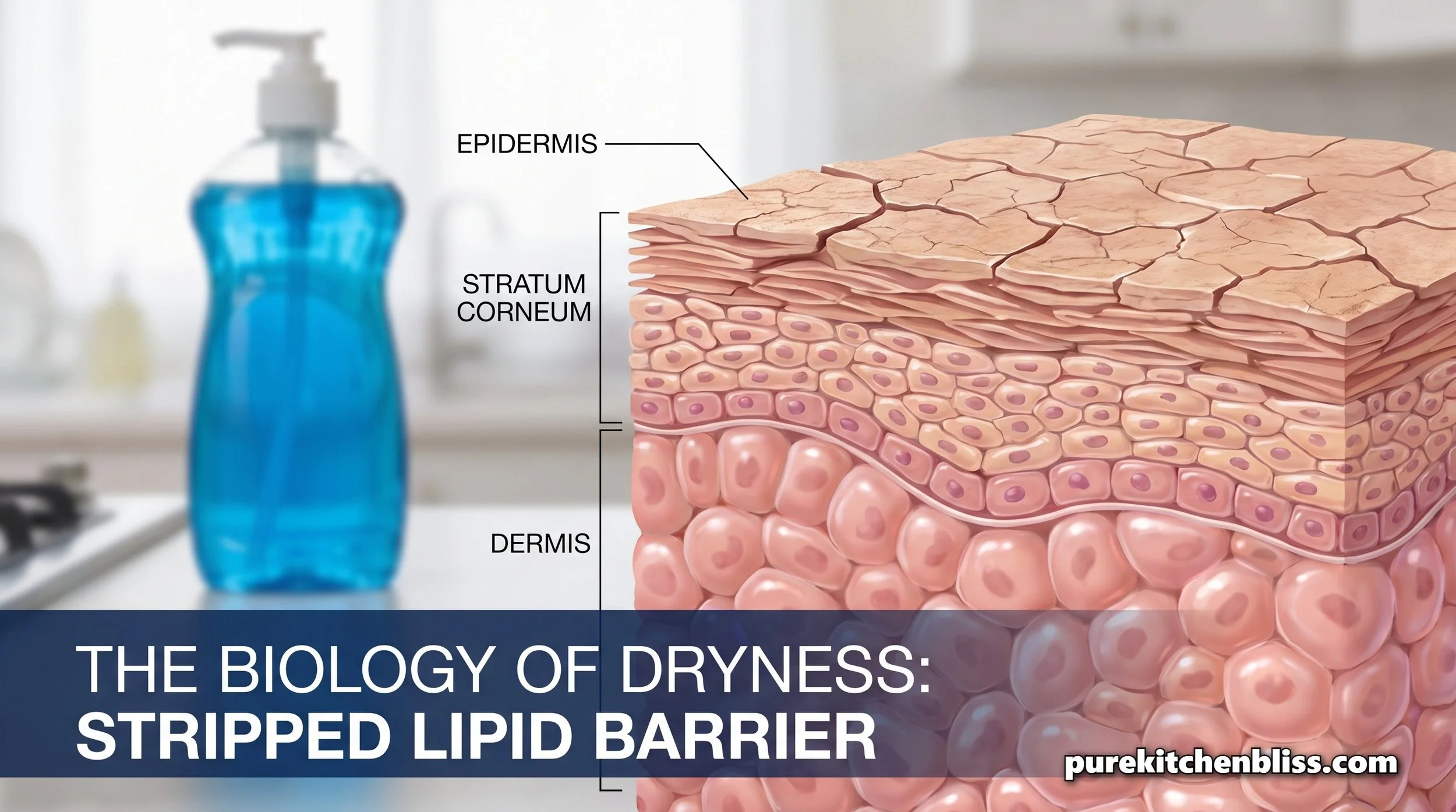
The hot water habit that's working against you
Hot water feels like it should clean better, and for genuinely greasy pots and cutting boards that need sanitizing, there's some truth to that. But for the vast majority of everyday dishes, warm water cleans just as effectively as hot, and the temperature difference matters far more for your skin than it does for the dishes themselves. Heat accelerates the same oil-stripping process that surfactants are already doing, so combining hot water with dish soap is close to the worst-case combination for your skin barrier, two separate mechanisms working against the same lipid layer at the same time.
A practical adjustment that costs nothing and requires no new products is simply running your dishwater warm instead of hot for routine dishes, reserving genuinely hot water for the specific situations where sanitizing actually matters, a cutting board that handled raw meat, or cookware with baked-on grease that needs the extra heat to break down. This single change alone reduces the cumulative stress on your hands across a normal week of dishwashing without changing anything else about your routine.
Gloves are the fix most people skip, and the material actually matters
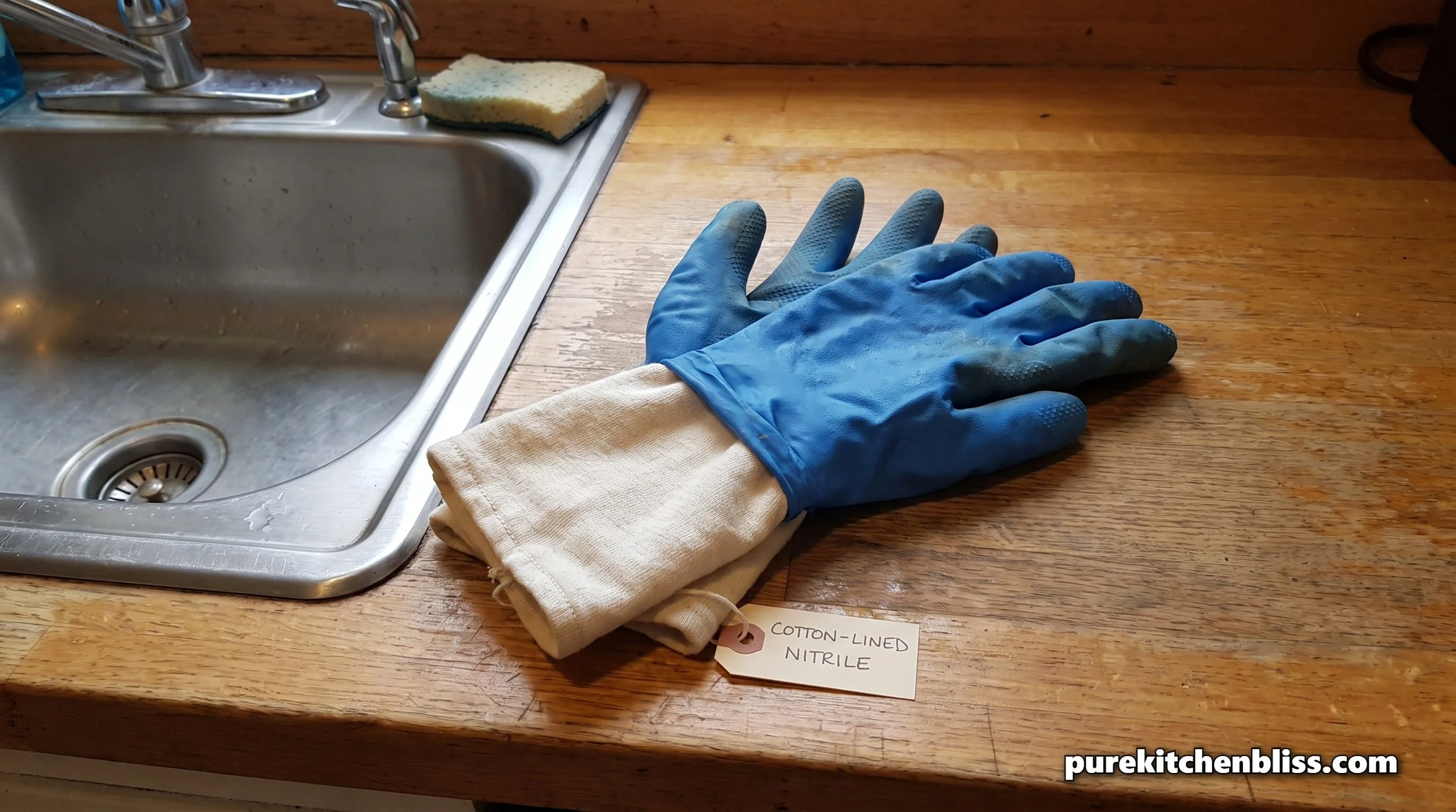
Wearing gloves for dishes keeps soap and hot water off your skin entirely, which is more effective than any moisturizer applied after the fact, since it prevents the damage rather than trying to repair it afterward. The material choice matters more than people assume. Latex gloves work but carry a real allergy risk for some people and tend to degrade faster with repeated exposure to hot water and detergent. Nitrile gloves are the more durable, allergy-friendly option for most households, resistant to a wider range of chemicals and less prone to breaking down over repeated use than latex.
The detail that actually makes gloves usable long-term, rather than something you try once and abandon, is a thin cotton liner underneath. Bare rubber or nitrile against skin traps sweat, which creates its own moisture and irritation problem inside the glove, especially during longer dishwashing sessions after a big fall meal. A cotton liner absorbs that sweat and adds a layer of comfort that makes the difference between gloves you actually reach for every time and gloves that end up forgotten in a drawer after the first sweaty, uncomfortable attempt.
What to actually put on your hands afterward, and what the soap is made of
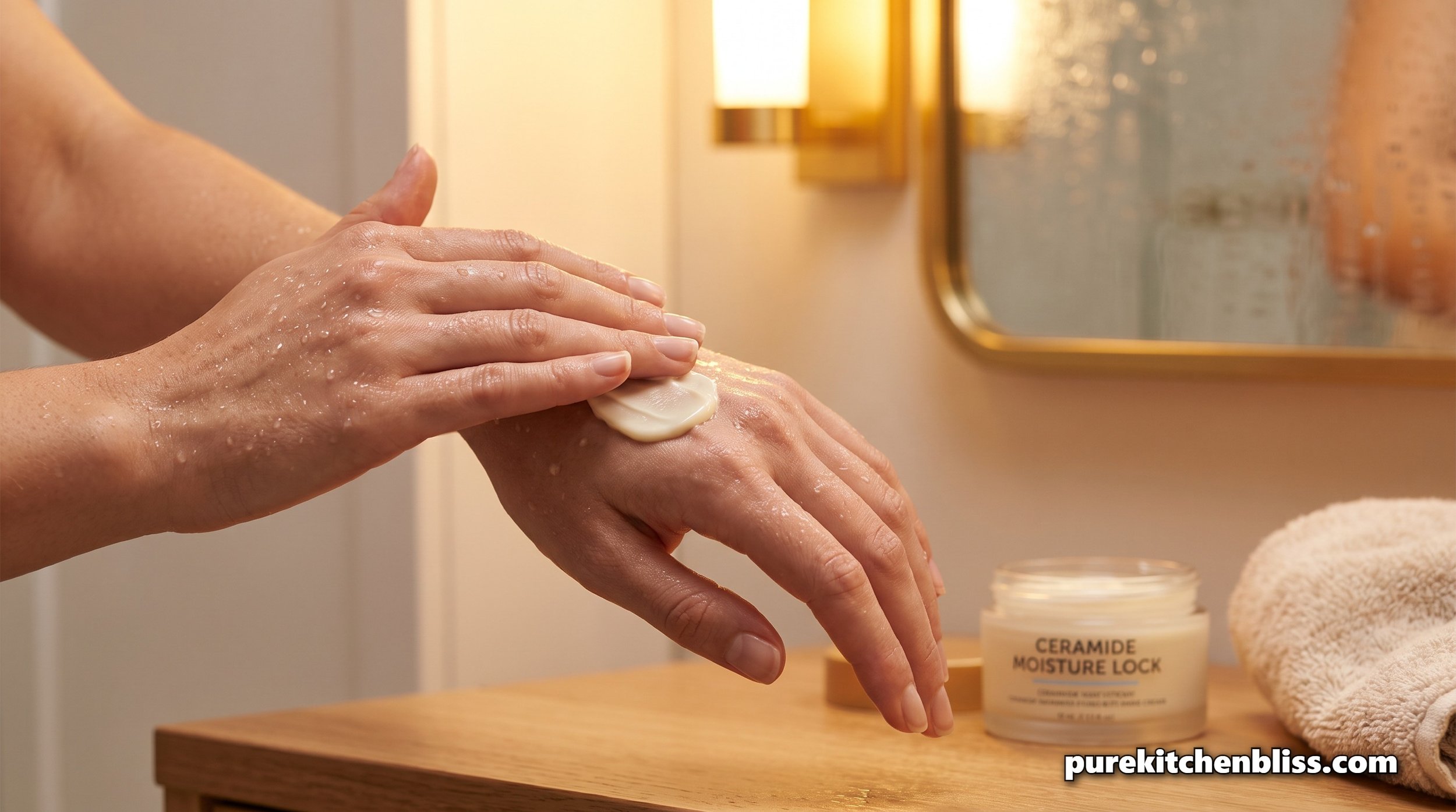
Not all hand creams are doing the same job, and a lot of what's marketed as "natural" or "moisturizing" skips the ingredients that actually rebuild a damaged lipid barrier. Ceramides, ingredients that are structurally similar to the lipids naturally present in your skin's own barrier, are one of the more evidence-backed additions, since they directly replace what dishwashing strips away rather than just sitting on top of the skin. Glycerin functions as a humectant, drawing moisture into the skin and helping form a protective layer against the next round of hot water and detergent, which is part of why it shows up in more thoughtfully formulated dish soaps as well as hand creams. Timing matters as much as the product itself, applying cream to hands that are still slightly damp after drying, rather than fully dry, helps trap some of that surface moisture under the cream rather than letting it evaporate first.
The dish soap formula itself is worth reconsidering too, not just what you put on afterward. Plant-derived, coconut-based surfactants like coco-betaine and sodium cocoate cut grease effectively while being measurably gentler on skin than sodium lauryl sulfate, and switching formulas is a change you make once rather than a habit you have to remember every time you're at the sink. Fragrance is worth a second look too, since "fragrance" on an ingredient label can represent dozens of undisclosed chemical compounds, some of which are known skin irritants in their own right, adding another layer of stress to a barrier that's already working overtime during dishwashing season. If you're already thinking about non-toxic, ingredient-conscious skincare in general, our sister site's guide to natural bath products for sensitive skin covers the same ingredient-level thinking applied to body care more broadly, and a lot of the same barrier-repair logic carries directly over to hand care specifically.
| Look for | Why it helps | Avoid |
|---|---|---|
| Coco-betaine, sodium cocoate | Plant-derived surfactants, gentler than SLS | Sodium lauryl sulfate (SLS) |
| Ceramides | Directly replaces stripped skin lipids | Creams with fragrance as a main selling point |
| Glycerin | Humectant, draws in and holds moisture | Undisclosed "fragrance" blends |
| Fragrance-free formulas | Removes a common secondary irritant | Alcohol-heavy hand sanitizers as a daily habit |
If you went through our guide on how often you should wash your hands while cooking, the same logic applies here in reverse, the goal isn't washing your hands less, it's making sure what's actually touching your skin during all that necessary washing isn't working against you unnecessarily. And if you're rethinking cleaning products in the kitchen more broadly this season, our guide to swapping out harsh kitchen chemical products covers several related ingredient swaps beyond just dish soap specifically.
What I actually use
For gloves, a pair of cotton-lined nitrile gloves has genuinely changed whether I reach for gloves at all during a normal dishwashing session, since the sweat problem that made bare rubber gloves miserable is basically solved by the liner. For the actual dish soap, I switched to a plant-based, fragrance-free dish soap built around coconut-derived surfactants rather than SLS, and it cuts grease just as well as what I used before while being noticeably less harsh across a week of daily use. For recovery, a ceramide-based hand cream kept right by the sink means the moisturizing step actually happens immediately after drying rather than getting skipped because the cream is in a different room. If your whole house runs dry through the heating season, a humidifier addresses the ambient air side of this rather than just the dishwashing side, and it's worth considering if dry skin shows up in more places than just your hands once the furnace kicks on for the season.
What this actually comes down to
Dry, cracked hands in the fall aren't an inevitable cost of the season, they're the predictable result of hot water, harsh surfactants, and increased hand washing all stacking on top of each other during exactly the months when your skin has the least reserve to work with. Warm water instead of hot, cotton-lined gloves you'll actually wear, a gentler dish soap formula, and a ceramide-based cream applied while hands are still damp address the actual mechanism rather than just papering over the symptoms. None of it requires an overhaul of your kitchen routine, just a few specific swaps that target where the damage is actually coming from.