Where to Put Your Kitchen Fire Extinguisher (And Why Your Smoke Alarm Battery Matters More Than You Think)
Transparency Note: We independently select these products based on research and user reviews. If you buy something through our links, we may earn a commission.
Most kitchens have a fire extinguisher tucked into a cabinet somewhere and a smoke alarm on the ceiling nobody's touched since the day it went up. Both feel like the kind of thing you buy once and forget about, and that's exactly the problem. An extinguisher in the wrong spot can be genuinely unreachable during an actual fire, and a smoke alarm with a dead battery is, statistically, worse than useless, it gives a false sense of coverage that isn't actually there.
Neither of these takes more than a few minutes to get right, but the details matter more than most people assume. Here's where each one actually belongs in a kitchen, why the placement logic isn't obvious, and the maintenance schedule that determines whether either one works when it counts.
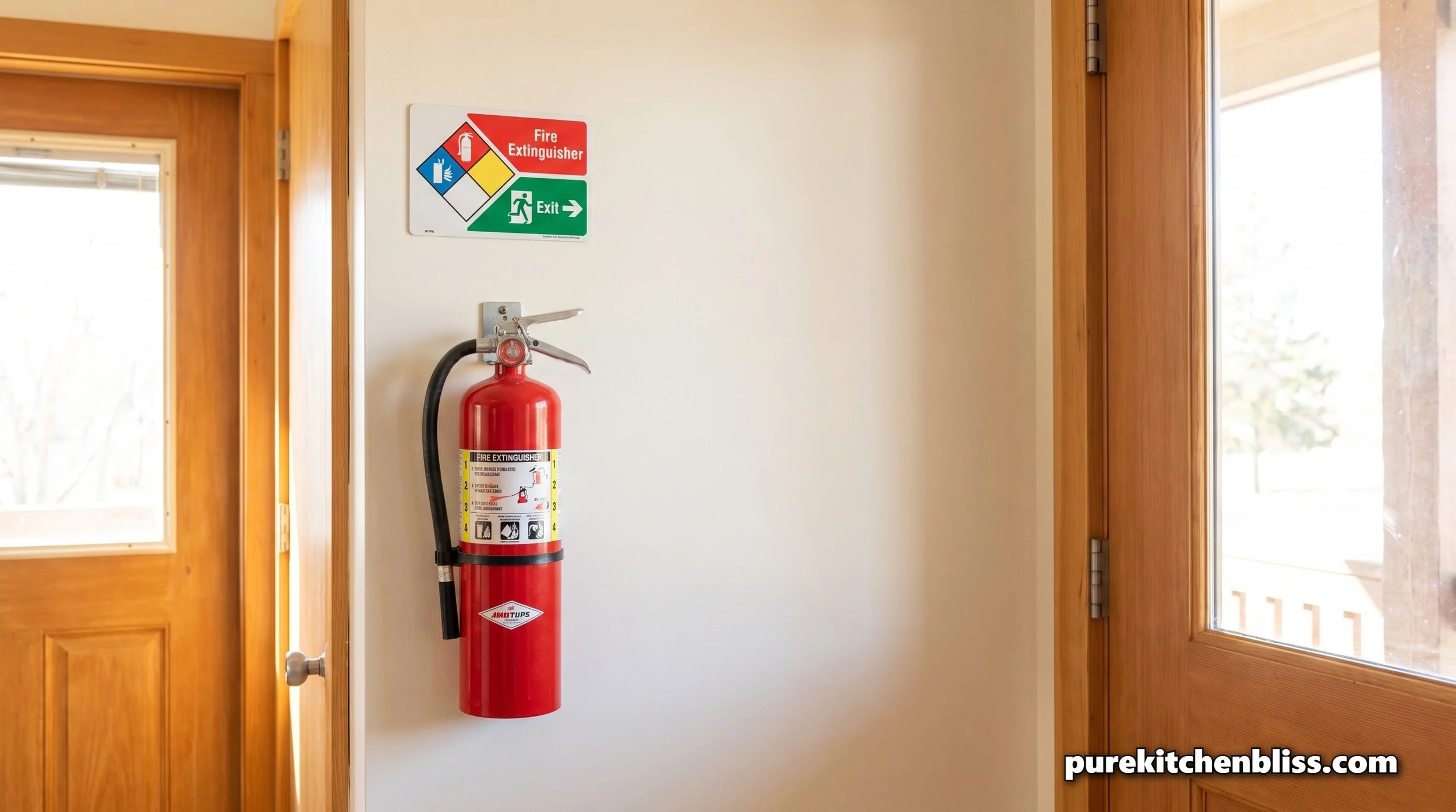
Why placement matters more than just owning one
The instinct most people have is to mount an extinguisher as close to the stove as possible, on the theory that a stove fire is exactly what it's for. That instinct is backwards. When a stovetop fire erupts, especially a grease fire, it can spread fast enough that the wall directly behind or beside the stove becomes inaccessible within seconds, flames, heat, and smoke cutting off exactly the spot where the extinguisher was mounted. The correct placement is near the kitchen's exit doorway instead, somewhere you'd naturally pass on the way out, which lets you grab it while keeping your route to the door open rather than putting yourself between the fire and the only way out.
This matters more today than it did a generation ago. Fire researchers have documented that the average time from ignition to flashover, the point where an entire room ignites at once, has dropped from roughly 17 minutes in homes built in the 1970s to as little as three to five minutes in a modern home, driven mostly by synthetic materials in furniture and cabinetry that burn faster and hotter than the natural materials common decades ago. That shrinking window is the whole argument for exit-adjacent placement over stove-adjacent placement, you genuinely may not have time to walk past an active fire to reach an extinguisher mounted on the wrong wall.
The right type for a home kitchen
Commercial kitchens are required to carry a dedicated Class K wet-chemical extinguisher for grease fires, since standard extinguishing agents can actually make a hot oil fire worse by causing violent splattering. Most home kitchens don't reach that requirement, but the underlying warning still applies at home, never use water on a grease fire, it will cause the burning oil to splash and spread rather than putting it out. For a standard home kitchen, a multipurpose ABC extinguisher rated 2-A:10-B:C is the common, sufficient standard, it covers ordinary combustibles, flammable liquids, and electrical fires, which together account for the range of things that actually catch fire in a typical home. If your kitchen sees heavy grease-based cooking, deep frying regularly, or you simply want the added margin, a smaller kitchen-specific unit rated for grease and electrical fires, sold as a compact "kitchen extinguisher," is worth the extra cost as a second unit rather than a replacement for the general-purpose one.
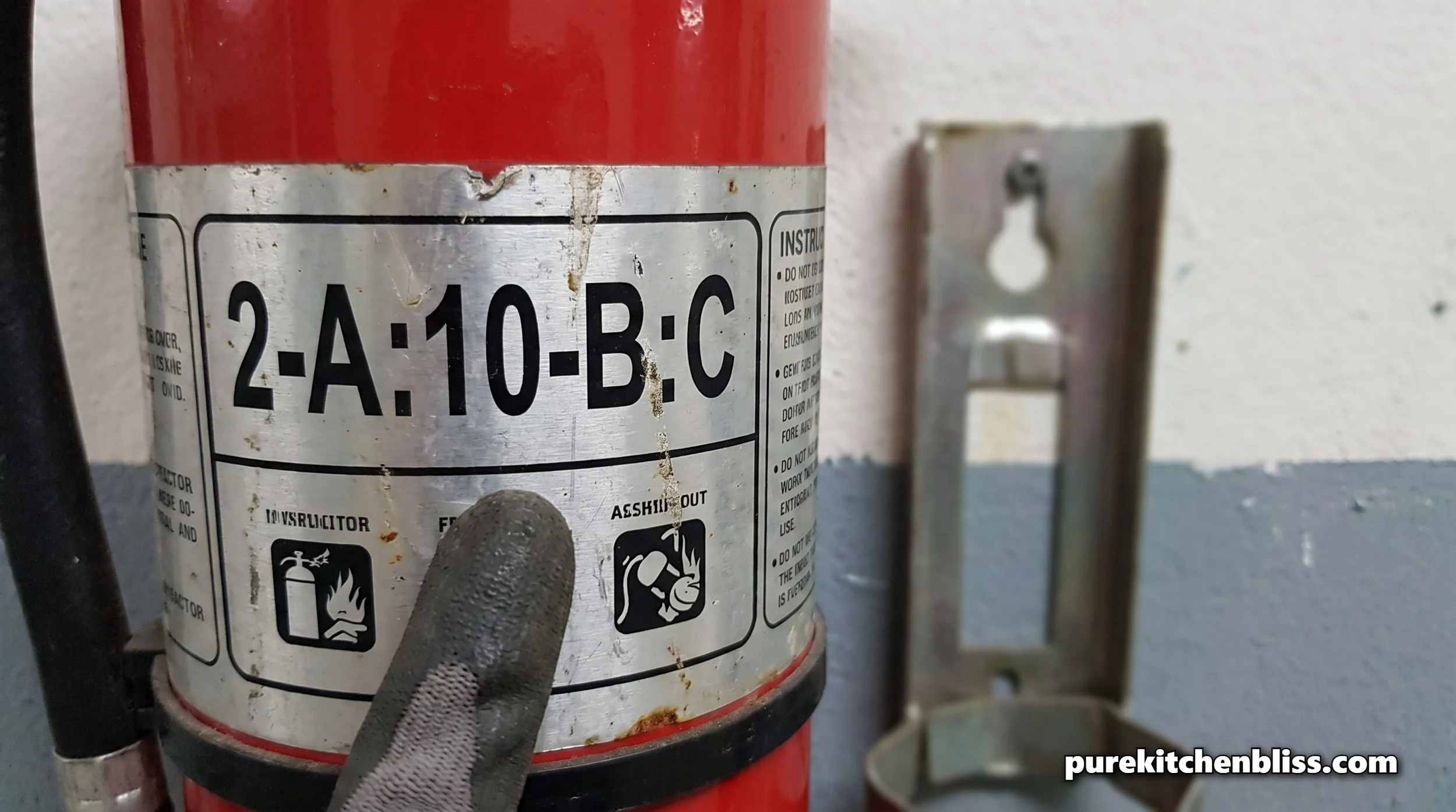
Mounting height and the check that takes thirty seconds
NFPA guidance caps extinguisher mounting height at five feet from the floor to the top of the unit, a limit that also happens to satisfy ADA reach requirements for someone using a wheelchair. Mount it lower rather than higher if you're unsure, an extinguisher that's technically reachable but awkward to grab in a panic isn't meaningfully better than one that's out of reach entirely. Keep the area directly in front of it clear too, a common failure point in both homes and commercial kitchens is an extinguisher blocked by a trash can, a stack of storage bins, or a cabinet door that swings into its path.
A monthly visual check takes under a minute and catches most of the ways an extinguisher fails silently, confirm the pressure gauge needle sits in the green zone, check that the pin and tamper seal are both intact, and make sure nothing's been stacked in front of it since the last check. Disposable home extinguishers are generally rated for about 12 years of service life, after which the unit should be replaced entirely rather than serviced, since the internal pressurizing agent degrades over that span regardless of how well it's been stored.
The smoke alarm failure nobody expects
Roughly three out of five home fire deaths occur in homes with either no smoke alarm at all or one that wasn't working at the time, according to NFPA research, and the overwhelming majority of those non-working alarms failed because of a missing, dead, or disconnected battery rather than a defective unit. That statistic is genuinely sobering once you sit with it, the alarm itself almost always works fine, it's the maintenance that gets skipped.
This is exactly the kind of thing that's easy to fold into an existing habit rather than treating as its own separate task. If you're already running a weekly kitchen reset, adding a quick alarm test button press to that same routine costs almost nothing and means it never falls off your radar the way a once-a-year reminder easily can.
Battery types and the replacement schedule people get wrong
Test every smoke alarm monthly using the test button, this confirms the alarm and the battery are both functioning, not just that the unit is physically mounted and powered. For a traditional battery-powered alarm, replace the battery every six months, or immediately if you hear a periodic chirp, which signals a low battery specifically and isn't something to ignore or mute by pulling the battery out entirely. A useful memory trick some fire departments recommend is tying battery changes to a recurring calendar event you already track, since "every six months" is easy to lose track of otherwise.
Sealed, 10-year lithium battery alarms sidestep this maintenance entirely, the battery is built in and rated to last the full lifespan of the unit, with no periodic swap required. Regardless of battery type, the alarm unit itself needs full replacement at 10 years, sensor components degrade with age in ways a fresh battery can't fix, and a 10-year-old alarm with a brand new battery is still an alarm running on aging, less reliable sensors.
Where alarms actually belong in a kitchen
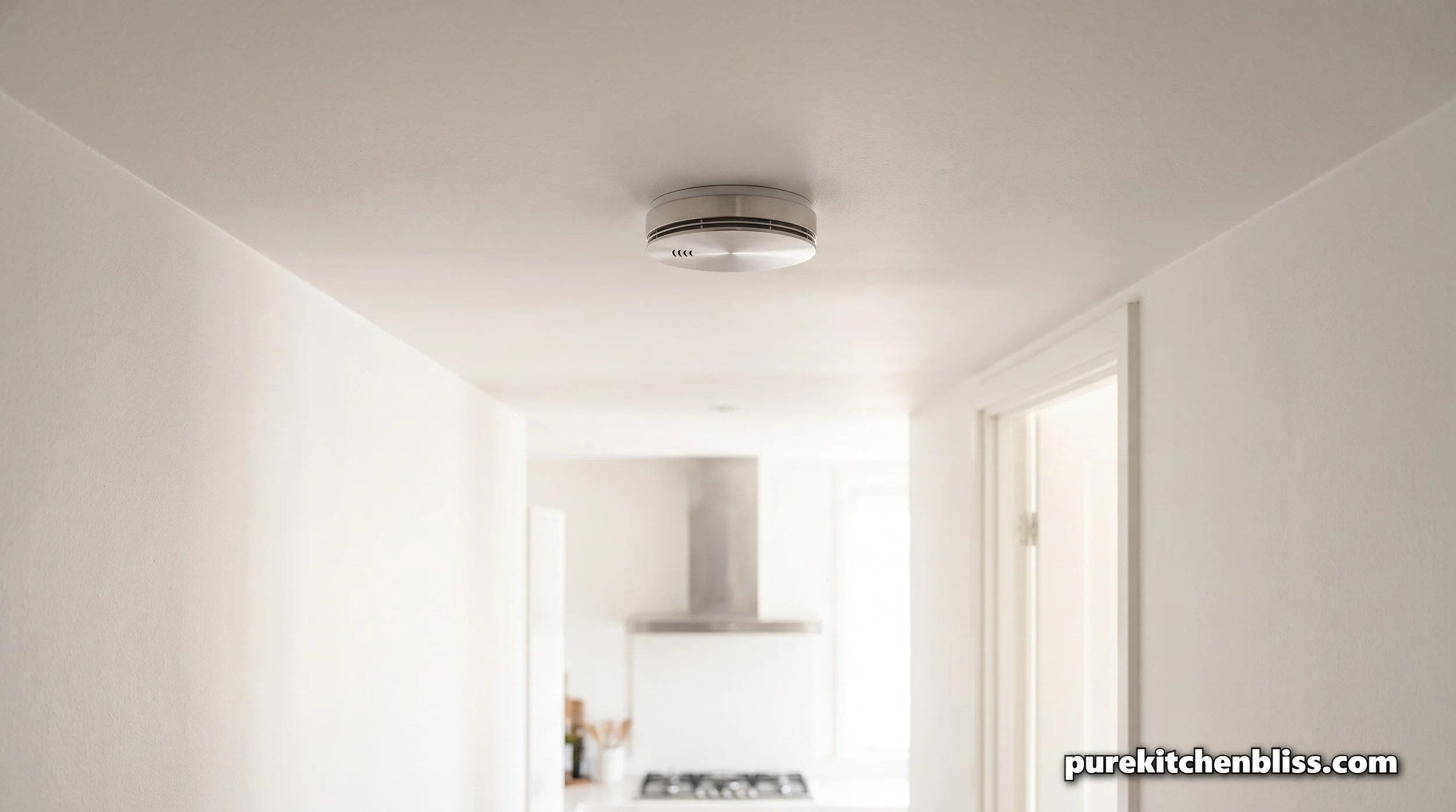
A smoke alarm mounted too close to cooking equipment produces enough false alarms from normal cooking that people start disabling it or ignoring it entirely, which defeats the purpose. NFPA guidance is specific here, keep any smoke alarm at least 10 feet from cooking appliances to avoid nuisance triggers from everyday cooking steam and smoke. That doesn't mean skipping alarm coverage near the kitchen, it means placing one in an adjacent hallway or open living space rather than directly over the stove, alongside the alarms already required inside every bedroom and outside each sleeping area on every level of the home.
Mounting position matters too. Ceiling-mounted units should sit in the middle of the ceiling where possible, and if that's not achievable, a wall mount needs to sit at least three feet from any corner and within 12 inches of the ceiling, since smoke rises and pools at the ceiling line first. Keep alarms away from air vents and ceiling fans as well, moving air can push smoke away from the sensor before it has a chance to trigger.
What I actually keep in this house
We keep a 2-A:10-B:C rated fire extinguisher mounted near our kitchen's side exit rather than anywhere close to the stove, along with a wall mounting bracket set at a height every kid old enough to help in an emergency could actually reach if needed. For smoke coverage, we've switched over to 10-year sealed battery alarms throughout the house specifically to remove the twice-a-year battery task from the list of things that can quietly slip. In the hallway just outside the kitchen, we run a combination smoke and carbon monoxide alarm, since that hallway also sits near our gas water heater, and covering both hazards with one unit in the right spot beats mounting two separate devices.
| Item | Correct placement | Maintenance schedule |
|---|---|---|
| Fire extinguisher (2-A:10-B:C) | Near the kitchen exit, not over the stove; below 5 ft, unobstructed | Monthly gauge/pin check; replace at ~12 years |
| Traditional battery smoke alarm | 10+ ft from cooking appliances; ceiling center or 3 ft from a corner | Test monthly; battery every 6 months or at chirp; replace unit at 10 years |
| 10-year sealed battery alarm | Same as above | Test monthly; no battery swaps; replace unit at 10 years |
| Combo smoke/CO alarm | Near gas appliances or attached garages, same distance rules apply | Test monthly; same battery/replacement rules |
What this actually comes down to
Owning a fire extinguisher and a smoke alarm isn't the same as having working ones. Mount the extinguisher near an exit rather than the stove, keep it below five feet with a clear path in front, and check the gauge monthly. Keep smoke alarms at least 10 feet from cooking equipment, test them monthly, and either commit to a real battery schedule or switch to sealed 10-year units so the maintenance stops being something that has to be remembered. Neither of these takes real effort once it's set up correctly, the risk is entirely in the setup being wrong in the first place and nobody noticing until it matters.