The Dye-Free Halloween Candy Guide
Transparency Note: We independently select these products based on research and user reviews. If you buy something through our links, we may earn a commission.
My wife started reading candy ingredient lists a few years back after one of our kids had a rough week that seemed to track with a stretch of birthday parties and school treats. We never got a clean answer on cause and effect, kids are messy variables, but it got both of us actually looking at labels instead of just grabbing whatever was on sale before Halloween. What I found looking into it more seriously is that the regulatory picture is genuinely shifting right now, just not as fast or as completely as a lot of headlines suggest.
This isn't an anti-candy article. My kids eat candy on Halloween like every other kid in the neighborhood. It's a guide to what's actually changing in the candy aisle, which common treats still carry synthetic dyes, what the science behind the concern actually says, and how to build one dye-free option into your bowl without making it a whole project.
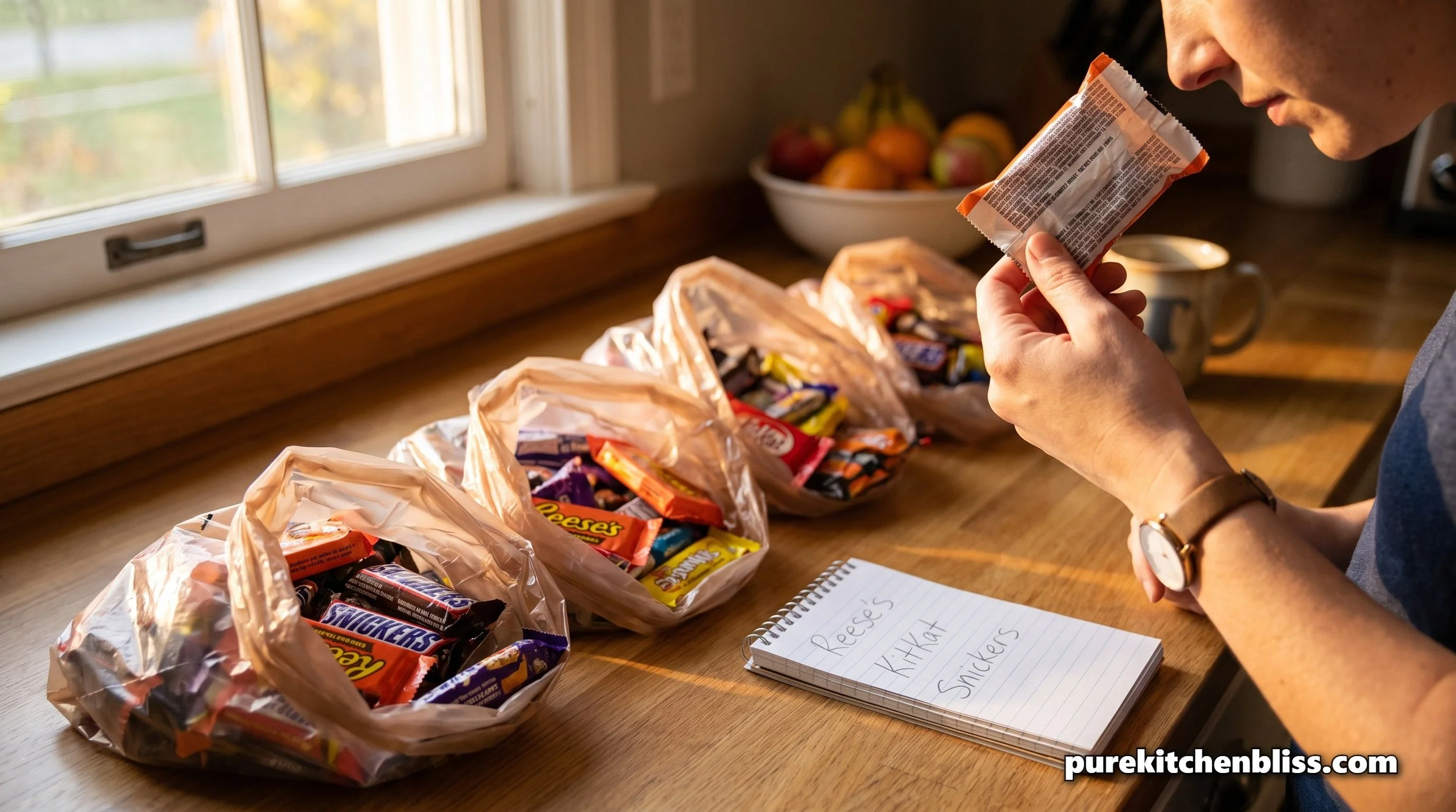
What the FDA has actually done, and what's still voluntary
In January 2025, the FDA revoked authorization for Red No. 3, also called erythrosine, in food and ingested drugs, citing the Delaney Clause, a provision in the Federal Food, Drug, and Cosmetic Act that requires the agency to ban any additive shown to cause cancer in humans or animals. The dye had already been barred from cosmetics since 1990 over the same underlying rat study, but it stayed legal in food for another three and a half decades until a 2022 petition forced the agency's hand. Food manufacturers have until January 2027 to reformulate. That part is a binding rule, not a suggestion, and products still containing Red 3 after that date are subject to FDA enforcement.
Where it gets more confusing is the other six synthetic dyes people hear about most, Red 40, Yellow 5, Yellow 6, Blue 1, Blue 2, and Green 3. In April 2025, HHS Secretary Robert F. Kennedy Jr. and FDA Commissioner Marty Makary announced a plan asking industry to voluntarily phase these out of the food supply, with a target date that has been reported as both end of 2026 and end of 2027 depending on the source, since the FDA's own tracking page and industry commitments haven't fully aligned. Either way, this is a request the agency is monitoring, not a formal ban with a hard enforcement date the way Red 3 has.
A handful of states have gone further on their own. West Virginia passed a law in March 2025 banning all seven of these dyes from school meals starting August 2025, and from all food sold statewide by January 2028, the first state to legislate a direct ban rather than wait on federal action. More than 75 similar bills have been introduced across other states as of early 2026, though most haven't passed yet. So depending on where you live and which brand you're holding, the actual legal status of the dye in your kid's candy bag varies more than most people assume, and it's genuinely still in motion.
Which common Halloween candies still use synthetic dyes
Red 40 alone shows up on tens of thousands of indexed product labels, more than any other synthetic dye in the US food supply, and it's the one most often found in red or orange colored candy, including several Halloween staples that have been using the same formula for decades. Some major brands have started moving ahead of the federal deadline. Mars Wrigley announced dye-free versions of M&M's, Skittles, and Starburst rolling out through 2026, which is a meaningful shift given how much shelf space those three brands alone take up every October. But reformulation isn't universal yet, and older stock made under the original recipe is still sitting in stores and warehouses, so a bag on the shelf right now could be either version depending on when it was manufactured.
The only reliable way to know what's actually in the bag you're handing out, or the one your kid brought home, is to read the ingredient list rather than assume based on the brand name or packaging claims alone. A "naturally flavored" callout on the front of a bag says nothing about the coloring inside, and I've seen plenty of packaging that leads with one health claim while the dye is still listed three lines down in the ingredients.
What the health concern actually is, and isn't
It's worth being straight about the evidence here instead of overstating it, because the two dyes getting the most attention are backed by two different kinds of concern. Red 3 was banned specifically because of a cancer finding in lab rats at high doses. Some researchers argue that mechanism, a hormonal pathway specific to rat thyroid tissue, may not translate directly to human risk at typical food exposure levels, but the Delaney Clause doesn't give the FDA discretion to weigh that once a carcinogenicity finding exists. It's a legal trigger, not a judgment call the agency gets to make case by case.
For the other synthetic dyes, particularly Red 40, the concern driving the voluntary phase-out is centered more on behavior and attention in children, an area where the research is genuinely mixed rather than settled. Several studies going back decades have found associations between synthetic dye consumption and hyperactivity in some children, while other studies have found no consistent effect across broader populations. The EU already requires a warning label on foods containing Red 40 stating it "may have an adverse effect on activity and attention in children," which tells you where European regulators landed on the precautionary side of that question. The US scientific consensus hasn't reached the same settled conclusion, and reasonable people, including researchers who've spent careers on this, still disagree on how strong the effect actually is. I'd rather give you that accurate, still-debated picture than pretend the science is more settled than it is in either direction.
Building a dye-free option into your bowl
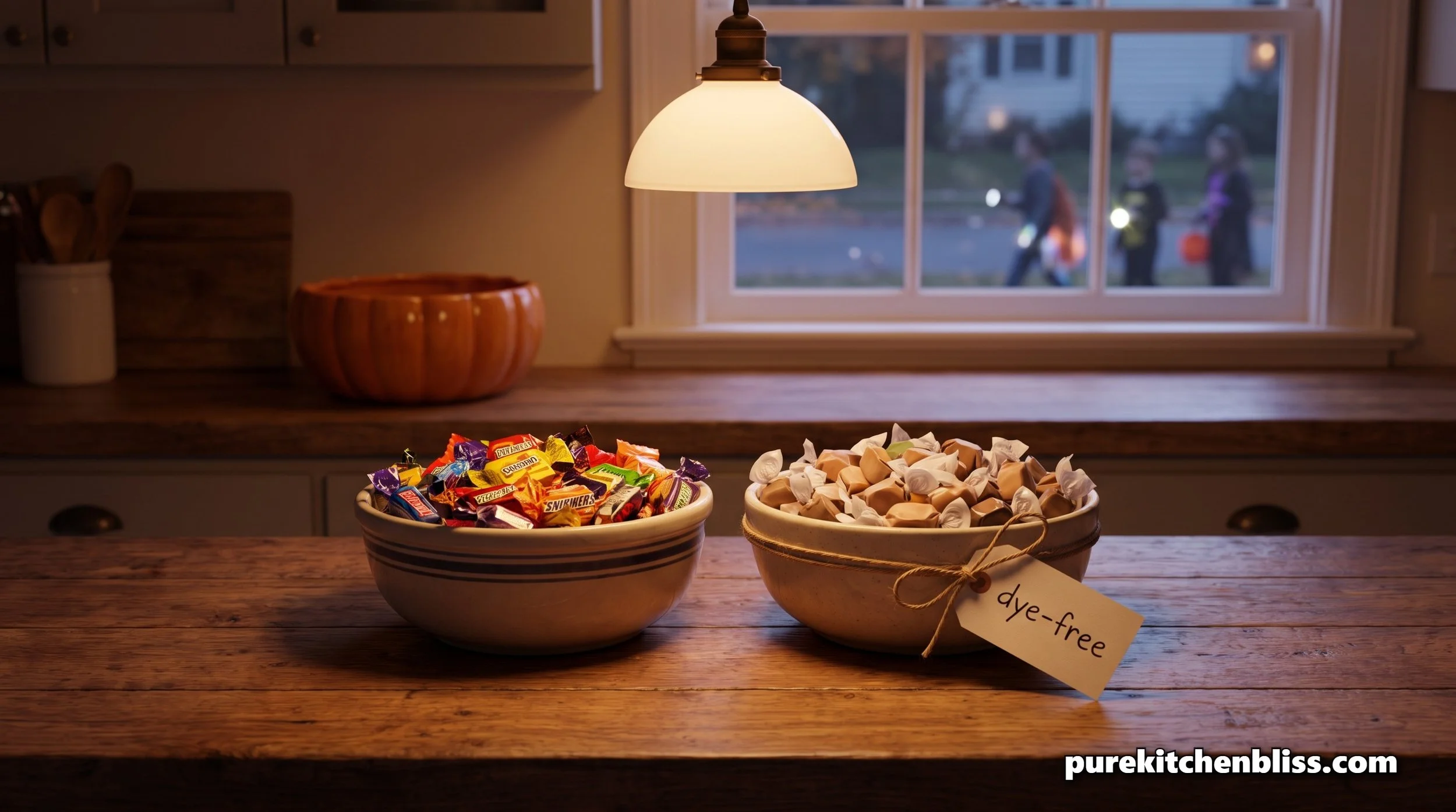
You don't need to swap your whole candy stash to make this manageable. What I do is keep one separate bowl or bin specifically for dye-free treats, so any kid who wants to avoid them, or any parent handing out candy who wants an option for their own kid, has one without turning the whole night into a sorting exercise at the door. A dye-free Halloween candy assortment makes this easy to stock without hunting down individual brands or checking a dozen ingredient lists yourself.
If you're also using this as a chance to sort through what your own kids bring home, our guide to inspecting and storing Halloween candy covers the same kind of dedicated bin approach for tampering and allergen checks, and the two systems work well stacked together, one pass for safety, one pass for ingredients.
If you're baking instead of buying
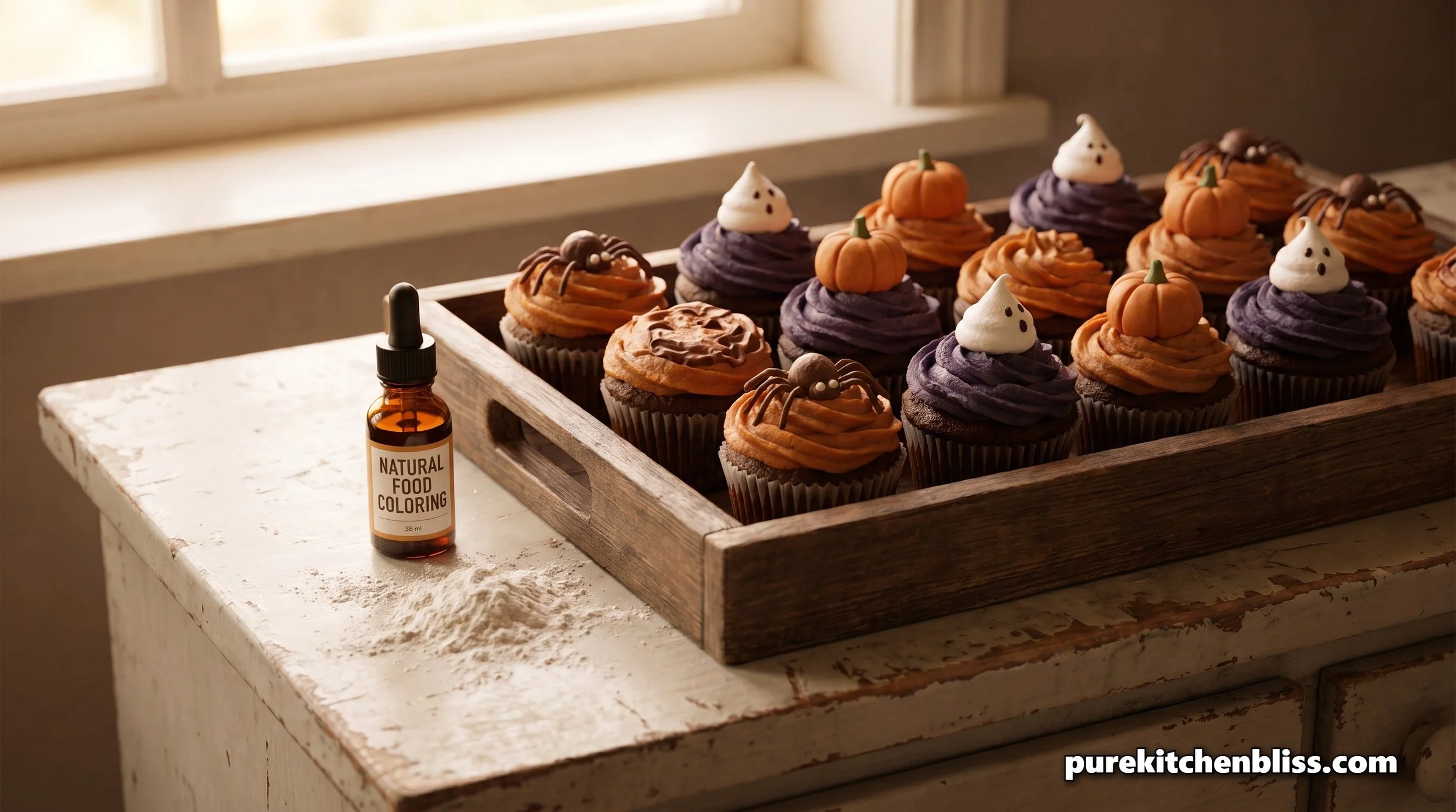
For any Halloween baking where you're adding color yourself, orange frosting, purple cupcakes, whatever the theme is that year, natural alternatives have gotten a lot better than the beet powder and turmeric workarounds people were stuck with a few years ago. A natural food coloring set made from vegetable and fruit concentrates gets close to the same vibrancy without a synthetic dye on the ingredient list, which matters more for baked goods than for store bought candy since you have full control over what goes into the batter or frosting in the first place.
If you're also rethinking what your kids' snack containers and dishware are made of while you're at it, our guide to non-toxic cookware and dishes for kids covers the material side of the same non-toxic living question, since dye exposure isn't the only ingredient-adjacent thing worth a second look in a kitchen full of kids.
A few things I'd skip worrying about
Not every dye-adjacent claim making the rounds this time of year holds up. Chocolate candy without bright coloring is generally a non-issue regardless of brand, since the concern is specific to the synthetic pigments, not chocolate itself. Natural color additives approved by the FDA in May 2025 as replacements aren't automatically safer just because they're labeled natural, some plant-derived colorants have their own allergen or sensitivity considerations, so a dye-free label isn't a blanket green light either. And a single Halloween night of dyed candy isn't going to undo anything about how a kid's diet looks the other 364 days of the year. The goal here is an informed choice, not a reason to feel like you failed at Halloween if half the bowl still has Red 40 in it.
Where I've landed on this
I'm not pulling my kids out of the Halloween candy economy over any of this. What's changed in our house is just a little more label reading, one dye-free option available for anyone who wants it, and paying attention to actual regulatory timelines instead of reacting to whatever claim is loudest online that week. The FDA's Red 3 rule is real and binding, with a firm 2027 date behind it. The rest, Red 40 and the five dyes tracking behind it, is still moving, voluntary rather than mandated, and probably worth another look once those later deadlines actually arrive and we see how much of the industry followed through.
| Dye | Also known as | Regulatory status | Common in |
|---|---|---|---|
| Red 3 | Erythrosine | Banned in food, effective Jan 2027 (FDA, Jan 2025) | Bright red candy, maraschino cherries, cake decorations |
| Red 40 | Allura Red AC | Voluntary phase-out requested (FDA/HHS, Apr 2025) | Most widely used red or orange candy dye in the US |
| Yellow 5 & 6 | Tartrazine, Sunset Yellow | Voluntary phase-out requested | Candy, cereal, snack foods |
| Blue 1 & 2 | Brilliant Blue, Indigotine | Voluntary phase-out requested | Blue and purple candy, beverages |
| Green 3 | Fast Green FCF | Voluntary phase-out requested | Green candy, some baked goods |