Transparency Note: We independently select these products based on research and user reviews. If you buy something through our links, we may earn a commission.
Between holiday cooking marathons and four kids constantly underfoot, I spend more hours standing on this kitchen floor than in almost any other room in the house, and for years I wore whatever sneakers were closest to the door without thinking about it. That changed after one too many close calls on a wet tile floor while carrying a pan. Slip resistance in footwear is an actual tested engineering standard, not a marketing word printed on a box, and the shoe you're standing in affects your traction, your fatigue level, and your lower back by the end of a long day far more than most people assume.
This isn't about fashion. It's about what a kitchen floor actually does to footwear over hours of standing, cooking, and cleanup, and which features on a shoe box are backed by a real standard versus which ones are just words.
Why slip resistance is a real certification, not marketing
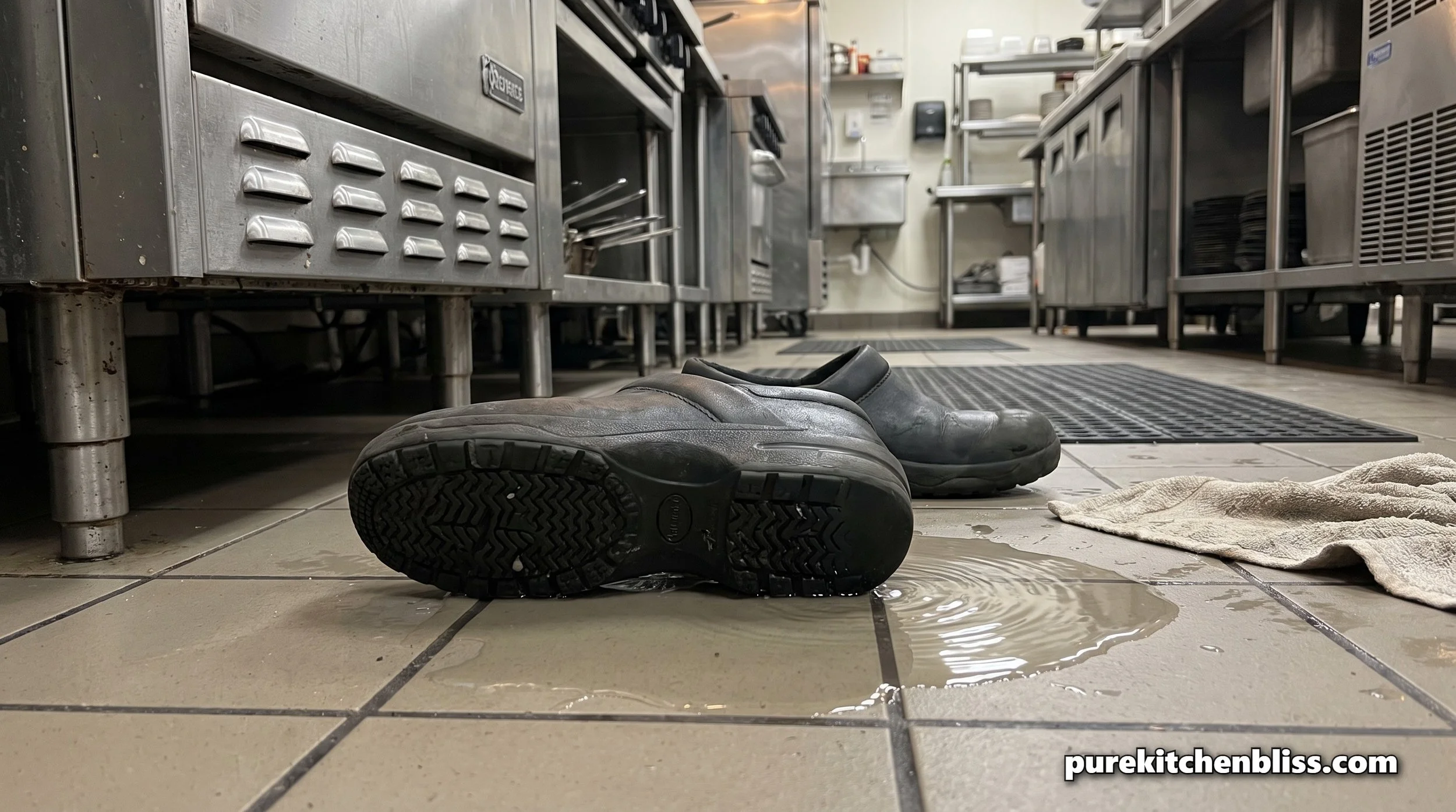
The number to actually look for is an ASTM F2913 rating, an independent laboratory standard that tests a shoe's outsole for traction specifically on wet and oily surfaces, the exact conditions a working kitchen floor produces constantly. A shoe that carries this certification has been measured, not just claimed, and it's the closest thing to an objective answer to "will this shoe actually keep me upright" that exists in footwear. Outsole tread pattern matters alongside the rating itself, deep, multi-directional grooves shed liquid and oil out from under the shoe as you walk, while a flat or shallow tread traps that same liquid as a thin film that acts almost like a lubricant between your foot and the floor.
This isn't just a professional kitchen concern. A home kitchen floor sees the same spills, the same grease, and the same wet spots a restaurant floor does, just at a smaller scale, and a pair of regular sneakers with worn-down tread offers meaningfully less protection than a certified pair once the floor gets wet or greasy.
What actually happens to your feet and back over a long cooking session
Standing on a hard floor for extended periods is genuinely demanding on the body, and the data backs up what most people who cook for a living already know from experience. Surveys of restaurant workers have found that a large majority experience some form of foot pain from the job, with a meaningful share reporting constant soreness or noticeable fatigue during a shift. Concrete and tile floors are unforgiving on the plantar fascia, the connective tissue running along the bottom of the foot, and a shoe without real cushioning or arch support puts that tissue under sustained stress for hours at a time.
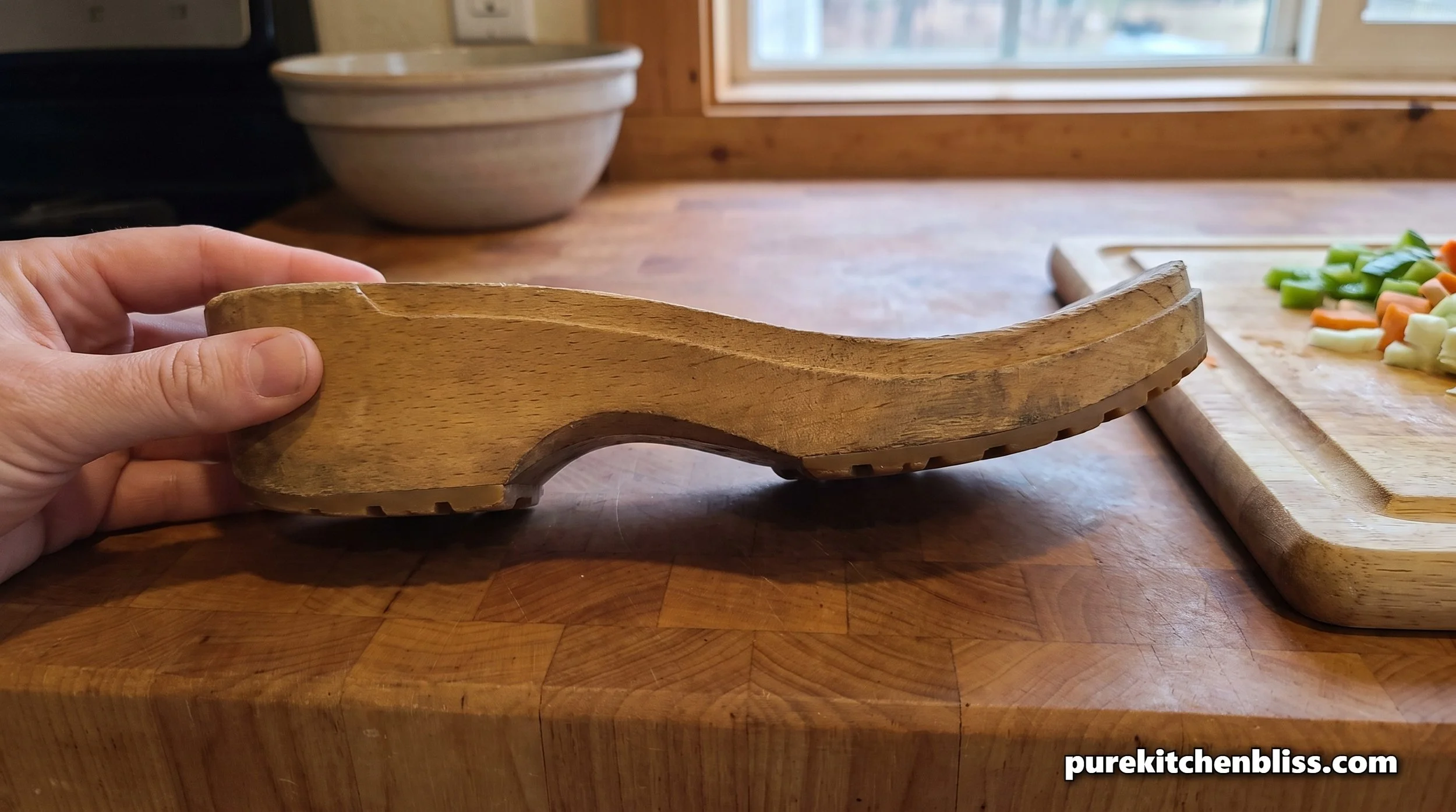
A rocker-bottom sole design, where the sole curves gently rather than sitting completely flat, encourages a natural rolling motion through each step rather than a flat, jarring heel-to-toe strike, and it's a feature genuinely worth seeking out if you're on your feet for multi-hour cooking sessions, holiday prep being the obvious example. It reduces cumulative impact in a way that adds up meaningfully by hour six or seven of a long cooking day.
Materials that actually hold up to a kitchen
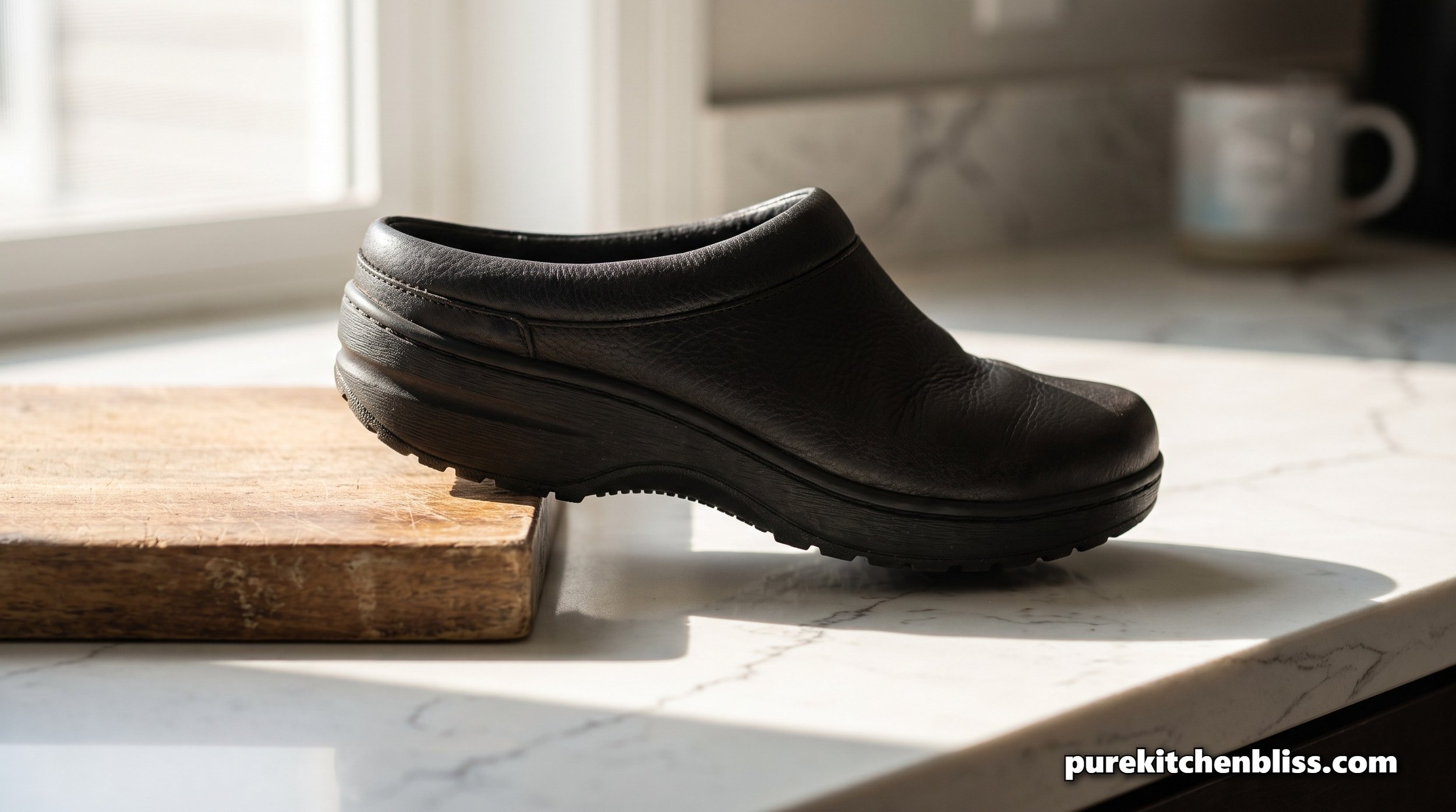
Seamless, non-porous uppers, whether synthetic leather or a one-piece molded material, resist absorbing grease and liquid in a way stitched fabric or mesh simply can't. That matters for two reasons, cleaning and odor. A shoe you can wipe down or rinse clean in seconds stays sanitary through repeated kitchen use, while porous canvas or mesh soaks up spills, traps moisture, and starts holding onto odor within weeks of regular wear. If you're cooking daily, this difference compounds fast, a wipeable shoe stays genuinely clean, while a mesh sneaker becomes something you're reluctant to wear indoors after a month of kitchen use.
Waterproofing is worth checking specifically if dishwashing or wet prep work is a regular part of your routine. A treated synthetic or leather upper keeps feet dry through normal splashing, though no shoe holds up to prolonged submersion, that's a different problem a shoe alone won't solve.
The support features actually worth paying for
A removable insole matters more than it sounds like it should, since it lets you swap in a custom orthotic if you need one, or simply replace a compressed, worn-out foam insert without replacing the whole shoe. Genuine arch support, not just a marketing claim but a shoe that actually holds its shape under your foot's weight after hours of use, is the single biggest factor in whether a shoe still feels supportive by the end of a long day or has gone flat and unsupportive by hour three. An enclosed toe with some impact protection is worth considering too, particularly if hot liquid or a dropped knife is a realistic risk in your kitchen, an open-toe sandal offers no protection against either.
What not to wear, even though it's tempting
Socks alone or slides offer essentially no protection against a dropped knife, hot spilled liquid, or a slick floor, and they're genuinely one of the more common causes of kitchen injuries that a proper shoe would have prevented entirely. Flip-flops carry the same problem plus a worse grip pattern, the flat, minimal tread does almost nothing against a wet floor. Worn-out sneakers are a quieter version of the same risk, tread that's visibly smooth from months of wear has lost most of its slip resistance regardless of what the shoe was rated for when new, which is why regularly inspecting your kitchen shoes for wear matters as much as the initial purchase decision.
Keeping your kitchen safe beyond just footwear
Good shoes reduce slip risk, but they're one piece of a broader kitchen safety picture, not the whole thing. If a slip does turn into a burn or a cut, having a properly stocked kit on hand makes a real difference, our kitchen first aid kit guide covers what actually belongs in it. And if you haven't thought through where your fire extinguisher and smoke alarms actually sit in relation to how you move through the kitchen, our kitchen fire safety guide covers that side of the room.
What I actually wear
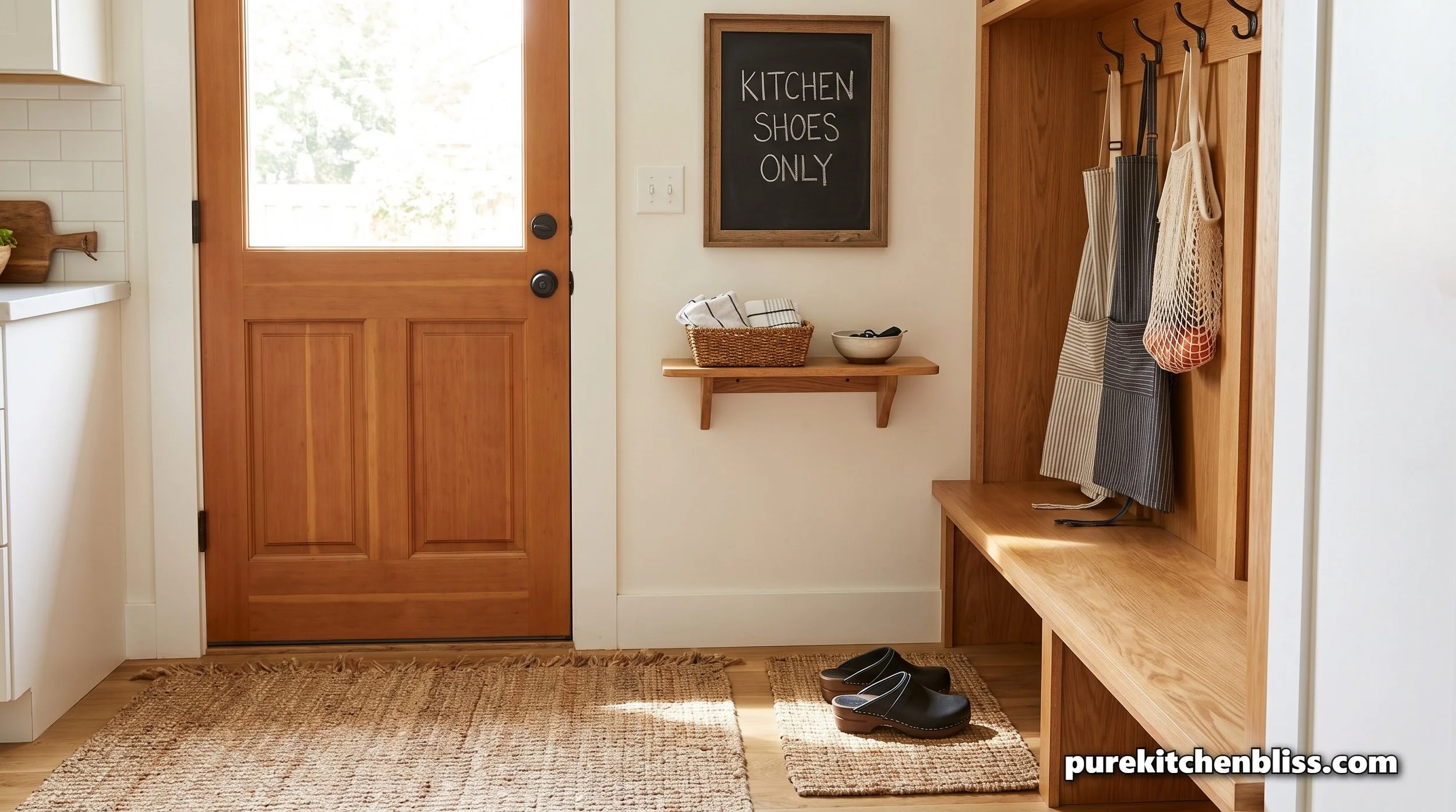
A pair of ASTM-certified slip-resistant clogs are what I reach for during any long cooking session, the rocker sole and removable insole genuinely make a difference by hour four or five. For a lighter-weight option that still carries a real slip rating, a pair of slip-resistant work sneakers works well for shorter kitchen stretches where a full clog feels like overkill. If your current shoes are otherwise fine but the stock insole has gone flat, a set of replacement arch-support insoles extends the life of a shoe you already like without buying new footwear entirely. And for the spot in front of the stove or sink where you stand the most, an anti-fatigue kitchen mat adds a meaningful layer of cushioning underfoot on top of whatever shoes you're wearing.
| Feature | What to look for | Why it matters |
|---|---|---|
| Slip resistance | ASTM F2913 rating, deep multi-directional tread | Independently tested on wet/oily surfaces |
| Sole shape | Rocker-bottom curve | Reduces cumulative impact over long standing sessions |
| Upper material | Seamless synthetic or treated leather | Wipeable, resists grease absorption and odor |
| Insole | Removable, orthotic-compatible | Replaceable without buying a new shoe |
| Toe coverage | Enclosed, some impact protection | Guards against hot spills and dropped items |
What this actually comes down to
The right kitchen shoe isn't about looks, it's a genuine piece of safety equipment for a room with wet floors, grease, hot liquid, and hours of standing. Look for an actual ASTM F2913 slip rating, a seamless easy-clean upper, real arch support with a replaceable insole, and inspect the tread periodically for wear rather than assuming a shoe that was rated well when new still performs the same after months of use. It's a small change that shows up directly in how your feet and back feel by the end of a long day at the stove.