Transparency Note: We independently select these products based on research and user reviews. If you buy something through our links, we may earn a commission.
Once the turkey comes off the table, a two-hour clock starts running whether anyone's paying attention to it or not. That's not a soft suggestion, it's the same danger zone math that governed thawing and cooking the turkey in the first place, and it applies to every dish on the table, not just the bird. Different dishes also last very different amounts of time once they're actually in the fridge, stuffing and gravy don't get nearly the runway turkey does, and a few common habits genuinely work against food safety instead of helping it.
Here's the actual timeline for each major Thanksgiving dish, why letting food cool on the counter first is a mistake rather than common sense, and how to store and reheat everything so the leftovers are as safe as the original meal.
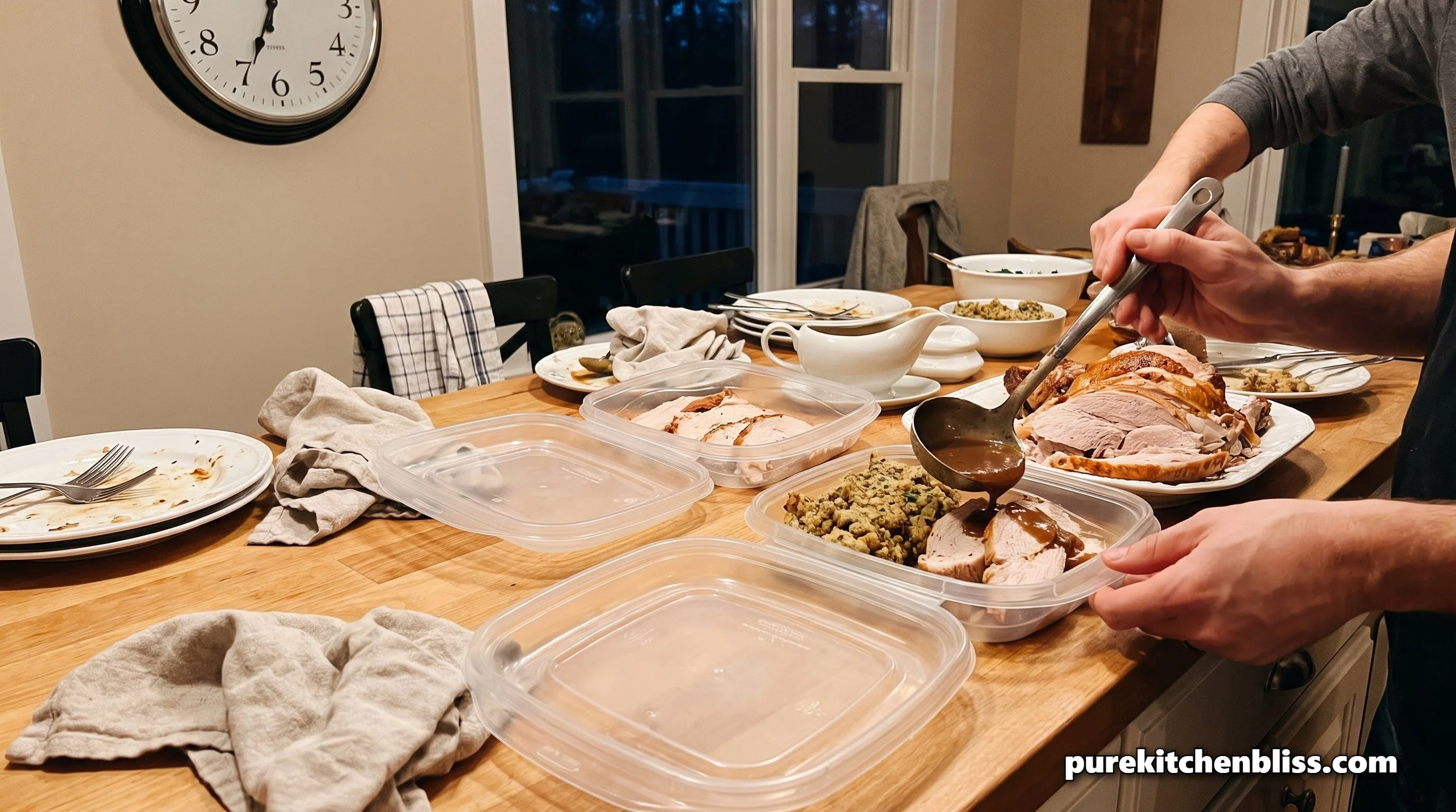
Why "let it cool first" is the wrong instinct
In a USDA study, 76 percent of people said they'd let leftovers cool to room temperature before refrigerating them, on the theory that putting hot food in the fridge is somehow bad for the fridge or the food. That instinct is backwards, and it's genuinely one of the more common food safety mistakes made every Thanksgiving. Food sitting out, even on a counter, spends that entire cooling period in the 40 to 140°F danger zone, exactly the range bacteria multiplies fastest in. Refrigerators are built to handle warm food going in, and getting food into the fridge or freezer while it's still hot, or even steaming, is safer than waiting.
The two-hour clock starts the moment the meal comes off the heat, not when dessert is finished or when guests have gone home. At a big family gathering with dessert, conversation, and cleanup stretching well past dinner, it's easy to blow past that window without anyone noticing, which is exactly why getting leftovers into containers early, even before the meal fully wraps up, is worth doing rather than leaving it for later.
How long each dish actually lasts in the fridge
Turkey holds up the longest of anything on the table, three to four days refrigerated according to USDA and extension guidance. Stuffing and gravy are the shortest-lived items by a meaningful margin, food safety specialists at both the University of Georgia and Michigan State University extension services recommend using them within just one to two days, noticeably less runway than the turkey itself gets. Most other side dishes, mashed potatoes, green beans, roasted vegetables, fall into a middle range of three to five days depending on ingredients. Cranberry sauce is the outlier in the other direction, homemade versions last seven to ten days, and canned cranberry sauce can hold for up to two weeks in the fridge once opened.
The practical takeaway is that your leftover turkey sandwiches have more time than your leftover stuffing does, and treating everything on the plate as equally durable is how stuffing or gravy ends up eaten past its safe window while turkey gets tossed too early out of caution.
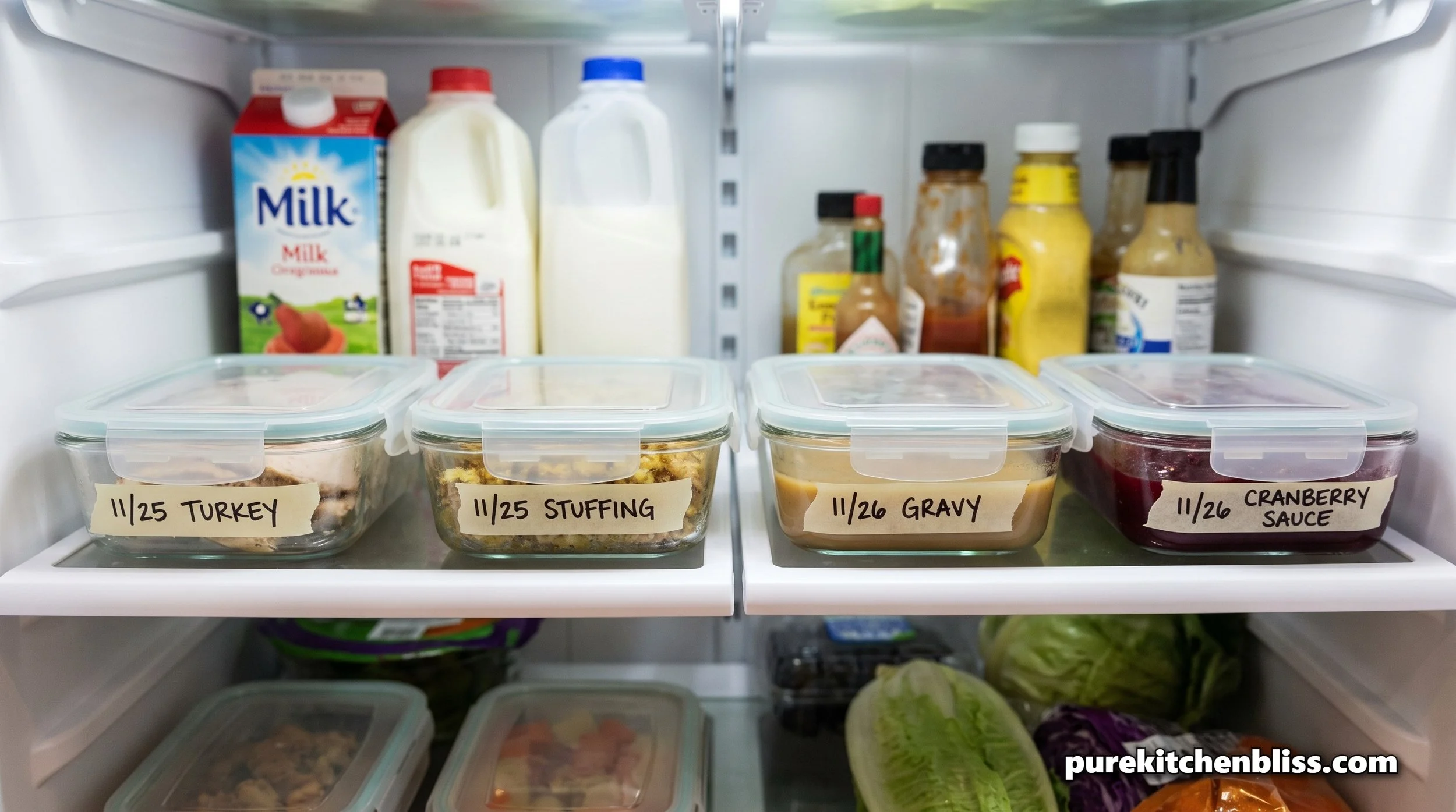
What freezes well, and what genuinely doesn't
Turkey freezes well for up to four months without much quality loss, and it's the easiest item on the table to portion and freeze for later use in soups, sandwiches, or casseroles. Gravy also freezes well, up to four months by most guidance, and reheats cleanly once brought back to a full boil. Stuffing freezes acceptably for about a month, though texture softens somewhat on reheating compared to fresh.
Mashed and sweet potatoes are the trickiest item to freeze successfully, the texture tends to separate and turn grainy once thawed, since the starches and water content don't hold together the same way after freezing. If you know you won't finish mashed potatoes within the fridge window, freezing them is still better than throwing them out, but expect a texture change and plan to use them in something like a shepherd's pie topping rather than serving them plain. Pie is generally fine frozen for a couple of months, though custard and cream-based pies hold up worse than fruit pies and are better eaten fresh within their fridge window instead.
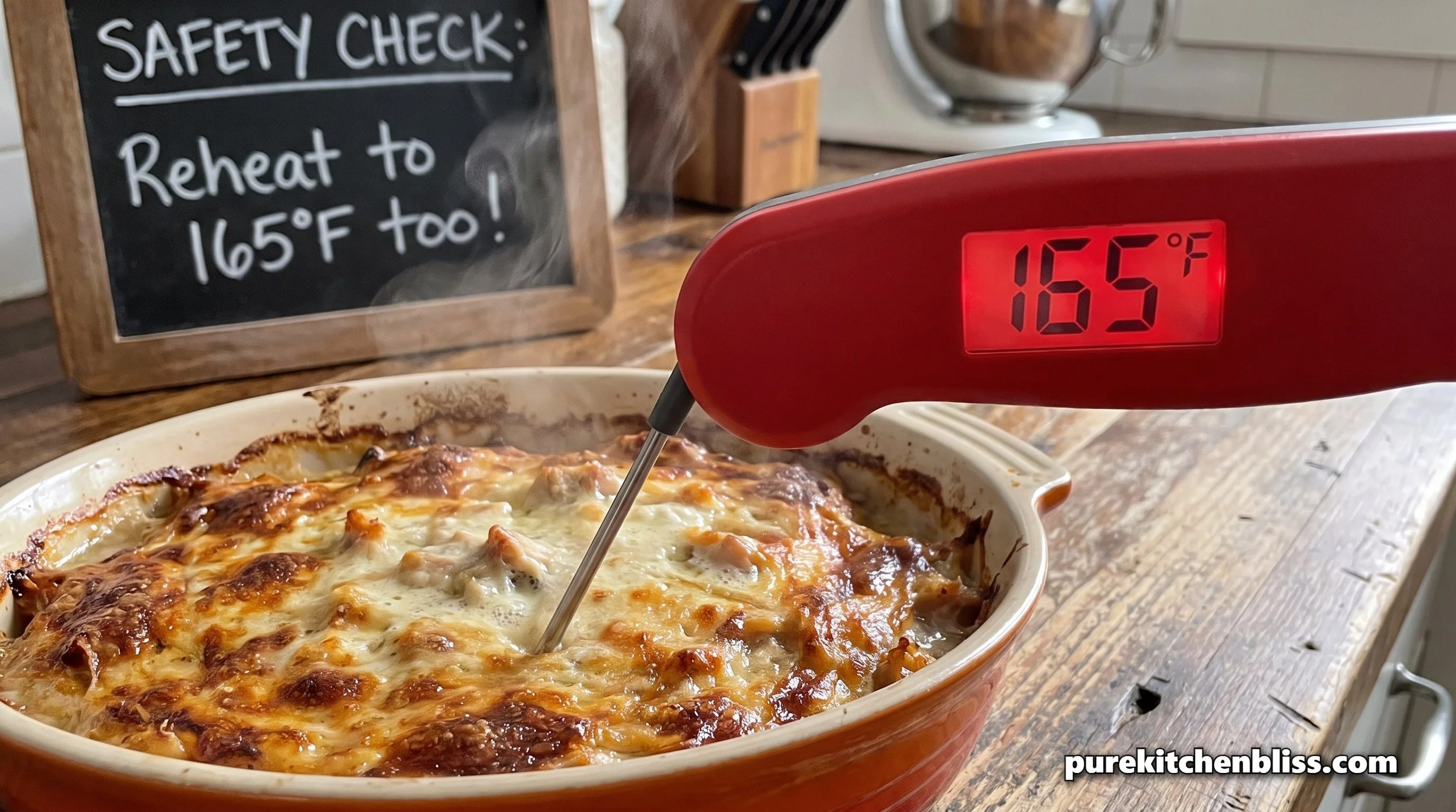
Reheating safely, not just until it's warm
Reheat solid leftovers, turkey, stuffing, casseroles, to an internal temperature of 165°F, checked with the same food thermometer used on the original turkey, rather than judging doneness by how warm it feels. Liquid leftovers like gravy need to come to a full rolling boil before serving again, not just a light simmer, since the boil is what actually gets the whole volume up to a safe temperature evenly rather than leaving cooler pockets that never got hot enough.
If you're reheating turkey mixed into a new dish, soup, casserole, pot pie, the whole dish needs to reach 165°F throughout, not just at the surface, since a dish that's warm on top but still cool in the center hasn't actually been brought back to a safe temperature.
Portioning strategy, and why one giant container works against you
A whole turkey carcass or a single large container of stuffing cools far too slowly in the fridge, the mass of food in the center stays in the danger zone range for much longer than a shallow, spread-out portion would. Slice turkey off the bone before storing rather than refrigerating it whole, and split stuffing, gravy, and sides into shallow containers rather than one deep dish. This isn't just about eventual portion convenience, it directly affects how fast the food actually reaches a safe refrigerator temperature after cooking, which is the whole point of getting it into the fridge quickly in the first place.
If you're organizing fridge space for a big holiday storage push, our fridge and pantry organization guide and our fridge storage container roundup both cover the same zone-based, shallow-container thinking that applies directly here.

What I actually use for this
A set of shallow glass storage containers handles the bulk of the immediate post-meal storage, since the wide, low shape is exactly what speeds safe cooling. For anything going into the freezer for longer than a couple weeks, a vacuum sealer genuinely extends quality and prevents the freezer burn that ruins turkey and gravy stored in a standard freezer bag over months. A roll of freezer-safe labels for dating everything as it goes in takes ten seconds per container and removes all the guesswork three weeks later when you're staring at an unlabeled bag trying to remember what it is and when it went in.
| Dish | Fridge | Freezer |
|---|---|---|
| Turkey | 3-4 days | Up to 4 months |
| Stuffing / dressing | 1-2 days | About 1 month |
| Gravy | 1-2 days | Up to 4 months |
| Mashed / sweet potatoes | 3-5 days | Up to 2 months (texture changes) |
| Cranberry sauce (homemade) | 7-10 days | Up to 2 months |
| Pie | 3-4 days | 1-2 months (fruit holds up best) |
What this actually comes down to
Get food into the fridge within two hours of cooking, even while it's still hot, rather than waiting for it to cool on the counter first. Turkey has the longest fridge window at three to four days, stuffing and gravy the shortest at one to two, and everything reheats safely at 165°F, or a full boil for gravy specifically. Slice and portion into shallow containers rather than storing in one large mass, and if you're not going to finish something within its fridge window, the freezer buys real extra time for most of the table except mashed potatoes, which hold up better eaten fresh.