The 5-Minute Microwave Steam Reset: Efficiency Over Elbow Grease
Between running a coffee shop, and wrangling four kids, I’ve learned one absolute truth: if you’re spending twenty minutes scrubbing a microwave, you’ve failed the efficiency test. In my shop, we don't use "elbow grease" when we can use the right tool for the job. In the kitchen, that tool is atmospheric steam.
A dirty microwave isn't just an eyesore; it’s a failure of your kitchen sanctuary. Exploded food particles carbonize over time, which can actually damage the appliance's interior lining. Instead of reaching for a scraper, we’re going to use basic physics to "reset" the machine in five minutes flat.
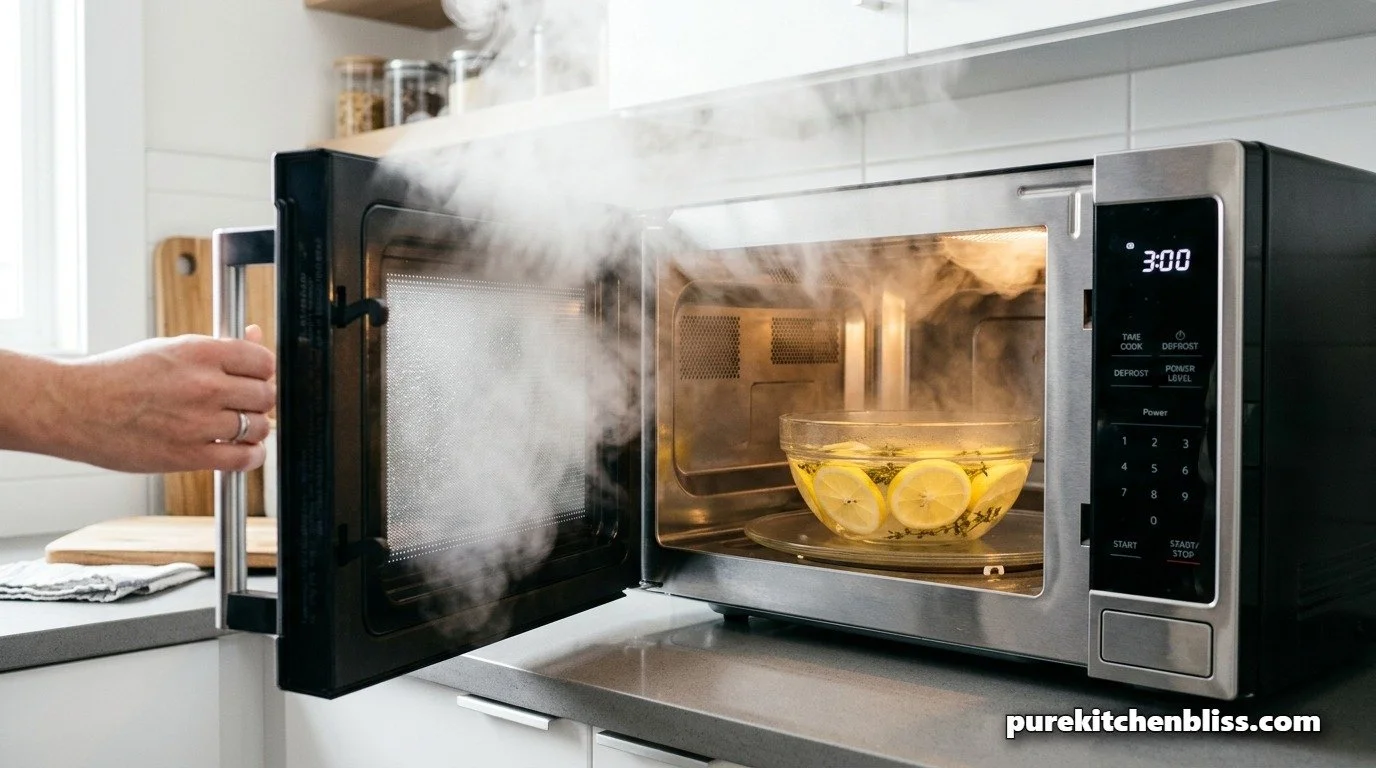
1. The "Steam Sauna" Configuration
We’re going to turn the microwave into a localized pressure chamber to loosen the molecular bond of stuck-on grease.
The Setup: Fill a microwave-safe glass bowl with 1 cup of water and 2 tablespoons of white vinegar.
The Pro Addition: Toss in a few lemon slices. The citric acid acts as a natural degreaser, breaking down the oils that common soaps miss.
2. The Thermal Soak
This is the "walk away" portion of the job, the most important part for a busy father.
The Power Up: Run the microwave on high for 5 minutes. You want the interior window completely fogged over with condensation.
The Carpenter’s Rule: Do not open the door. Let it sit for an additional 5 minutes. This "dwell time" allows the steam to penetrate the crustiest food layers, turning them into a soft slurry.
3. Comparison: Scrubbing vs. The Steam Reset
| Cleaning Method | Active Labor | Mechanical Risk | Result |
|---|---|---|---|
| Manual Scrubbing | 15-20 Mins | High (Surface scratches) | Patchy/Incomplete |
| The Steam Reset | 60 Seconds | Zero Risk | Factory Clean |
4. The One-Swipe Finish
After the 5-minute dwell time, remove the bowl and the turntable.
The Process: Using a clean microfiber cloth, wipe the ceiling first, then the sides and floor.
The Reality: Because the steam has fully hydrated the dried food, it should come off in one single pass. This protects the mechanical integrity of the microwave's interior coating.
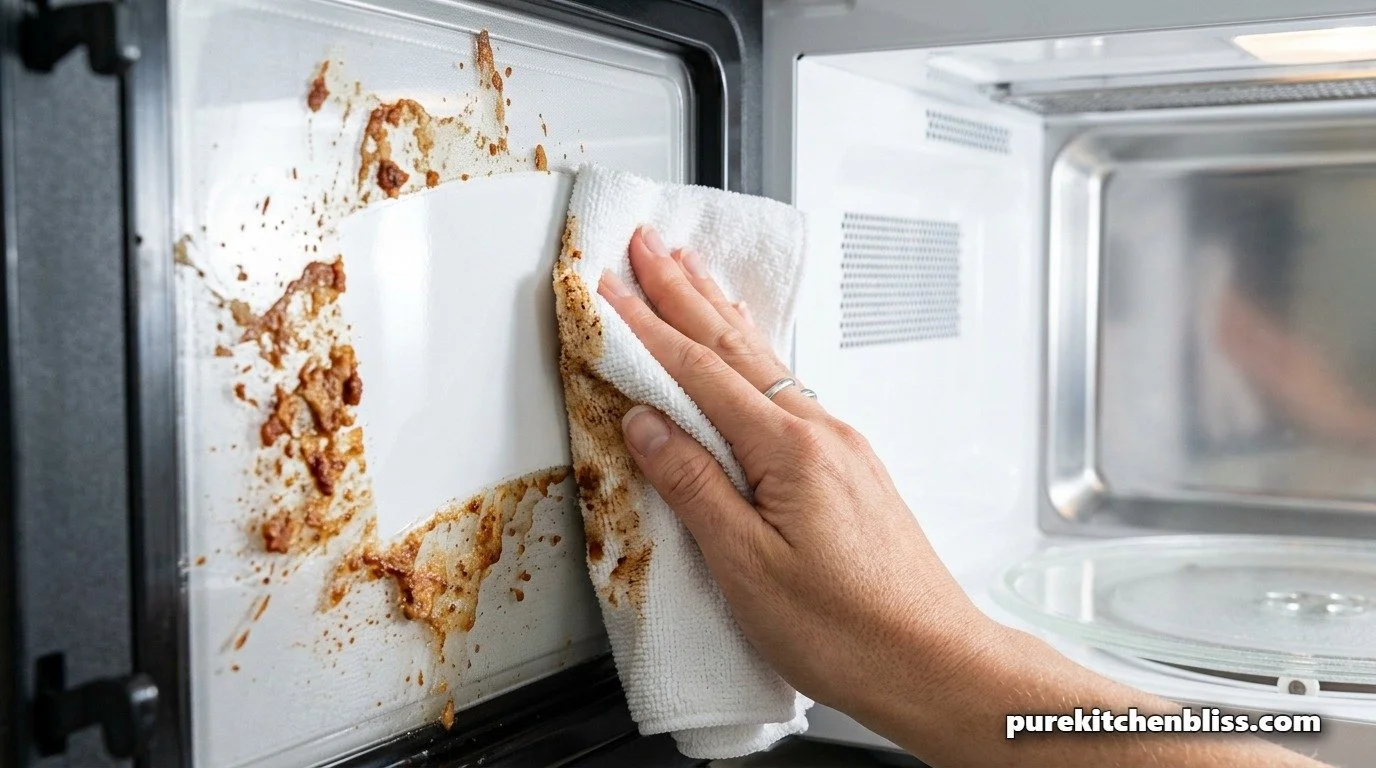
5. Why We Care
Stuck-on food can cause "hot spots" that lead to magnetron failure. By keeping the interior surfaces clean, you are ensuring the appliance draws power correctly and safely. It’s the same reason we keep our knives clean, it’s about tool longevity. Plus, using organic vinegar ensures no chemical odors are lingering when you heat up lunch for the kids.

Next Up: Take that same high-efficiency logic to your trash management with 5 Genius Hacks to Stop Your Trash Can From Ruining Your Kitchen Vibe!.